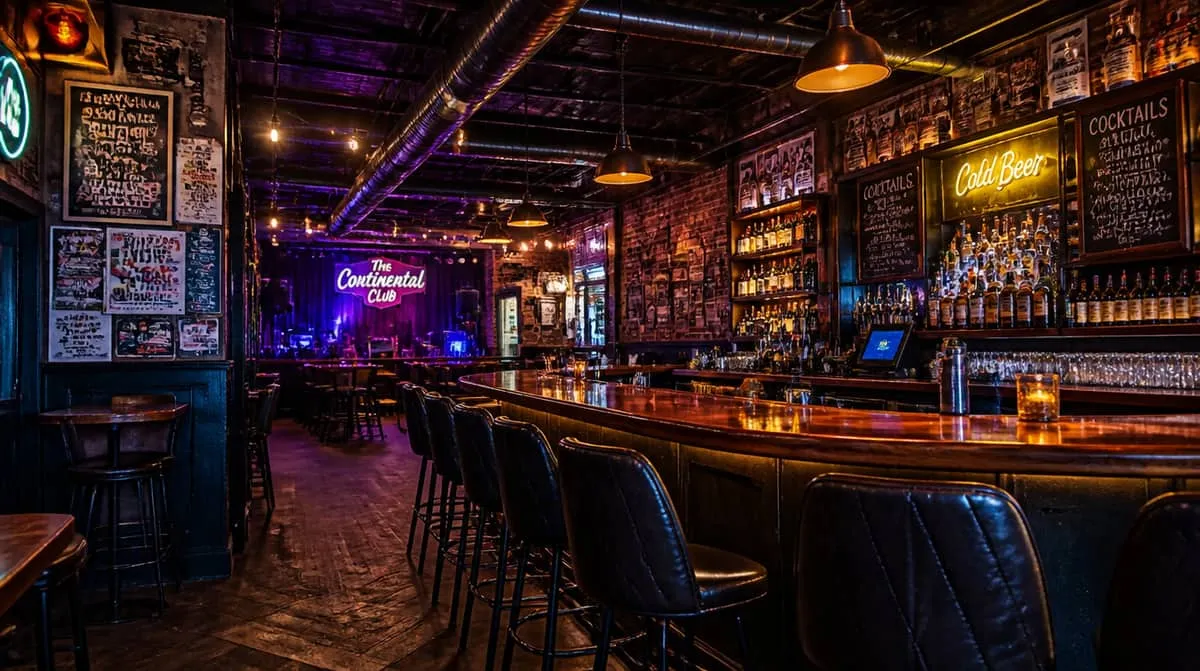
Charleston's bar and lounge market carries pressures that most Southeastern cities do not deal with at the same intensity. The rooftop bars along East Bay Street and the French Quarter compete for harbor views that draw a national tourism crowd on top of the local base. The historic buildings that make up much of the peninsula's hospitality inventory come with structural limits that a new-build city never has to think about. And the salt air rolling off the harbor and the marsh humidity that sits over the Lowcountry for most of the year will find every weak point in an outdoor furniture spec within a season. Sourcing bar lounge furniture Charleston operators can depend on means understanding all three of these realities, because a stool that works on an East Bay rooftop is not the same stool that belongs in an Upper King cocktail room.
The Rooftop and Harbor-View Hotel Corridor
Charleston's rooftop bar scene, concentrated along East Bay Street, the French Quarter, and the hotel corridor near Meeting Street and the Battery, is the city's signature hospitality product. These are destination venues built around harbor and church-steeple views, and the furniture has to hold up to both premium visual expectations and a coastal environment that is genuinely harsh on outdoor material.
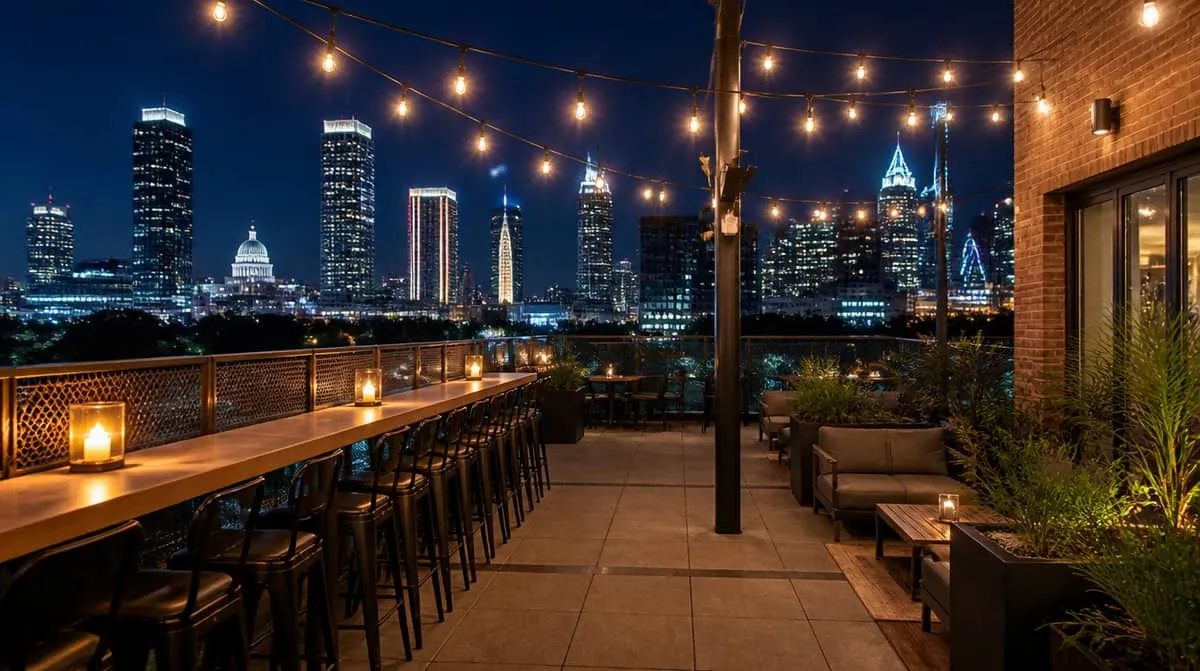
Salt air is the variable that trips up operators who source furniture based on a spec sheet written for an inland city. Standard powder-coated steel will show corrosion at welds and fasteners within a year or two on a harbor-facing rooftop, even with a quality finish. Fully welded powder-coated aluminum is the correct frame material for Charleston's outdoor and semi-outdoor bar seating. It does not rust, it carries less weight for rooftop structural loads, and it holds up under the combination of UV exposure and salt that a harbor-facing deck absorbs from April through October. Avoid hollow footrests on any barstool going into a high-volume rooftop program. Solid bar stock footrests take the constant pressure of guests resting and repositioning their weight without denting or working loose, which hollow tube footrests will do within a season.
Upholstery on any Charleston rooftop or covered-porch seating needs to be solution-dyed acrylic or a marine-grade vinyl rated for coastal humidity, not standard contract fabric rated for indoor use only. For the indoor lounge zones in the same property, the lobby bar, the parlor-level seating, the interior rooms that flank a courtyard, specify performance fabrics at a minimum of 50,000 double rubs Wyzenbeek with a moisture barrier under the seat cushion. Charleston's humidity works its way into upholstered furniture even indoors, and foam without a barrier will hold moisture and shorten the useful life of the piece well ahead of schedule.
Seat height mismatches are a recurring problem on Charleston renovation projects, where an older bar counter is being reused or rebuilt to a slightly different height than the plans assume. Confirm the actual counter height before ordering. A standard bar-height counter runs 42 inches and pairs with a 28 to 30 inch seat height. Counter-height surfaces at 36 inches need a stool in the 24 to 26 inch range. Getting this wrong by even two inches is uncomfortable for every guest and not something you fix without replacing the order.
Upper King and the Historic District: Design and Structural Constraints Together
The Upper King Street corridor has become Charleston's most design-forward hospitality district, with cocktail bars and lounges that compete on visual identity as much as drink program. At the same time, much of this inventory sits inside historic buildings on the peninsula, single houses, converted warehouses, buildings with heart pine floors that have been in place for a century or more. Furniture sourcing in this district has to satisfy design ambition and structural reality at once.
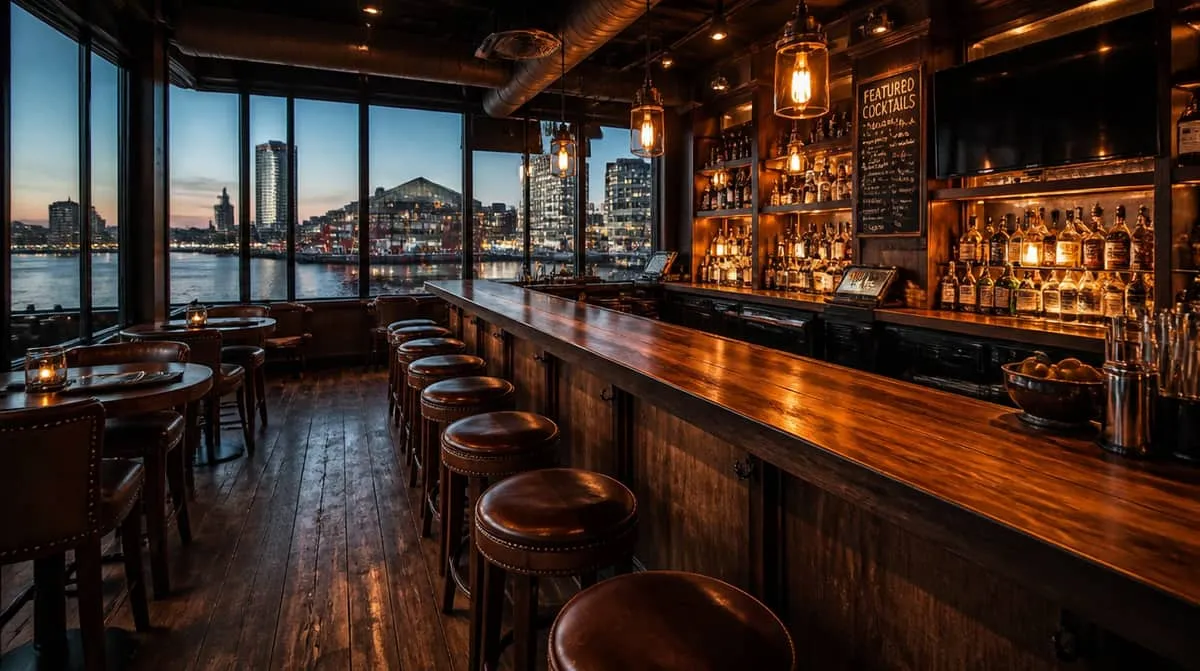
Current preferences on Upper King lean toward curved lounge silhouettes, warm neutral or deep jewel-toned upholstery, and mixed-material tables that pair reclaimed or solid wood tops with metal or stone bases. The generic dark-wood tavern look that defined a previous generation of Charleston bars is giving way to something more considered. Operators opening now are sourcing bar lounge furniture Charleston design-conscious guests notice, which means pieces built to look intentional up close, not just to fill a floor plan.
COM programs are worth raising with your supplier early in this process. A custom order-material program lets a designer specify a proprietary fabric on a commercially proven frame, which is how an independent Upper King bar gets a bespoke look without giving up the structural rating a hospitality environment requires. In historic buildings specifically, confirm floor load and doorway clearance before finalizing heavier case goods or built-in banquette frames. Narrow stairwells and low doorframes in converted single houses have derailed more than one furniture delivery on the peninsula, and it is a cheaper problem to solve during design than on move-in day.
The Convention and Cruise Corridor
North Charleston's convention and event calendar, anchored by the Charleston Area Convention Center and North Charleston Coliseum, combined with the cruise ship passenger traffic that lands downtown for a few hours at a time, produces a different kind of volume than the neighborhood bar market. Venues near these corridors see concentrated surges rather than a steady evening trade, and furniture needs to be specified for that pattern.
For high-volume venues in this corridor, prioritize structural weight and weld quality. Barstool frames should be minimum 16-gauge steel or equivalent aluminum on all structural members, with fully welded joints at the footrest and every leg-to-seat connection. Bolted frames loosen under the stress of hundreds of different guests over a single event day or cruise call. Replaceability matters here too. Confirm your supplier keeps stock of your primary collection rather than relying entirely on made-to-order lead times, so that a handful of damaged barstools can be replaced in the same finish without waiting on a full production run.
Sourcing Bar Lounge Furniture for Charleston Projects
Charleston's hospitality construction market runs on tourism-season timing more than most cities. A rooftop concept aims for a spring opening ahead of peak season, a King Street lounge targets a fall reveal before the holiday convention calendar fills in, and the furniture order lands on a schedule that construction delays have already compressed. The standard 8 to 12 week lead time for custom orders does not always fit inside a fixed opening date.
The practical approach for most Charleston bar and lounge projects combines in-stock contract inventory for the core seating program with custom or COM orders reserved for accent pieces where design specificity matters most. Build a relationship with your supplier before the need is urgent, and know in advance which frame finishes are held in stock, which COM programs have realistic turnaround, and which vendors can fill a partial replacement order on short notice.
If you are in the early planning stages of a bar or lounge build anywhere on the Charleston peninsula, from the East Bay rooftop corridor to Upper King, or in the growing North Charleston and Mount Pleasant markets, request a specification consultation before your layout is finalized. It surfaces seat height mismatches, coastal material issues, and historic-building clearance problems while they are still cheap to fix.
Tell us about your Charleston bar and lounge furniture needs and we will turn your quantities, finishes, and timeline into a firm quote. Request a quote whenever you are ready to compare.