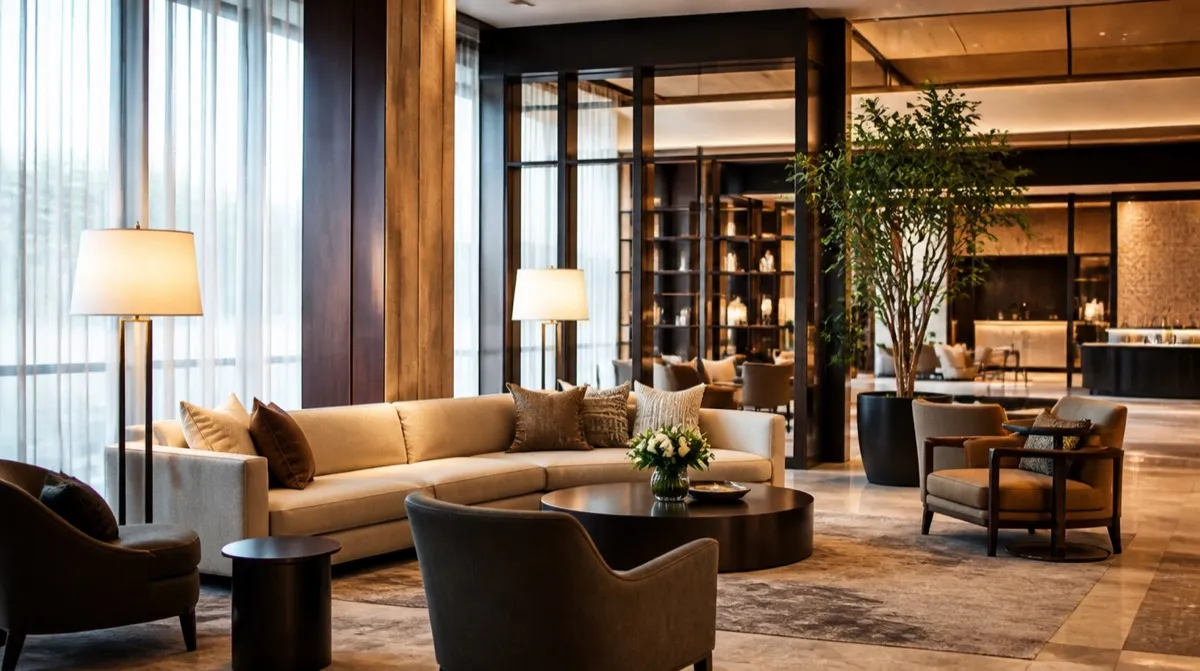
Commercial hospitality furniture is a different animal from anything you would buy for a home or a standard office. It has to survive constant public use, wipe clean after spills, hold up to daily rearranging, and still look good enough to shape how a guest feels about your property. For procurement teams outfitting a hotel, restaurant, bar, or event venue, the real challenge is not finding one good chair. It is sourcing a coordinated package of seating, tables, casegoods, and outdoor pieces that all meet commercial specs and look like they belong together. This guide covers the categories, the specs that matter, and how to source a whole property as one program.
The categories of commercial hospitality furniture
Almost everything you will spec falls into four broad categories:
- Seating. Banquet and stacking chairs, dining chairs, barstools, lounge chairs, booths, and benches.
- Tables. Dining tables, banquet rounds and rectangles, cocktail and highboy tables, and occasional tables.
- Casegoods. Headboards, nightstands, dressers, credenzas, desks, and reception millwork.
- Outdoor. Patio and poolside seating and tables built to survive sun, moisture, and temperature swings.
Most properties draw from all four. A hotel with a restaurant, a bar, a ballroom, and a pool touches every category, which is exactly why coordination matters so much.
Seating specs that matter
Seating takes the hardest use in any hospitality space, so it earns the closest attention. Two numbers do most of the work. Target commercial upholstery rated to at least 50,000 Wyzenbeek double rubs, well above the 10,000 to 15,000 typical of residential fabric, and seat foam in the 35 to 40 ILD range so cushions hold their shape rather than flattening within a year. Frames should be welded steel or aluminum, or corner-blocked hardwood, never stapled joints alone.
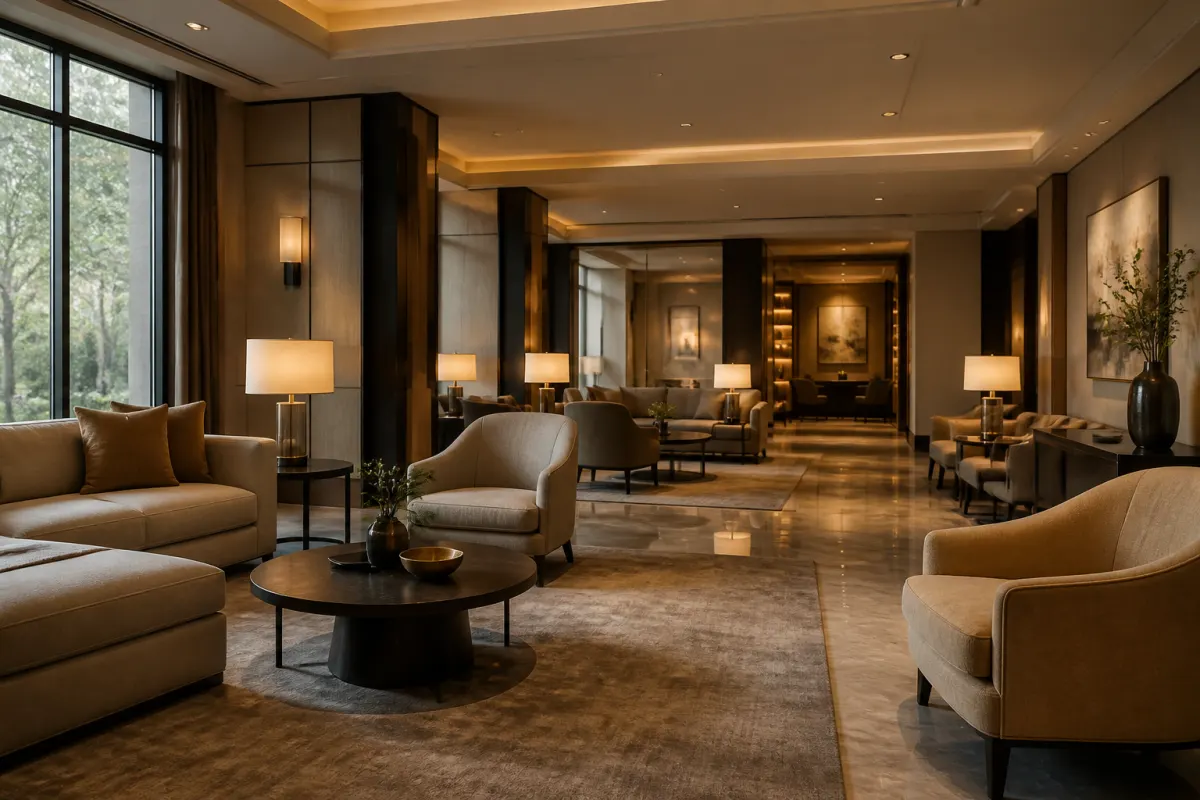
Costs vary widely by type. At volume, steel-frame stacking banquet chairs commonly run $45 to $90, aluminum $70 to $130, resin Chiavari chairs $40 to $80, wood or aluminum Chiavari $90 to $180, and folding chairs $20 to $50. Commercial barstools typically land between $110 and $320, and lounge chairs from $300 to $900 depending on frame and fabric.
Table specs that matter
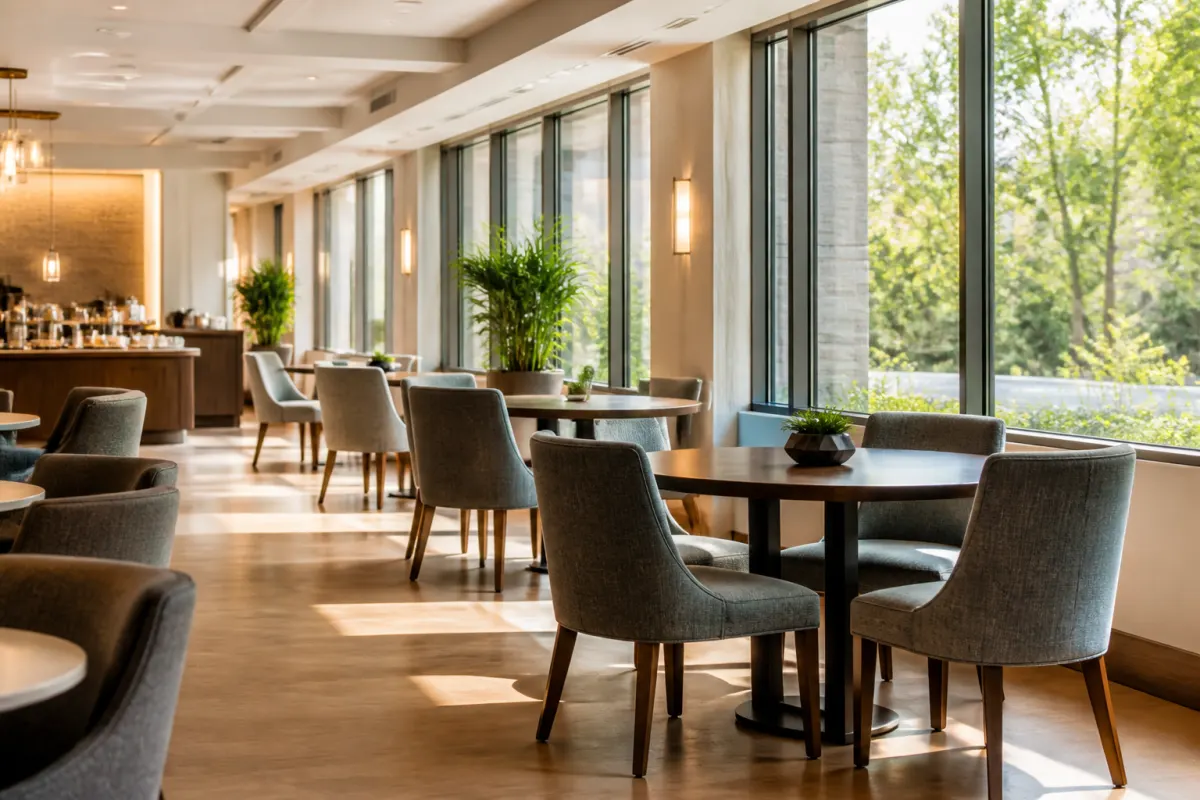
Hospitality tables have to survive being wiped down hundreds of times, bumped by chairs and carts, and in the case of event tables, folded and stored constantly. Look for commercial-grade tops that resist heat, moisture, and scratching, along with sturdy bases and, for event tables, reliable folding mechanisms and edge protection.
At volume, round 60-inch folding banquet tables commonly run $60 to $130, rectangular 6 to 8-foot tables $50 to $120, and cocktail or highboy tables $70 to $150. As with seating, the base and mechanism matter as much as the top, because a table that fails at the hinge is out of service regardless of how nice the surface looks.
Casegoods and outdoor
Casegoods carry the design identity of guest rooms and public spaces, and they take real abuse from luggage, carts, and daily handling. Spec solid or engineered hardwood cores over particleboard, chip-resistant edge banding, and heavy-cycle drawer glides and hinges.
Outdoor furniture faces its own enemies: UV, moisture, and temperature swings. Look for UV-stabilized resin, powder-coated aluminum, or teak, along with quick-dry foam and solution-dyed outdoor fabric on any cushions. Indoor-grade pieces pushed outside fail fast, so treat outdoor as its own spec rather than an afterthought.
Commercial grade versus retail
The temptation to save money with retail-grade furniture almost always backfires in a commercial setting. Retail pieces are built for occasional home use, and public-facing hospitality use destroys them within a season or two. Commercial hospitality furniture carries higher weight ratings, true commercial foam and fabric, and frames engineered for constant use and movement. The replacement cost and the labor of constantly swapping failed pieces erase any upfront savings, which is why contract-grade specs are the baseline, not the upgrade.
Sourcing a coordinated package across a property
The biggest advantage a procurement team has is buying the property as one program rather than piecing it out. A coordinated package keeps finishes, wood tones, and fabrics consistent across the lobby, restaurant, ballroom, and guest rooms, which is nearly impossible to achieve when each space is sourced from a different vendor at a different time.
A coordinated hospitality package needs compatible specifications and a delivery plan for each category. Custom finishes and upholstery typically run 10 to 14 weeks, but individual products can have different lead times. When you are ready to spec an entire property, request a quote with your item list and opening date so the proposal reflects the whole project.
The bottom line
Commercial hospitality furniture comes down to four categories, a handful of non-negotiable specs, and the discipline to source them together. Anchor every seating and table choice to 50,000-plus Wyzenbeek fabric and 35 to 40 ILD foam, hold outdoor to its own weatherproof spec, and buy the property as one coordinated program to get consistent looks and better pricing. Do that, and your furniture will look right on opening day and still be standing years later.