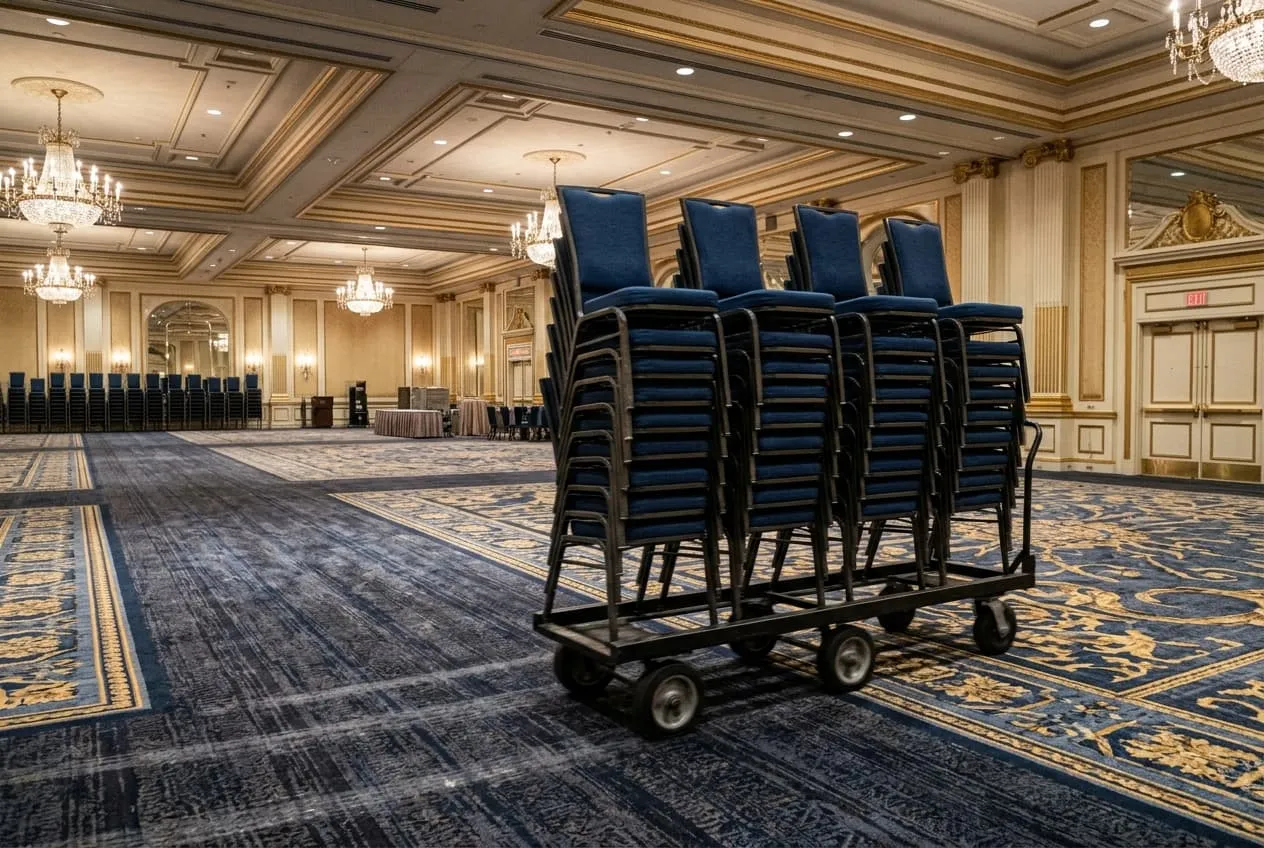
Wilmington runs a different kind of event calendar than a big convention city, and that shapes what its venues need from their furniture program. The Chase Center on the Riverfront anchors the market as the region's main meeting and banquet facility, pulling in corporate conferences tied to the banking and finance sector that has defined the city for decades, along with regional trade events and nonprofit galas that draw attendees from Philadelphia and Baltimore as easily as from within Delaware. Downtown around Rodney Square and the Hotel du Pont host a steady run of legal, corporate, and civic dinners. Trolley Square and the Brandywine corridor carry a different flavor entirely, with restaurant private dining rooms and boutique event spaces that book weddings and rehearsal dinners for clients who want a smaller, more polished setting than a downtown ballroom. If you run banquet operations for a hotel, a standalone event hall, or a restaurant with a private events program in Wilmington, your furniture inventory has to work across that whole range, and most properties underestimate how much that range demands until a room setup falls short of what a client expected.
What Wilmington's Event Mix Actually Requires
The mix, not the volume, is what trips up Wilmington operators. A single property might run a bank's regional sales conference on a Tuesday, a bar association dinner on a Thursday, and a wedding reception on Saturday, three events with three different room configurations and three different client expectations about what the furniture should look and feel like. That kind of variety means your banquet chairs and folding tables can't be a single one-size compromise. Corporate clients from the finance sector expect a clean, professional setup that photographs well for internal newsletters and annual reports. Wedding clients expect something closer to what they've seen at Winterthur or a Brandywine Valley estate wedding, and that expectation follows them into a downtown hotel ballroom.
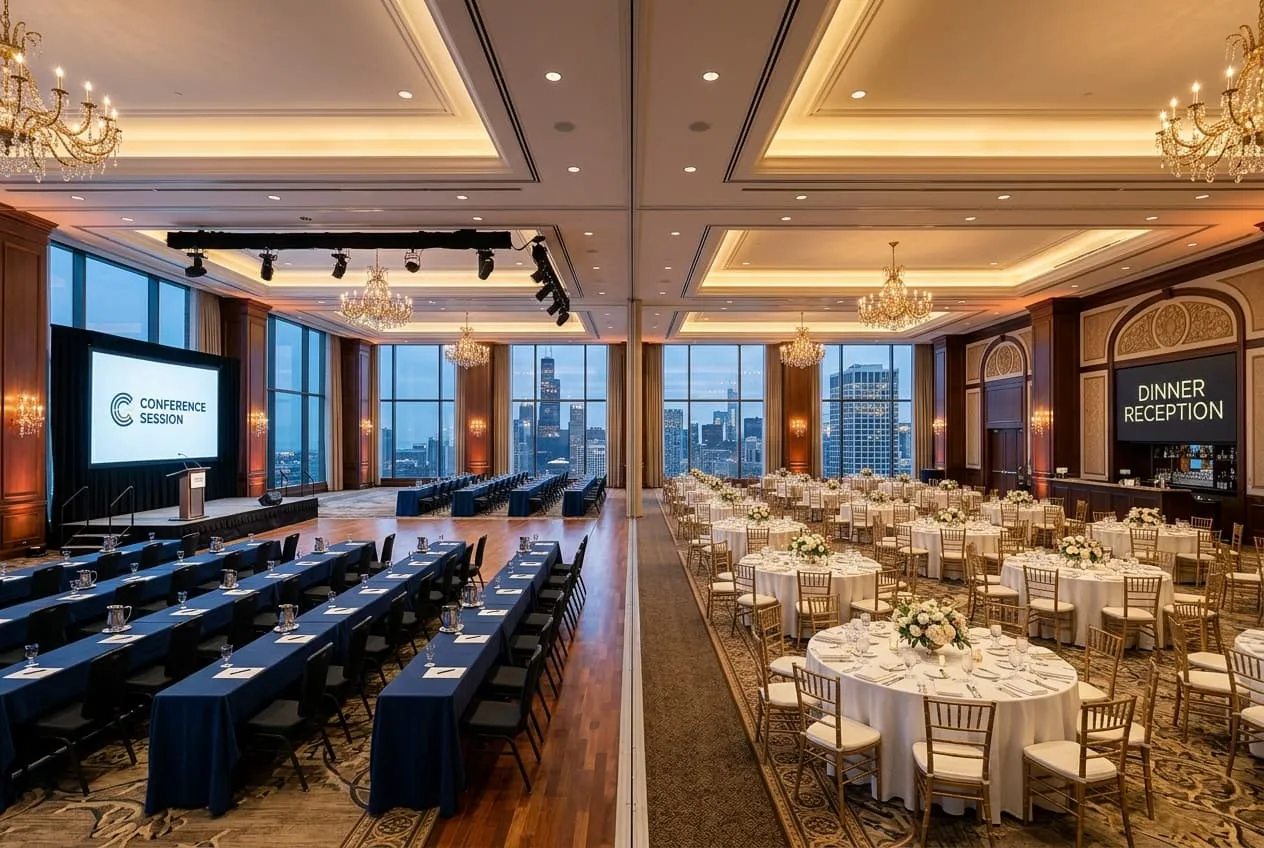
Stackable banquet chairs rated for at least eight high are still the right baseline even for a market Wilmington's size, because most properties are running back-to-back setups with a lean events staff. A chair cart matched to your specific chair model matters just as much here as in a larger market, maybe more, since smaller banquet teams don't have the labor to fight with an oversized cart in a narrow service corridor near the Riverfront's loading areas. Folding tables need to cover round formats (60-inch and 72-inch) for plated dinners and galas, plus 6-foot and 8-foot rectangular tables for the conference and boardroom-style setups that make up a meaningful share of Wilmington's bookings given the concentration of corporate headquarters and regional offices in the area.
Chair Spec for Properties from the Riverfront to Trolley Square
The banquet chair is the one piece of furniture every guest sits in for hours, and it's also the piece your staff resets constantly across a week of mixed programming. Frame material is the first real decision. Steel frames hold up better under the fast, repetitive stacking that happens after a long corporate dinner or a late wedding reception, and they're the safer choice for any venue running heavy weekly turnover. Aluminum frames shave weight for staff who are moving chairs in and out of tight storage areas, but the metal gauge needs to be thick enough to avoid flex over time.
For the wedding and rehearsal dinner market centered around Trolley Square, the Brandywine corridor, and the historic estate venues just outside the city, a Chiavari chair remains the standard choice because it signals a level of formality that clients recognize immediately and photographs well against the area's older architecture. For the corporate and conference business tied to the Chase Center and the downtown financial district, a padded steel-frame stacker is the more sensible spec, since durability and fast reset time matter more than ornamentation when you're flipping a room from a conference layout to a banquet dinner in a few hours.
Foam density in the seat and back cushion deserves more attention than it usually gets. Budget contract chairs use foam that compresses within a couple of years of regular use, and a guest can feel that immediately in a chair that no longer holds its shape. High-density foam costs more up front but holds its profile through years of nightly use, which matters for a Wilmington property planning to keep the same chair inventory for the better part of a decade.
Folding Tables: The Operational Backbone
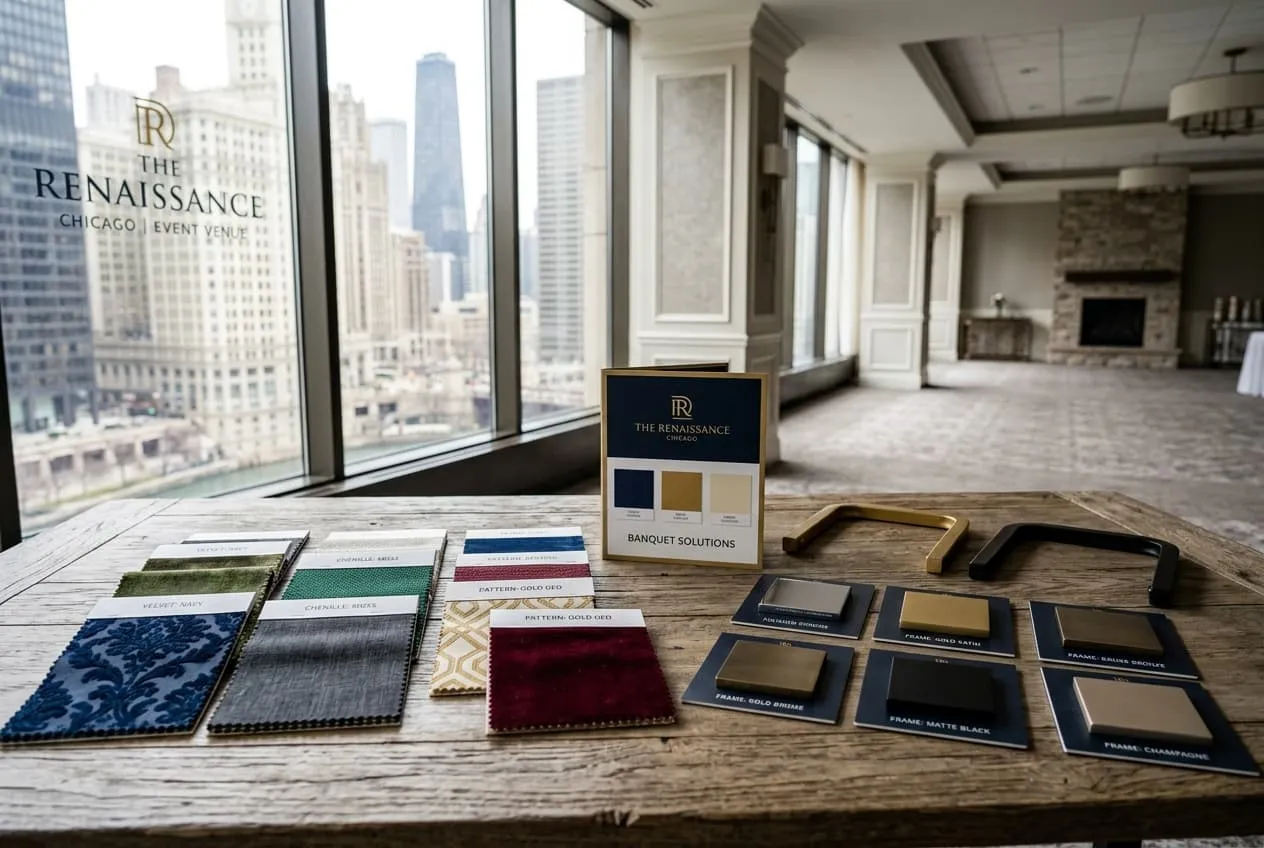
Folding tables rarely get the credit they deserve, but they're where a room flip either goes smoothly or falls apart. A hinge that develops play over time creates a wobble that becomes obvious the moment a centerpiece or a laptop is set on the table, and in a market where a large share of clients are corporate professionals used to a certain standard of polish, that kind of detail gets noticed fast. Commercial-grade folding tables use reinforced steel hinges, and longer rectangular tables need a center support leg to prevent sag once they're loaded with catering equipment or conference materials.
Surface finish matters in Wilmington's climate, where humid summers and cold, damp winters both put stress on table surfaces moving between a loading dock, a kitchen, and a climate-controlled ballroom. High-pressure laminate resists warping better than a budget veneer and holds up to the frequent wipe-downs a lean events staff needs to get through between a Friday conference and a Saturday wedding. For venues near the Riverfront or in mixed-use developments along Market Street, a table that looks presentable without a full linen cover gives staff more flexibility on setups where a client wants a cleaner, less formal look.
Buying Volume, Managing Storage, and Working with the Right Supplier
Storage space is tight at most Wilmington event venues, particularly the older downtown properties and the historic buildings that host events near Rodney Square. Newer construction along the Riverfront tends to have dedicated storage bays built into the plan, but plenty of the city's most in-demand venues are working with converted spaces that weren't originally designed for banquet operations. That constraint should shape your chair spec directly. Chairs that stack to twelve high take up meaningfully less floor space than chairs that only stack to six, and across a full inventory that difference determines whether your storage room works or becomes a daily headache.
Ordering commercial furniture in volume from a single contract supplier, rather than piecing together inventory from several smaller purchases, keeps your room looking consistent. Mismatched chair frames or slightly different shades of the same finish are the kind of thing corporate clients and wedding planners both notice, even when individual guests don't. Specifying one model for your full program, and documenting it clearly for future reorders, keeps a Wilmington venue's look intentional for years rather than accumulating a patchwork inventory.
A supplier who understands the hospitality contract market can walk you through storage footprint before you commit to an order, help plan cart and dolly logistics for tight service corridors, and give realistic lead times when you're working toward a grand opening or a renovation deadline. For a Wilmington property booking conference business tied to the finance sector's calendar, or trying to lock in wedding season before the Brandywine Valley venues fill up, getting furniture on site with time to spare isn't optional. It's what keeps the banquet program ready the moment those bookings arrive.
For Wilmington properties comparing banquet and event furniture options, project-specific pricing tells you more than any published range. Request a quote and we will scope it to your space and volume.