Portland's Event Market and What It Demands from Furniture
Portland's event market operates across a wider range of venue types than most Pacific Northwest cities. The Oregon Convention Center anchors the large-format conference and trade show segment, drawing national and regional events that fill the adjacent Lloyd District hotel corridor and create overflow demand throughout downtown properties. The Pearl District and Willamette River waterfront support a substantial social event market corporate celebrations, wedding receptions, gala dinners where aesthetic presentation is as important as functional capacity. The Alberta Arts District and NW 23rd Avenue corridor host smaller event concepts that lean into Portland's creative culture for corporate off-sites and branded experiential events.
Each of these segments has specific furniture requirements, and the hotels and venues serving them are likely running across more than one. A hotel ballroom near the Oregon Convention Center handles a regional medical conference in February, a wedding in June, and a tech company all-hands in October. The furniture that serves all three events has to meet the functional demands of each without requiring separate inventories.
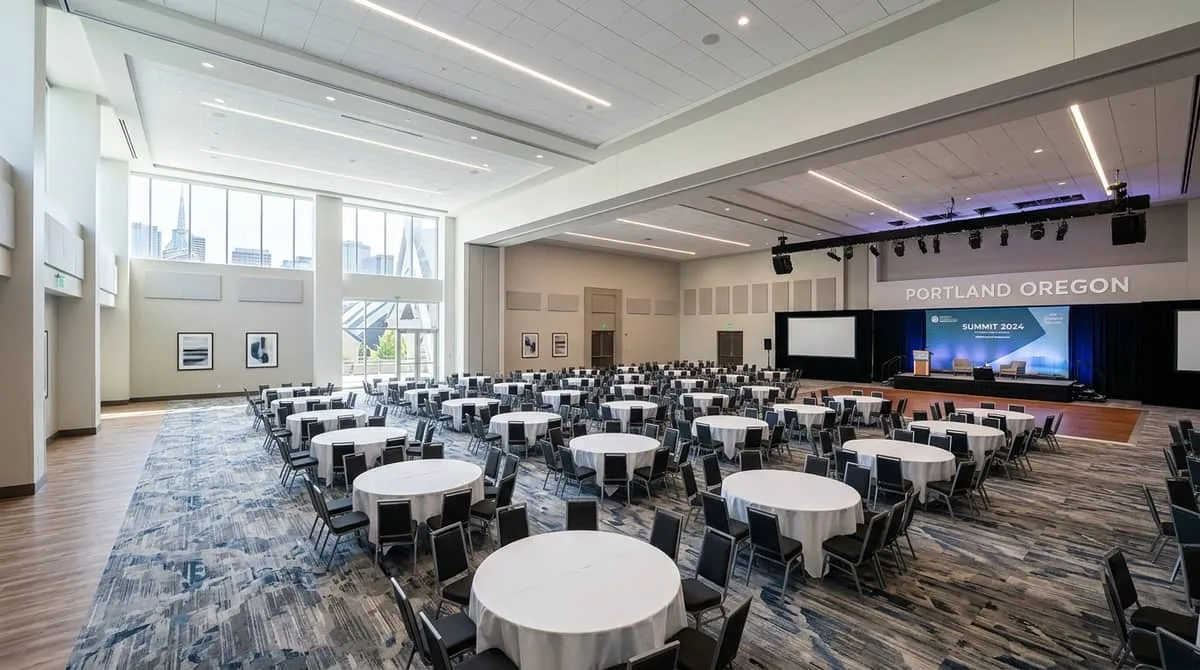
Contract-grade banquet and event furniture is spec'd for that multi-use reality. The key engineering differences from residential or light-commercial alternatives higher structural ratings, tested stack cycles, durable surface materials are what make the furniture viable across a multi-year service life of constant reconfiguration, stacking, transport, and setup. Buying residential-grade for a Portland event venue is a false economy: the per-event cost, when amortized over actual service life, runs significantly higher than the same investment in contract-grade product.
Banquet Chairs: Specification for Portland Event Venues
Banquet chair selection for Portland event venues involves balancing stackability, durability, and aesthetic appropriateness across the events the venue programs. There's no single chair that's optimal for every Portland event context, but there are categories that perform across the range.
Chiavari chairs the classic formal banquet chair in gold, silver, or wood finishes remain the dominant specification for Portland's wedding and gala dinner market. Properties competing for Pearl District reception business and Willamette River waterfront events that position on visual elegance will find chiavaris in resin or aluminum remain the guest and planner expectation. Resin chiavaris in commercial grade are more durable than their classic frail reputation suggests commercial resin construction with metal hardware at key stress points handles the stacking and transport cycles of a busy event calendar without the structural failures that residential-quality chiavaris develop. Specify chiavaris with published stack height ratings and confirm that the stacking system doesn't concentrate stress on individual chair elements.
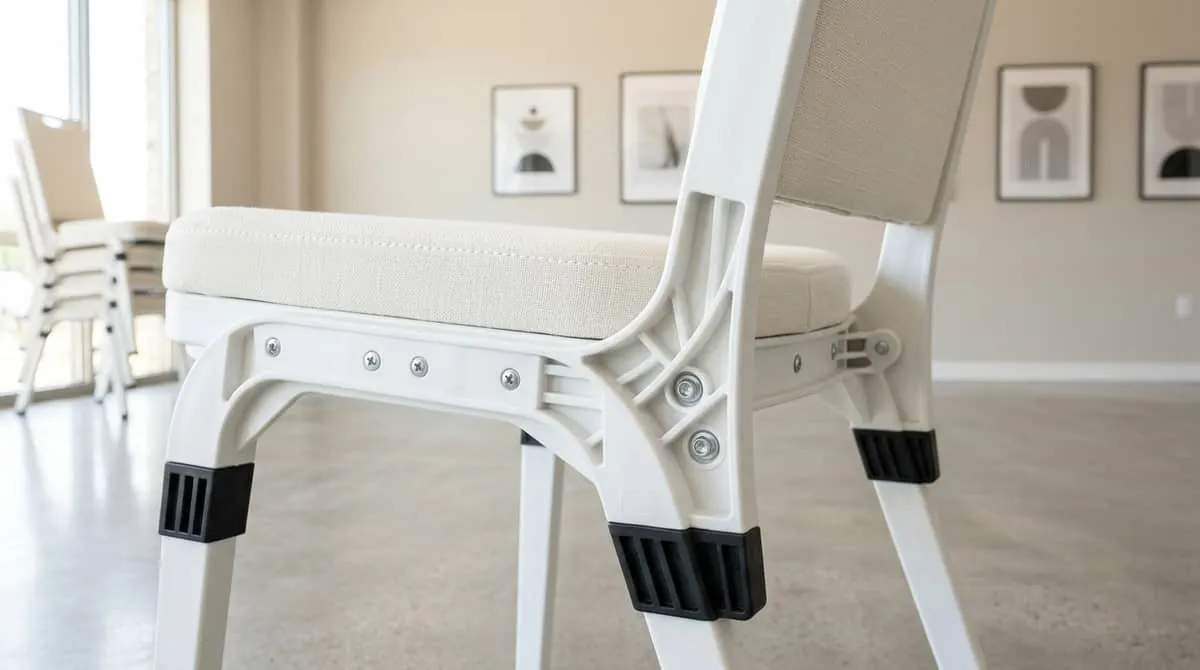
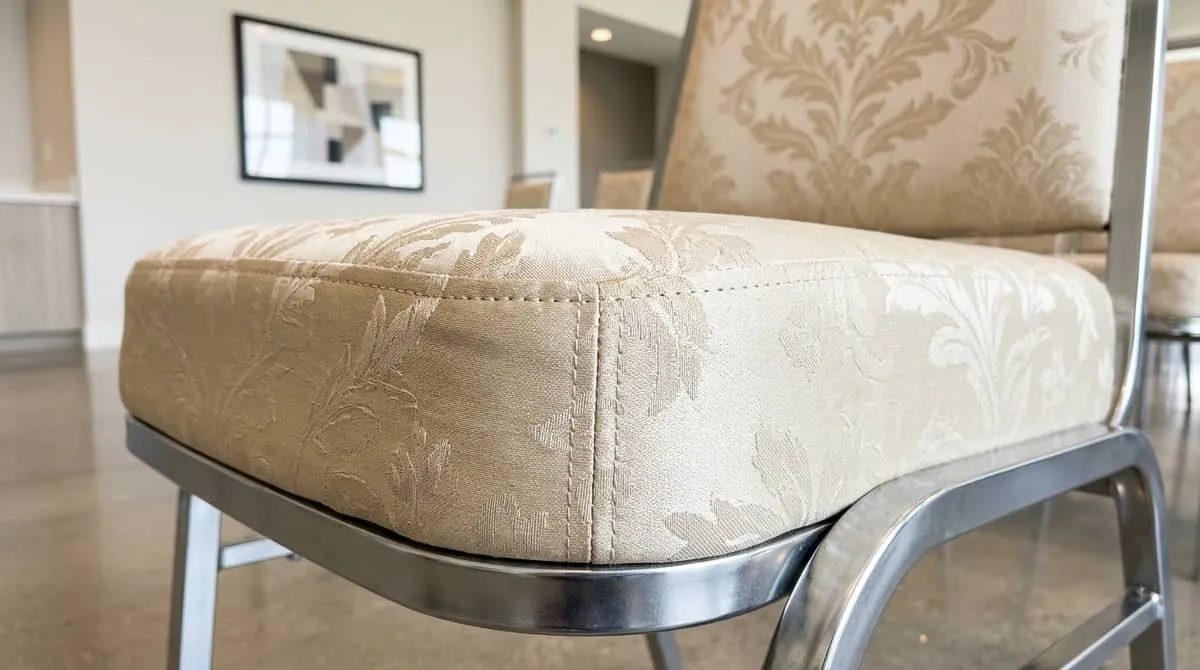
For convention-adjacent hotel properties near the Oregon Convention Center, function chairs padded folding chairs or stack chairs in commercial fabric are more appropriate than chiavaris for the conference and corporate event programming that drives occupancy. Commercial stack chairs with upholstered seats in neutral fabrics (charcoal, taupe, slate) work across the range of corporate event types and allow flexible room configurations that chiavaris don't support as efficiently. Look for stack chairs with welded steel or aluminum frames, seat padding at commercial density, and tested stack capacities of eight to twelve chairs with stable stack geometry.
Cross-over chairs designs that work for both formal events and corporate programming are increasingly common in Portland's mixed-use event spaces. These typically feature cleaner lines than classic chiavaris with the structural ratings needed for convention-adjacent use. For boutique Portland venues that program both wedding receptions and corporate off-sites, cross-over designs reduce the need for multiple chair inventories.
Folding Tables and Staging Equipment
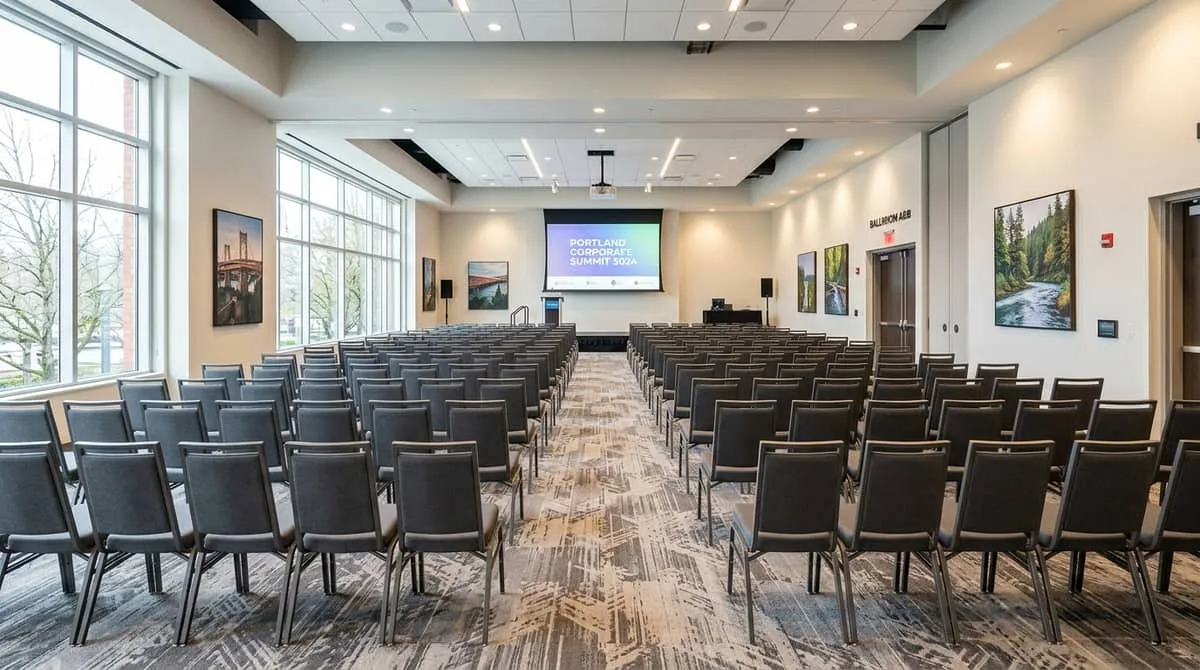
Folding tables are the workhorse of Portland event venues, and the difference between commercial-grade and light-duty alternatives becomes visible within the first year of service. Commercial folding tables need to handle the weight of food service full water service settings, buffet line equipment, multi-course place settings as well as the handling they receive during setup and breakdown.
Table surfaces for Portland event venues should be specified in high-pressure laminate (HPL) over a torsion box or cellular core. HPL surfaces resist heat, moisture, and the impact damage that dining service creates; cellular core construction provides the rigidity needed for tabletop loads without the weight penalty of solid core alternatives. Specify surface edges in ABS or PVC banding that matches the surface laminate exposed particleboard edges are a quality indicator that signals to guests and planners that the venue's furniture investment was made at the wrong level.
Folding leg mechanisms and locking systems are the primary failure point in commercial folding tables under heavy service use. Positive-lock mechanisms where the leg requires intentional release rather than inadvertent folding under load are the standard for venues with safety obligations. Confirm the leg mechanism rating with your supplier, and ask specifically about the lock force rating. This is a spec detail that distinguishes commercial-grade from retail alternatives.
Table base heights for Portland event venues should cover the core configuration range: standard dining at 30 inches, cocktail height at 42 inches, and 18-inch serpentine or crescent tops for buffet line extensions. Covering the full range in a compatible product family means room resets can mix configurations without visual inconsistency.
Lounge and Cocktail Reception Furniture
Portland's event market has moved strongly toward lounge seating components in event programming. Cocktail receptions before seated dinners, networking breaks within conference programming, and hybrid event formats that mix mingling and seated content all create demand for portable lounge furniture that can be deployed in event spaces without the logistical complexity of full lounge furniture.
Commercial event lounge furniture modular seating cubes, lightweight lounge chairs, cocktail tables in a range of heights is designed for this use. The key spec requirements are stackability or compact storage, surface durability against the inevitable spills of cocktail service, and visual quality that holds up in event photography. Portland's event planning community is active on social platforms where event photographs shape venue perception, and furniture that reads as generic or worn in photographs has a visible cost.
For Pearl District event spaces and hotel ballrooms near the Willamette River that compete for corporate and social events, investing in a curated lounge inventory is a meaningful differentiator. Events where guests can move between a dining room and a lounge zone generate more positive response than events where the entire experience is anchored to a dining chair. Portland's event clientele, which skews toward the creative and tech sectors, has high expectations for multi-zone event design.
Specifying event lounge furniture in a consistent color palette charcoal, white, and natural tones work across the broadest range of Portland event concepts allows the venue to offer flexibility without the visual inconsistency that a mixed inventory creates. Avoid patterns or strong colors that read specifically against certain event types.
Storage, Logistics, and Operational Efficiency
The operational dimension of banquet and event furniture specification is as important as the product dimension, but it's often addressed late in the procurement process. Storage footprint, transport logistics within the venue, and setup crew requirements are all shaped by furniture specification choices and getting those choices wrong creates labor and operational inefficiencies that compound over the life of the inventory.
Stack height and storage footprint matter most for Portland hotel properties where back-of-house square footage is limited. Pearl District hotel conversions and older Portland properties near Powell's Books typically have tighter storage configurations than purpose-built convention hotels. Know your storage dimensions ceiling height, rack dimensions, aisle clearances before specifying furniture stack heights and storage configurations. A chair that stacks 12 high in a warehouse context may only stack 6 high in your storage room if ceiling height constrains it.
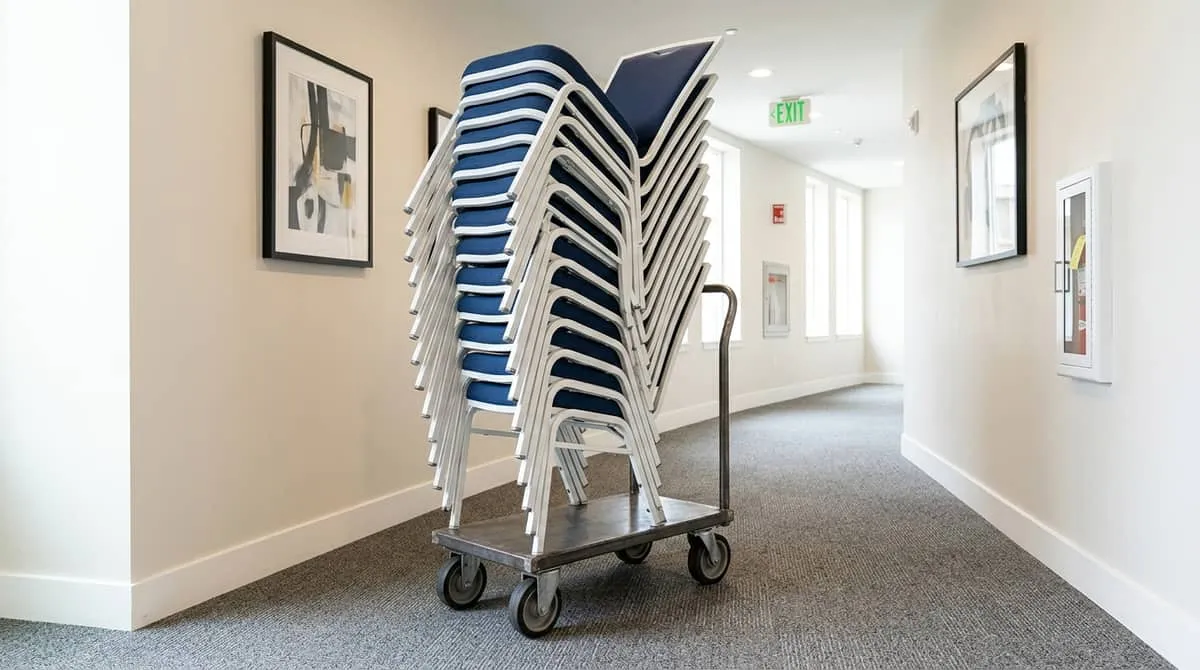
Banquet cart systems dollies, trucks, and carriers for moving chairs and tables between storage and event spaces should be specified in coordination with your furniture. Not all carts work with all chair and table designs. Confirm cart compatibility with your furniture supplier before finalizing the furniture specification.
For venues handling multiple simultaneous events a configuration common in Oregon Convention Center overflow hotels that run a conference and a social event on the same evening labeling and inventory management systems prevent furniture from migrating between events in ways that create mid-event quality problems. Build these operational protocols into your setup documentation from the beginning of the furniture program.
Tell us about your Portland banquet and event furniture needs and we will turn your quantities, finishes, and timeline into a firm quote. Request a quote whenever you are ready to compare.