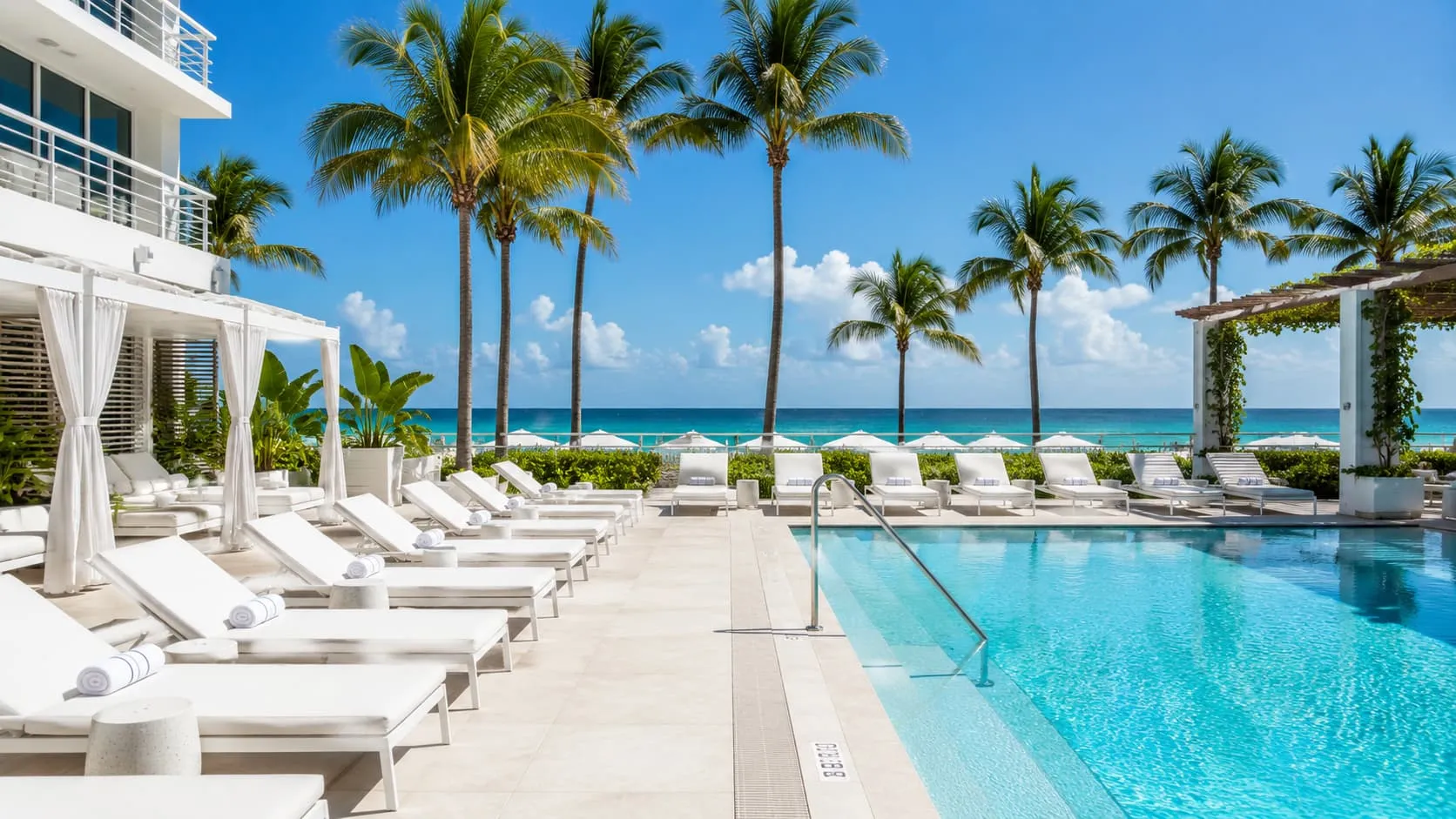
Miami doesn't have an off-season. While venues in Chicago or Boston are doing skeleton crew bookings in February, Miami is packed South Beach hotel ballrooms running back-to-back, Biscayne Bay waterfront properties stacking weddings and corporate dinners, Wynwood event spaces pulling double duty as gallery nights flip into private buyouts. If you manage a hotel banquet department, a standalone venue, or a restaurant that converts to private dining on weekends, your furniture inventory is a working asset, not a decoration. The decisions you make at spec time chair stackability, table widths, material durability show up directly in your labor costs, your reset times, and the range of bookings you can actually say yes to.
What Miami's Event Market Actually Demands
Few cities ask as much of their banquet furniture as Miami does. A single South Beach hotel might run a fashion industry dinner Friday night, a quinceañera Saturday afternoon, and a corporate breakfast Sunday morning different room configurations, different guest counts, different aesthetics the client paid for and expects to see. That's the reality, and it's why flexibility isn't a nice-to-have for banquet event furniture Miami operators; it's the baseline requirement.
Stackable banquet chairs, folding tables in multiple widths and lengths, and modular seating layouts let a crew reset a room in a few hours rather than a full day. The venues that execute this well have their storage systems dialed in: rolling carts, labeled bays, and clear setup guides for each event type. Staff turnover in this market is real, and any system that depends on one person's institutional knowledge is a liability. Build the storage infrastructure right from the start and it pays back quickly.
Chair and Table Choices for South Beach and Brickell Properties
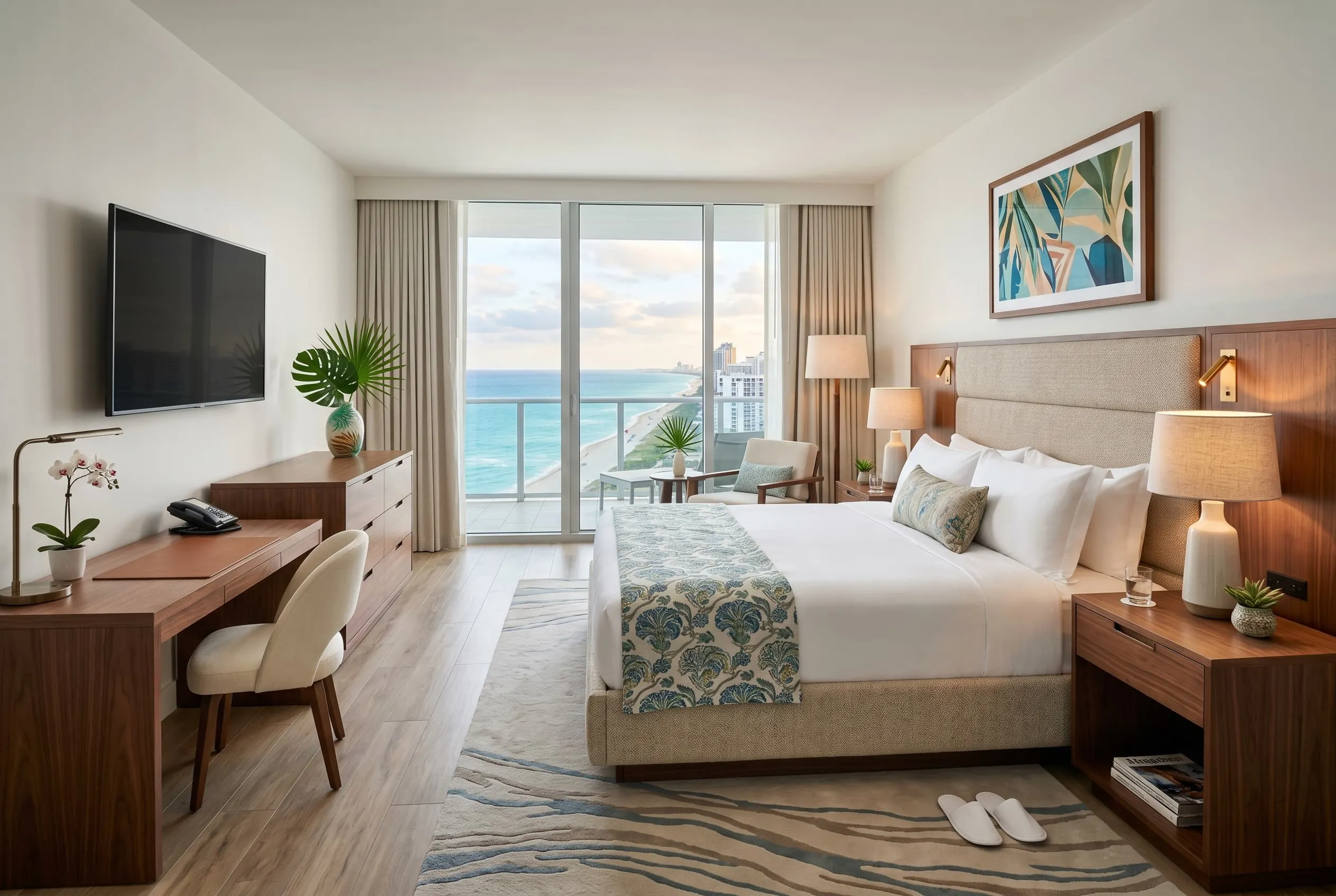
In Miami's premium hospitality corridors the Art Deco properties along Collins Avenue, the newer towers in Brickell what the furniture looks like is part of the product. Chiavari chairs remain a workhorse for formal events because they read as polished without needing a tablecloth to make them presentable. Gold and silver finishes move well for weddings, quinceañeras, and Latin-influenced celebrations where presentation carries real cultural weight and clients are paying attention to the details.
For venues in Wynwood or the Design District, the requests skew differently: ghost chairs, clear acrylic stackers, bentwood minimalism pieces that recede into a curated space instead of competing with it. Folding tables with quality laminates in neutral tones give you the widest range. They work under linens for black-tie setups and hold up fine uncovered for cocktail hour or casual corporate formats. Before you commit to a table, look at it both dressed and bare that's how it's going to live in your inventory, and both versions need to be something you can put in front of a client.
Outdoor and Pool Deck Furniture Considerations
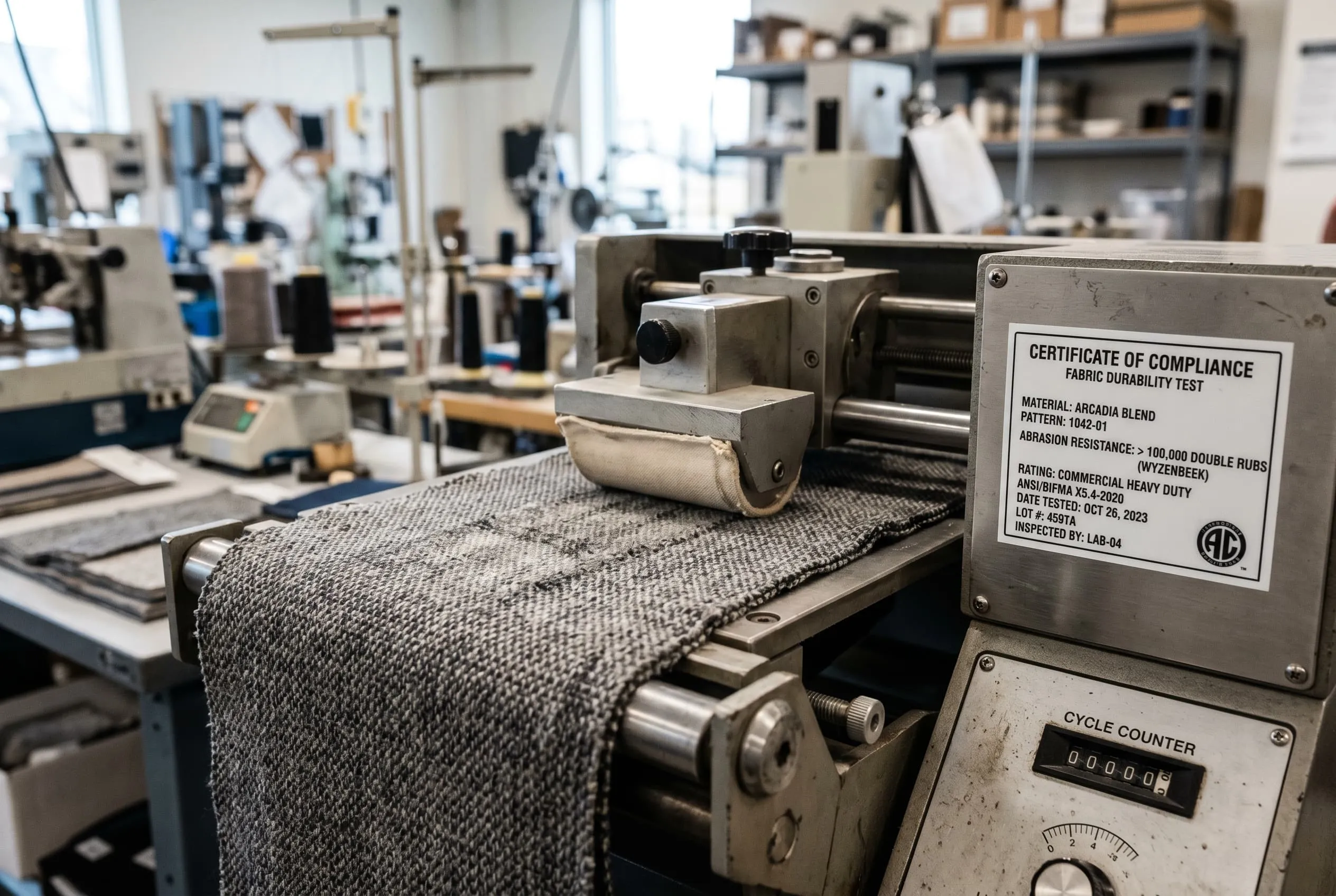
Miami's outdoor event season runs twelve months. That's genuinely different from almost any other major American market, and it puts specific pressure on materials that venues in colder cities never have to think about. Pool deck furniture for event use has to survive UV exposure, ocean salt air, humidity, and repeated cleanings with industrial products all without fading, rusting, or softening structurally. This is the one category where speccing down on materials guarantees you'll be replacing inventory on a cycle that wipes out the savings.
Aluminum frames with powder-coat finishes, resin wicker over aluminum cores, and marine-grade stainless hardware are what experienced Miami operators reach for. Weight is worth thinking through carefully: pool deck furniture your staff reconfigures between events needs to be light enough for one person to handle without being so light that it moves in the coastal wind. Tables with umbrella holes and proper weighted bases give you shade flexibility for daytime events without locking the whole deck into a single overhead structure.
Storage, Logistics, and Working with Suppliers
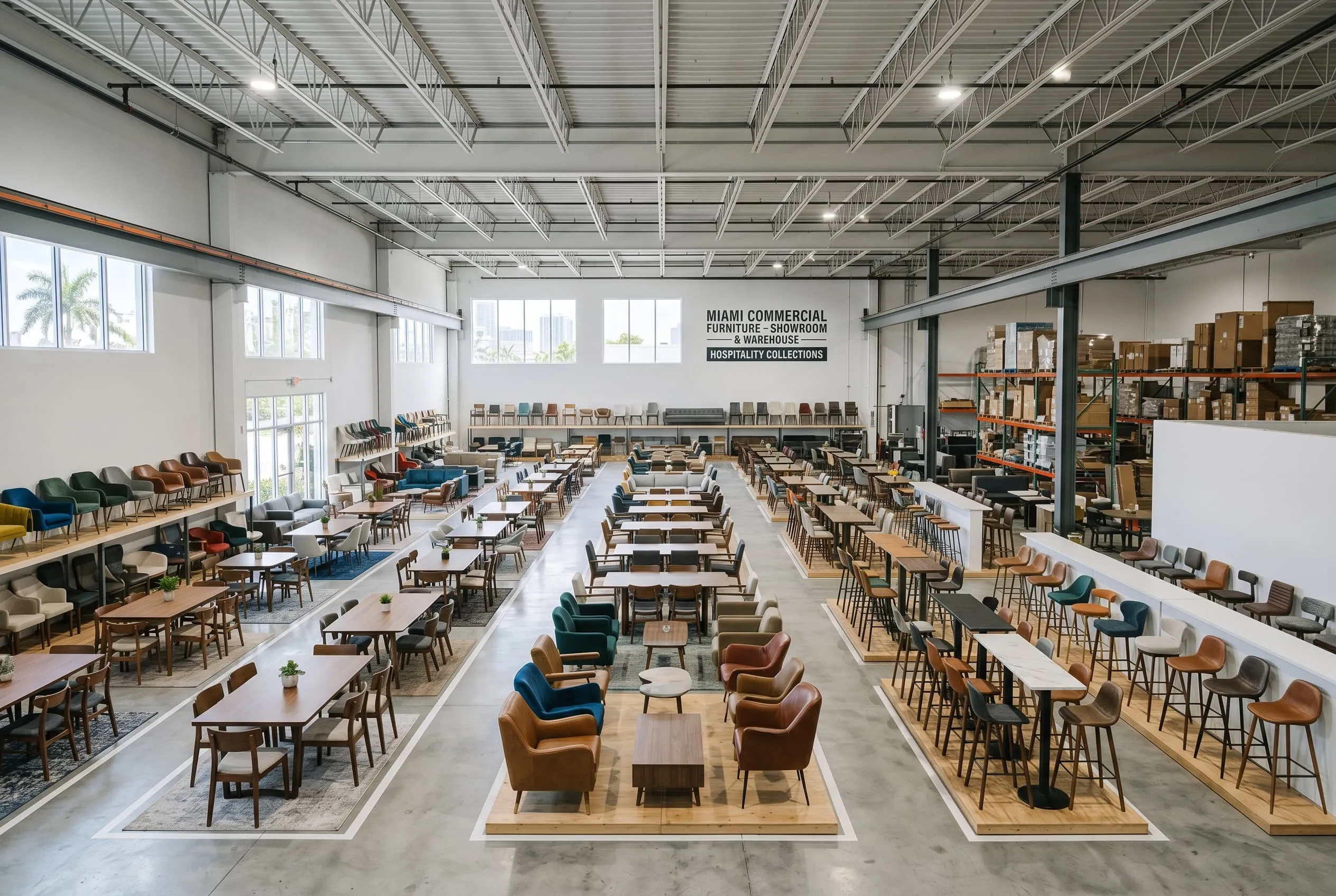
The logistics side of banquet event furniture Miami purchasing doesn't get talked about enough. How do you receive a large shipment? Where does inventory actually live day-to-day? What does your replacement cycle look like at year three and year five? These questions matter because Miami's real estate costs mean back-of-house storage is tight especially in older South Beach properties where historic preservation kept the facades but left interior layouts with little room to work with. If your storage footprint is constrained, that constraint should drive your spec: chairs that stack to twelve high take up meaningfully less floor space than chairs that top out at six, and over time that math adds up.
A supplier who actually knows the Miami market is worth finding and sticking with. That means someone who understands lead times around PortMiami activity, the demand spikes that hit every winter when northern visitors fill the city, and the compressed timelines boutique hotel projects run when they're trying to open before Art Basel week. When you're evaluating suppliers, push on warranty terms for outdoor pieces specifically and understand what the replacement parts picture looks like for anything you expect to use hard for five or more years. A chair that's discontinued in year two of a ten-year program is a problem.
If you're specifying furniture for a Miami venue or banquet program and want to get clear on the commercial-grade requirements that protect your investment long-term, the resources below are a good place to start.
Pricing for banquet and event furniture in Miami depends on quantities, finishes, and your delivery window, so a project-specific quote beats any list figure. Request a quote to get yours.