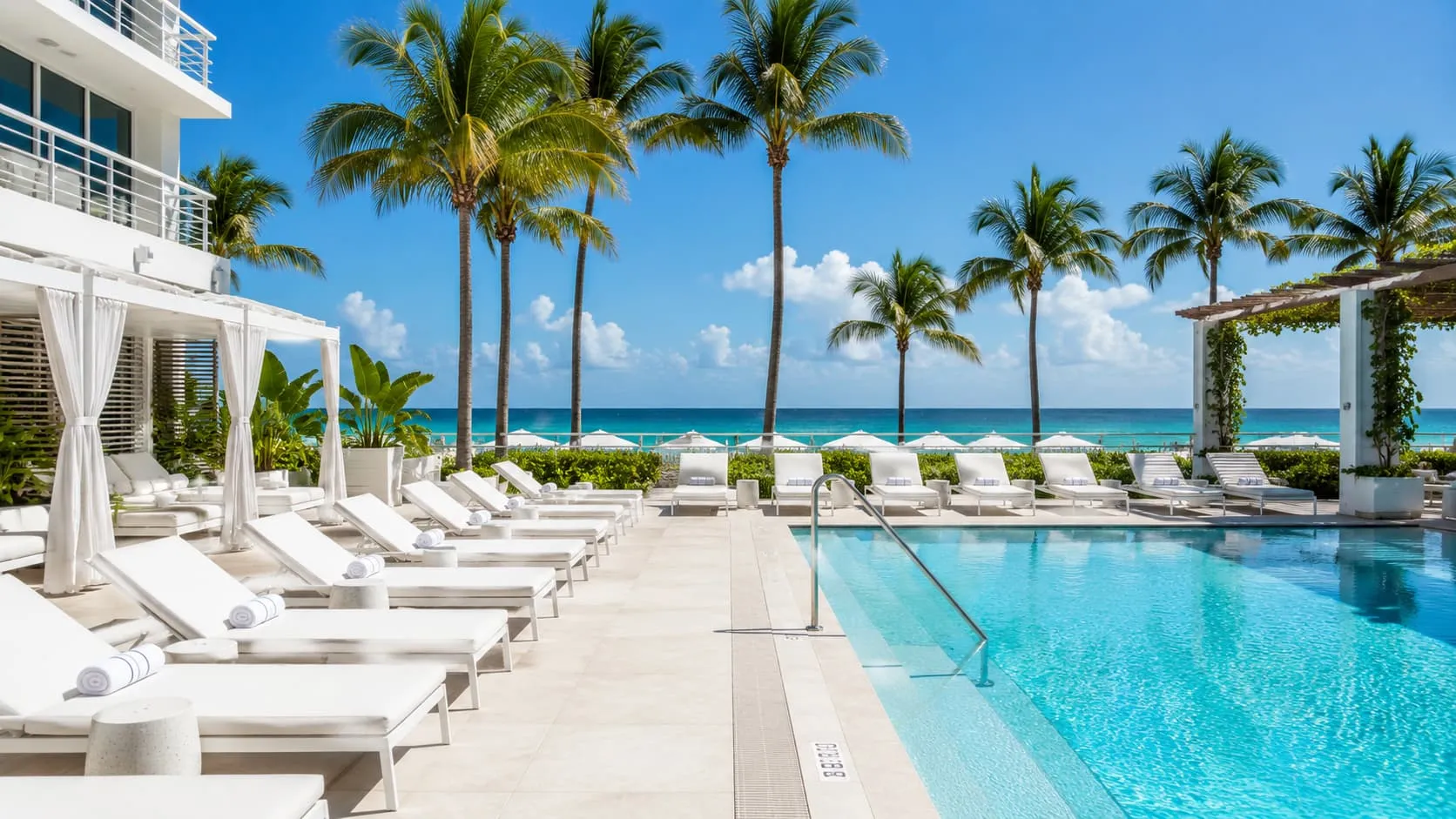
Miami's bar and lounge market is its own animal. Brickell rooftop bars run finance crowds five nights a week. Latin cocktail lounges in Little Havana close at 3 a.m. South Beach hotel bars treat their furniture as part of the brand identity if the chairs look cheap, the whole concept reads cheap. Then every December, Art Basel floods the boutique hotel market to capacity and holds it there for two weeks straight. In this environment, your bar lounge furniture Miami selection is a pure business decision. Pieces that fail under pressure are not just a replacement cost they tell guests the operation does not take itself seriously.
What Commercial Barstools Actually Need to Survive Miami Volume
A hotel lobby bar on Miami Beach or a waterfront cocktail lounge runs hard. Guests sit, pivot, drag, and lean against barstools across eight to ten hours of service. Open-air terraces bring salt air and humidity that will find any weak point in a frame finish. Condensation from cold glasses, spilled drinks, and the oils from constant skin contact break down upholstery faster than operators expect the first time they go through it.
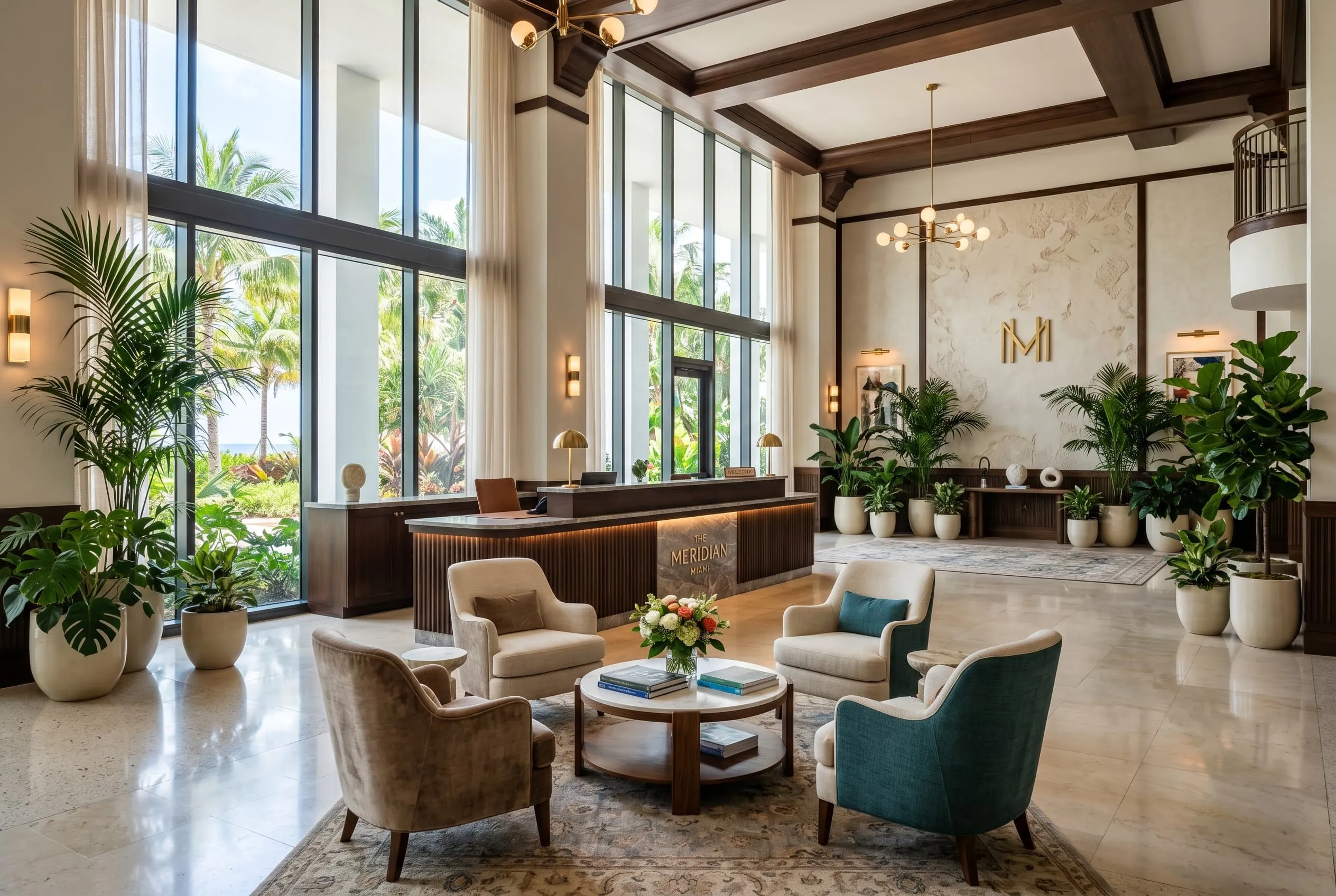
Start with frame material. Powder-coated steel is the right call for indoor venues where you want a refined look and predictable costs. Anything that will live on a pool deck or open terrace needs powder-coated aluminum instead lighter, genuinely rust-resistant, and available in every finish from matte black to brushed bronze. Pay attention to footrest gauge. A thin footrest tube on a high-volume barstool will bend within a season at a venue doing 300-plus covers a night. Specify a minimum 1.5-inch diameter tube on any stool expected to take that kind of punishment. On seat height: standard bar service calls for 28 to 30 inches. High-top tables need 30 inches and up get this wrong and you create a discomfort issue that guests notice immediately, even if they cannot name it.
Lounge Seating: Durability Without Sacrificing the Aesthetic
Miami's hospitality market has high aesthetic expectations, and the lounge seating category is where that tension shows up most. You are furnishing spaces that need to photograph well for Instagram, survive Art Basel crowds without looking tired by January, and still hold up eighteen months later when the boutique hotel decides to refresh for a new season. Low-profile velvet tub chairs, modular sectionals, and curved accent chairs in rich colorways are everywhere in the Design District and South Beach for good reason they deliver on the look. The question is whether they are built for commercial use or residential use dressed up for a hospitality sale.
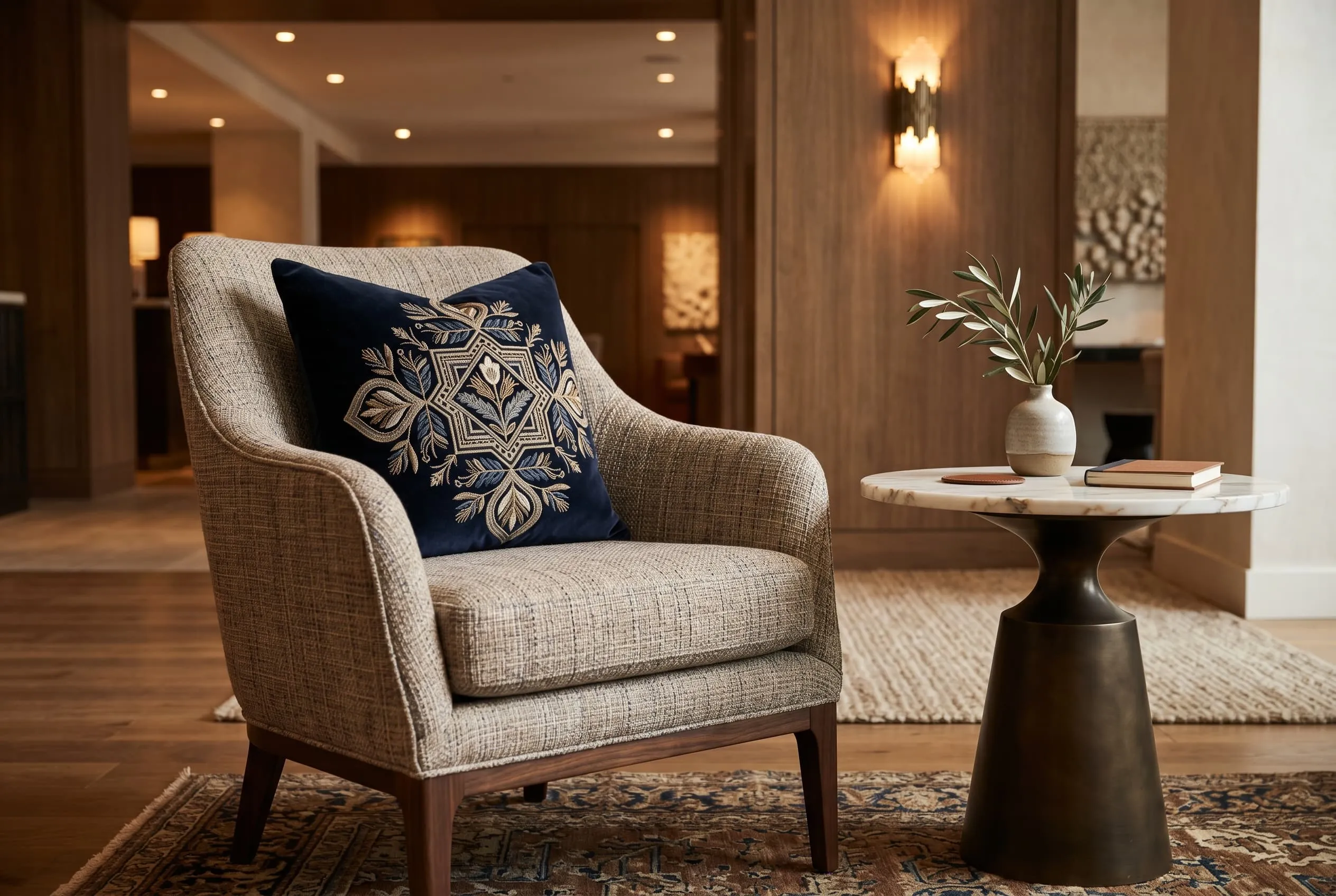
Performance fabric is non-negotiable. Residential velvet falls apart in a commercial lounge within months. Commercial-grade performance velvets are rated to 100,000 double rubs minimum, treated for stain and moisture resistance, and available in the same saturated color palette that makes velvet compelling in the first place. For Latin-influenced cocktail lounges and dining rooms, deep jewel tones, warm terracotta, and saturated greens match the design language naturally. For Art Deco restorations in South Beach, cream, coral, and ocean blue with chrome or brushed gold accents hit the period notes without compromising the commercial spec. Do not overlook the foam. High-resilience foam at 1.8 density minimum holds its shape under daily use. Anything below that, and you are looking at flat cushions within a year a slow-burn problem that operators often attribute to the wrong cause when they start replacing pieces.
High-Top Tables and the Pool Deck Problem
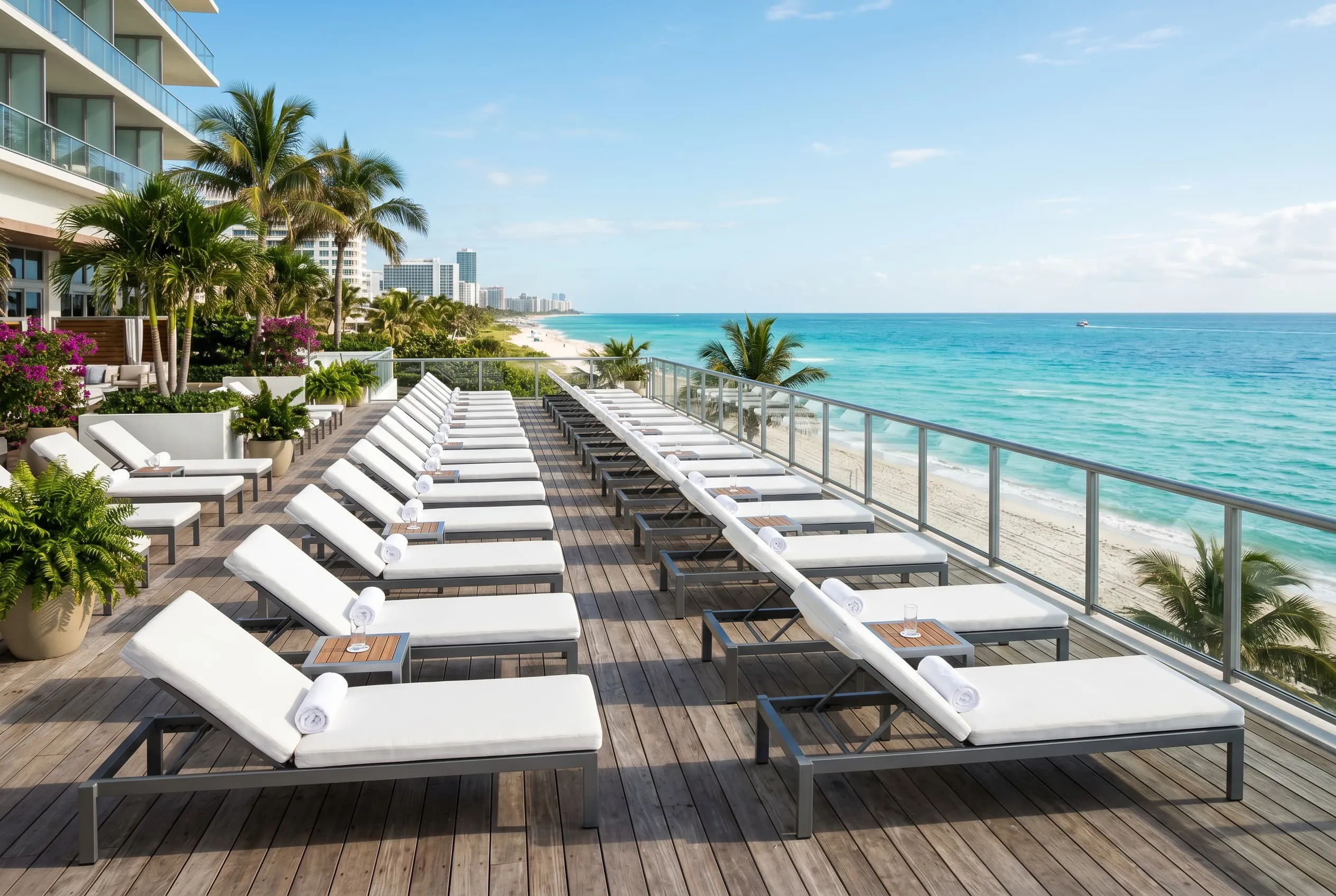
Miami's outdoor hospitality season runs twelve months a year, which makes pool deck and terrace furniture a distinct purchasing category. High-tops on pool decks take a specific kind of abuse: all-day sun, water contact from wet guests and poolside service, and the physical stress of crowds leaning and pressing against them during events. A high-top that works perfectly indoors at a Brickell cocktail bar is not automatically the right product for an outdoor pool environment.
For outdoor high-tops, cast aluminum or welded aluminum frames with a marine-grade powder coat finish are the commercial standard. Tabletop material is where operators consistently make costly calls. Tempered glass looks right, but on a busy pool deck it chips and scratches fast, and the maintenance adds up. Solid compact laminate or Dekton tops give you a comparable clean surface that holds up against moisture, UV, staining, and scratching at a fraction of the upkeep. One detail worth specifying upfront: umbrella holes on any high-top going into direct sun exposure. Miami's afternoon heat from June through September makes shade a genuine guest comfort issue, not a nice-to-have.
Sourcing Bar Lounge Furniture Miami Operators Can Count On
The supplier relationship matters as much as the product when you are sourcing bar lounge furniture Miami venues need at commercial volume. You need lead times that work with pre-opening schedules, the ability to reorder specific frames and fabrics when a piece needs repair, and a supplier who actually understands hospitality specs not one selling residential product at a commercial markup with a different tag on it.
Work with suppliers who have active hospitality project experience, can hand you test data on fabric ratings and frame load capacity, and know Miami's climate demands for outdoor and transitional spaces. Custom upholstery color matching is standard practice for any boutique hotel or branded bar concept, so confirm your supplier can handle it without minimum orders that make a single reorder impractical. If you are working on an Art Deco restoration in South Beach, get explicit confirmation that the supplier can match period-appropriate silhouettes in contract-grade construction. That combination is more specific than it sounds, and a supplier who does not work in that space regularly will often quote you something that looks close on a spec sheet and misses in person.
The right furniture investment pays back fast in Miami's volume-driven market. Pieces that hold up mean fewer replacement cycles, a consistent look that supports the brand, and guests who settle in and stay longer because the space simply feels right.
If you are sourcing bar and lounge furniture for your Miami property, the fastest way to real numbers is to tell us what you need. Request a quote with your quantities and timeline.