Baltimore's event market runs at a scale and a pace that reflects the city's unique combination of assets. The Baltimore Convention Center handles major national conferences healthcare, government, trade and spills event business into the hotel ballrooms and meeting spaces of every major Inner Harbor property. Johns Hopkins Medicine, the University of Maryland Medical System, and Baltimore's broader academic medical infrastructure generate a continuous calendar of symposia, conferences, and fundraising galas that keep hotel event spaces booked year-round. Banquet and event furniture in this market doesn't get a rest.
Baltimore's Banquet and Event Market
The Baltimore Convention Center's footprint 1.2 million square feet on Pratt Street, connected by skybridge to several major hotels sets the scale for event furniture demand in the Inner Harbor corridor. When a national medical conference fills the Convention Center, the adjacent hotel properties are simultaneously running breakout meetings, receptions, working dinners, and post-session networking events. A single convention week can put 50,000 or more covers through hotel ballrooms that are already running their own independent group business.
Banquet chairs in this environment need to be specified for daily stacking, frequent reconfiguration, and continuous use. The standard specification for a Convention Center-adjacent property is a commercial chiavari or ballroom chair in polished or brushed metal, weight-rated to 300 lbs, with a seat pad in a commercial-grade fabric rated for 100,000+ double rubs. The chair frame needs to withstand daily stacking six to eight high on a transport dolly without deforming or scratching. Low-quality banquet chair frames show deformation within a year of this use pattern commercial-grade frames do not.
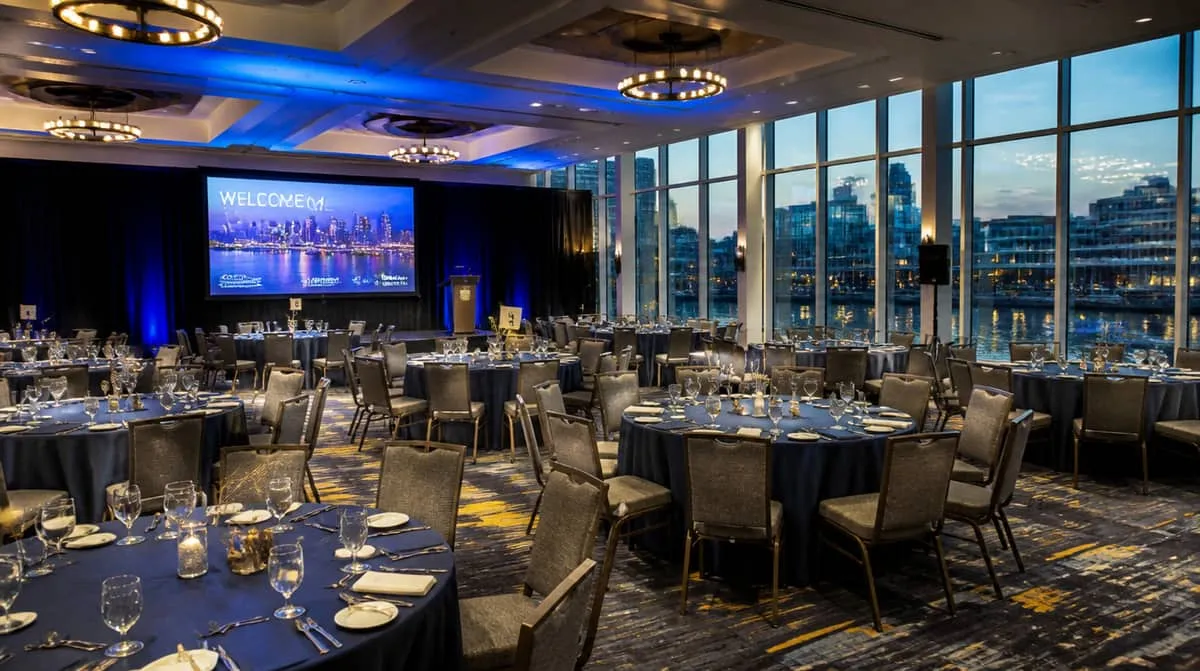
Medical conference and academic event business from the Hopkins and UMMS orbit tends to run more formal than general convention business. Academic galas and hospital fundraising events hosted in Baltimore's premier hotel ballrooms the Marriott, the Hyatt, the Hilton expect a furniture presentation that matches the event's prestige. That means ballroom chairs with upholstered seat pads in a cohesive fabric program, clean sightlines in the room, and no visible transport damage on chair frames. Healthcare donors and academic luminaries notice the room's presentation quality.
Federal contractor and government-adjacent events, driven by Baltimore's proximity to Washington D.C. and the concentration of federal agency offices in the Maryland suburbs, tend toward efficient mid-scale meeting formats: 50 to 200 person working sessions, training events, and regulatory meetings. These events need banquet chairs that configure quickly into classroom, theater, and conference-style arrangements, tables that fold flat for transport, and equipment that can be moved by two people without specialized tools.
Design and Specification for Baltimore Event Furniture
Baltimore's ballroom and event space aesthetic has shifted toward the same brick-and-harbor contemporary palette that defines the city's broader hospitality design vocabulary. Even in formal ballroom settings, the design trend is away from the gold-chiavari-on-ivory-linens formula and toward furniture that reads as a deliberate design statement about Baltimore's character.
Gold chiavari chairs remain a specification for traditional hotel ballrooms and aren't going away they're still the default for wedding events, which represent a significant revenue category for every major Baltimore hotel property. But charcoal and gunmetal chiavari chairs, garden-style bamboo chairs in warm wood tones, and upholstered ballroom chairs in a deep navy or slate fabric are all gaining ground as operators update event furniture programs.
For pre-function and reception areas, lounge chairs and ottomans provide a hospitality-forward alternative to banquet chairs in standing-room cocktail configurations. Modular lounge groupings allow event coordinators to configure flexible reception spaces that feel designed rather than merely functional. In Baltimore's historic hotel properties many of which have pre-function spaces with original terrazzo, ornate plasterwork, and period chandeliers lounge seating with period-referencing upholstery and frame finishes integrates with the building's architecture rather than fighting it.
Procurement and Inventory Planning
Event furniture procurement for Baltimore hotels involves both the initial outfitting and ongoing inventory management. Banquet chair fleets need to be sized not just for the property's largest ballroom configuration but for simultaneous event use across multiple spaces. A hotel running back-to-back conference and wedding weekends needs enough chair inventory to set two rooms at full capacity without pulling from one to serve the other.
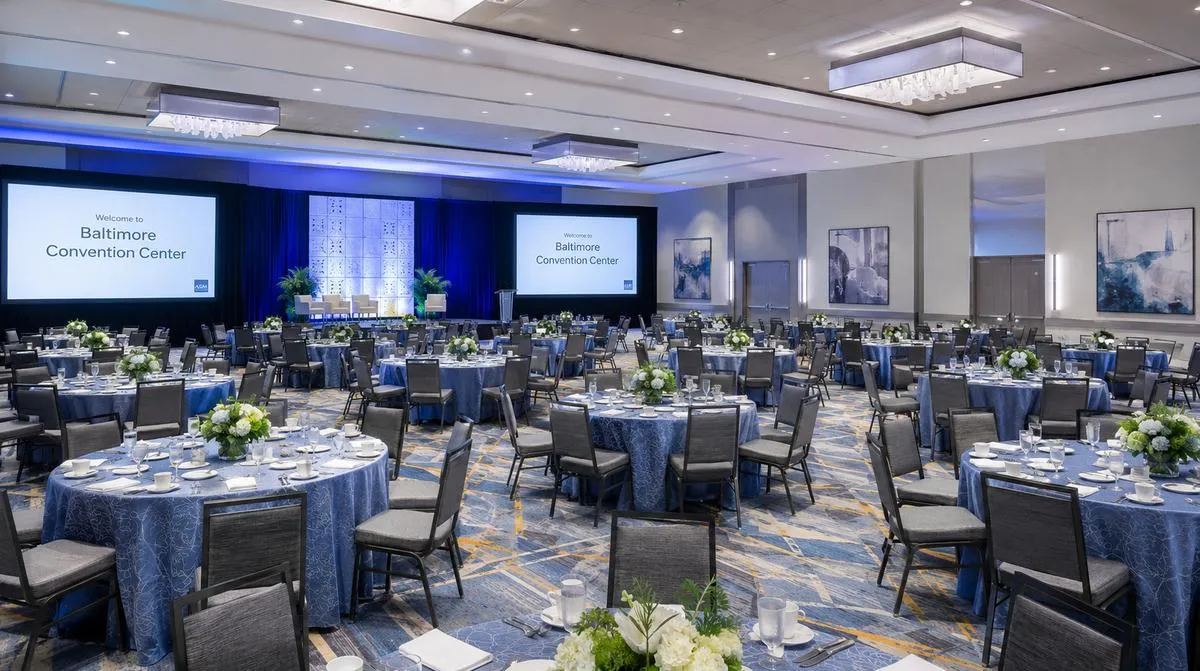
Lead times for commercial banquet chairs run six to ten weeks for standard specifications and ten to sixteen weeks for custom upholstery programs. Coordinating chair delivery with ballroom renovation or pre-opening schedules requires procurement to begin months before the completion date.
Frame durability testing documentation BIFMA standards or equivalent should be part of the supplier's standard specification package for Baltimore event furniture. Request it at the point of specification, not after a warranty claim is needed.
Every Baltimore venue has its own volume, layout, and turnaround demands, and banquet and event furniture pricing follows from those specifics. Request a quote and we will scope it to your project.
Related reading
- Banquet furniture cost guide: what venues actually pay
- Banquet chairs: the complete commercial buying guide
- Ballroom furniture guide for event venues
- What is contract furniture
- Hotel furniture supplier guide
- Hospitality furniture supplier guide
- Banquet chairs for hotel ballrooms
- Event lounge chairs and reception seating
- Ottomans for event and pre-function spaces
- Commercial furniture in Maryland