Baltimore has a bar culture that predates most American cities and still operates with a straightforwardness that newer markets can't manufacture. Fells Point has taverns that have been continuous operations since the colonial period. The Inner Harbor hotel bar corridor runs at convention pace hundreds of covers nightly during major events at the Baltimore Convention Center. Federal Hill's neighborhood bar scene serves a local residential crowd that expects durability and character in equal measure. Across all of these contexts, bar and lounge furniture faces demands that residential-grade and light-commercial products simply cannot meet.
Baltimore's Bar and Lounge Market
The Baltimore Convention Center generates significant nightly bar volume at adjacent hotel properties. When a major medical conference driven by Johns Hopkins Medicine or the University of Maryland Medical System's connection to the broader healthcare industry fills the Convention Center and books out the surrounding hotel corridor, hotel bar lounges are operating at full capacity from 5 PM to midnight, often seven nights running. Seating in these environments takes concentrated, sustained use that typical hotel lounges experience only during peak periods.
Barstools in Convention Center-adjacent hotel bars need welded steel frames, not screwed or bolted construction. Wobble is the enemy in a high-volume bar environment a loose barstool is a liability risk, a maintenance call, and a guest complaint waiting to happen. Seat pads should be in a commercial vinyl or performance leather with double-stitched seams rated for 100,000+ flex cycles. Swivel mechanisms, if specified, should be rated for commercial use and serviced on a preventive maintenance schedule.
Fells Point is a different specification environment. The neighborhood's historic taverns many operating in buildings with original 18th and 19th century fabric have a visual character that demands furniture to match. Raw wood bar tops with worn patina, brick walls, low exposed-beam ceilings. Barstools here work best in a bentwood or solid oak construction with minimal ornamentation, finished in a medium stain that looks like it's been there for decades. The goal is furniture that disappears into the room's history rather than announcing itself as a recent purchase.
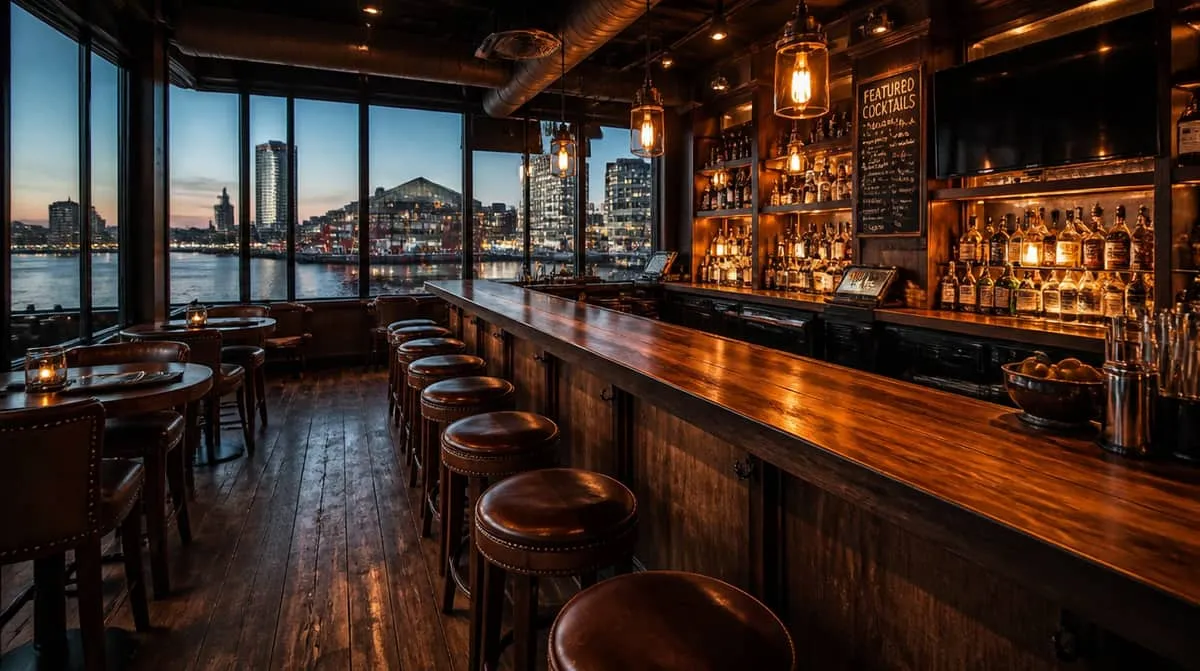
Federal Hill's neighborhood bar-restaurants present a hybrid specification: the room needs to function as a restaurant through dinner service and shift to a standing-room bar by 10 PM. Lounge chairs and low seating that works for dining becomes awkward in a late-night bar environment. The better approach for these properties is to define clear zones a lounge corner with low seating that stays consistent across both service modes, and a bar and high-top zone that serves both dinner and late-night bar traffic without reconfiguration.
Design Specifications for Baltimore Bars and Lounges
Baltimore's bar and lounge aesthetic pulls directly from its working waterfront heritage. The Chesapeake Bay's material vocabulary aged rope, weathered steel, raw oyster shell, maritime brass fittings translates into a bar design language that the city's operators have made their own. Furniture specifications that reference these materials, even abstractly, read as Baltimore-authentic rather than generically industrial.
Metal barstool frames in a flat black or raw steel finish with wood seat inserts in a medium oak or walnut tone are a Baltimore-fluent specification. The material combination references maritime industry without being literal about it no anchor motifs required. Paired with bar tops in a butcher block or live-edge slab and back bar shelving in reclaimed wood, the furniture contributes to a room that reads as genuinely local.
Hotel lounge specifications in Harbor East and the Inner Harbor corridor skew more polished but should maintain the harbor palette. Lounge chairs in a deep slate blue or charcoal performance fabric with aged brass leg details, sofas in a warm oyster linen-blend, and ottomans in a cognac leather that pulls the warmth of the brick and wood tones into the seating grouping. The effect is refined without being generic it reads as a specific place, not a brand-standard hotel lounge.
Outdoor bar seating on waterfront decks requires UV-stable, moisture-resistant specs: powder-coated aluminum frames, solution-dyed acrylic seat fabric, and teak or composite footrests that handle wet environments without degradation.
Procurement and Lead Times
Bar and lounge furniture procurement benefits from consolidating the order barstools, lounge seating, and accent pieces under one supplier relationship rather than splitting across multiple vendors. Consolidated orders simplify delivery coordination, reduce the risk of finish-tone mismatches between lots, and typically improve production priority at the manufacturer.
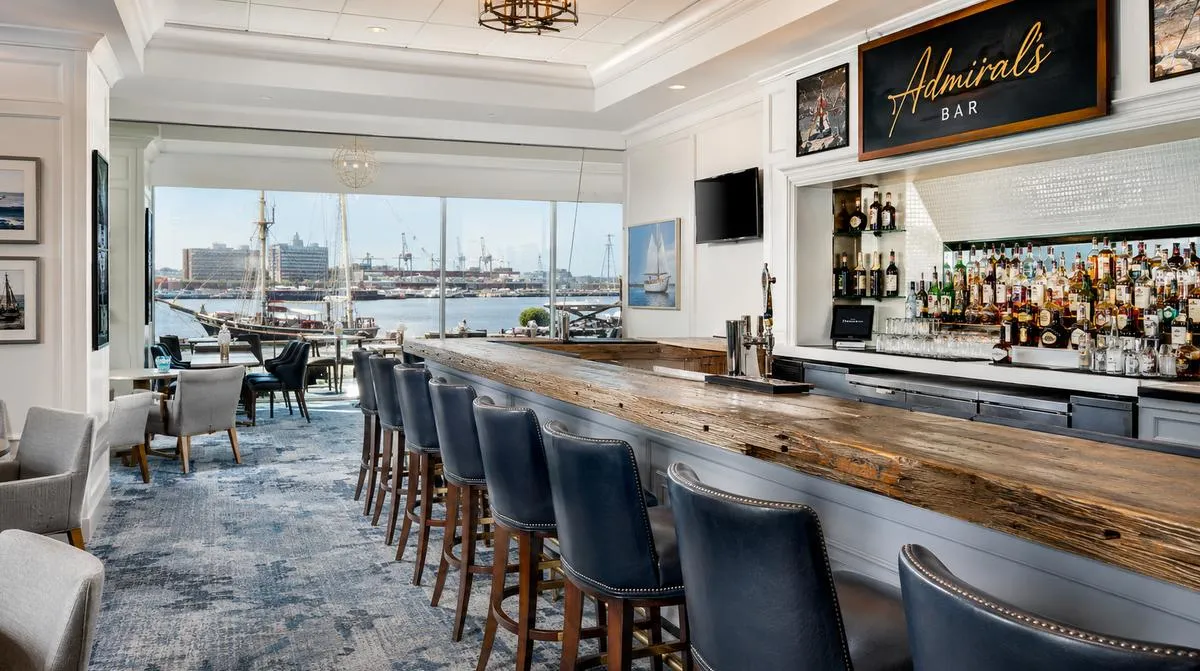
Lead times for commercial barstools run six to ten weeks for in-stock frames with custom seat pad upholstery. Full custom specifications frame finish, seat material, and dimension modifications extend to twelve to sixteen weeks. Lounge seating with custom upholstery typically runs ten to fourteen weeks.
Baltimore's Inner Harbor loading dock constraints and Fells Point's narrow access streets make white-glove delivery with on-site assembly strongly preferable to dock-and-drop logistics.
Ready to spec bar and lounge furniture for your Baltimore project? Send us the details and we will price it around your requirements. Request a quote to start.