Boutique hotels in Baltimore occupy a distinct competitive position: they sit between the brand-flagged convention blocks at the Inner Harbor and the short-term rental inventory that has proliferated in the city's historic neighborhoods. To win against both, they have to deliver something neither can a designed experience that feels genuinely local, authentically crafted, and immediately recognizable as Baltimore. The furniture that fills those rooms is not a background element. It is the product. Specification decisions that would be afterthoughts in a select-service property become the central design challenge in a boutique context.
Baltimore's Boutique Hotel Market
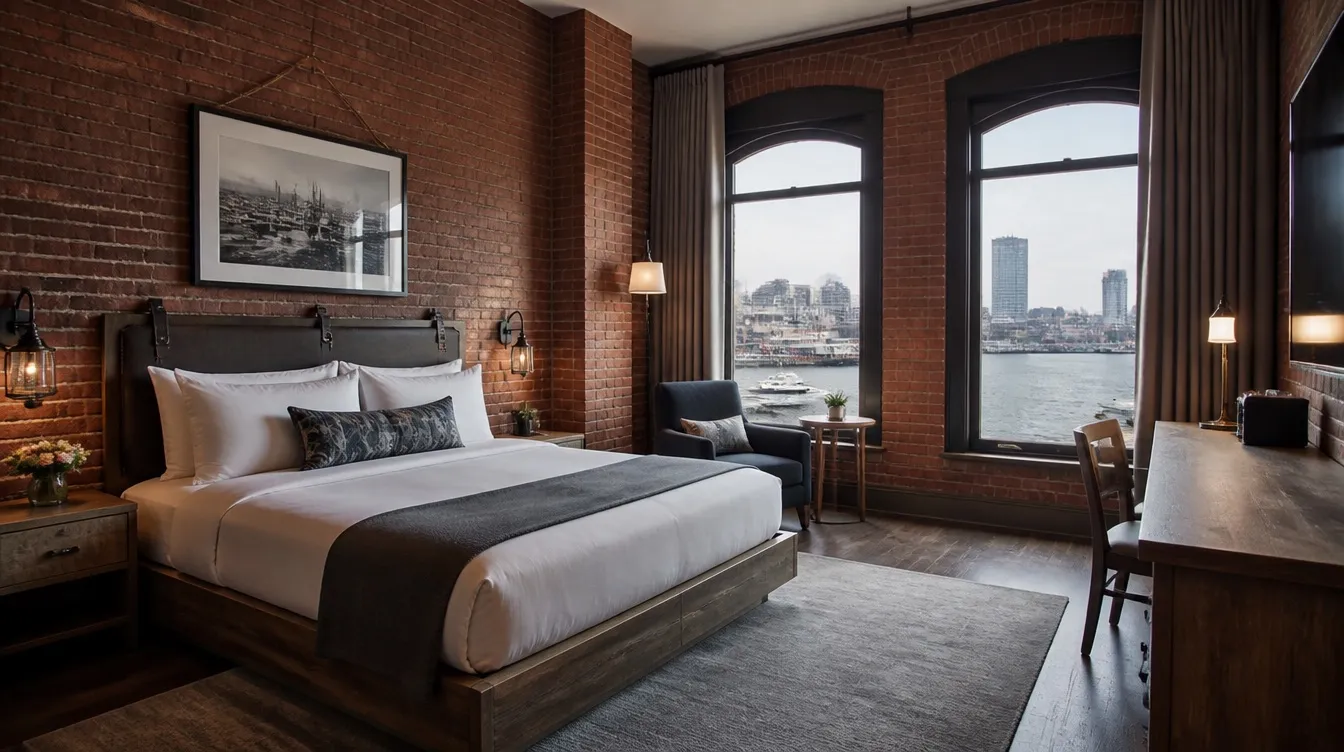
Fells Point is the city's most active boutique hotel corridor. The neighborhood's 18th-century rowhouse fabric, cobblestone streets, and proximity to the waterfront create a setting that attracts design-forward travelers willing to pay a premium for authenticity. Properties here are typically under 80 keys, converting historic commercial or residential buildings with irregular floor plans, exposed structural brick, timber beams, and uneven original hardwood. The furniture spec has to work within those constraints not in spite of them.
Lounge chairs in Fells Point boutique lobbies need to be proportioned for lower-ceiling rooms and visually cohesive with exposed masonry. Overstuffed contemporary pieces look out of place. The right approach is mid-century-influenced forms in warm leather or textured linen, scaled to the room, in a palette that reads against rather than clashes with the original brick tones.
Station North, Baltimore's arts district, has attracted a newer generation of boutique properties targeting the creative traveler designers, musicians, academics visiting the nearby Maryland Institute College of Art. These hotels have more latitude to experiment with furniture: gallery-inspired lobby seating, artist-commissioned upholstery textiles, and pieces with obvious craft provenance. The furniture here is often the starting point for the hotel's visual identity rather than a response to an existing building aesthetic.
Harbor East attracts the boutique traveler who wants design quality with the convenience of walkable dining and access to the Convention Center. These properties operate at slightly higher key counts often 100 to 150 rooms and need furniture that holds up to more aggressive occupancy while still reading as boutique rather than brand-flagged. Sofas and lobby seating in this tier need to be durable enough for continuous public use but styled with the restraint and specificity that distinguishes boutique from select-service.
Healthcare visitor traffic from Johns Hopkins and UMMS adds an occupancy floor that pure leisure boutique markets don't always have. Baltimore boutiques benefit from this base but it means guestroom furniture needs to prioritize comfort and practical functionality alongside aesthetic distinctiveness.
Boutique Design Specifications for Baltimore
Baltimore's boutique hotel design language has cohered around a clear aesthetic reference: the working waterfront. Chesapeake Bay blue-grey, exposed brick amber, maritime rope, weathered steel, aged brass, warm walnut. These aren't borrowed trends from another city they're Baltimore's own material vocabulary, and boutique hotels that deploy them credibly rather than superficially earn the design legitimacy they're competing on.
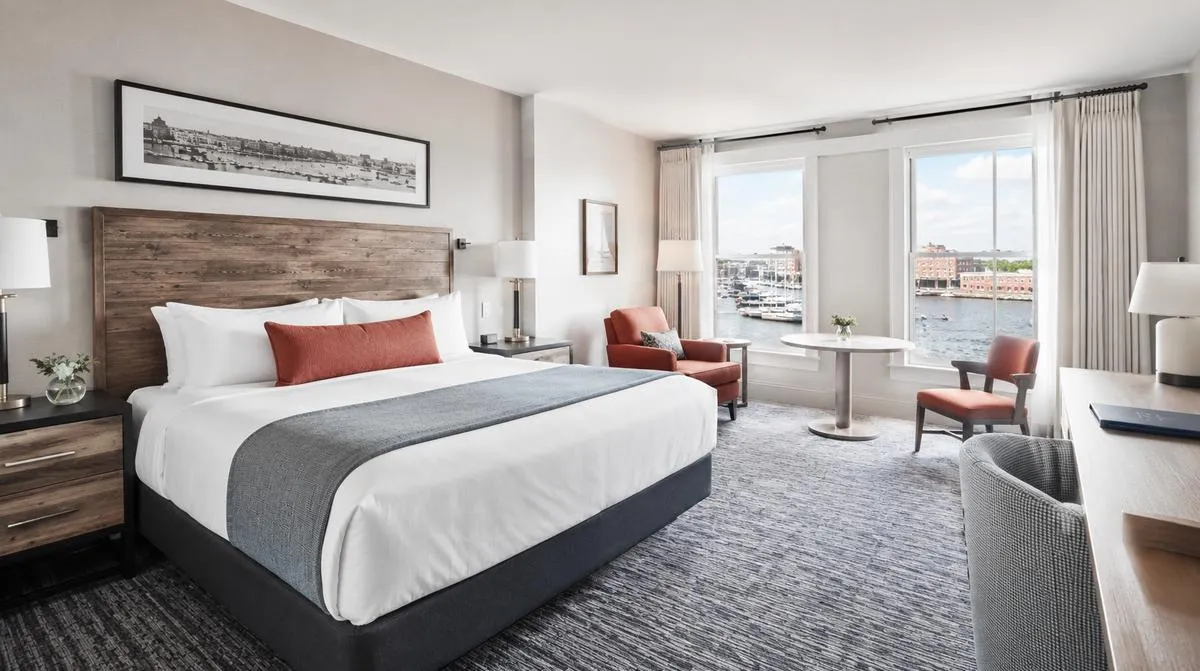
For guestrooms, headboards are the most visible specification decision. A channel-tufted headboard in a deep navy performance fabric immediately anchors the room in Baltimore's coastal character. Pair that with casegoods in a wire-brushed walnut finish and a bedside lounge chair in a warm cognac leather and the room has a complete design story. Every element references the same material and color vocabulary without being repetitive.
Lobby and common area specifications benefit from deliberate mix: not everything should be matching or matching adjacent. An aged-brass pendant fixture over a raw wood communal table, flanked by sofas in a charcoal wool-blend and leather accent chairs this kind of intentional tension reads as curated rather than decorated. It's the visual signal boutique travelers are looking for when they choose this property category.
Contract specifications remain non-negotiable even at the boutique tier. Maryland NFPA 101 fire safety standards apply to all commercial hospitality furniture regardless of property size. COM specifications with boutique-sourced textiles need to be verified for commercial Martindale ratings before they're committed to production.
Procurement for Boutique Baltimore Properties
Boutique hotel procurement differs from full-service hotel buying in one critical way: the quantities are smaller, which means fewer suppliers will prioritize your timeline. A 60-key property ordering 120 chairs and 30 sofas competes for production slots against full-service hotels ordering ten times that volume.
Working with a supplier who services the boutique segment deliberately not as a residual category matters. Lead time visibility, willingness to combine custom and in-stock orders, and flexibility on phased delivery are the variables that distinguish a supplier worth the relationship from one who treats small orders as low priority.
Plan procurement conversations six to nine months before a target opening or renovation date. Custom upholstery for boutique specifications, particularly COM work with specialty textiles, requires the longest lead times and the least tolerance for late changes.
If you are sourcing boutique hotel furniture for your Baltimore property, the fastest way to real numbers is to tell us what you need. Request a quote with your quantities and timeline.