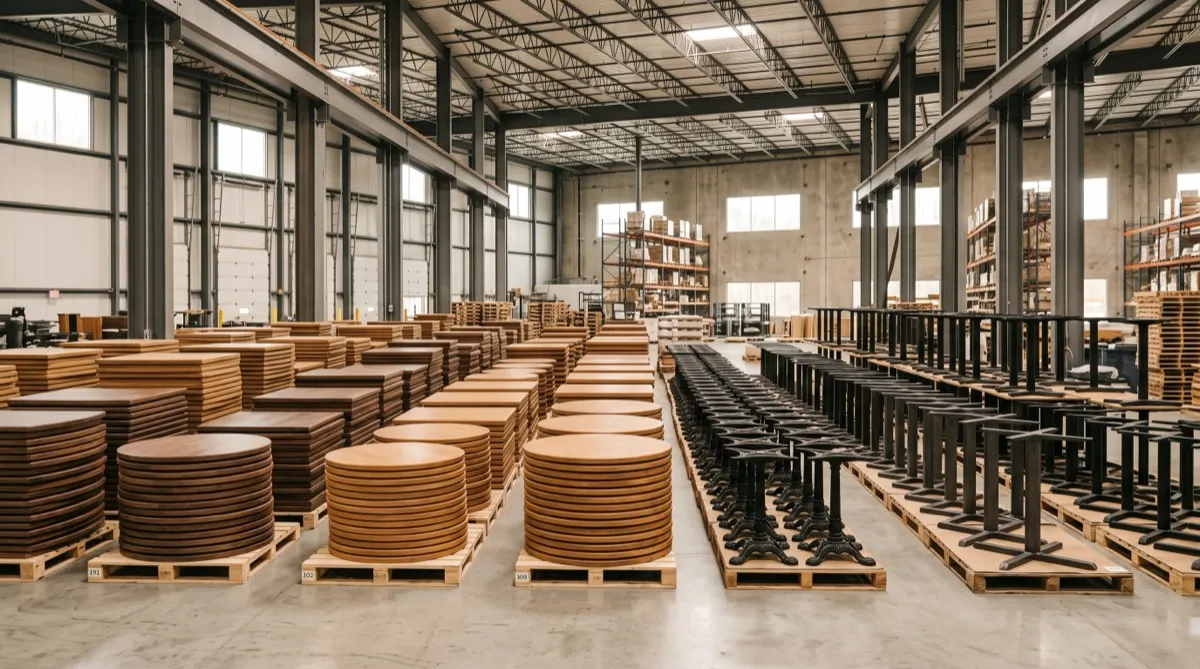
Restaurant table tops wholesale means buying tops and bases separately, at commercial spec, direct from a supplier rather than through a retail furniture store. It costs less per unit than buying assembled tables at retail, but only if you match the top material and the base correctly and order both pieces from the same commercial line. Get the pairing wrong and you end up with wobble, mismatched heights, or a base rated for a lighter top than the one sitting on it.
This guide covers what to check before you place a bulk order of restaurant table tops and bases.
Why restaurants buy tops and bases separately
Retail dining tables come as a single fixed unit. Restaurants rarely buy that way, and there are two good reasons why. First, tops wear out faster than bases. A laminate top in daily service takes scuffs, hot pans, and constant wiping, while a steel or cast iron base can outlast three or four top replacements. Buying them separately means you can replace a worn top without throwing away a perfectly good base. Second, separating the purchase lets you standardize on one base across multiple top styles, which simplifies inventory if you run more than one concept or location.
The tradeoff is that you have to confirm compatibility yourself. Top thickness, mounting plate size, and base bolt pattern all need to line up, so buying tops and bases as a matched commercial set from one supplier removes the guesswork.
Top materials and where each one fits
High-pressure laminate (HPL). The standard choice for full-service and quick-service restaurants. Laminate resists heat, stains, and scratching, cleans with any standard sanitizer, and comes in a wide range of finishes including realistic wood-look prints. It is also the most price-efficient option at volume, which is why most multi-location operators standardize on it.
Solid wood and wood veneer. Used where the concept calls for a warmer, higher-end look, such as upscale casual dining or bar seating areas. Solid wood tops need a sealed, commercial-grade finish to resist moisture and daily wiping, and they run notably higher in cost than laminate. Wood also needs periodic refinishing, which laminate does not.
Outdoor and all-weather tops. For patios and rooftop seating, look specifically for tops rated for UV and moisture exposure, typically a weatherproof resin, powder-coated aluminum, or a sealed composite. A standard indoor laminate top left outside will delaminate within a season, so do not substitute an indoor top for outdoor use just to save on the order.
Matching bases to tops
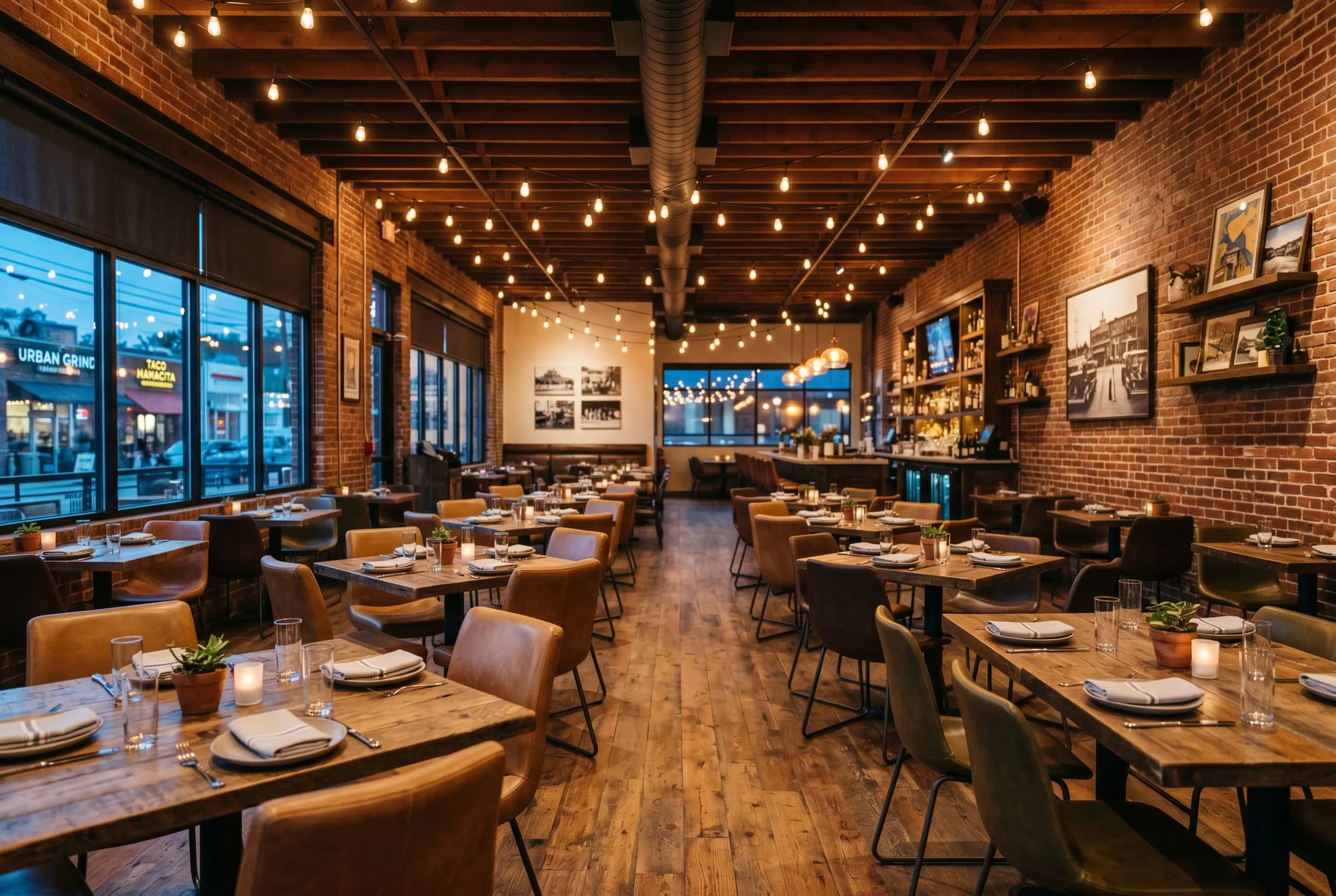
The base has to be rated to carry the top's weight and footprint without tipping. A few things to confirm before ordering:
- Base footprint versus top size. A larger table top, especially a round top over 30 inches or a long rectangular top, needs a wider base or dual-column base to stay stable. Undersized bases are the most common cause of wobbly tables in high-traffic dining rooms.
- Mounting plate compatibility. Confirm the base's mounting plate matches the bolt pattern the top is predrilled for, or that the top ships undrilled with a universal mounting kit.
- Indoor versus outdoor bases. Outdoor bases need a rust-resistant coating or finish rated for exposure, not just a standard indoor powder coat.
- Height standardization. Dining height is typically 28 to 30 inches and bar height 40 to 42 inches. Order bases and tops as matched sets by height category so a mixed shipment does not end up with tables at two different heights on the same floor.
Realistic pricing at volume
Table pricing scales with material and finish, and per-unit cost drops as order quantity increases. As a general guide across the category, expect basic laminate-topped tables at the lower end of the range and premium wood or aluminum construction at the upper end, with volume discounts typically starting at 50 units and increasing again at 100, 250, and 500 units, commonly 5% to 15% off list depending on quantity and finish. A multi-location restaurant group replacing tops across a dozen locations should request pricing at the combined total quantity rather than location by location, since combining the order usually unlocks a better discount tier than splitting it.
Freight and lead times
Bulk table top and base orders typically ship LTL (less-than-truckload) for smaller quantities or full truckload once an order reaches a few hundred units. Freight cost depends heavily on your delivery zip code, whether the location has a loading dock or needs a liftgate truck, and whether the address is a standard commercial location or a limited-access site like a strip mall unit with no dock. Have those delivery details ready when you request a quote, since freight is quoted separately from the furniture and can shift materially based on dock access alone.
Lead times run 2 to 6 weeks for in-stock laminate tops and standard bases. Custom wood finishes, non-standard laminate colors, or made-to-order outdoor sets typically run 8 to 14 weeks, so build that into your opening or renovation timeline.
What to check before you order at volume
- Top thickness and edge profile match the base's mounting plate.
- Frame gauge and weld quality on the base, since a thin or bolted-only base flexes under daily use.
- Weight rating appropriate for the top size and anticipated use, including guests leaning on the edge.
- Laminate wear layer or wood sealant rated for commercial food-service cleaning chemicals.
- Floor protection glides included on every base, since bare feet on tile or hardwood scratch floors fast.
- Request one sample top and base pairing before committing to a full order, especially for a new finish or a first order with a supplier.
Getting a quote
Because tops and bases are priced and shipped as separate line items, the fastest way to get an accurate number is to request a quote with your item breakdown: top material and finish, base style, quantity, indoor or outdoor use, delivery zip code, and target timeline. You can request a quote directly, and use the furniture cost calculator first to build a realistic budget range before you commit to specific finishes.