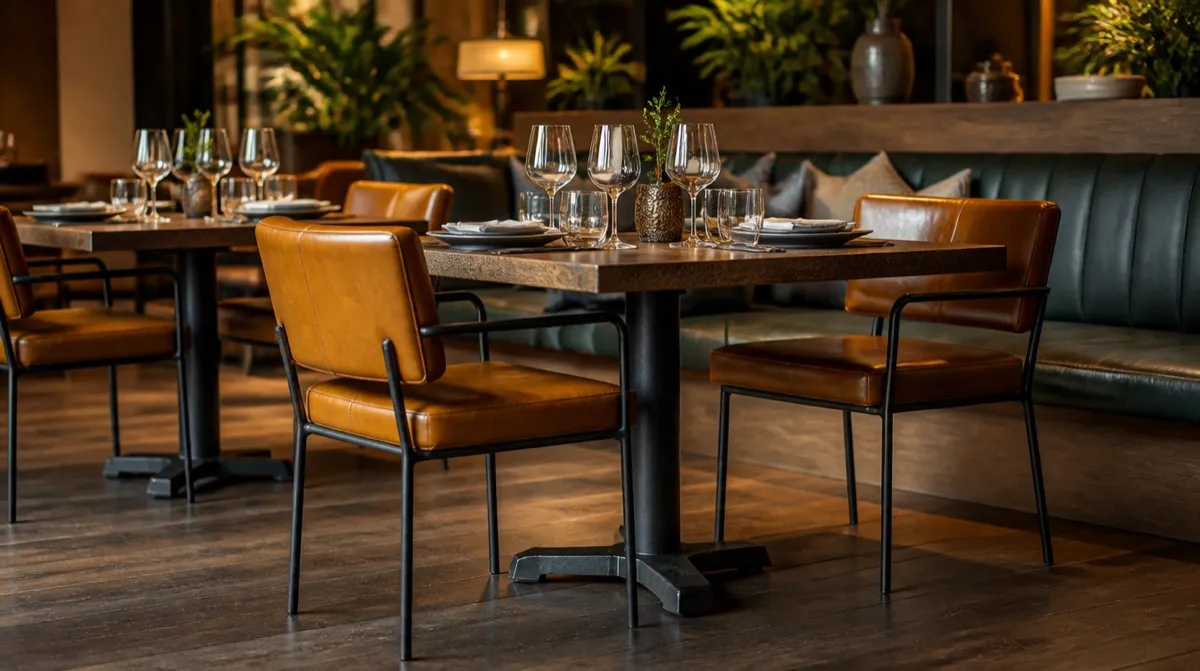
One of the smartest moves in commercial furniture procurement is treating commercial table tops and bases as two separate purchases. Buying them as a fixed unit locks you into one look and forces a full replacement when only one part wears out. Buying them as components lets you mix top shapes and finishes with the right base for the load, swap a scratched top without touching the base, and standardize hardware across a whole floor. This guide breaks down how to spec commercial table tops and bases so they stay stable, survive daily service, and stay easy to maintain.
Why tops and bases are a two-part decision
A table failure is almost never the whole table. It is a chipped laminate edge, a wobbling base, or a scratched surface after a few hundred covers. When tops and bases are one welded unit, that small failure means scrapping a good component along with the bad one.
Specifying them separately gives operations teams real leverage. You can keep a consistent base program across a venue while rotating top finishes for different zones, order replacement tops in bulk without re-buying bases, and keep spare parts on hand for fast turnarounds. It also makes shipping and storage easier, since flat tops and stacked bases pack more efficiently than assembled tables.
Choosing the right table top
The top is the surface guests touch, so it takes the visible wear.
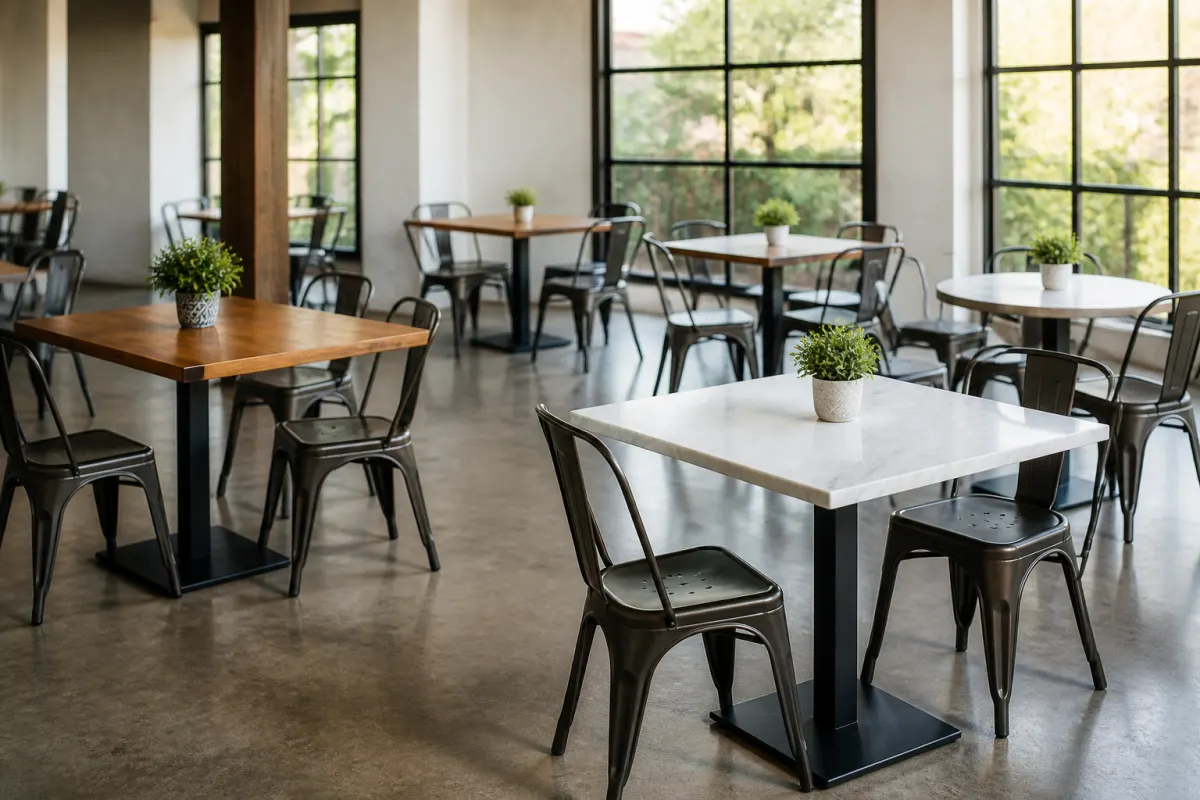
Laminate tops are the workhorse of casual and mid-tier dining. They resist scratches and heat, wipe clean, and come in nearly any finish. Look for a commercial-grade high-pressure laminate with a protective edge, since the edge is where cheap tops fail first.
Solid wood and butcher block bring warmth to upscale concepts but need sealing and more care.
Stone, quartz, and solid surface read premium and handle heat well, but they are heavy and demand a base rated for the weight.
Metal and reclaimed looks suit industrial concepts and stand up to outdoor-adjacent use.
Whatever the material, confirm the top is rated for commercial food service, not residential decor, and match the top thickness to the base so the assembled height lands correctly.
Matching the base to the load
The base does the structural work, and the two things that matter most are stability and footprint.
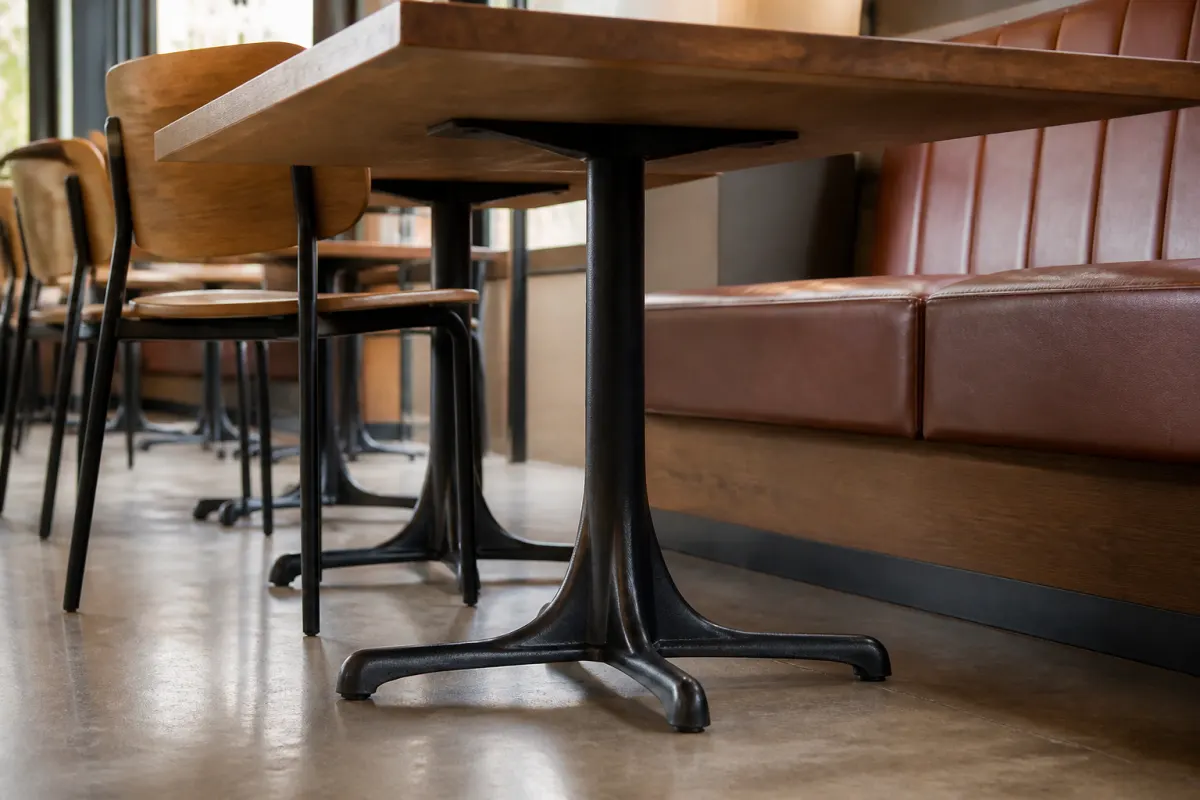
Match the base spread to the top size and shape. A base that is too small for the top creates tipping and wobble, which is both a guest complaint and a liability. Cast iron and heavy steel bases give the best stability for stone and large tops, while lighter aluminum bases suit smaller laminate tops and spaces that get rearranged often.
Choose the column and spread by seating type. Standard dining height suits most restaurant floors, counter and bar height pair with stools, and a wider spread base keeps taller tables from tipping. Adjustable glides are worth specifying on every base, because commercial floors are rarely perfectly level and a single wobbly table gets remembered.
Shapes, sizes, and how they seat
Top shape drives capacity and flexibility. Round tops seat groups comfortably and ease traffic flow, square tops push together into flexible runs, and rectangular tops maximize covers in tight footprints. For events and banquets, folding tables in 60 inch rounds and 6 to 8 foot rectangles remain the flexible standard. A single base program that accepts multiple top shapes gives a venue the most reconfiguration options with the fewest parts to stock.
Budgeting a table program
Component pricing keeps a table program affordable and easy to model. At volume, round 60 inch folding tables run about $60 to $130, rectangular 6 to 8 foot tables land around $50 to $120, and cocktail or highboy tables come in near $70 to $150. Fixed-base dining tables vary with top material and base weight.
Two numbers shape the real budget. Freight and installation typically add roughly 14 to 26 percent over furniture cost, and heavy stone tops push that higher. Volume price breaks step down at 50, 100, 250, and 500 or more units, so a full floor or multi-location order earns a better per-unit number. Stocked tops and bases ship fast, while custom finishes carry a 10 to 14 week lead time. Model a full mix of tops and bases with our furniture cost calculator before you commit.
Spec it once, replace it forever
The payoff of the component approach shows up years later, when a damaged top is a $70 swap instead of a scrapped table. Browse options across our tables category, standardize on a base program that fits your heaviest top, and keep a few spare tops in storage for fast turnarounds. When you are ready to price a full tops and bases package for your floor, request a quote and we will match every top to a base rated for its load.