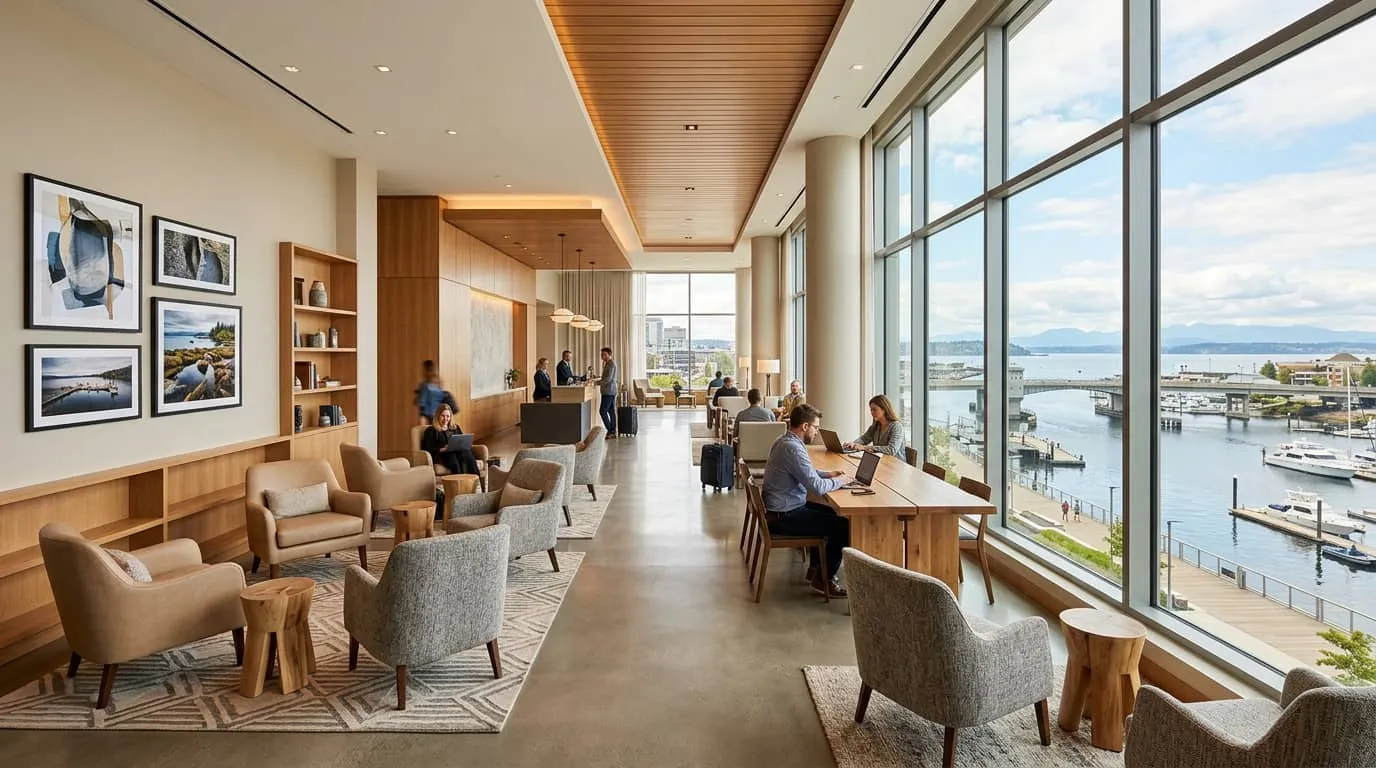
Tacoma's dining scene has undergone a real transformation over the past several years. The waterfront along the Foss Waterway Esplanade now hosts restaurants that draw guests specifically for the dining experience rather than as an afterthought to other activities. The Stadium District has developed a food and beverage identity that extends well beyond the pregame market that defined it historically. The Proctor District in north Tacoma has cultivated a neighborhood restaurant culture with independent concepts that would be at home in Capitol Hill or Portland's Division Street.
All of this creates real demand for restaurant furniture in Tacoma that meets commercial performance standards, not furniture that photographs well in a showroom but fails within two years under the actual conditions of a high-volume South Sound restaurant.
Commercial Restaurant Furniture Performance Requirements
The test for commercial restaurant furniture in Tacoma is simple: can it handle the volume conditions of a busy service in a high-turnover dining environment without showing structural failure or significant wear within the first three to five years of operation?
The answer depends on specification, not brand or price. Commercial dining chairs need to be tested to ANSI/BIFMA standards at 250,000 sit cycles. Residential dining chairs are tested at 10,000 to 15,000 cycles. In a Tacoma restaurant running two or three turns on a Friday night, the cycle volume accumulates quickly, and chairs that are not tested to commercial standards show frame loosening and upholstery failure within the first year.
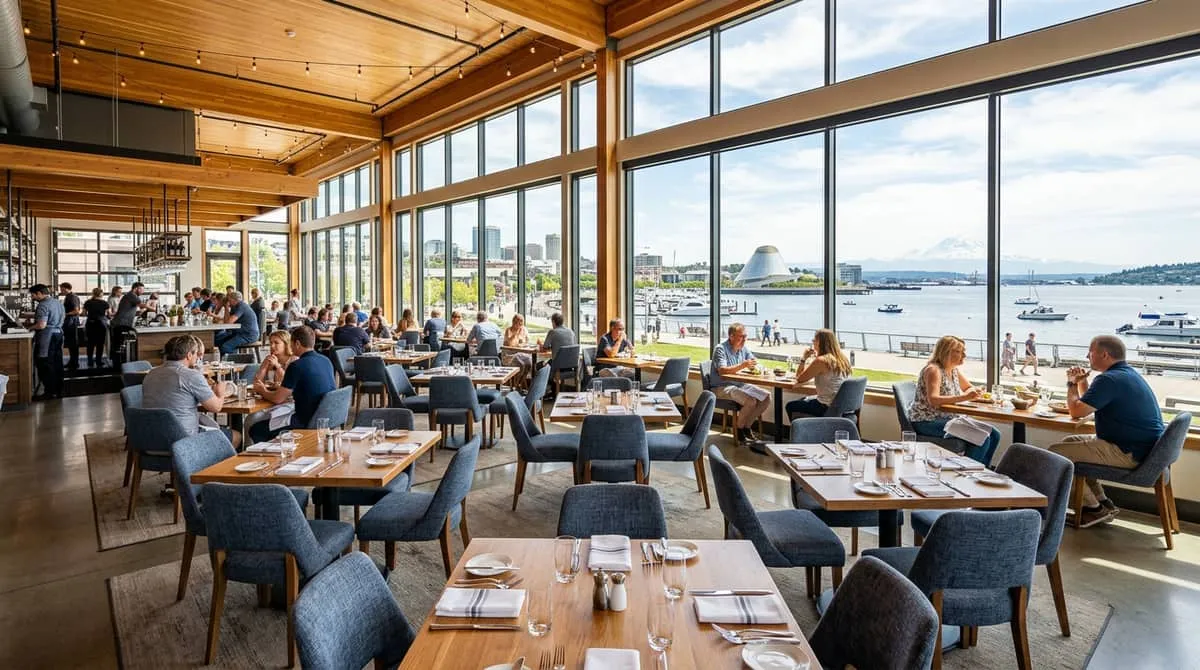
Upholstery for restaurant dining chairs needs to be specified at a minimum of 50,000 Wyzenbeek double rubs for seat surfaces, with contract-grade foam density of 1.8 to 2.0 pounds per cubic foot. Below-spec foam compresses permanently under commercial use and creates seating that appears worn and neglected far sooner than the frame or fabric would suggest is necessary.
Design Direction for Tacoma Restaurant Furniture
The most successful restaurant furniture programs in Tacoma connect to the city's material heritage without being historically literal about it. The industrial waterfront character of the Foss Waterway, the Craftsman residential architecture of the Proctor District, and the arts and glass identity associated with the Museum of Glass and the Chihuly collections, these are real design references that translate into furniture choices guests register even if they cannot articulate why the space feels grounded in its location.
Solid walnut frames with warm amber finish, performance woven fabric in forest green or slate, and metal accents in brushed black work well across most Tacoma restaurant aesthetics. The combination reads as Pacific Northwest contemporary without becoming a caricature of any single design trope.
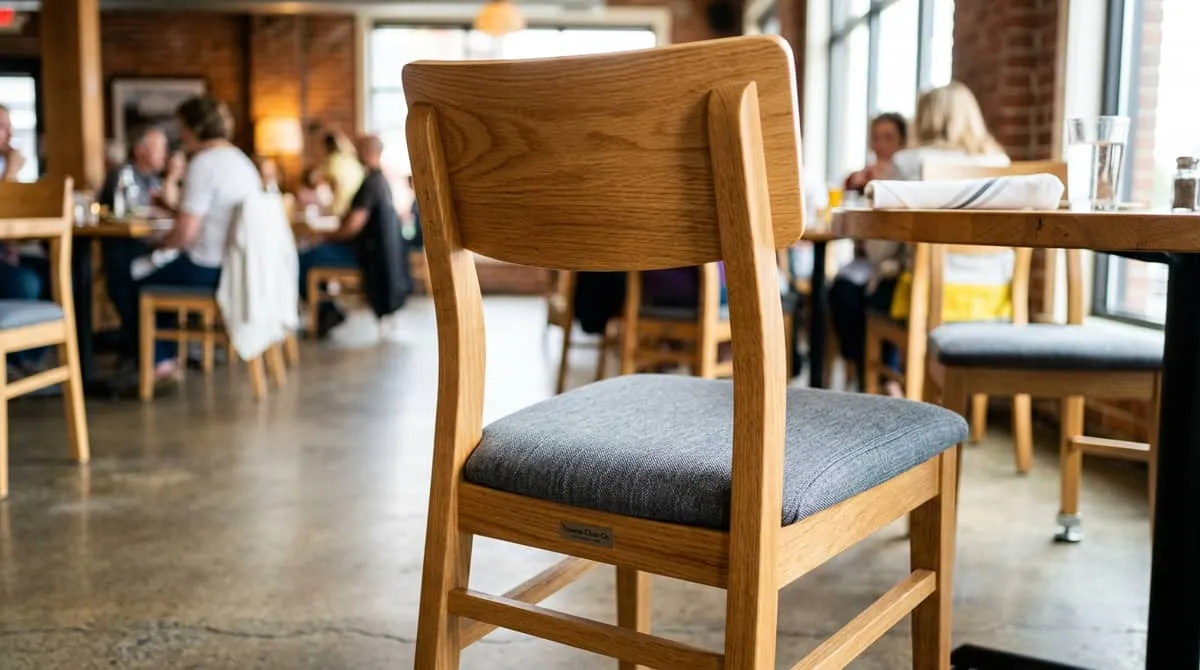
Booth and banquette seating for Tacoma restaurants needs particular attention to upholstery specification. Banquette seating in a restaurant application that runs lunch and dinner service accumulates more use per square foot of fabric than almost any other furniture application. Commercial-grade fabric at 50,000 double rubs is the floor for banquette upholstery; operators who want to protect their investment longer should specify 100,000 double rubs or higher for primary banquette surfaces.
Sourcing and Lead Times for Tacoma Restaurant Projects
Restaurant furniture lead times in Tacoma run 8 to 14 weeks for custom upholstered chairs and 10 to 16 weeks for custom booth and banquette construction. Operators planning a Tacoma restaurant opening should begin furniture procurement conversations a minimum of 16 weeks before the target opening date, allowing time for specification review, sample approval, production, and freight.
Budget per seat for commercial restaurant dining chairs runs $150 to $300 for solid contract-grade work from domestic mid-tier manufacturers, and $350 to $650 for custom upholstered options with wood frame details. Booth seating runs $200 to $500 per linear foot depending on fabric grade and construction specification.
The freight advantage for Tacoma, proximity to the Port of Tacoma for import furniture or direct routing from Pacific Northwest domestic manufacturers, helps reduce transit time compared to Spokane or Boise, but does not eliminate the need for early procurement planning on any custom-configured furniture program.
Pricing for restaurant furniture in Tacoma depends on quantities, finishes, and your delivery window, so a project-specific quote beats any list figure. Request a quote to get yours.
Related reading
- What is contract furniture
- Commercial furniture vs retail
- Hospitality furniture supplier guide
- Restaurant dining chairs
- Restaurant barstools
- Restaurant tables
- Commercial furniture in Washington
Our take
The maintenance side of a Tacoma furniture program deserves as much attention as the initial specification. A dining room that turns two or three times on a Friday night accumulates sit cycles fast, and the operational answer is a standing service routine: hardware checks on chair frames a couple of times a year, glide replacement before floors start showing drag marks, and a reupholstery decision point for banquettes well before the fabric fails outright. Because banquette seating absorbs more wear per square foot of fabric than anything else in the room, operators who plan a mid-life recover of primary banquette surfaces, while keeping the frames in service, extend the working life of the heaviest-used seating in the building without pulling the dining room apart.
The bottom line: Tacoma operators get the longest service life by pairing commercial spec at purchase with a scheduled maintenance routine, especially on banquettes, which wear faster than any other seating in the room.