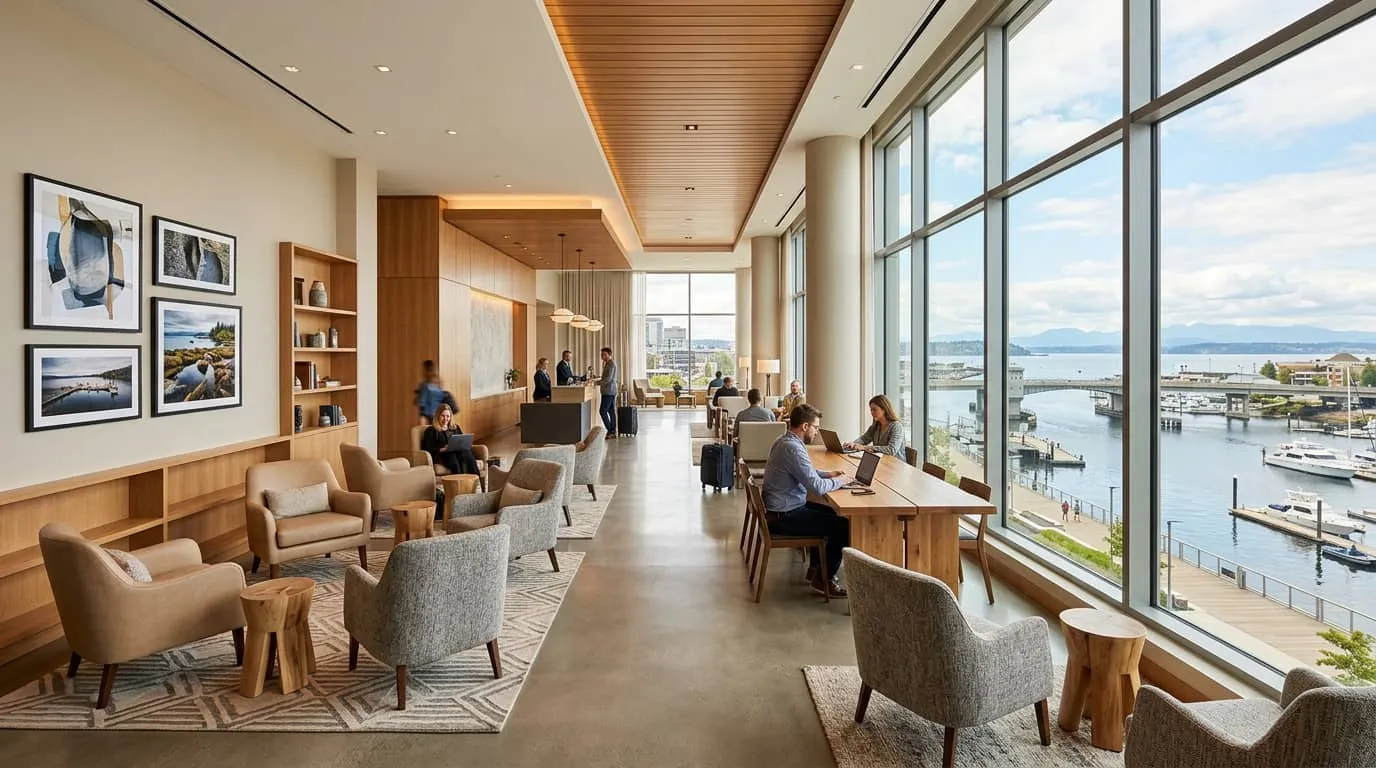
FF&E procurement, Furniture, Fixtures, and Equipment, is one of the highest-risk phases of any hotel or restaurant development project, and the operators who execute it well in Tacoma are the ones who approach it as a project management discipline rather than a purchasing exercise. The proximity to Seattle's supply chain infrastructure and Port of Tacoma's logistics capacity gives Tacoma operators some advantages over inland Pacific Northwest markets, but it does not eliminate the timeline, specification, and vendor management risks that cause FF&E projects to go wrong.
The Scope of FF&E for Tacoma Hospitality Projects
The FF&E scope for a hotel project covers everything that is not permanently attached to the building structure: guestroom furniture packages including beds, headboards, nightstands, dressers, desks, chairs, and luggage benches; public space furniture for lobby, F&B, fitness, and meeting rooms; window treatments, lighting fixtures, artwork, and decorative accessories; and equipment categories including in-room electronics, fitness equipment, and back-of-house operational items.
For a restaurant, the FF&E scope covers dining chairs and tables, bar seating, booth and banquette construction, host stand, service stations, and decorative elements. The equipment category includes kitchen equipment but is typically managed separately on its own procurement track.
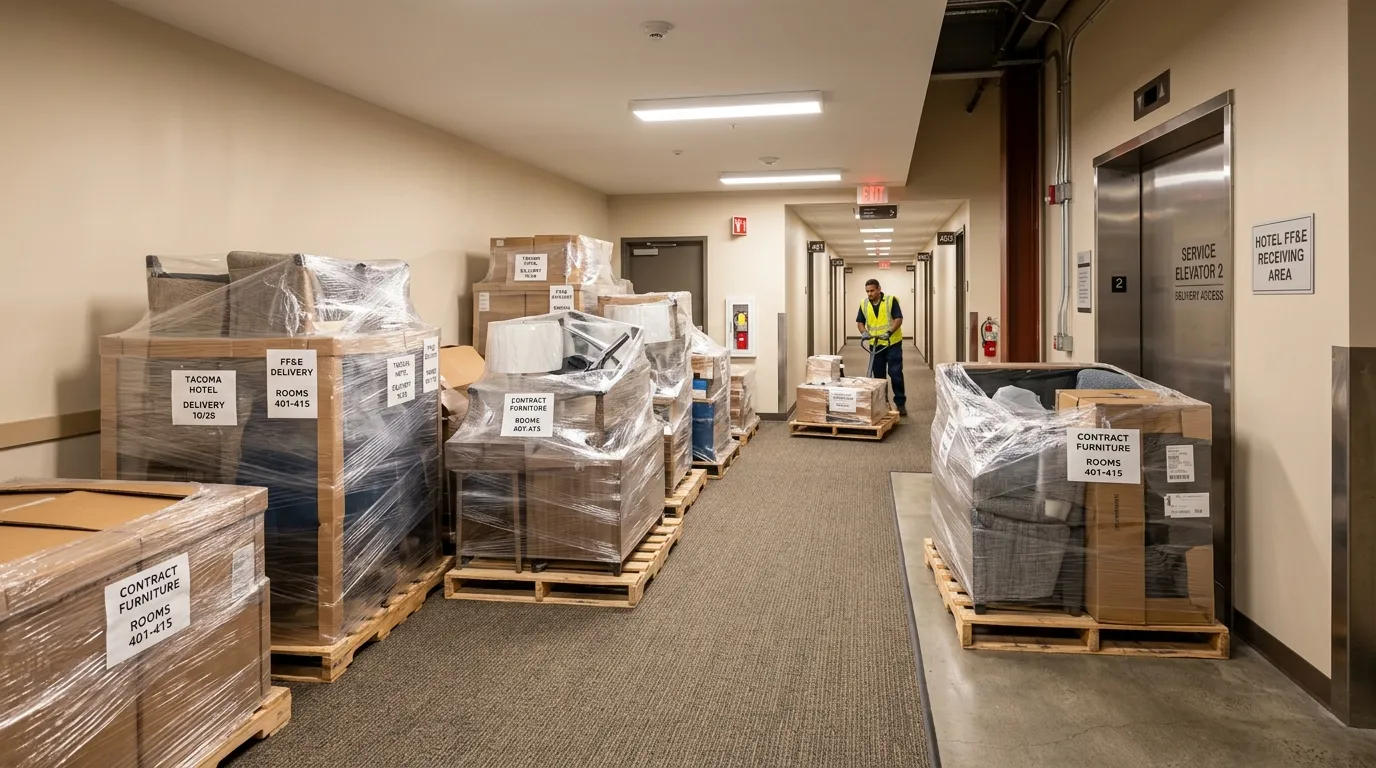
Managing these categories simultaneously, with different lead times and different supplier relationships, is what makes FF&E procurement a discipline. A guestroom case good with a 14-week lead time ordered two weeks late means a room that cannot open on schedule. That room's lost revenue typically exceeds the cost of the furniture itself many times over.
Tacoma Logistics Advantages for FF&E
Tacoma's logistics position is genuinely advantageous for FF&E procurement compared to Pacific Northwest markets east of the Cascades. Port of Tacoma handles significant container volume, which means imported furniture moving through Pacific Coast ports may arrive closer to your project site than comparable deliveries to Spokane or Boise. Domestic freight from Pacific Northwest manufacturers also benefits from Tacoma's position near the I-5 corridor.
That logistics advantage is real but not unlimited. Large FF&E deliveries in Tacoma's downtown and waterfront areas still navigate urban logistics constraints, restricted delivery windows, limited staging areas near active construction sites, and the coordination requirements of white-glove installation in occupied or partially-occupied hotel properties.
Build freight transit and installation coordination into your Tacoma FF&E procurement timeline as explicit line items. A manufacturer's quoted lead time typically covers production, not door-to-door delivery. Confirm what the quoted window covers and add transit time and installation scheduling lead time before your project completion date.
Specification Process and Vendor Selection
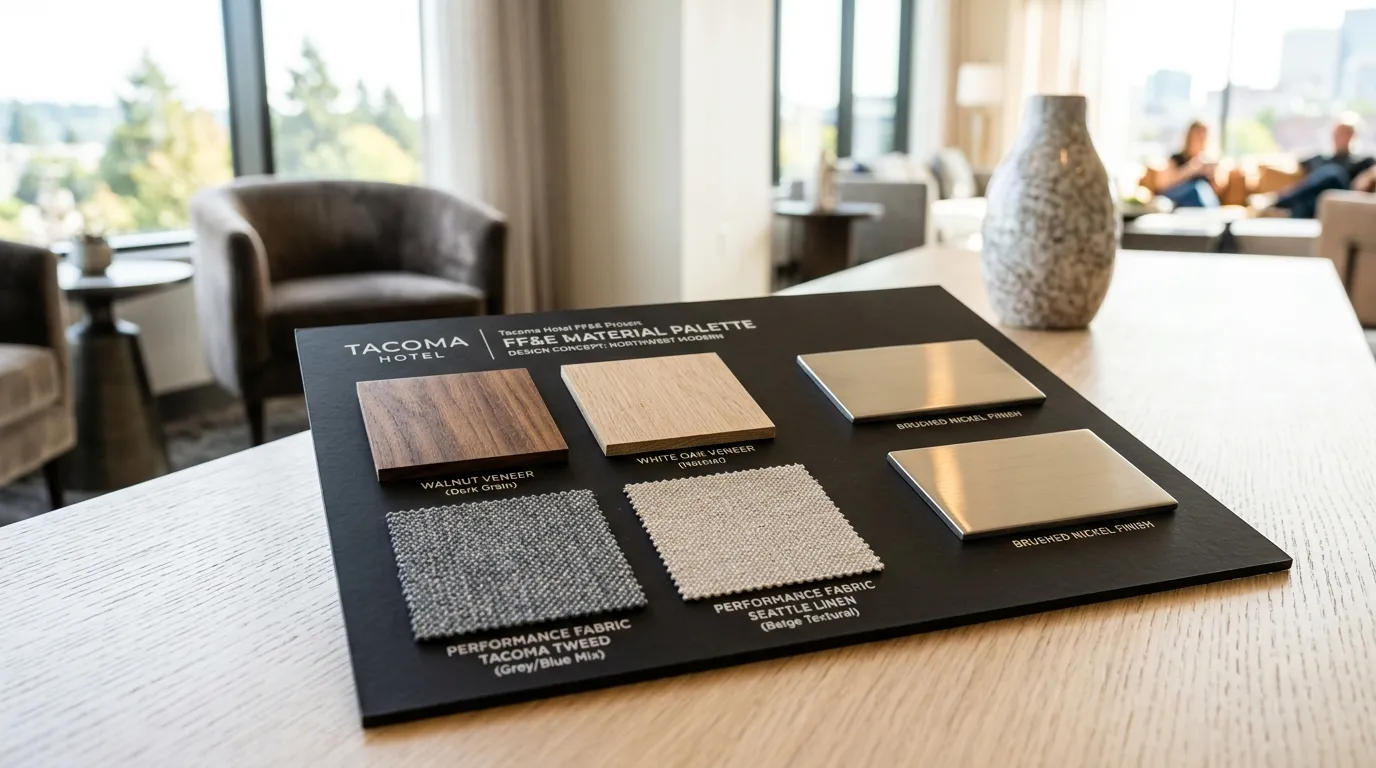
The specification phase of FF&E procurement should be complete before vendor outreach begins. Operators who go to market with a complete specification, room count and category, design concept and finish standards, performance requirements by furniture category, and delivery window, receive more accurate proposals and faster responses than operators who approach vendors with a vague brief.
For Tacoma hotel and restaurant projects, specification documents should include minimum performance standards for each furniture category: frame cycle count ratings for seating, fabric double rub count ratings for upholstery, construction method requirements for case goods, and finish durability standards. These specifications give you an objective basis for vendor comparison that goes beyond price.
Vendor selection should include at least two evaluation rounds. The first screens for capability, can the vendor manufacture to your specification, do they have hospitality project experience, can they provide references from comparable projects in the Pacific Northwest market? The second evaluates the specific proposal, specification accuracy, pricing, lead time commitment, and warranty and post-delivery support terms.
Managing FF&E Installation in Tacoma
Installation sequencing is the most common source of FF&E project schedule failures. Furniture installation cannot begin until rooms are painted, millwork is complete, and electrical rough-in is finished. If any of those predecessor tasks are running late, the furniture installation window compresses or disappears.
Assign explicit accountability for tracking predecessor task completion and build the dependency chain into your project schedule before FF&E procurement begins. The installation contractor cannot solve a construction delay; the project manager can escalate it before it becomes a schedule failure.
Punch list resolution, identifying and correcting defects after initial installation, adds one to two weeks to the practical installation timeline for a full hotel floor. Build that time into your schedule rather than discovering it after your planned opening date.
Pricing for FF&E in Tacoma depends on quantities, finishes, and your delivery window, so a project-specific quote beats any list figure. Request a quote to get yours.