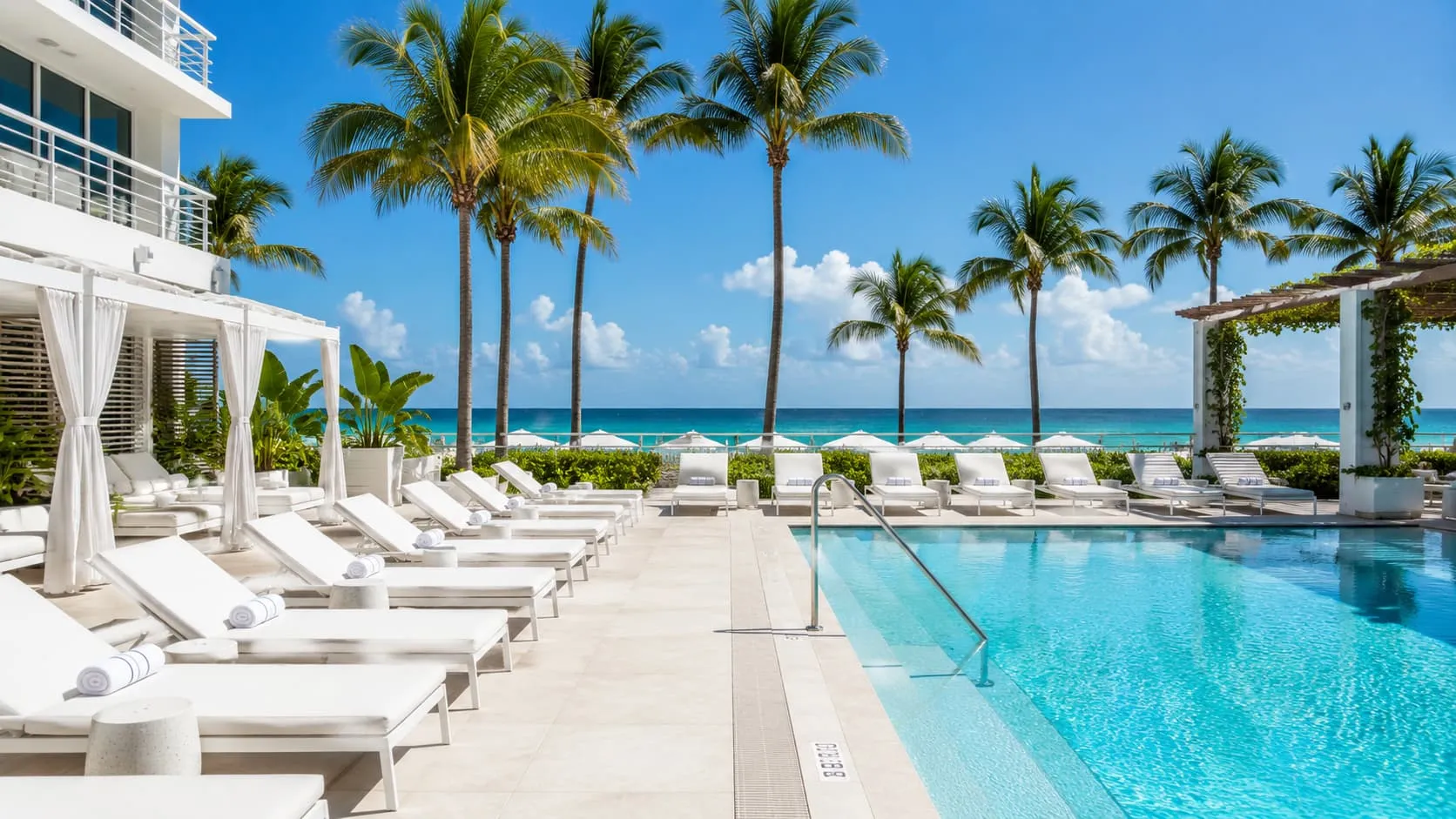
Miami hospitality does not slow down. The Art Basel crowd floods South Beach every December, Wynwood brunch spots run double seatings on Sundays, and the waterfront dining rooms along Brickell push through hundreds of covers a night without a break. The furniture holding all of that together is not sitting in a climate-controlled showroom it is outside in 90-degree heat, salt air, and afternoon downpours, then back in service before the dinner rush. If what you buy cannot handle that, you will know it within a season.
Why Contract-Grade Matters More in Miami Than Almost Anywhere Else
"Contract-grade" gets thrown around a lot in this industry, but in Miami it actually means something. Contract furniture is built to commercial specs: heavier frame gauge, denser foam, fabrics rated for 50,000-plus double rubs, and finishes that have been tested for UV and moisture resistance not just sold with a hopeful warranty. For any venue with indoor-outdoor flow, those specs are the floor, not a nice-to-have.
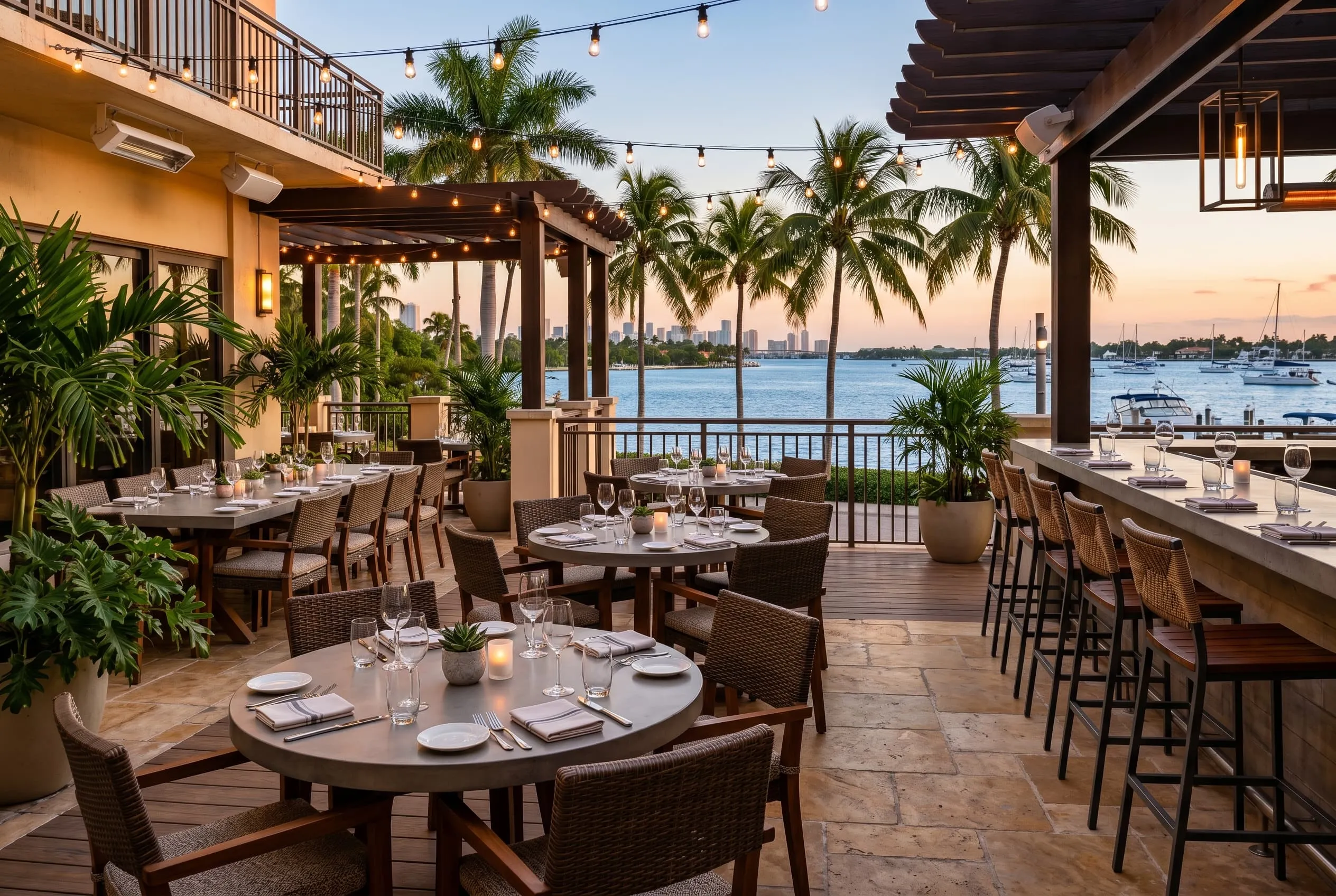
Miami's climate exposes cheap construction fast. A thin powder coat on aluminum will start oxidizing in salt air within a season on Miami Beach. Unsealed cushion foam soaks up moisture during the June-through-October rainy season and molds out before fall is over. Rattan that is not resin-based cracks in direct sun within a year. Contract-grade pieces are engineered around these exact failure points the cost per unit is higher upfront, but you stop replacing furniture every 18 months. That math adds up quickly across a 150-seat dining room.
Choosing the Right Materials for Miami's Indoor-Outdoor Reality
The line between inside and outside barely exists in most Miami restaurants. Retractable glass walls, open-air atriums, covered waterfront terraces, pool decks that flip into private dining during events this is not a trend, it is how South Beach, Coconut Grove, and the Design District actually operate. Your furniture needs to move coherently across all of those zones without looking like it was sourced from three different catalogs.
For frames, powder-coated aluminum is the workhorse for outdoor and transitional spaces. It handles humidity and salt without rusting, does not absorb heat the way raw metal does, and comes in sophisticated finishes that hold up against the design standards Miami operators expect. Teak still shows up at higher-end waterfront properties where the warm wood tone earns its place aesthetically, but plan for seasonal maintenance or it will grey out faster than you want.
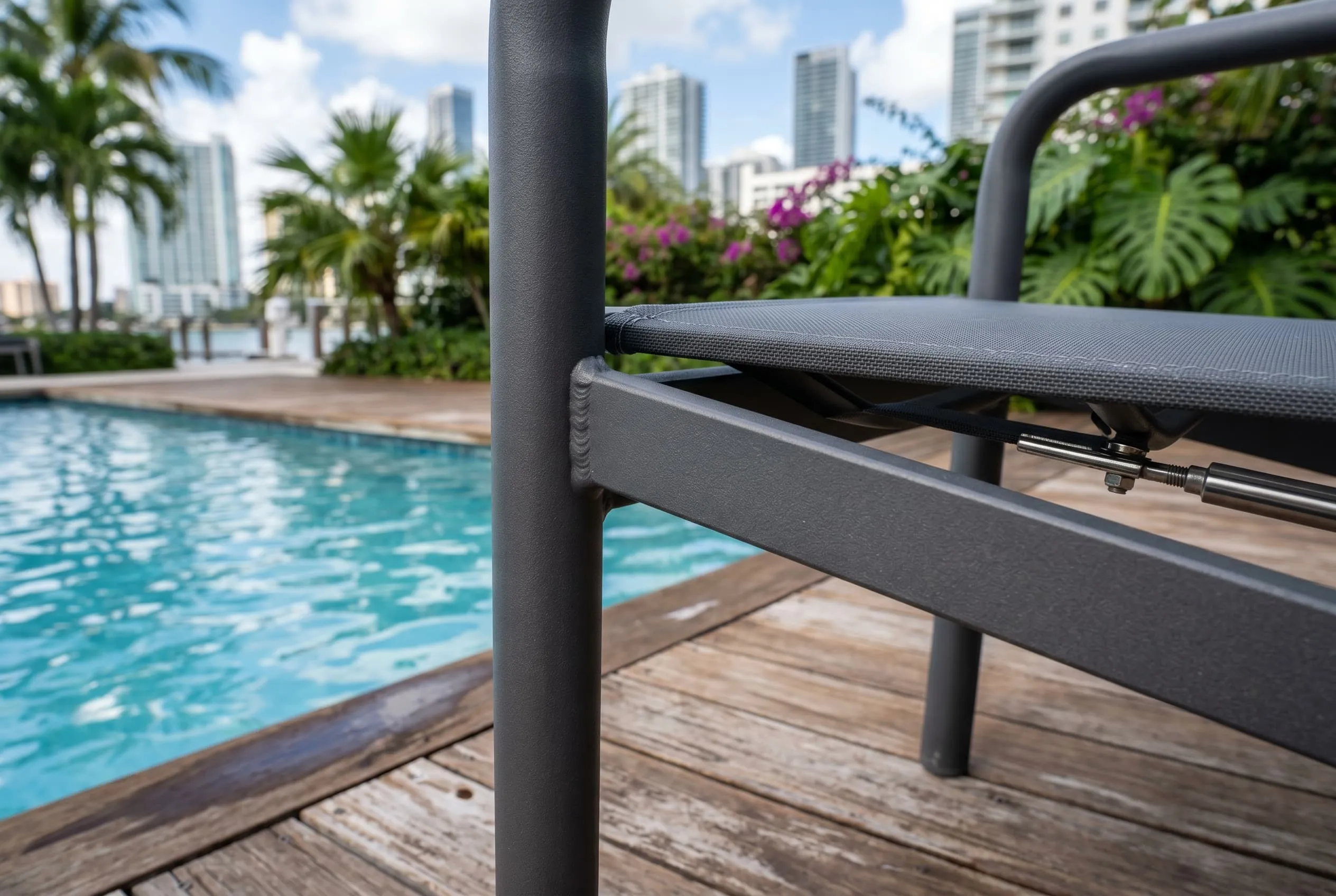
For upholstery in outdoor or high-humidity zones, solution-dyed acrylic Sunbrella being the most common name you will encounter is the industry standard for a reason. The color runs through the fiber itself rather than sitting on the surface, so UV fading is minimal even under Miami's sun load. These fabrics also resist mold and mildew, which matters when cushions take a hard afternoon rain and need to be back in service two hours later.
Art Deco Restoration Projects and the Custom Furniture Question
South Beach's Art Deco Historic District is its own sourcing category. When a hospitality group is restoring a 1930s or 1940s property on Ocean Drive or Collins Avenue, the furniture has to read as period-appropriate geometric forms, chrome accents, curved backs but still survive the daily punishment of commercial service. That combination is harder to find than it sounds.
The right supplier for an Art Deco restoration will either carry reproduction pieces built to contract specs, or will work with you on custom fabrication where the commercial frame comes first and the period aesthetic is layered on top through upholstery, finish, and hardware. That second approach is more common than most buyers expect, and it is often the smarter call you get the visual result the property's design narrative requires without compromising on durability.
If you are sourcing for an Art Deco project and the supplier you are talking to cannot speak to custom fabrication or period reproduction options, they are not the right partner for that job. Move on.
How to Qualify a Restaurant Furniture Miami Supplier
Not every company that sells furniture to restaurants is actually a hospitality supplier. There is a difference, and it shows up in the details. When you are evaluating vendors, ask direct questions before you commit to anything.
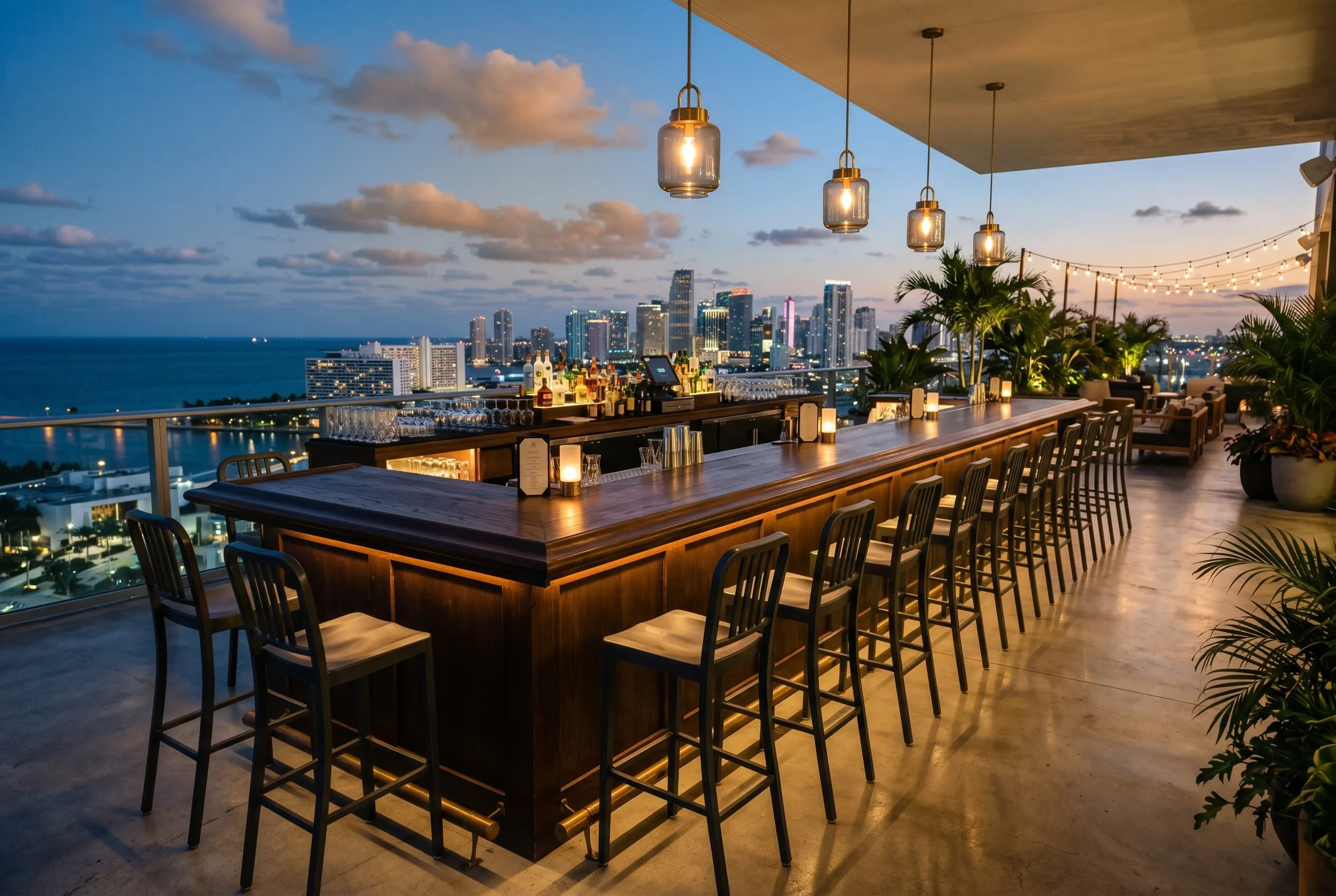
Ask for references from Miami properties specifically. A supplier that has placed furniture at a Brickell rooftop bar or a Wynwood concept restaurant has already proven their pieces survive local conditions. Ask about lead times during peak seasons if you are ordering for a December opening timed to Art Basel, a two-month delay is not recoverable. Ask about warranty terms, and specifically whether the warranty covers commercial use and outdoor exposure. Many manufacturer warranties are quietly voided the moment a piece goes outside.
Ask about volume pricing and stocking programs too. If you are furnishing 200 seats, you need a supplier who can guarantee consistency across the full order and hold enough inventory to replace damaged pieces without a multi-month wait. Latin-influenced dining concepts in Little Havana or Coral Gables often need custom colorways that require lead time planning. Build that into your sourcing timeline from the start, not as an afterthought when you are six weeks from opening.
Restaurant furniture is a revenue-generating asset, not an operating expense to minimize. Treat the sourcing process with the same rigor you would apply to your kitchen equipment, and the front of house will hold up the way it needs to.
Pricing for restaurant furniture in Miami depends on quantities, finishes, and your delivery window, so a project-specific quote beats any list figure. Request a quote to get yours.