For a park, brewery, or campus order, compare material, construction, accessible dining positions, care, freight, and repair options together. Forty park tables or twenty brewery tables are example project scales. Two-year and five-year replacement cases can be modelled as budget assumptions, but material alone does not establish either service life or compliance.
Here is what parks departments, brewery and restaurant groups, and campus facilities teams need to know before ordering commercial picnic tables wholesale.
Recycled plastic vs wood vs metal
Use the actual products and site exposure to compare cost, loads, cleaning, repairs, and expected operating tasks. Material names are a starting point for requesting specifications, not a complete performance ranking.
Recycled plastic (HDPE) tables. Compare the exact board formulation, reinforcement, UV/weathering information, loads, care instructions, and warranty. HDPE can reduce refinishing work compared with some wood finishes, but the material name does not guarantee that a table will never crack or need repair. Include actual cleaning and replacement-board costs in the comparison.
Wood tables. Confirm species, treatment, finish, loads, and the maker's care and repair instructions. Some finishes call for periodic treatment, while others permit natural weathering. Compare actual quoted cost and replacement-board options rather than assuming wood is always cheaper or requires the same resealing routine.
Metal-frame tables. Compare the exact steel or aluminum frame, top, coating, hardware, load ratings, and anchoring instructions. Neither metal construction nor frame weight alone establishes the highest capacity or strongest table. Use actual mass and handling requirements when comparing furniture for sites that reconfigure.
There is no purchasing-trend survey supporting a dominant material here. Compare the proposed plastic, wood, and metal-frame products against the site's cleaning, repair, storage, and replacement records.
ADA ends and accessible seating
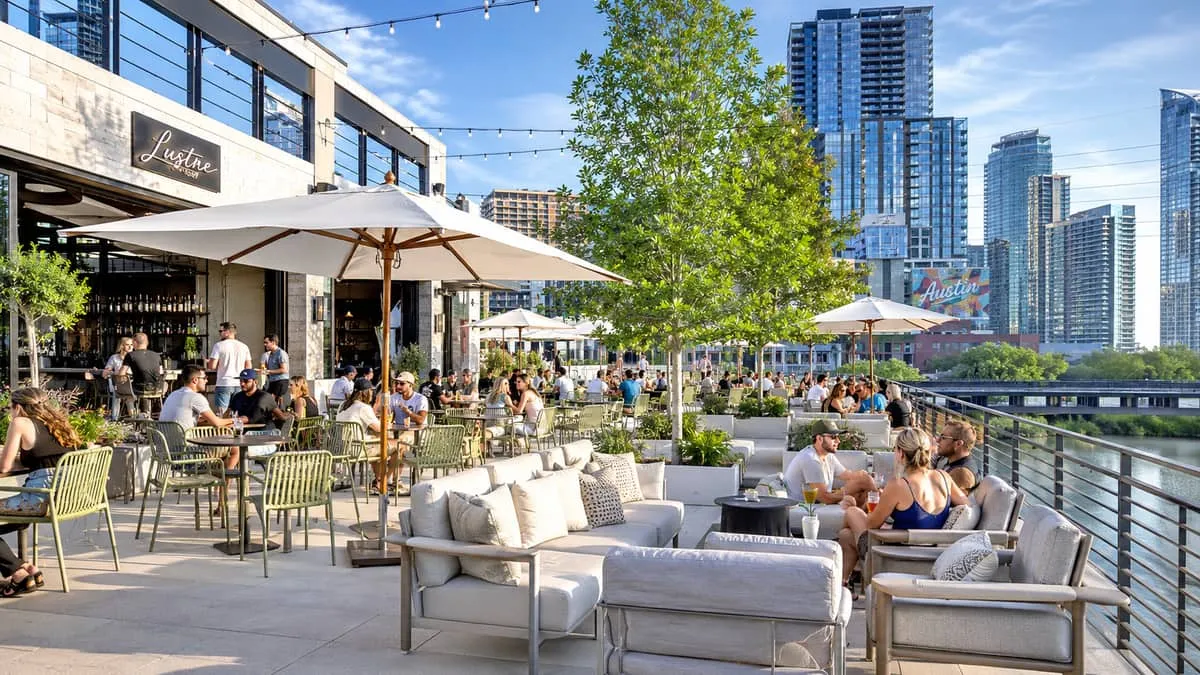
Include accessible dining positions and routes in the initial public-site plan. Applicable requirements depend on the site and jurisdiction; an accessibility label on the product does not establish compliance of the installed arrangement.
An extended end can provide an accessible dining position, but an overhang alone does not establish compliance. Where ADA dining-surface requirements apply, Section 226 calls for at least 5 percent of seating and standing spaces to comply and be dispersed. Section 902 also addresses approach space, knee/toe clearance, and a 28 to 34-inch top height. Count dining positions rather than assuming 20 percent of table units is the rule. Confirm the site's applicable accessibility requirements and routes before ordering.
What "wholesale" pricing means at volume
A wholesale or commercial label does not establish frame gauge, exposure performance, lifespan, or an automatic volume discount. Request the exact construction, loads, outdoor-use instructions, warranty, and itemized quantity pricing. Do not infer one-or-two-season failure from a retail channel alone.
Per-unit pricing depends on material, dimensions, finish, and the specified configuration. To get an accurate number, request a quote with your material, table length, ADA end count, and finish, and check it against the furniture cost calculator before you set a budget.
Freight and delivery for bulk orders
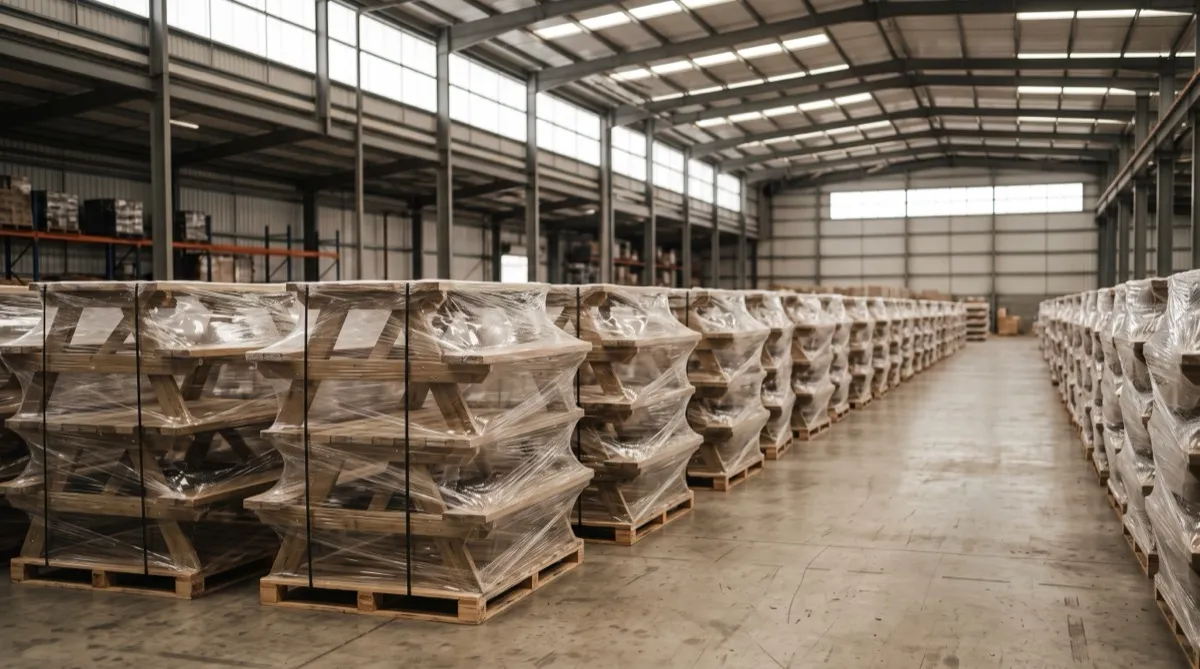
Confirm packaged dimensions, weights, shipment method, and receiving scope for the actual order. LTL and full-truckload freight are options to price; the supplier and carrier determine the method. Include the delivery location, dock or liftgate needs, site access, unloading equipment, and placement duties in the quote rather than assuming freight includes inside-the-fence placement.
Lead times
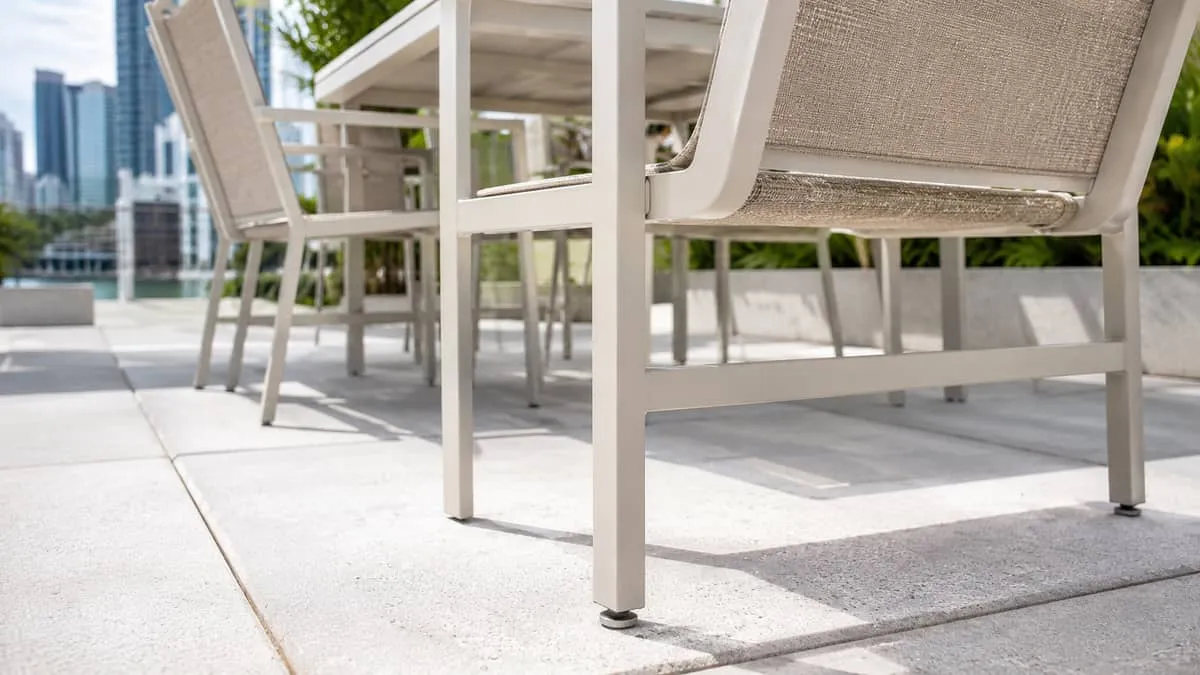
Confirm availability and dispatch dates for the exact line, quantity, and finish. If you test 2 to 6 weeks for a standard order and 8 to 14 weeks for a custom order, record them as planning placeholders. Obtain the production, transit, and installation dates needed for your opening, grant, or semester deadline.
What to check before you order at volume
Obtain the exact table's material and construction specifications, load ratings and their basis, care, warranty, replacement parts, and approved anchoring or leveling methods. Wood treatment and drying requirements depend on the proposed product. Review a sample or documented configuration where practical; a material name or frame gauge alone does not validate structural performance.
Sample project sizing
| Project type | Typical order size | Rough budget range |
|---|---|---|
| Neighborhood park (2-3 pavilions) | 15 to 30 tables | $3,000 to $12,000 |
| Brewery or restaurant patio | 10 to 25 tables | $2,500 to $9,000 |
| University quad or dining courtyard | 50 to 150 tables | $12,000 to $50,000 |
| Multi-park city contract | 100 to 500+ tables | $25,000 to $150,000+ |
The table uses illustrative quantity and budget assumptions, not current supplier prices or a verified market survey. The dollar notation has no confirmed currency or included freight, tax, assembly, or installation scope. Replace the ranges with the chosen models, accessible positions, delivery zone, currency, and itemized written quote before approving the budget.
Getting an accurate quote
Request a quote with materials, quantities, accessible dining positions, finishes, delivery access, and target installation dates for relevant independent suppliers to review. Each supplier confirms actual configurations, freight, availability, prices, and terms. Browse illustrative table concepts for design direction; the catalog does not verify load ratings, accessibility, stock, or suitability for your site.
Related reading
- Banquet Tables in Bulk: Round vs Rectangular, Pricing, and Freight
- Wholesale Restaurant Furniture: How to Buy Direct From a Commercial Supplier
- Where to Buy Commercial Furniture in Bulk: A Practical Guide
Our take
For a public site, compare graffiti, sticker, and gum cleanup alongside weather exposure. Through-color plastic can have a different repair path from a coated surface, but it does not guarantee invisible repairs. Request the exact material's approved cleaner, scraping or abrasion limits, and replacement-board options. Trial the proposed cleanup method on an approved sample; do not sand an installed table unless the maker allows it.
The bottom line: Include public-site cleaning and repair methods in the specification. Compare maker-approved cleanup trials and replacement parts alongside initial price and weather exposure.