A covered patio and an exposed rooftop can impose different sun, rain, temperature and wind conditions. Document those conditions for the actual stool rather than predicting replacement within two seasons.
Counter-height examples often pair a 24 to 26 inch seat with a surface around 36 inches. Measure the actual outdoor counter, underside clearance and foot support, and trial the proposed seat; the height label alone cannot establish a fit.
What actually fails outside
Inspect the complete frame, fasteners, joints, finish and seating surface. Use the manufacturer's maintenance instructions and the venue's inspection history to plan checks and repairs.
Compare the complete aluminum or steel assembly against manufacturer exposure and care limits. Aluminum does not form iron rust, but corrosion and finish durability remain product-specific; exterior or marine-grade labels alone cannot establish suitability.
Ask the manufacturer to document fastener materials, coatings and any isolation between dissimilar metals. The Electrochemical Society explains galvanic corrosion at contacts between different metals. Confirm compatibility for the complete proposed assembly rather than inferring performance or a replacement deadline from stainless or plated hardware alone.
Seat material and drainage
Request seat and cushion exposure, drainage, cleaning and storage instructions for the exact assembly. Wicker, rope, polymer and quick-dry labels alone do not establish suitability, and cushions do not inevitably mildew regardless of care.
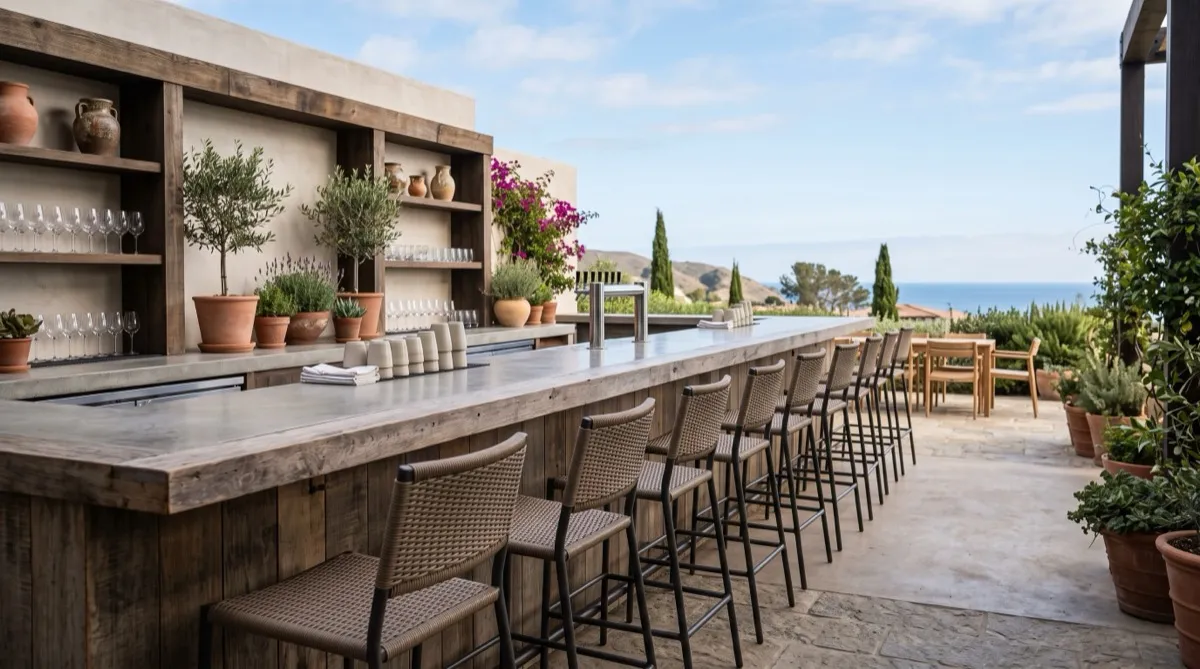
Trial actual drainage and drying on the proposed seat. Perforations do not guarantee instantly dry furniture; covered placement and upholstery suitability must follow the model's instructions.
Stack-and-store logistics for the off-season
Use the venue's actual season, storm and closure plan to determine storage requirements.
Confirm the stool actually stacks, and confirm it stacks on the equipment you own. A stool rated to stack five high on a commercial dolly is a very different storage plan than a stool that has to be shelved individually because the arms or a wide base prevent nesting. If you are running forty or more units on a rooftop, the difference between stackable and non-stackable changes how much storage space you need to budget for entirely.
Confirm storage position, stacking protection, cover ventilation and drainage with the manufacturer. A tarp does not automatically provide suitable long-term protection.
Bolting down vs. movable
Review wind, guardrail, access and anchoring requirements for the specific rooftop or patio with the project team and authority. Obtain documented installation instructions before selecting movable or fixed seating. The outdoor counter stools page contains concepts; it does not establish freestanding or anchor-ready product availability.
The fabric durability checker supports planning comparisons; it is not a complete frame, coating or code review for the pictured concepts. The commercial barstool buying guide covers related height and layout questions.
Ordering at volume
Confirm actual quantities, stock, custom approvals, production and delivery milestones. A branded finish has no universal ten to fourteen week window.
Choose spares from storage, repair needs and current reorder terms. Five to eight percent can be a planning scenario, not a required minimum or proof that every outdoor stool receives more abuse than indoor furniture.
Request a quote with the site drawings, climate, counter dimensions, quantities and project requirements so independent suppliers can document proposed models.