Counter height seating gets pulled out, spun, kicked, and leaned back on more than almost any other seat in a commercial room. A metal frame is usually the right answer for that kind of use, but not every metal stool built for a showroom photo is built for a kitchen counter that turns tables three times a night. The difference shows up fastest at the weld joints, the second-fastest place it shows is the finish, and if either one was cut on the manufacturing side, you will know within the first year of service.
Why metal wins at the counter
Wood counter stools look warmer and fit certain design programs better, but metal frames handle the specific stresses of counter-height seating with fewer failure points. A metal frame does not split, does not loosen at glued joints, and holds its shape under the leverage forces guests put on a stool when they lean back on two legs, which happens constantly at a bar or counter regardless of how many table tents ask them not to.
The tradeoff is weight and acoustic noise. Metal stools scrape and clatter on hard flooring more than wood, which matters in a quiet dining room but rarely matters at a counter seating area already generating ambient noise from the kitchen or the bar.
Weld quality is the whole spec
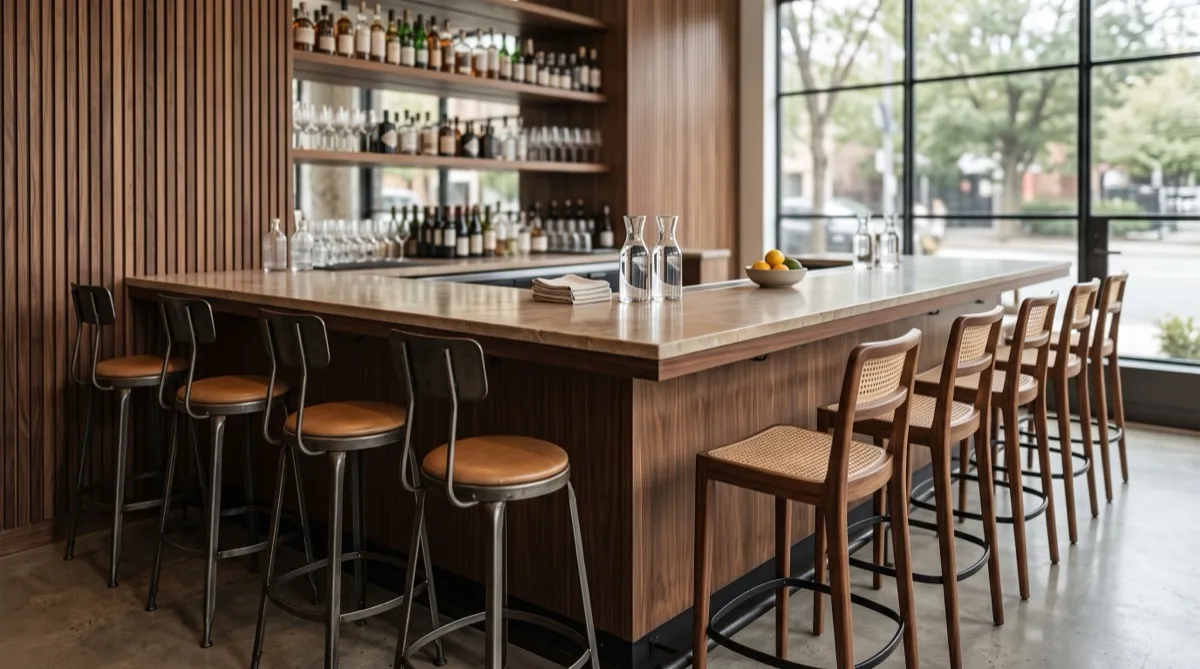
Every failure point on a commercial metal stool traces back to a joint, and the joint quality is set at manufacturing, not something you can upgrade later. Look for continuous welded seams at every frame junction, particularly where the legs meet the seat frame and where the footrest ring attaches. A stool with a separately welded footrest ring, rather than one bent directly into the leg tubing, distributes leverage forces better and resists the bent-leg failure that shows up on cheaper units within the first year of daily use.
Run your hand along the weld if you can get a sample unit before ordering at volume. A clean weld is smooth and continuous. A rough, pitted, or inconsistent weld bead is a sign of lower manufacturing standards and often correlates with thinner-gauge tubing elsewhere on the frame. Gauge matters directly: 16 to 18 gauge steel tubing is the standard range for commercial-grade stool frames, and anything thinner flexes noticeably under normal guest weight.
Finish and corrosion resistance
Powder coat is the standard commercial finish and for good reason. It resists chipping, scratching, and the daily contact with clothing, bags, and cleaning chemicals far better than painted or plated finishes. Confirm the coating is applied over a properly prepped and primed frame, not sprayed directly over bare or lightly cleaned steel, since adhesion failure at the coating layer is one of the more common warranty issues on lower-cost import stools.
If the stool will see any exposure to moisture, whether that is an indoor-outdoor patio counter, a pool bar, or simply a kitchen counter with regular mopping underneath, ask specifically about corrosion resistance at the base and glide contact points. Chrome finishes look sharp initially but show wear and pitting faster than powder coat in high-moisture environments, and chrome that starts flaking looks worse than almost any other finish failure because the contrast against the bare metal underneath is so visible.
Glide protection for your floor
Counter stools move constantly, pulled in and out dozens of times per service, and every one of those movements is a chance to scratch or gouge the floor underneath. Nylon or felt glide caps on metal legs protect hardwood, tile, and vinyl composition flooring from the scoring that bare metal feet cause almost immediately. This is a small hardware detail that gets overlooked on a purchase order and then becomes an expensive floor repair a year into operation.
For any stool that will roll rather than sit stationary, confirm caster quality and swivel resistance match the flooring type, and check that the swivel mechanism on swivel stools uses a sealed bearing rather than an exposed one, since exposed bearings collect grease and debris fast in a kitchen-adjacent counter setting.
Seat height and counter clearance
Standard counter height in the US runs 34 to 36 inches, which calls for a stool seat height in the 24 to 26 inch range to leave the standard 10 to 12 inches of leg clearance between seat and counter surface. Confirm your actual counter height before ordering rather than assuming the standard, since custom millwork counters and older buildings frequently deviate from it. A stool that is even two inches off the right height reads as uncomfortable to guests even if they cannot articulate why, and it is one of the more common causes of seating complaints that trace back to a spec mismatch rather than the stool itself.
Ordering at volume
Metal counter stools are one of the more forgiving categories for volume ordering because the frame construction does not vary much between a ten-unit order and a two-hundred-unit order, unlike upholstered pieces where fabric lot consistency becomes a real concern at scale. Because the per-unit price drops sharply as quantities climb, pulling stool orders from several locations or an entire property refresh onto one purchase order usually pays for whatever scheduling effort it takes to line them up.
Run your unit count and finish selection through our furniture cost calculator to see the delivered cost picture before you finalize an order, particularly if you are comparing a stocked finish against a custom powder coat color that adds lead time. For the broader counter stool category, including material and back-height decisions beyond metal frame construction, see our commercial bar stools wholesale guide.
To price a specific frame gauge, finish, and quantity, request a quote and a specialist can confirm lead time on stocked versus custom powder coat. The current lineup lives in our counter stools category.