
Compare resin-wicker and metal furniture as complete products for the actual patio. Include exposure, cleaning, occupied comfort, storage, handling, and repair. Neither option's material label establishes suitability or a replacement cycle.
What resin wicker actually is
Obtain the selected weave's polymer, color and UV/weathering information, cleaners, exposure limits, warranty, and repair options. Synthetic wicker can use different formulations and supporting frames; HDPE is not a universal specification. Natural wicker also needs exact exposure and care approval rather than a blanket material exclusion. No wicker label establishes years without cracking or fading.
Review the actual supporting frame, weave, connections, loads, tests, and repair instructions as one assembly. Do not infer that every wicker product uses aluminum or that its weave has no structural role.
What metal patio furniture actually is
Compare the selected aluminum or steel frame, coating, hardware, loads, actual mass, exposure, care, and repair information. Aluminum does not develop iron rust, but corrosion and coating damage remain possible. Material alone does not establish rigidity, weight, market prevalence, or suitability for daily moves.
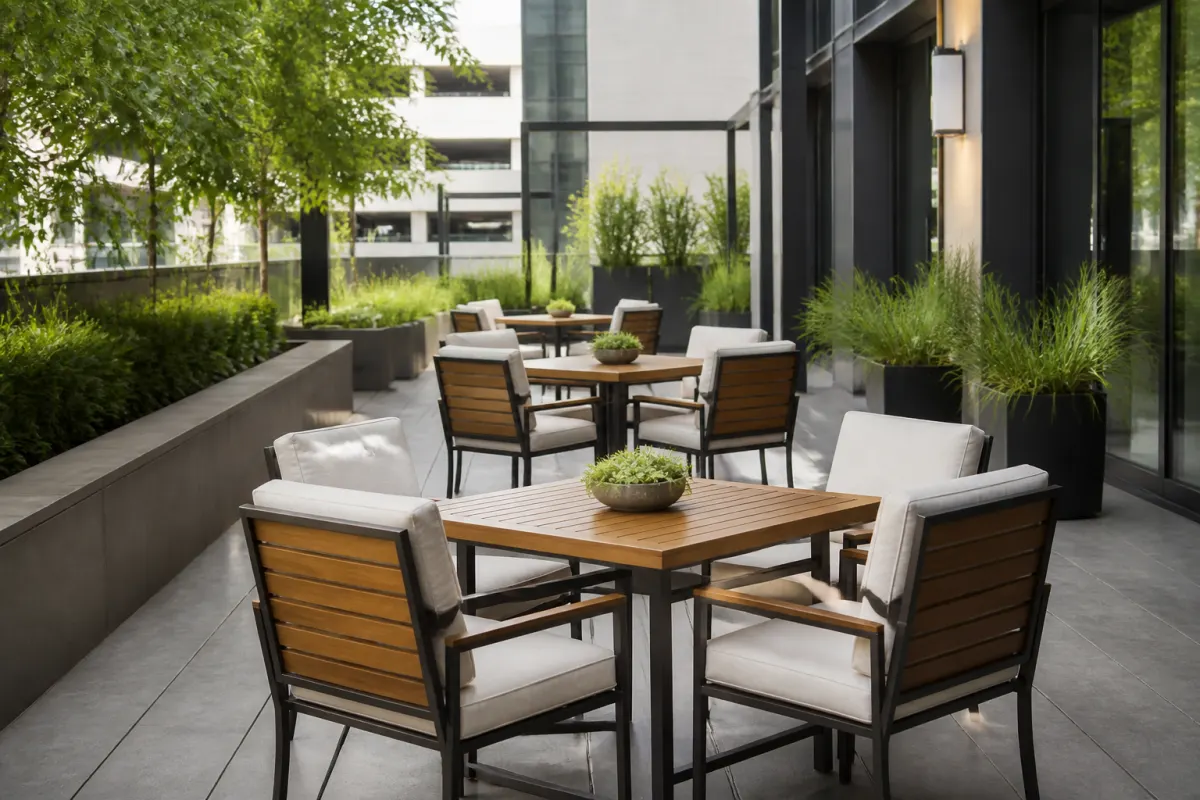
Metal frames come bare (just the frame, for use with cushions) or fully finished as the visible surface, like a slatted aluminum dining chair or a mesh sling lounge.
Durability: how each one actually fails
Inspect both the resin weave and its supporting frame. UV exposure, cleaners, contact wear, and construction can affect the weave, but a decade or two-to-three-season lifespan is not established by a wicker label. Obtain the selected product's exposure limits, cleaning instructions, warranty, and repair or replacement-weave options.
Inspect the whole metal product, including coating, joints, hardware, glides, and attachments. Follow the exact coating-repair and exposure instructions. A chip does not universally establish an immediate corrosion sequence, a many-year coating life, or the same repair frequency for every steel or aluminum design.
Cleaning and daily reset labor
Include actual cleaning and reset tasks in the product comparison rather than ranking labor from material names.
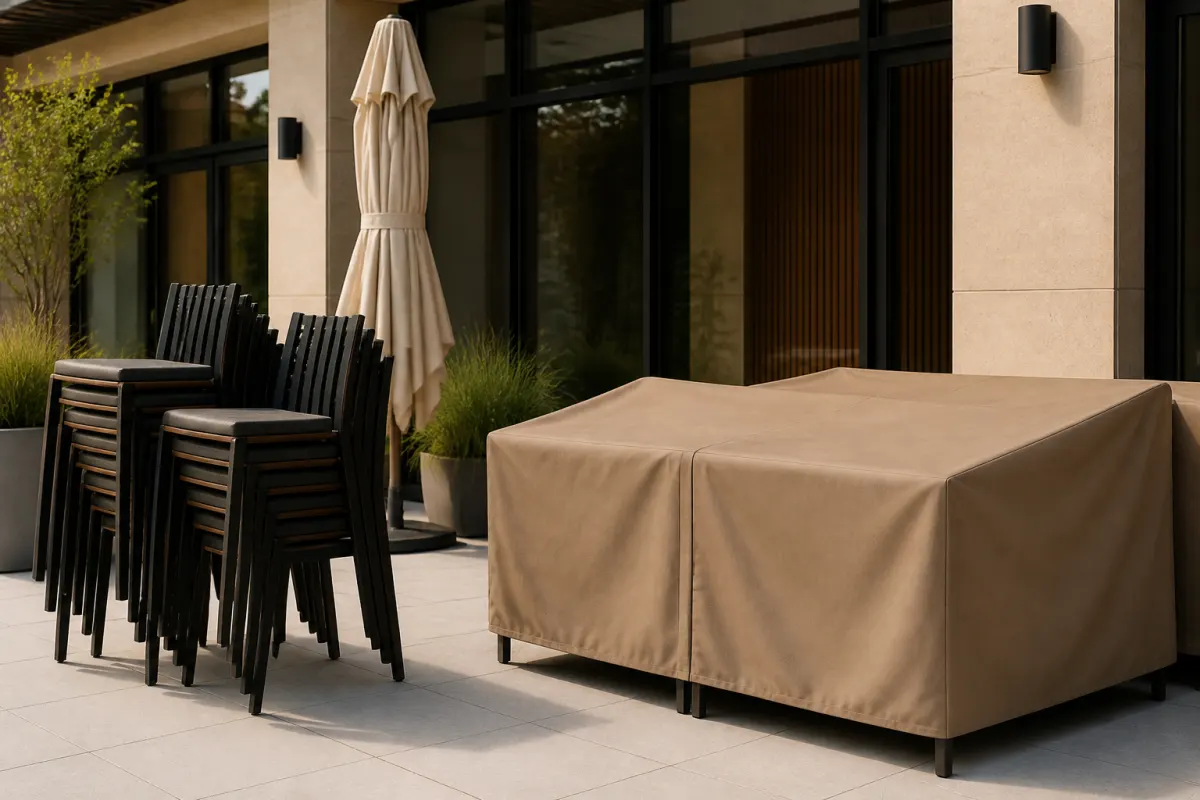
Trial the approved cleaning method on the actual metal, sling, or slatted product with the spills and staff tasks the site expects. Record time and drying requirements; no material label establishes a spray-and-wipe method or lowest cleaning labor.
Trial the selected wicker weave's approved cleaner, tools, rinsing, and drying against its expected dirt and spills. Texture can affect access for cleaning, but it does not establish a universal labor difference from metal or make cleaning a non-issue at a pool or lounge. Use measured tasks in the operating budget.
Weight and daily handling
For pieces moved daily, compare actual weight, approved handling, carts, routes, and the crew's trial results alongside appearance and occupied use.
Compare actual piece and loaded-cart weights, approved moves, routes, and staffing. Aluminum, wicker, and steel labels alone do not establish the lightest product or easiest handling.
Stackability needs the exact model's approval, stored-stack limit, matched cart, and loaded dimensions. Aluminum, wicker, or steel construction does not by itself determine whether pieces stack cleanly. Compare handling and storage with the proposed chair/cart system rather than selecting by frame material alone.
Style and guest experience
Review the exact wicker, slatted, or sling samples, colors, profiles, and cushions against the property's design brief. Those appearance preferences do not establish market popularity, a premium tier, or outdoor performance.
Neither is objectively more upscale. The choice tracks the property's design language more than any durability difference.
Making the call for your property
Document sunlight, temperature, salt or pool contact, cleaning, storage, and handling by zone. Compare exact-product approvals, care tasks, samples, and trials before selecting wicker, aluminum, steel, or a mix. Neither climate label nor material establishes a universal lower-maintenance winner.
Include measured cleaning and reset tasks for the proposed furniture in the comparison. Turnover and lounge use describe the operating brief, not automatic metal-versus-wicker time savings or comfort outcomes.
A mixed program is an option to test where different zones have different requirements. This guide does not establish that most properties choose it or that one material is always best for dining and another for lounging.
Sourcing and lead times
Obtain the selected products' production location and schedule from the supplier. A 10 to 14-week custom-order window is an early scenario to confirm for the exact finish, weave, fabric, and quantity. Record approval, production, dispatch, transit, and site receiving dates rather than assuming a single industry-wide origin or timeline.
Confirm exact minimums, mixed-model conditions, quantity pricing, and delivery scope from each supplier; consolidation does not guarantee a discount. Request a quote with quantities, climate, exposure, cleaning, and handling requirements for relevant independent suppliers to review and confirm actual products, documentation, costs, and terms.