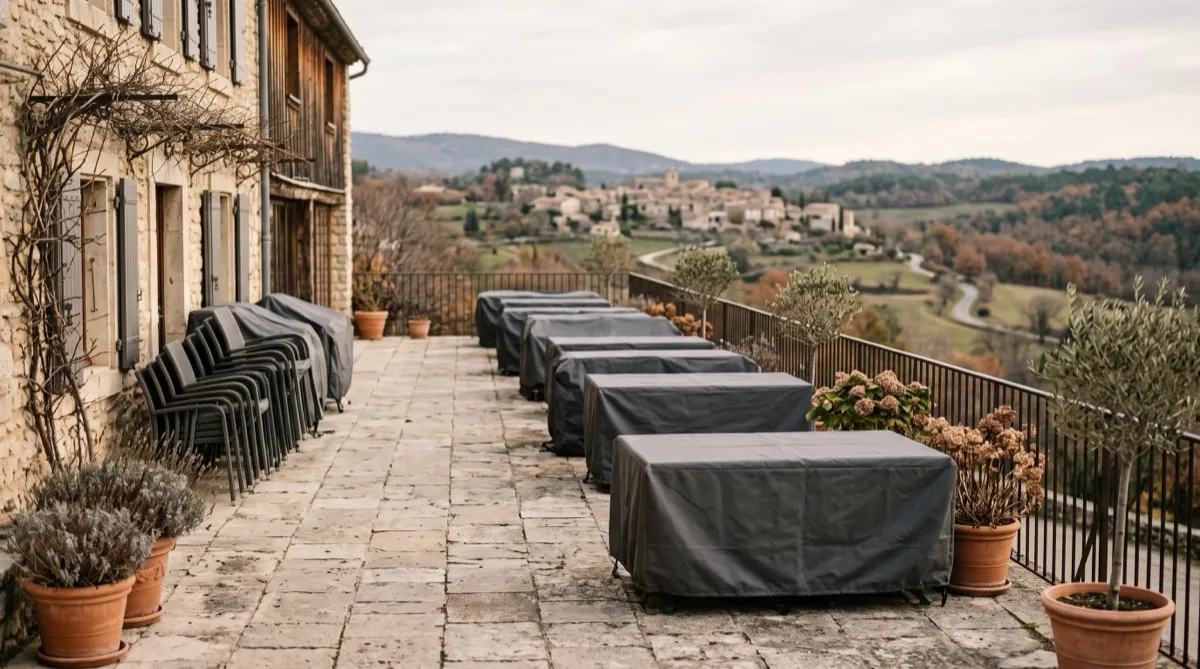
Build winterization from each product's temperature, exposure, drainage, cover, and storage instructions. Inspect for moisture, damage, and condition before shutdown and reopening. No evidence here establishes that cold itself rarely causes failure or that a rushed close-down is the dominant cause of winter damage.
Why winter is harder on furniture than it looks
Check the exact furniture's exposure, temperature, drainage, cover, and storage limits. Moisture trapped in joints or cushions is an important winter risk, but a material label does not prove immunity to cold or every freeze-thaw condition. Build the close-down procedure from those instructions, then inspect condition before reopening.
Cleaning before storage
Use the frame, finish, weave, and cushion makers' approved cleaners, tools, rinsing, and drying methods before storage. Inspect cracks, joints, coating, and soft goods, and arrange approved repairs where needed. An outdoor-rated cleaner is not automatically compatible with every assembly; follow packing and ventilation instructions rather than assuming bagging is appropriate.

What needs indoor storage versus a cover
Clean and completely dry cushions, umbrellas, and other soft goods before storage. Choose indoor storage or the exact maker-approved cover/storage method, with ventilation and drainage as directed. Do not assume every outdoor cover prevents mildew, or that every fabric assembly has the same storage requirements.
Confirm whether each frame is approved to remain outdoors over winter and what cover, snow-load, and drainage instructions apply. Aluminum does not develop iron rust, but that does not remove corrosion or coating concerns. Wood species, construction, and finish likewise need their own approved winter-storage procedure.
Stacking and space
Calculate storage using each model's approved stack height, cart or pallet method, loaded footprint, and handling access. Four-or-five-high stacks are scenarios only where the maker permits them. Stackability can offer options but does not guarantee a particular space saving or that every year's inventory fits.

What actually fails in freeze thaw
Inspect the components identified in the maker's instructions and the property's condition records, including joints, welds, footrests, umbrella mechanisms, table connections, and hardware where fitted. Moisture and freezing are conditions to assess, but no evidence here ranks footrests or welds as the greatest winter failure point. An inspection does not guarantee every later fault is prevented; take suspect pieces out of service for approved assessment.
Spring recommissioning
Do not simply pull furniture out of storage and set it up assuming winter left it unchanged. Inspect every piece before it goes back into service. Check frame joints and welds for any new corrosion or looseness that developed over the season. Test umbrella mechanisms before the first busy weekend, not after a guest finds one stuck. Air out and inspect cushions and fabric for any mildew that developed despite the cleaning and drying done at close down, since imperfect drying sometimes only shows up months later. Address anything found now, before the patio reopens to guests, rather than discovering it mid service on a busy day.
Building winterization into the operating calendar
Assign shutdown and reopening tasks, owners, and dates using local conditions and the products' instructions. Allow time for cleaning, drying, storage, inspection, and approved repairs before service. Review the calendar as conditions change rather than assuming one first-freeze date or schedule works for every program.
Sourcing replacement pieces
Plan replacement requests around the reopening date. Browse illustrative outdoor, table, and seating concepts for design direction; listings do not verify year-round outdoor or winter-storage approval. Request a quote with storage, quantities, exposure, and receiving deadlines for relevant independent suppliers to confirm actual products, instructions, availability, costs, and terms.