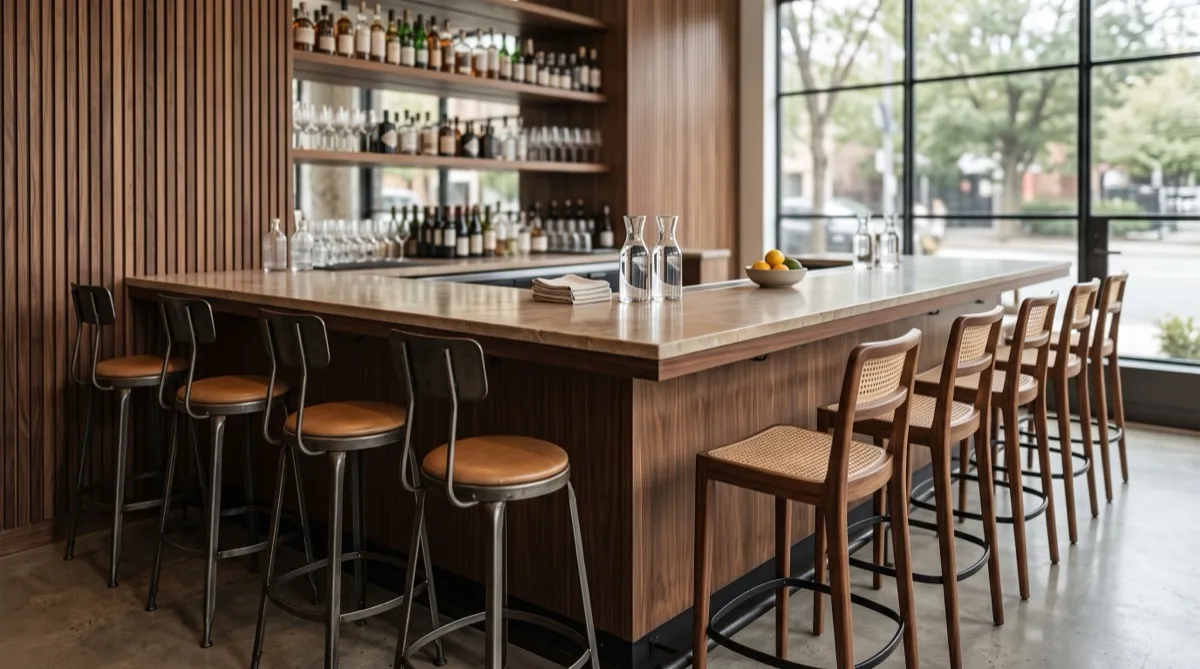
Compare the proposed metal and wood stool assemblies on the actual bar tasks, frame and joint evidence, cleaning, handling and approved repairs. Frame material is one design input; it does not determine years of service or establish the more expensive procurement mistake.
What metal frames do well
For a steel model, inspect the exact welds, joints, intended-use load, finish and cleaning documents. Compare it with the proposed wood model on the same tests and use; welded steel is not automatically immune to loosening, chemicals, moisture, chipping or scratches.
Remove a stool with a cracked weld, joint, or leg from service and obtain the maker's approved repair or replacement instruction. Re-welding, refinishing, or replacing a component needs approval for the exact tested assembly. Metal is not automatically repairable or able to tolerate leaning, dragging, and footrest impacts beyond its intended use.
The tradeoff is weight and warmth. Steel frames read colder and more industrial, and a room full of them can feel sparse without upholstery, wood accents, or a warmer finish to balance it out.
What wood frames do well
Compare the wood model's appearance with the room's samples, then document the actual mortise-and-tenon, doweled, corner-blocked, glued, or other joints. A commercial label or named joint does not establish a standard construction or prevent seasonal loosening.
Compare the actual available wood and metal finish samples with the bar top and millwork. Confirm finish codes, care, batch controls and replenishment terms; a material does not establish a wider tone range or future matching availability.
Obtain inspection, finish-care and authorized repair instructions for both models, including moisture and temperature limits. Compare parts and repair quotes for actual damage; wood does not universally loosen faster, require replacement, or cost more to repair than metal.
Weight and how it plays out on the floor
Compare the exact stool and loaded handling weight, stability documentation, grip points and floor contact. Neither metal nor wood establishes lighter handling or greater stability; time representative moves with the intended staff and route.
For stools moved during private events or cleaning, evaluate each candidate in a reset trial. For a fixed location, still review inspection, care and service access. Select from the actual handling and use evidence rather than choosing metal for an assumed weight advantage.
Repairability over the life of the stool
Think past the first year, but treat a 7 to 10 year horizon as an illustrative lifecycle budget, not an assured stool lifespan. Request the exact model's warranty, inspection instructions, replacement parts, and approved structural-repair process. A metal frame is not automatically repairable, and a failed wood joint does not by itself establish that replacement is the only approved option. Compare the maintenance plan for the actual products.
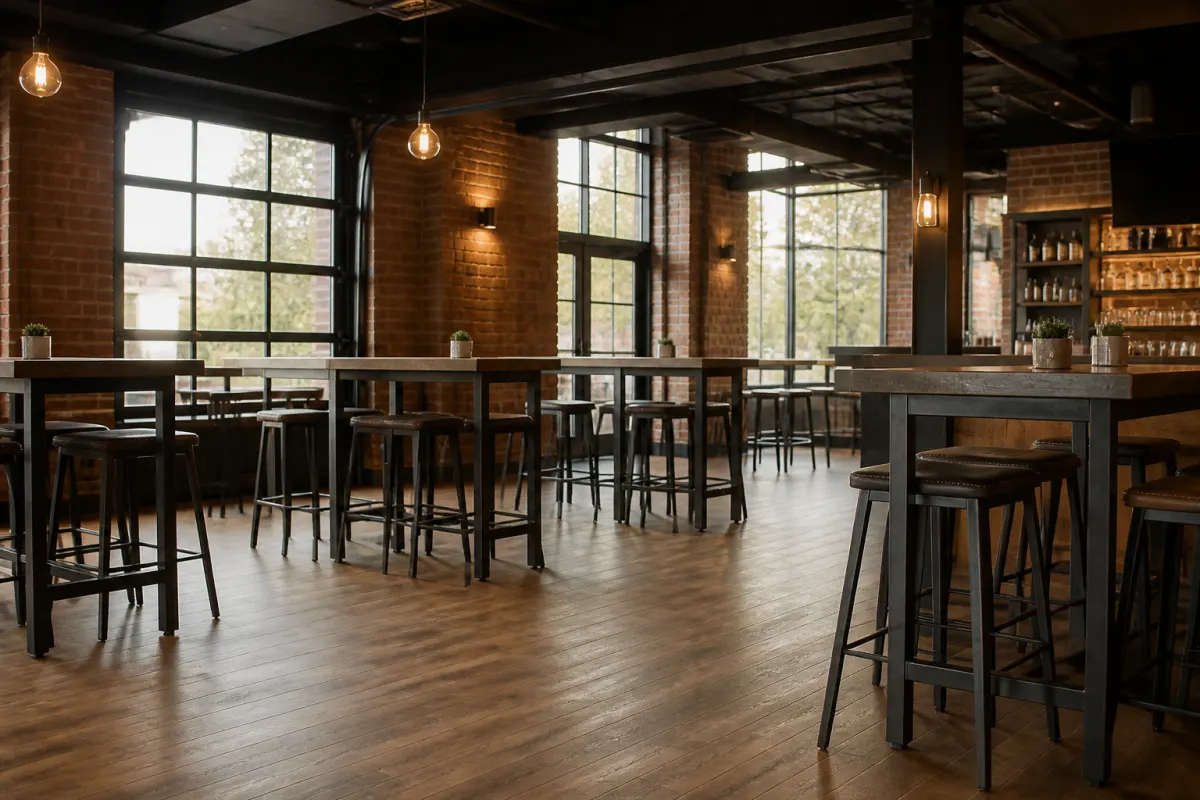
Use the same lifecycle worksheet for both candidates: acquisition, inspections, cleaning, approved repairs, parts and replacement assumptions. A maintenance team or longer ownership horizon does not establish a material winner without those records.
Mixing materials by concept
Most experienced buyers do not pick one material for the whole room. They mix by zone and by function.
Sports bars and high-volume neighborhood bars: record the actual turnover, spills, cleaning and handling, then compare documented wood and metal models on those requirements.
Upscale casual and craft concepts: compare wood, metal and wood-look finish samples with the millwork, then evaluate each zone's exact model and care documents rather than assign durability by appearance.
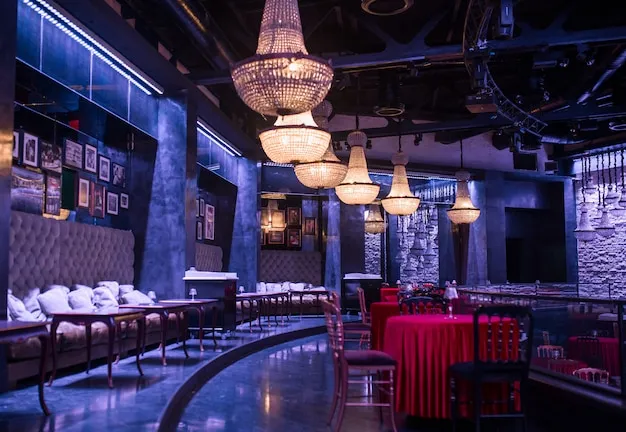
Nightclubs and late-night lounges: inspect visibility, stability, footrests, cleaning and reset needs in the actual lighting. The bar furniture guide provides related planning questions; low light does not make a material-wide durability ranking valid.
Hotel and resort bars: evaluate wood, metal and wood-tone finishes against the property's cleaning and handling program. A wood-look metal finish is an appearance option, not evidence of reduced maintenance exposure.
The style question, answered honestly
Wood does not automatically look better than metal, and metal does not automatically look industrial. Powder coat comes in wood-tone finishes that read warm from a few feet away. Wood frames can look heavy or dated if the profile is wrong for the room. The material decision should follow the durability requirement of the specific zone first, then get resolved for style within whichever material wins on function. A stool that looks perfect in a rendering and fails within a year is not a good value regardless of which material it used.
Getting the height and quantity right
Frame material is one half of the bar stool spec. Height and quantity are the other half, and getting height wrong is a more common and more visible mistake than picking the wrong material. Our guide on how to choose the right barstool height walks through the seat-to-counter math for bar height and counter height programs. If you are furnishing a full bar or nightclub program and not just replacing stools, our guide to furnishing a bar or nightclub covers zones, seating mix, and sourcing timelines.
Related reading
Request a quote with your stool count, occupied-use pattern, counter heights, floor conditions, and finish direction. Ask responding suppliers for the exact frame and joint construction, seat-height options, load documentation, and repair and care instructions so the material comparison is tied to actual models.