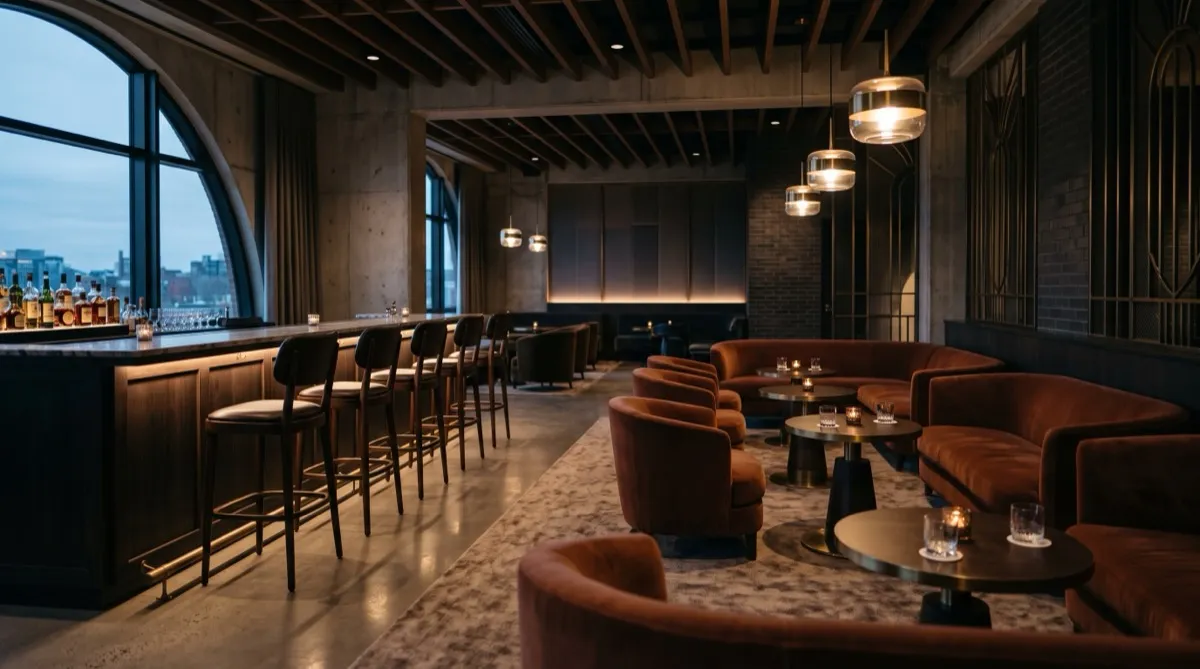
Bar and nightclub furniture takes more abuse than almost any other commercial environment. Late nights, constant spills, guests leaning on every surface, furniture moving around throughout the evening.
Buy the wrong thing and it won't survive a season. Here's what actually holds up in a high-traffic bar environment and how to source it.
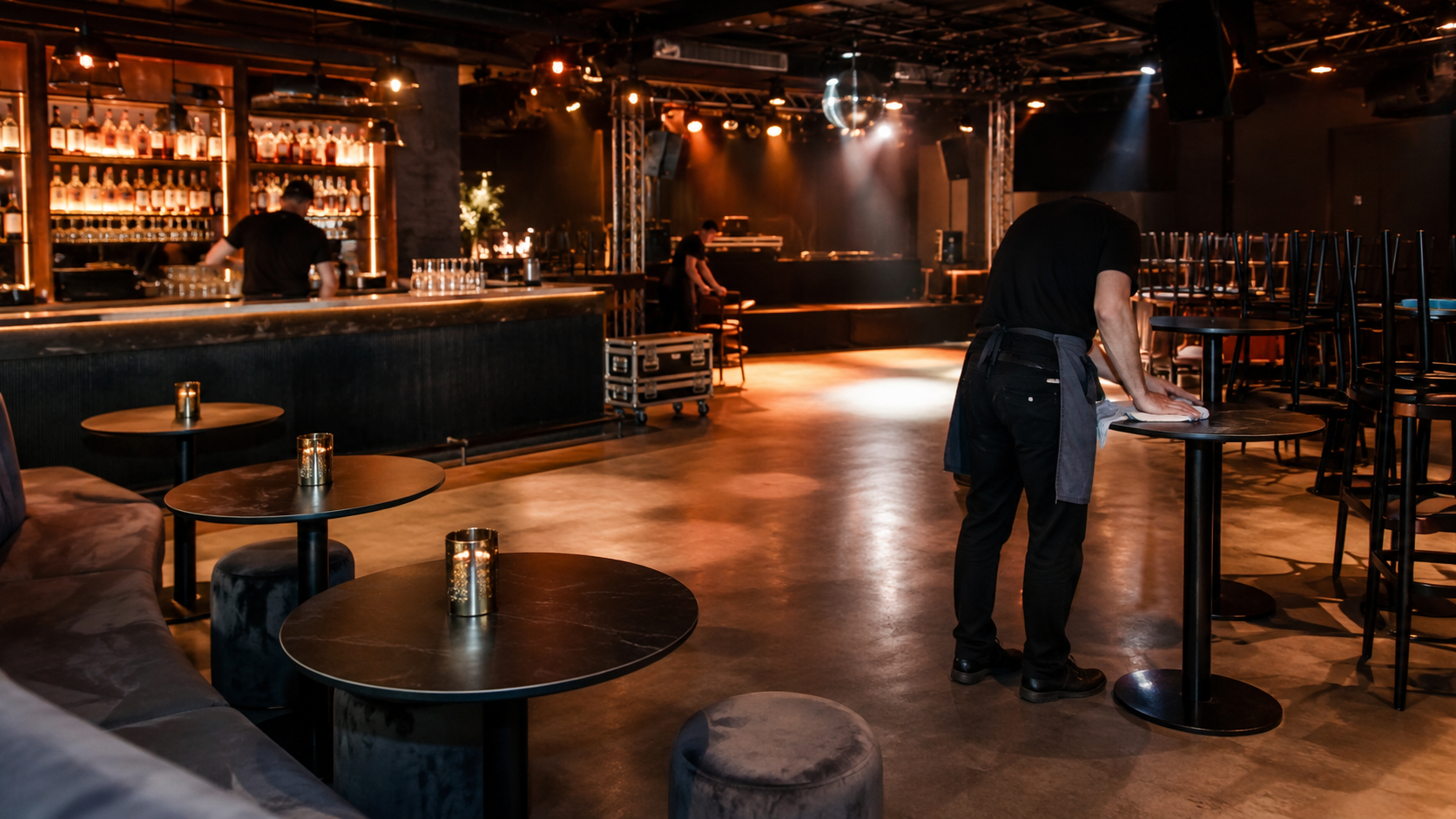
The bar environment is uniquely demanding
Think through what bar furniture goes through in a single night.
Spills: alcohol, beer, juice, soda. Multiple times per night on every surface. More concentrated than a restaurant dining environment because beverages are the primary product.
Standing and leaning: guests lean back on barstools, stand on footrests, sit on table edges, put full body weight on bar tops and tables while talking.
Moving: furniture shifts constantly as groups form, change, and leave. Chairs drag, tables slide.
Cleaning: commercial cleaning products applied daily, sometimes between rushes. Bleach solutions in some operations. Anything the fabric, finish, or joinery can't handle will fail.
Any furniture that can't handle all four of those things will fail fast. A bar environment is where the difference between commercial and retail grade becomes obvious within 90 days of operation.
What to buy for the bar itself
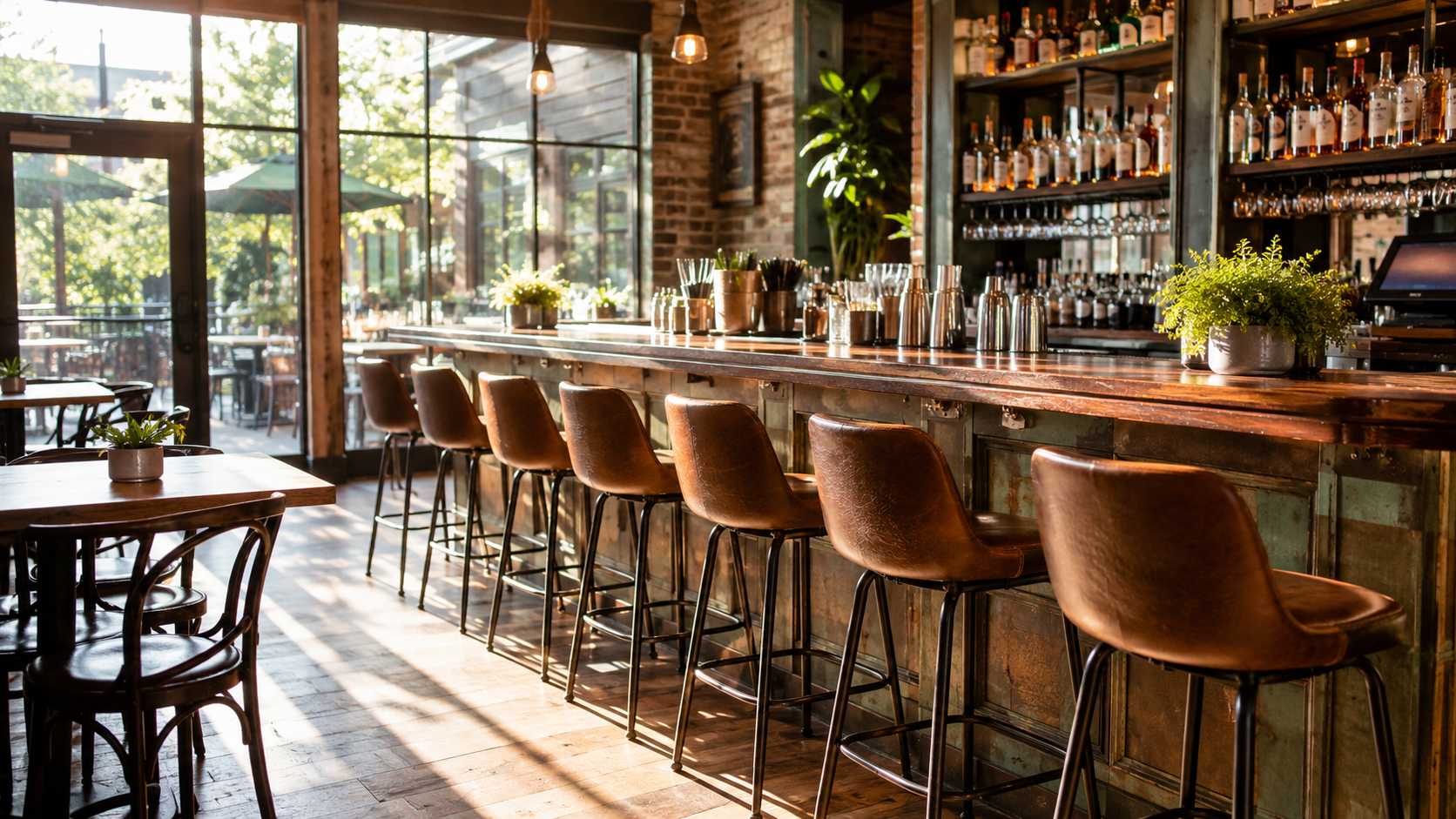
Barstools are the highest-stakes purchase. Heavy gauge steel frame with welded joints. The footrest must be reinforced, it's the first component that fails on lower-quality barstools because it takes concentrated stress every time a guest gets on or off. Upholstered seat in vinyl or performance fabric that wipes clean with commercial cleaning solution. No fabric that absorbs at the bar. Bar height seat at 28 to 30 inches for a standard 42-inch bar top. Backless stools work well in tight bar spaces and high-turnover environments.
High-top tables: cast iron or heavy steel base. Heavy bases don't slide or tip when guests lean on them. Light bases do. Laminate or solid surface top. Avoid wood tops at the bar, they absorb spills and stain regardless of how well they're sealed. The maintenance commitment on wood bar tops in a busy bar environment is significant.
Cocktail tables for standing areas: similar base spec to high-top tables but smaller diameter tops that groups can stand around comfortably. Popular in spaces with standing room areas near the bar.
Lounge and VIP seating
If your bar has a lounge section or VIP area, the spec changes.
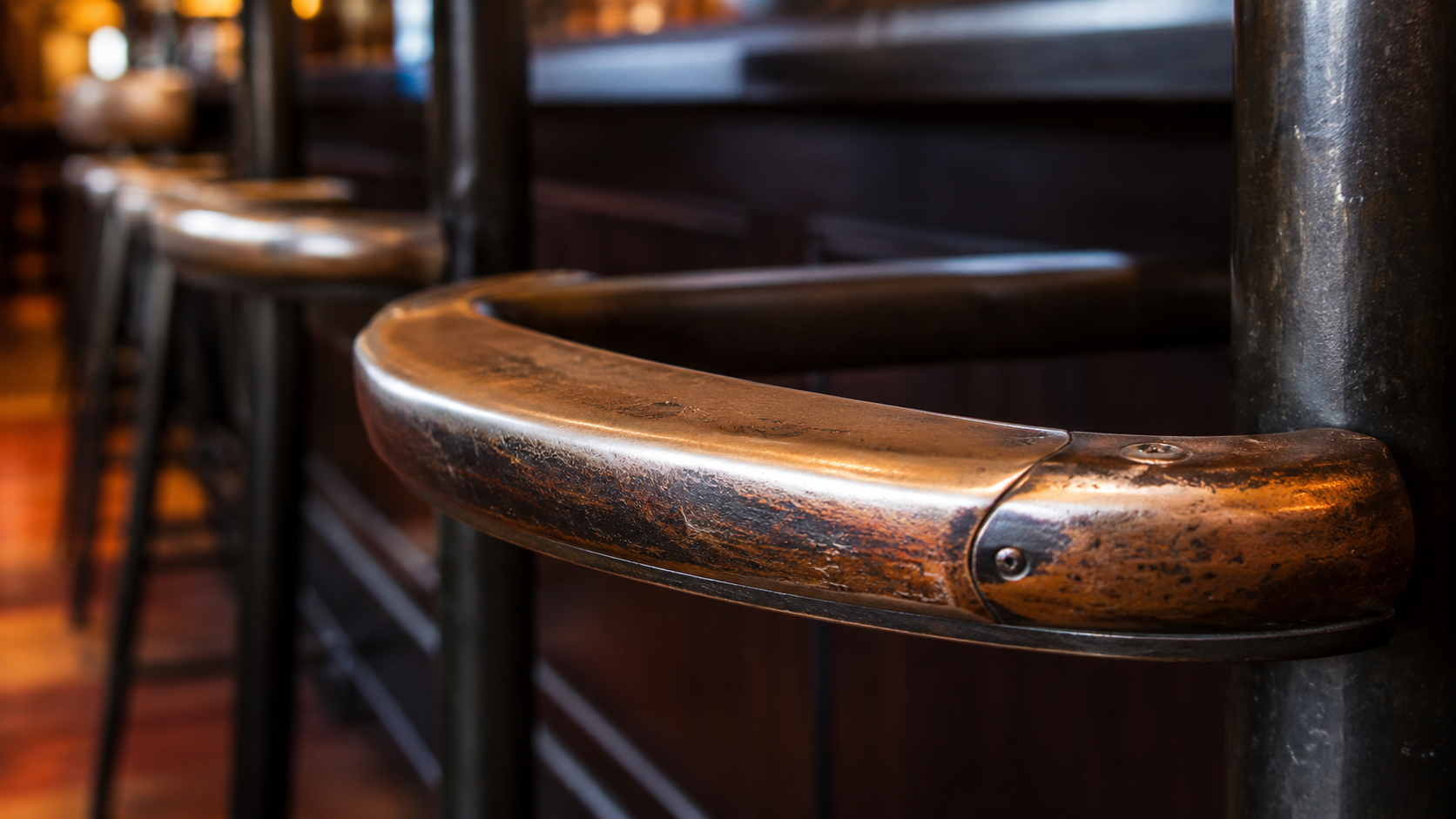
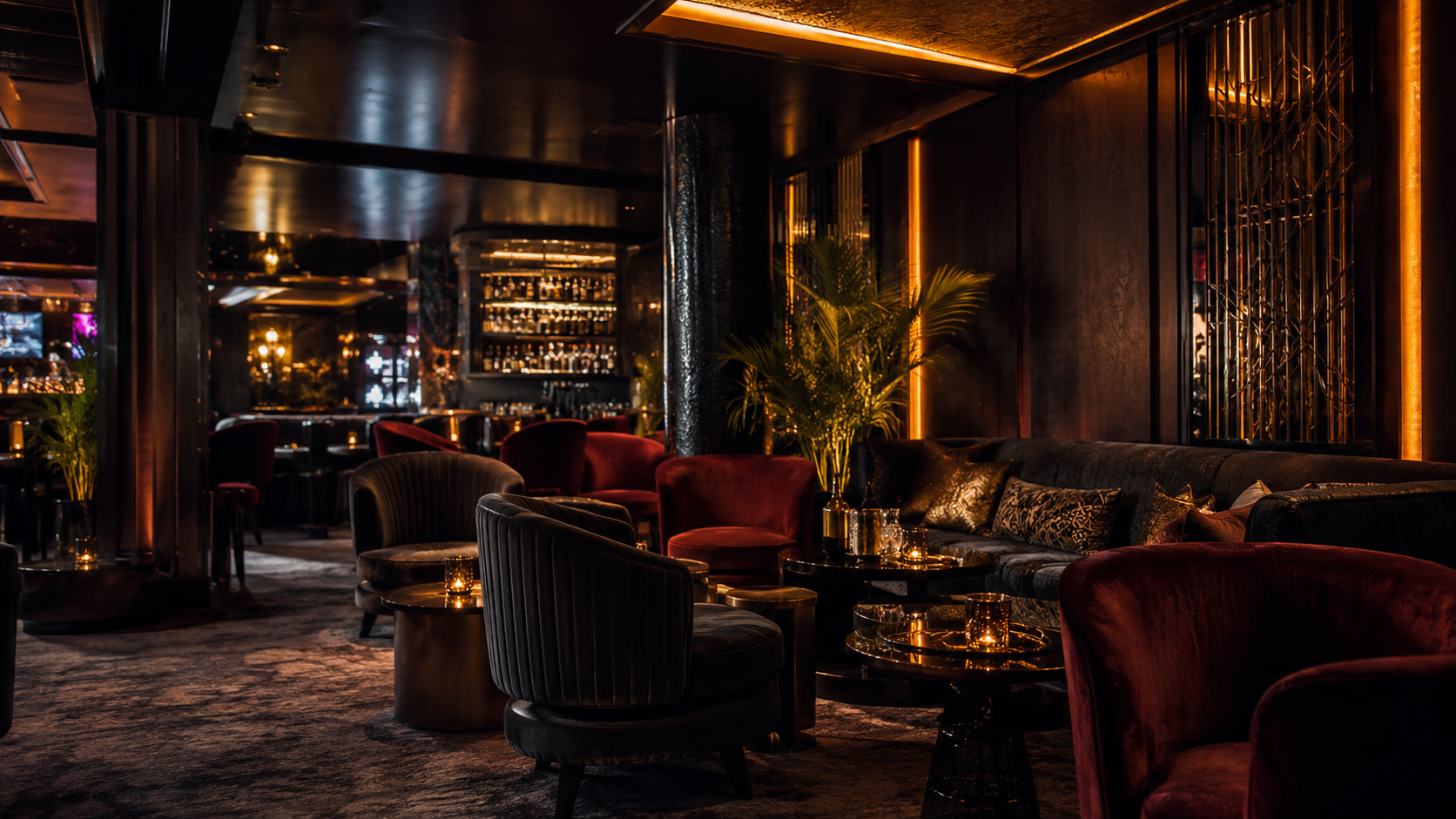
Lounge seating should be lower and more comfortable than bar seating. The durability requirements are the same, but the aesthetic is different. Velvet, performance fabric in dark colors, or leather reads premium. Specify commercial grade with minimum 50,000 Wyzenbeek regardless of how the material looks.
Banquette or booth seating built into the wall or as standalone units is common in bar lounge areas. Custom dimensions are typical here since the footprint is specific to your space. We do custom orders on banquette dimensions and upholstery.
Cocktail tables for lounge seating run lower than bar height, typically 16 to 20 inches, to work with low lounge furniture. Bases should be solid enough that they don't tip when a drink is placed at the edge.
For VIP areas where aesthetics are as important as durability, custom finishes and custom upholstery make the most sense. This is where the investment in a non-standard finish or a premium upholstery pays off visually.
Sourcing, minimums, and timeline
Bar furniture minimums: barstools typically 20 units minimum. Lounge seating typically 4 to 6 units per style.
Our furniture is manufactured in China, standard across the commercial furniture industry. In-stock items move fast. Custom orders and larger quantities ship factory-direct at 10 to 14 weeks. For a bar opening, place your furniture order 14 to 16 weeks before your launch date.
Custom options on finishes, fabrics, and dimensions are available across bar furniture categories. Bar environments often have specific aesthetic requirements, and bringing us your concept direction with reference images gets you to the right product faster than a description alone.
The bottom line
Bar furniture needs to survive spills, standing, leaning, moving, and daily cleaning with commercial products. Welded steel frames, reinforced footrests, vinyl or performance fabric at the bar, commercial foam, and cast iron table bases. That combination handles everything a bar environment puts furniture through. Spec it right once rather than replacing it every season.
Related reading: Commercial Barstool Buying Guide · How to Choose the Right Barstool Height · Commercial Upholstery Fabric Guide
Our take
The guide is right that heavy cast-iron and steel bases keep a table from tipping when guests lean, and at the bar rail that is exactly what you want. But a nightclub floor is not a fixed floor plan. Tables get pushed back for a dance floor, standing zones open up as the night builds, and a VIP section gets rebuilt for a booking. So the smarter read is to split the room by mode rather than spec every piece the same. Keep the immovable heavy bases where guests plant and lean, at the bar and around the perimeter, and give the flexible middle of the room a lighter, quickly clustered set of high-tops and cocktail tables that two staff can roll or carry off to clear a floor in minutes.
The bottom line: Spec the bar by mode, not one rule. Anchor the rail and perimeter with heavy tip-proof bases, but give the floor a lighter, quickly cleared set of high-tops on glides so staff can open a dance floor in minutes without dragging furniture across it.