
Compare the complete chair for the restaurant's appearance, occupied use, cleaning, handling, repair, and exposure. A material name does not establish whether a chair remains in service in year five or is replaced sooner. Use the actual model's documentation, samples, and the operation's records when comparing wood, metal, and polypropylene.
Solid wood
Solid wood is an option for the room's design brief. Assess the exact joints, loads, relevant tests, finish, cleaning, repair, and warranty. Mortise-and-tenon, doweled, welded, and bolted construction need review as complete designs; no universal wood-versus-metal joint-life ranking or first-season finish failure is established here.
Compare each candidate chair's actual mass and approved handling or stacking instructions. Wood, steel, aluminum, and plastic categories contain different designs, so material alone does not establish which chair is lighter or easier for staff to move.
Where to compare wood: dining rooms and private dining spaces where its appearance meets the brief. Review actual load, use, and handling requirements rather than assuming those rooms have lighter use.
Where it needs further review: heavy reset cycles, outdoor exposure, and frequent stacking. Wood furniture should be selected for the exact intended use; an indoor chair is not made outdoor-rated by applying sealant.
Metal
Compare steel and aluminum chairs using the exact frame, joints, finish, intended use, tests, loads, care, and repair information. Welds can also be damaged, and serviceable fasteners may require specified inspection or tightening. Aluminum does not develop iron rust, but that fact alone does not establish coating durability or outdoor suitability.
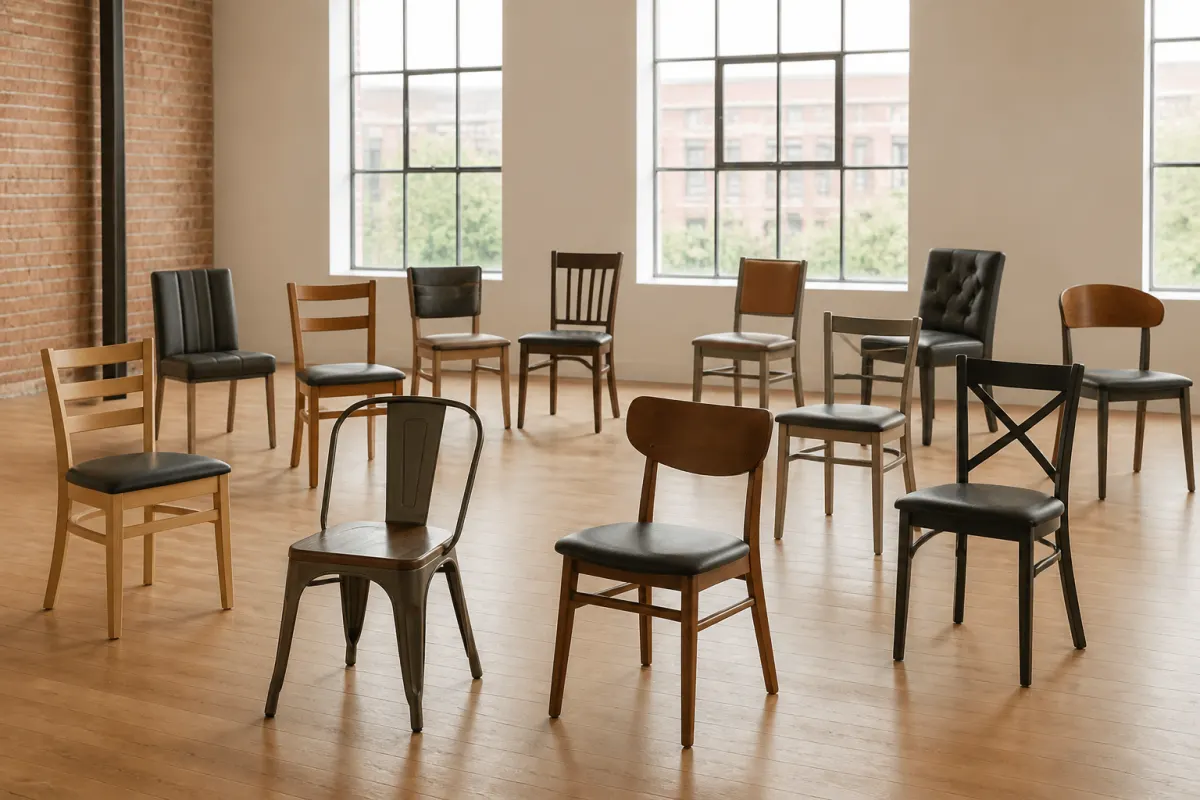
Compare actual chair weights at the required documented use and load, alongside staff handling trials. Upholstered, plastic, wood, and metal seats are options; the exact seat construction and cleaner compatibility determine their suitability.
Inspect joints, frame, seat attachment, glides, and finish together. Obtain relevant tests, assembly and inspection instructions, and repair options. Do not require welding as a substitute for assessing the complete chair or predict failure from a bolted-joint label alone.
Where to compare metal: dining, bar, lounge, patio, and event programs where the exact model meets intended use, comfort, exposure, handling, and storage requirements.
Polypropylene and molded plastic
Polypropylene chairs vary by formulation, reinforcement, intended use, and maker documentation. Check outdoor approval, UV/weathering information, cleaning products, allowed loads, stack/cart limits, and replacement parts for the exact model. A commercial or retail label alone does not prove that plastic will never crack or fade, or establish the weight of every chair in the category.
Review plastic-chair samples against the design brief rather than treating the material as a fixed visual tier. For food halls, cafeterias, cafes, or other programs, assess cleanability, comfort, loads, stacking, and appearance together.
For mixed-material chairs, assess the frame, seat, back, and their connections as one assembly. Compare actual mass, approved cleaning, relevant tests, loads, and parts; combining metal and plastic does not by itself prove durability or reduced weight.
Reading the material against your service style
Match material to how the chair actually gets used, not to how the room looks in a rendering.
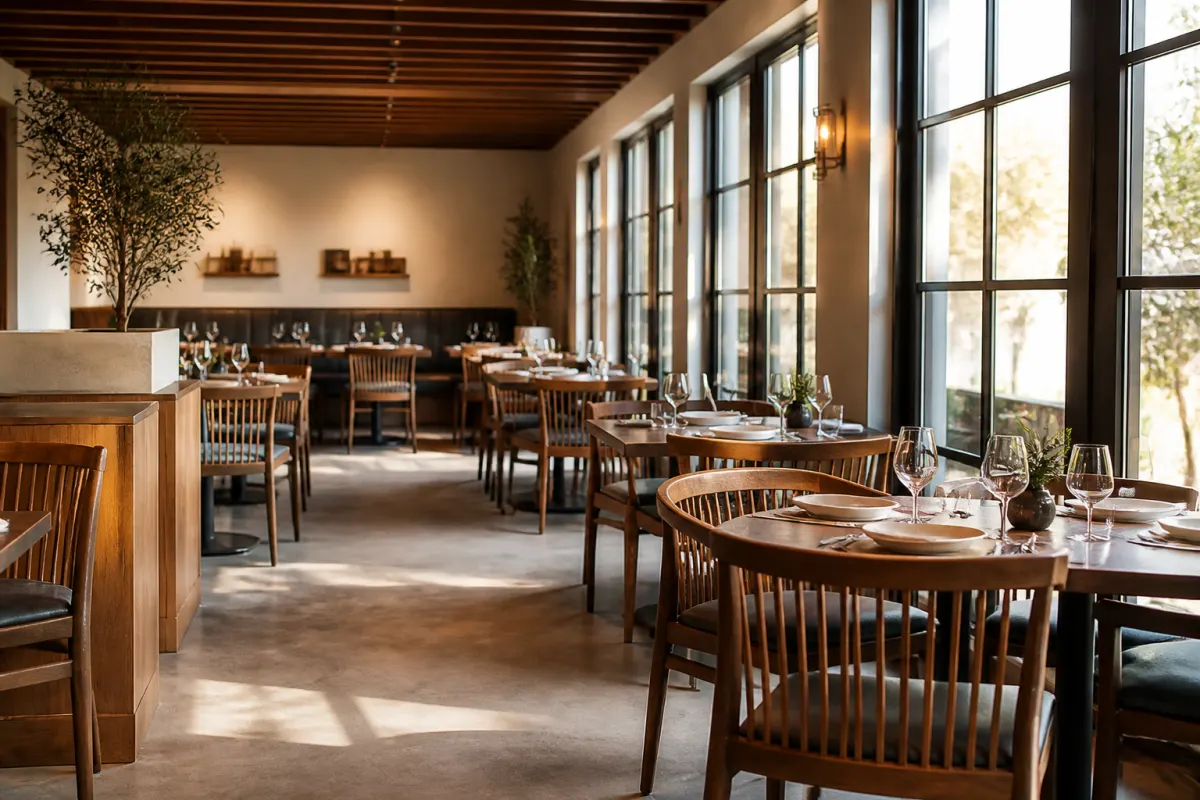
High turn, quick table cycles: compare actual cleaning, resetting, tests, loads, and repair requirements. Metal with poly or vinyl is one combination to assess, not a universal prescription.
Full service, longer dwell time: trial the proposed chairs for the intended meal length and review finish and care. Wood or upholstered metal can be compared without assuming a material alone establishes comfort.
Outdoor or patio: compare the exact proposed frame, finish, seat, hardware, tests, exposure limits, and care. Aluminum, wood, resin, and woven options each need model-specific outdoor-use approval; the material name does not supply it.
Banquet, event, or reconfigurable space: compare approved stack/cart systems, handling, occupied comfort, loads, and storage dimensions. See the bar furniture guide for related stool and high-top questions; confirm tests and limits for each product rather than transferring a chair's rating to another design.
What actually fails first
Inspect the whole chair rather than ranking every welded joint above every bolted one. Ask for intended use, relevant tests, approved loads, assembly and maintenance instructions, and replacement parts. Joint design and workmanship matter, but no joinery label guarantees a service life or eliminates other failure points.
Fabric or cushion add-ons carry their own separate durability question (Wyzenbeek rating, vinyl versus fabric, cleaning chemical resistance) independent of the frame material underneath them.
Volume and lead times
Confirm the selected products' production location and order milestones. A 10 to 14-week custom-order window can be an early planning scenario; the supplier must confirm the actual finish, quantity, dispatch, transit, and receiving dates. Compare landed cost and warranty terms across the proposed full order rather than assuming every consolidated order earns a discount.
Request a quote with seat counts, service tasks, handling, and indoor or outdoor placement. Relevant independent suppliers can propose actual chair options and confirm their construction, intended use, documentation, prices, and delivery terms; the site does not certify material or joinery suitability.