Include drinks, belongings, occasional leaning and housekeeping products in the coffee-table brief. A residential or commercial label alone cannot predict survival or a replacement date.
Top material is where most tables fail first
Request the exact top, substrate, finish and edge specification and approved cleaners. Solid surface and HPL do not universally outperform every veneer assembly or permit aggressive chemicals.
Compare stone, composite and glass samples against their actual load, impact and care limits. None resists nearly everything, and appearance or a predicted fingerprint pattern cannot establish suitability by itself.
Whatever the top material, obtain compatibility instructions for the exact cleaning products, concentrations and routine. Do not assume a commercial label permits every disinfectant; inspect an approved sample or follow the manufacturer's specified trial procedure before the room order.
Base stability and weight distribution
Confirm intended loads and applicable stability documentation for the complete table. Review the base footprint on the actual room layout; width, cast metal or low weight distribution alone cannot establish safe use.
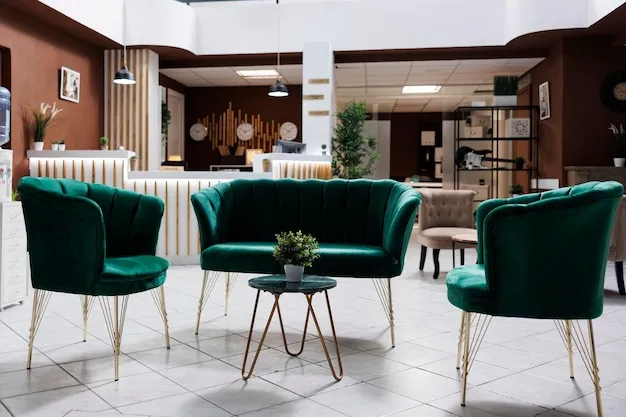
For a shelf or stretcher, confirm its permitted loads and whether it changes usable floor or knee space. The feature does not automatically establish stability.
Sizing the table to the seating cluster
Trial reaching and rising with the actual surrounding chairs. 14 to 18 inches from seating can be a layout example, not a universal clearance or accessibility answer. Keep the required circulation and maneuvering areas clear.
Trial table and seat heights together. 16 to 18 inch coffee tables and 20 to 22 inch occasional tables are examples to compare, not proof of fit for a particular lounge chair.
Matching finishes across the vignette
Compare physical finishes with the lounge seating, ottomans and console tables. One supplier does not automatically ensure a match. The tables category offers concept imagery for the brief rather than verified coordinated product lines.
Edge profile and safety
Consider edge profiles and placement with the project team, particularly beside traffic paths. An eased edge may fit the brief, but cannot guarantee impact protection or resistance to chipping. Keep low furniture outside required circulation.
Properties running family or leisure-heavy traffic should weigh this even more heavily than a business-focused lobby, since a low table at knee height in a busy walkway is exactly where a distracted guest makes contact first.
Budgeting a lobby refresh
Run the numbers for a full lobby seating refresh through the furniture cost calculator before committing to a design, since coffee tables are often ordered as part of a larger vignette package rather than a standalone line item. See our hotel lobby furniture guide for how coffee tables fit into the broader lobby furniture plan, including seating counts and traffic-flow considerations for high-volume properties.
For a fixed opening date, obtain current stock, approval, production and freight milestones for the exact top and base. Compare standard and custom options from written quotations rather than assuming which one arrives sooner.
Request a quote with the seating layout, top preferences, intended loads and cleaning products so independent suppliers can document proposed tables.