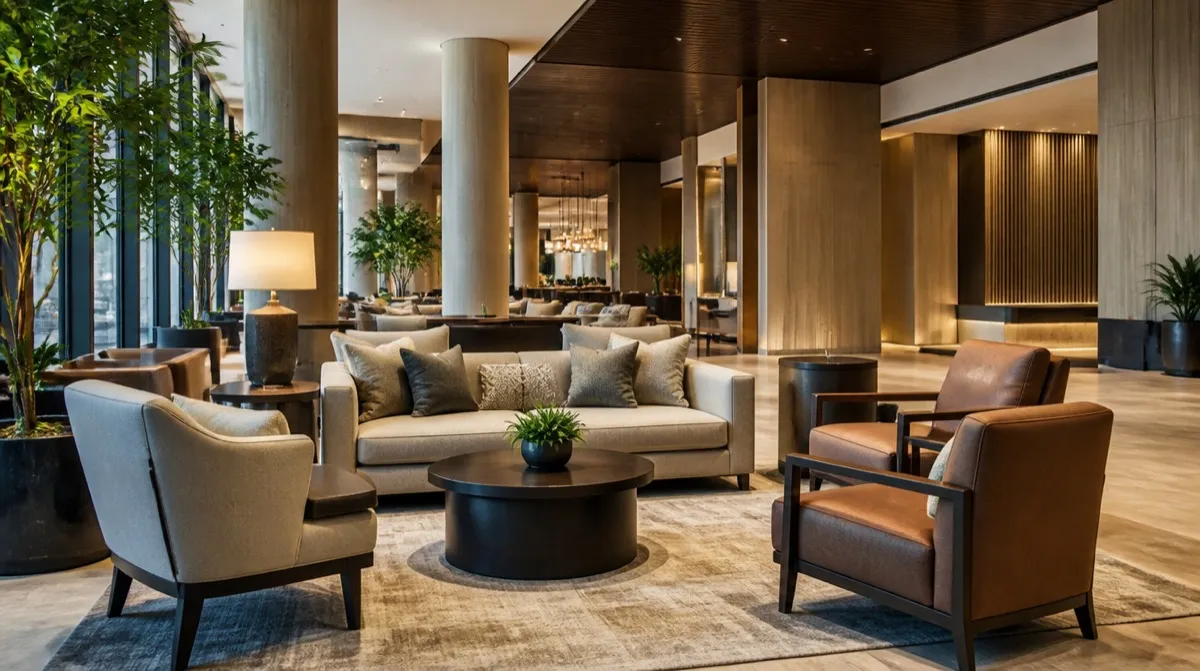
A reading room is the one space in a library where furniture is the whole program. There's no circulation workflow to design around, no computer bank to wire, no children's-room durability math. Just a chair, a lamp, a surface within reach, and enough quiet to make someone forget they meant to leave in twenty minutes. Get that combination right and the room becomes the reason people drive across town on a Saturday. Get it wrong and the room reads as overflow seating nobody asked for.
The furniture doing that work is a small, deliberate list: anchor lounge chairs, a scattering of sofas for the rare pair who came together, and side tables sized for a lamp and a mug rather than a laptop and a stack of files. It is not the whole-branch seating mix a library director has to balance across a floor plan; that ratio work, computer stations against browsing seating against group tables, lives in a separate planning conversation. This is about the one room where the library commits to comfort as the point.
What makes reading-room seating different from general lounge seating
Trial the proposed chair for the reading and laptop tasks in your brief. One-hour or ninety-minute sessions can guide a trial, but lounge labels do not establish how long every user remains comfortable.
Compare seat depth, height, arms and support with different users and postures. More foam or a deeper seat is not automatically a better fit. Review acoustics with the project team; upholstery alone does not guarantee that page turns or chair noise cease to be a problem.
How should a reading room pair chairs with tables?
Every anchor chair needs a surface within arm's reach, and the surface has to match what people actually bring into a reading room now. A low side table sized for a lamp and a drink still matters, but plan on a meaningful share of that seating also needing a stable spot for a laptop, which pushes some pairings toward a slightly taller occasional table rather than a true coffee-table height. Mix both heights across the room rather than standardizing on one. A patron settling in with a physical book wants a lower table at elbow height; a patron working through email between meetings wants something closer to lap height that won't require hunching.
Space chairs so a table serves one seat, not two strangers reaching across the same surface. Reading rooms are one of the few library spaces where solo use is the default, not group use, and furniture layout should read that way. Leave enough clearance behind each chair for someone to walk a full lap of the room without brushing a shoulder, both for accessibility and because a reading room that feels cramped undercuts the whole point of building one.
Holding a civic, timeless look on a contract-grade budget
Use the library's actual capital horizon and room design brief when choosing appearance and replacement assumptions. Fifteen to twenty years for libraries and five to seven for hotels are not verified universal refresh cycles.
Choose character through physical samples, proportions and the intended room setting. Confirm loads, applicable upholstery requirements, cleaning and support documentation independently of the look. A contract-grade label does not guarantee two decades of public use.
Sightlines and light matter as much as the furniture spec
Anchor seating works best positioned to take advantage of whatever natural light the room has, near windows where possible, angled rather than lined up in rows facing a wall. A reading room arranged like a waiting room, chairs in a perimeter line, undercuts the destination feeling even with excellent furniture. Cluster seating in twos and threes around shared light sources and sightlines to stacks or a courtyard, with enough gap between clusters that one group's conversation, however quiet, doesn't carry into the next.
Confirm supervision and safeguarding requirements with library staff for the actual reading-room users. Balance privacy and comfort with the required sightlines; quiet patrons cannot be assumed to make the space self-policing.
Specifying the room without re-solving branch-wide seating
The library seating guide covers how a full branch balances lounge, table, and computer-station seating across its total headcount; use that ratio work first to confirm how many seats the reading room actually owns in the building's overall program before locking a furniture count here. Once that number is set, this room's job is to make each of those seats count as a destination seat rather than an overflow seat, which is a materials and layout decision more than a quantity one.
Request a quote with seat count, tasks, light conditions and the room finish brief. The armchairs category provides design concepts rather than verified long-dwell specifications. The furniture cost calculator supports initial planning; obtain actual quotes and fit trials. The library furniture page organizes the other branch categories.