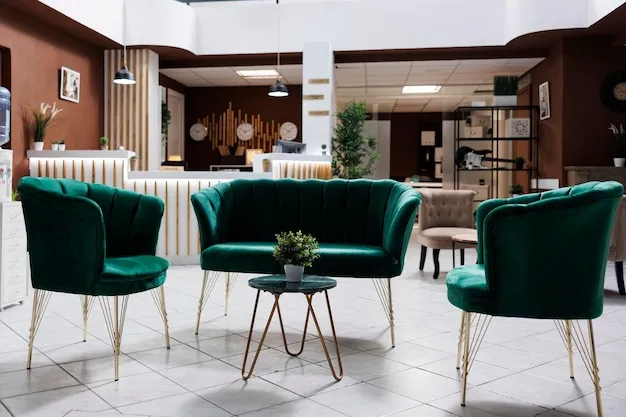
Library seating is not one product decision, it is a ratio decision. A branch needs task chairs at study tables, lounge pieces for readers who are staying an hour or more, and perch or bench seating near the stacks and entry where people sit for five minutes between errands. Order one chair type for the whole building and you end up with a reading room full of task chairs nobody wants to relax in, or a lounge area with nothing sturdy enough for someone doing real work. The mix is the spec.
Why library seating splits into three functional types
Think about how a visitor actually moves through the building. Someone parking a laptop for two hours at a study table needs a chair with real back support and a seat that stays comfortable through a long session, the same task-chair logic that governs an office floor. Someone who pulled a novel off the new-fiction shelf and wants to read for forty minutes wants something closer to a lounge chair, lower, softer, angled to encourage staying rather than working. Someone waiting on a hold pickup or catching their breath between stacks just needs a place to land for a few minutes, which is what bench and perch seating is for. Specifying all three as the same chair means overbuying comfort where you need durability, or underbuying durability where you need comfort.
Task seating at study tables and desks
For study seats, compare the selected metal or wood frame, joints, base, swivel or glide hardware, test documents, and parts against the library's actual duty cycle. Test sled and four-leg bases with approved glides on the exact floor, including occupied movement. Neither metal nor a sled base establishes longer life or less floor damage than another documented model.
How many task chairs does a library actually need per study table? Plan for one chair per linear seat at the table, sized to the table's actual working width rather than its full length, and test a ten-percent reserve as an illustrative budget scenario. Set the actual spare count from repair history, reorder time, storage capacity, and available replacement parts. A four-person table specified at exactly four chairs leaves you short the moment one chair needs repair.
Lounge seating for longer dwell times
For lounge seats, test the intended reading posture, cushion support, and ease of entry and exit with actual users. Compare tight and loose cushions by the assembly's fatigue, parts, and care documentation; a tight construction or performance-fabric label alone does not prevent sag or establish public-building cleanability.
Group lounge seating loosely rather than in rigid rows. A cluster of two or three chairs around a low table reads as an inviting corner; a straight line of identical chairs against a wall reads as a waiting area, even when the furniture itself is comfortable.
Perch, bench, and stack-adjacent seating
The third category is the one libraries most often skip and then wish they had. Short dwell-time seating near entries, hold-pickup areas, and stack ends gives a visitor somewhere to sit without committing to a study table or a lounge chair. Benches and simple perch stools do this well because they are compact, easy to keep sightlines around for staff supervision, and cheap enough per unit to place liberally without eating the furniture budget that a full lounge or study program needs. This is also the seating that takes the most casual, low-attention use, so keep the spec simple and durable rather than premium.
Upholstery and cleanability across the whole mix
For each upholstered zone, review the exact textile's abrasion method and result alongside the maker's cleaning instructions and the finished seat's construction. Compare light, dark, and mid-tone samples under branch lighting and with the intended cleaning process; color and a high double-rub count do not establish wear resistance or a maintenance outcome. Evaluate leather or leather alternatives on the same documented care criteria.
Controlling noise through the base, not just the upholstery
Record noise and floor-care requirements for each library zone. Test the exact base, leg caps or glides on its flooring during occupied movement and staff resets. Neither a sled base nor a wider carpet glide establishes less sound, scratches or wear; have facilities approve the selected combination and maintenance process.
Building the order
Start with a headcount by zone: study seats, lounge seats, and perch or bench positions, sized against your actual floor plan rather than an even split. Our fabric durability checker shows voluntary abrasion guidelines by textile type and traffic level. It does not verify a selected fabric's test report or certify public-building suitability; review the maker's full textile and cleaning documentation before specifying a large order. The side chairs and seating category offers furniture concepts to discuss; confirm the exact frame, glide, cleaning, and use documentation for the branch's floor and seating task.
For the reading-room-specific version of this seating question, our guide to furnishing a signature reading room goes deeper on one flagship space; this guide is the building-wide ratio. See the library furniture guide for how seating fits into a full branch furnishing plan.
Getting a quote
Once you have a zone-by-zone seat count, request a quote with separate task-chair, lounge, and bench quantities, upholstery direction, and funding dates. Ask responding suppliers which items they can supply and for product-by-product price, lead-time, receiving, and installation lines rather than assuming one package covers every zone.