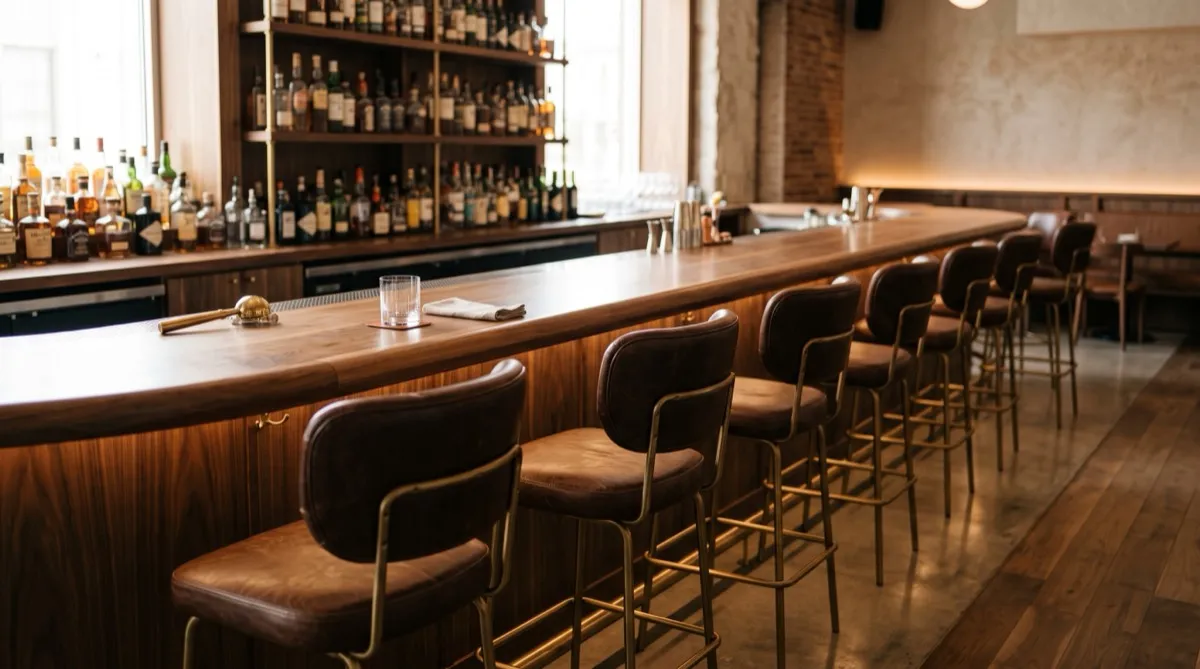
Compare the desired stool appearance with actual spill handling, cleaning and component documentation. Leather and vinyl vary by finish and construction; neither has a universal lifetime-cost advantage.
Why the material choice matters so much at the bar
A bar seat takes more direct abuse than almost any other upholstered piece in a venue. Guests sit in wet clothing, spill alcohol and mixers directly onto the seat, lean and shift constantly through a shift, and the seat gets cleaned with commercial sanitizer multiple times a night, every night. Whatever material is on that stool needs to survive that cycle for years, not months.
Real leather at the bar
Full grain and top grain leather age well and develop a look many operators want, a patina that reads as premium and gets better looking with light wear rather than worse. That is a real advantage in a lounge or lobby chair that sees moderate contact.
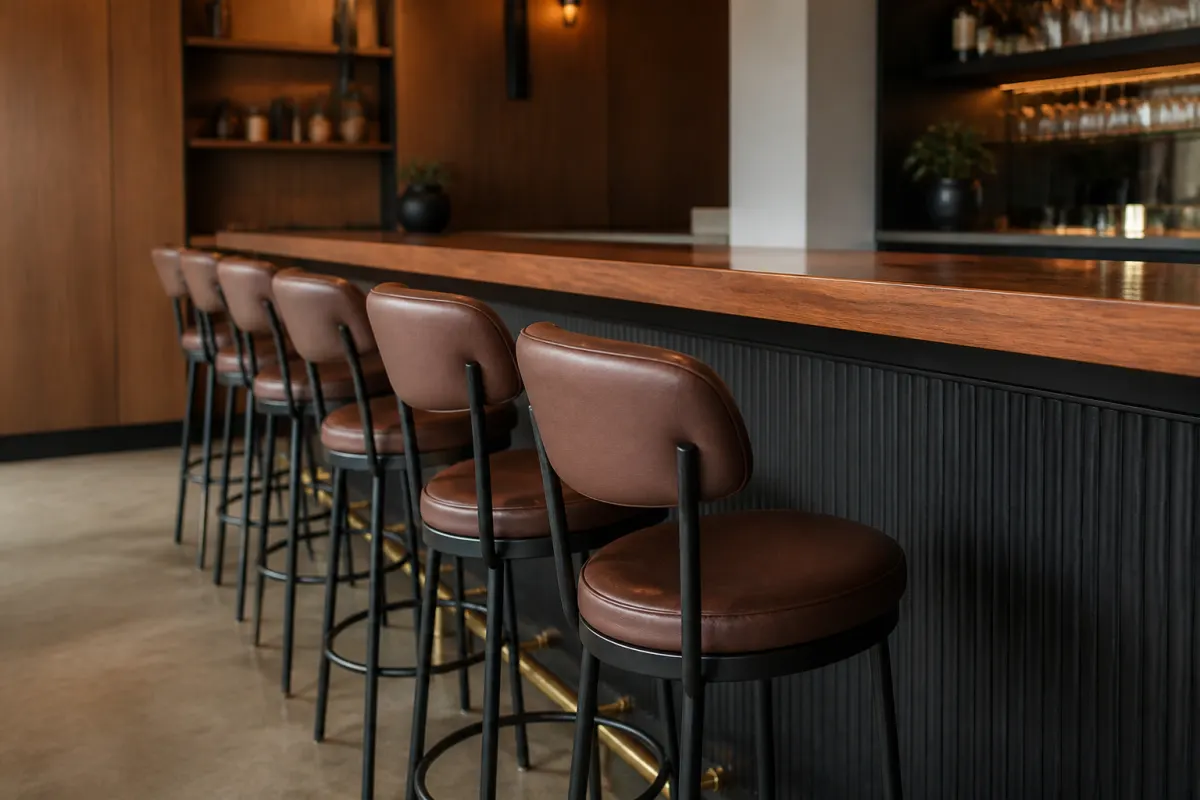
Give the proposed cover supplier the actual alcohol, mixer and cleaner exposures. Obtain written compatibility and spill instructions for the exact finish. Leather is not uniformly absorbent or unsuitable at every bar, and its label alone cannot predict cracking before a vinyl alternative.
Commercial vinyl at the bar
For vinyl, request the exact cover specification, approved cleaners, relevant tests and care limits. A commercial label or high double-rub count does not establish sanitizer compatibility or a one-to-two-year seam failure deadline.
Compare physical samples for grain, texture and finish under the room lighting. Appearance and performance must be checked for the actual options rather than assuming guests cannot distinguish them.
Where leather still makes sense
Evaluate each zone from observed spills, contact and cleaning. A lounge, booth or bar rail can have different requirements, but their names alone do not determine leather suitability.
Reupholstery economics
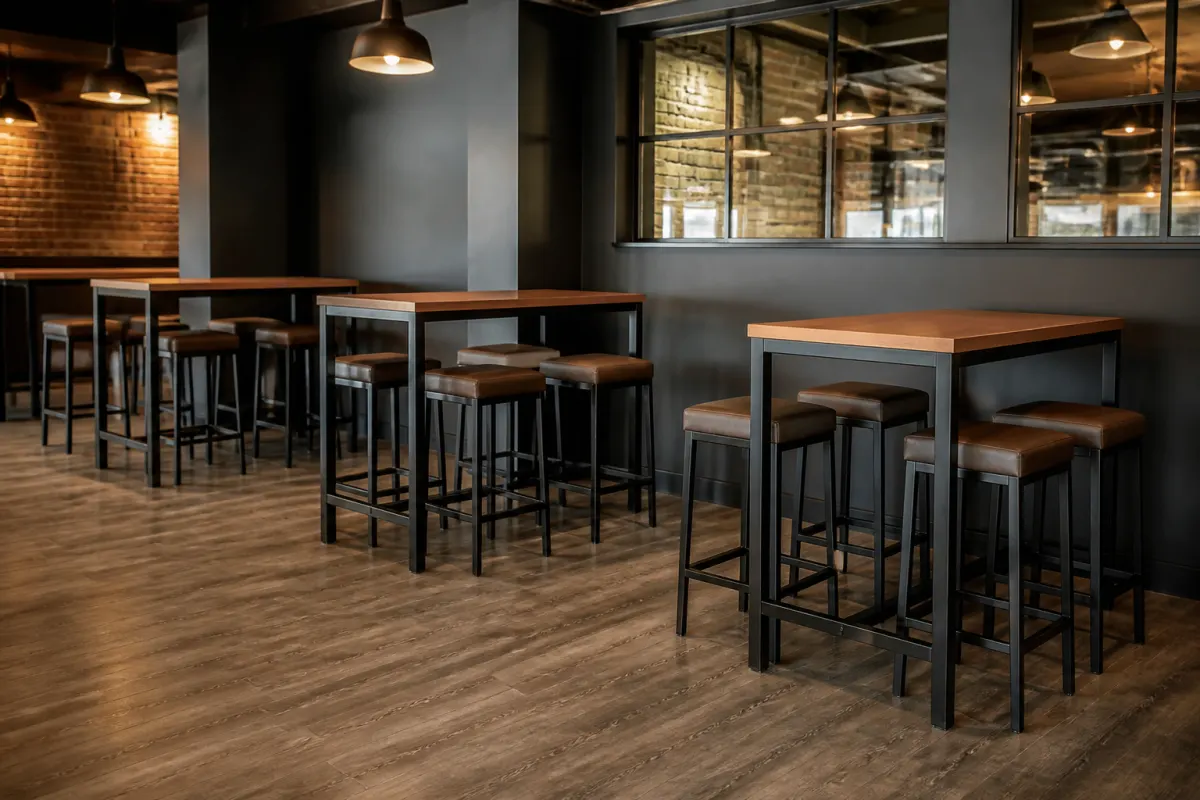
Inspect covers and supports and compare actual reupholstery and replacement quotes. Include materials, foam, labor, transport and downtime. Vinyl does not universally need fewer repairs or a faster job than every leather configuration.
Frame and construction still matter more than the cover
Review the complete frame, footrest and any swivel mechanism independently of the cover. Request intended loads, use limits, applicable testing and repair parts; heavy-gauge welding alone cannot establish service life.
Choosing across a mixed venue
A mixed-cover program is one option to compare by zone. Apply the actual cleaning and performance requirements to each cover rather than assuming vinyl belongs at every rail and leather only in quieter areas.
For the rest of the bar furniture program beyond stool upholstery, our bar furniture guide covers frame specs, table bases, and zone planning in full.
Sourcing and lead times
Obtain stock, sample approval, production and delivery dates for both materials. Custom upholstery has no universal ten to fourteen week window, and vinyl is not always faster than leather.
Browse barstool options as design concepts. Request a quote with the zone brief, stool count and cleaner requirements so independent suppliers can document actual cover and frame options.