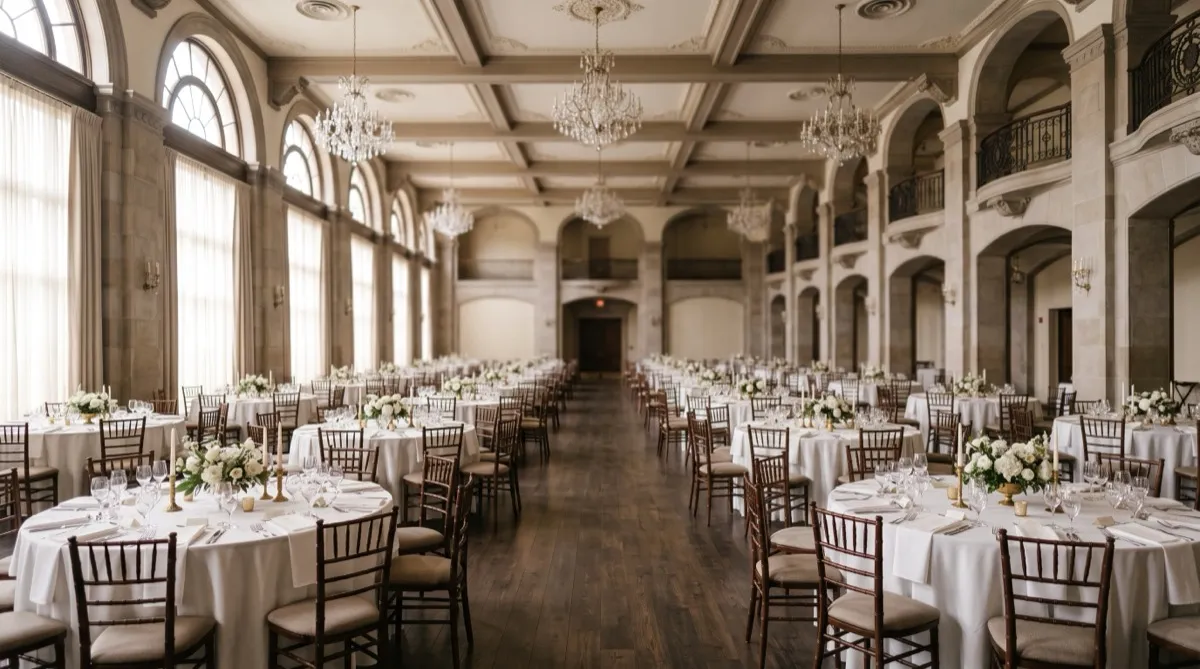
For 200 guests seated at 60 inch round tables, plan on 20 tables at 10 guests per table, or 25 tables if you seat 8 per table for more elbow room. You will also need 200 chairs, plus a few spares for last-minute additions. If you are running rectangular banquet tables instead, figure roughly 25 tables of 8 ft length seating 8 guests each, or 33 tables at 6 guests each if you want tighter, more formal spacing.
The math is simple, but the room is not. At 200 guests, a floor plan also has to carry a dance floor, a buffet or plated service line, a bar, and enough aisle width for staff to work the room during service. That is where most venues underestimate the footprint and end up short on either seating or walking space. Here is how to run the numbers properly before you place a furniture order.
The base math: guests per table
Start with your table type and guests-per-table target, then divide.
- 60 inch round tables, 8 per table: 25 tables for 200 guests
- 60 inch round tables, 10 per table: 20 tables for 200 guests
- 72 inch round tables, 10 to 12 per table: 17 to 20 tables for 200 guests
- 6 ft rectangular tables, 6 per table: 33 to 34 tables for 200 guests
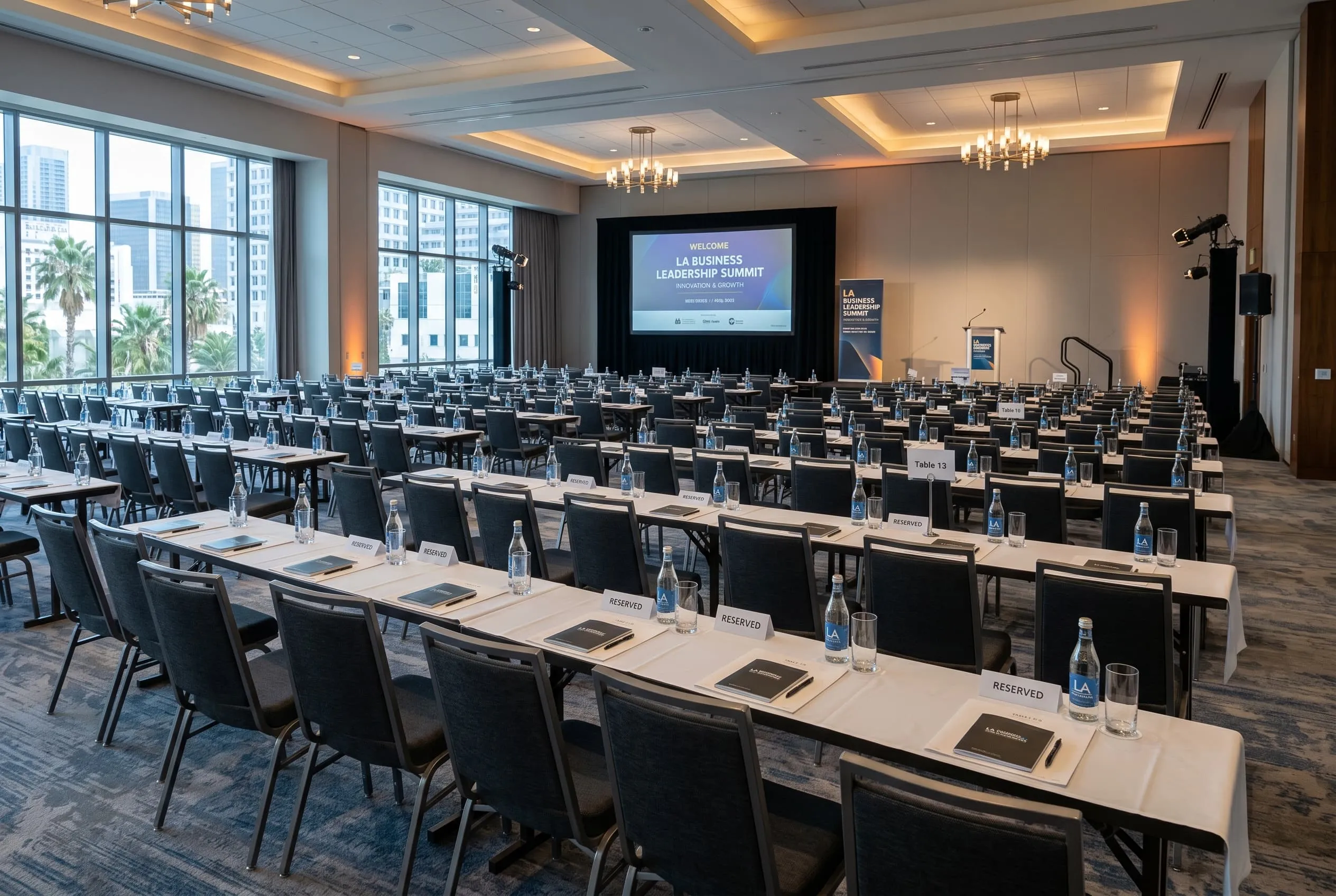
- 8 ft rectangular tables, 8 per table: 25 tables for 200 guests
- Cocktail or highboy tables, standing only, 4 to 6 per table: 33 to 50 tables for a cocktail-style 200 guest reception
Rounds seat more comfortably and encourage conversation across the table, which is why they dominate weddings and banquets. Rectangular tables run more efficiently down a hall or ballroom and work well for conference-style seating or family-style service. Most venues that host both formats keep an inventory of both round and rectangular tables and choose per event.
Chairs, and why you should over-order slightly
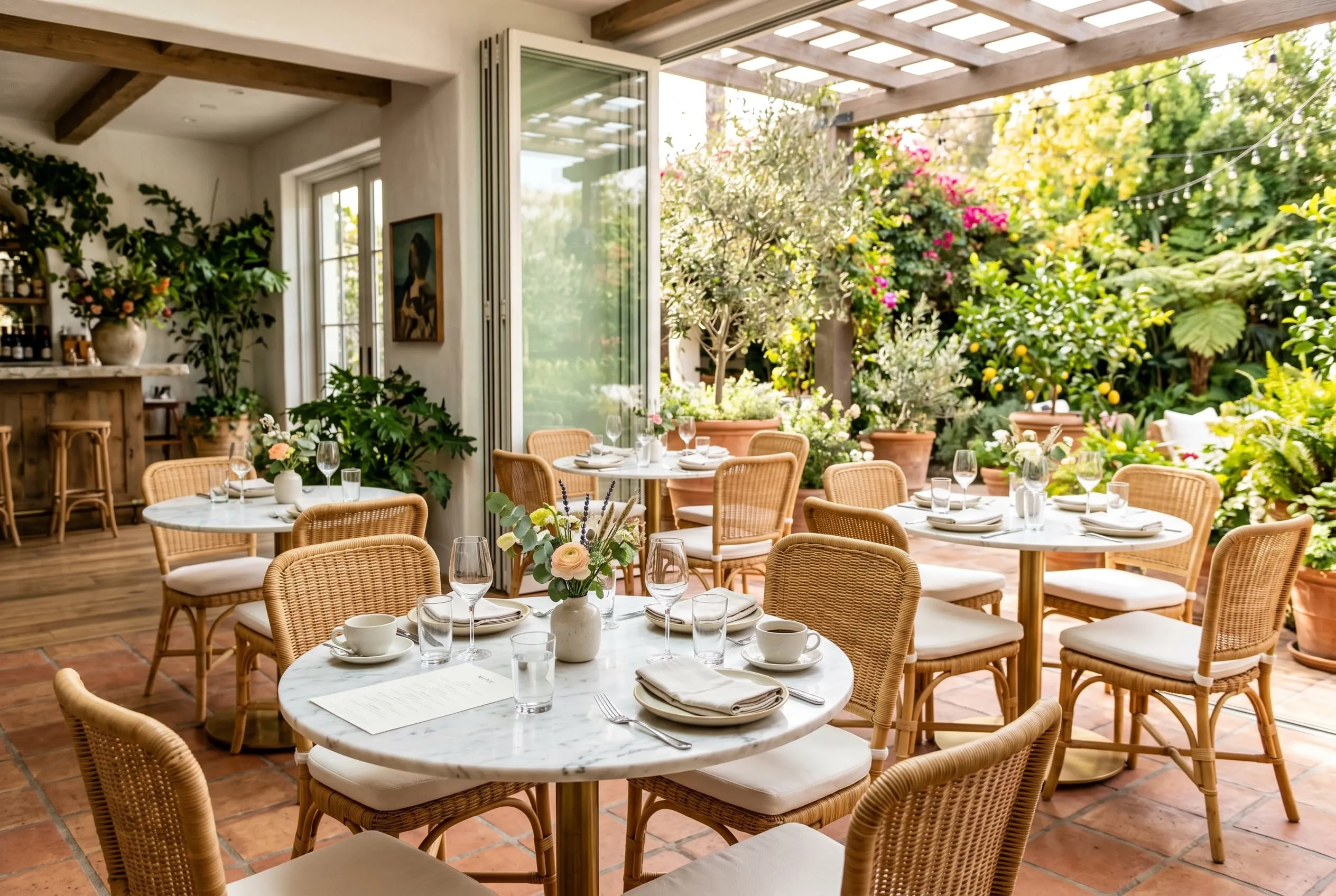
Order 200 chairs for 200 confirmed guests, then add 5 to 10 percent as a working buffer. Head counts shift between the final guest list and the day of the event, chairs get pulled for a head table or gift table, and a few always end up needing to be swapped out mid-event. Most venues that run events regularly keep 210 to 220 chairs on hand for a 200 guest program rather than ordering the exact count every time.
Steel-frame stacking banquet chairs run $45 to $90 per unit and cover the vast majority of banquet and conference programs. Aluminum stacking chairs run $70 to $130 and shave weight off setup and breakdown, which matters when the same 200 chairs get moved for multiple events in a week. Resin Chiavari chairs run $40 to $80 and wood or aluminum Chiavari chairs run $90 to $180 for a more formal wedding or ballroom look. At 200 units you are well past the volume discount threshold most suppliers apply at 50 and 100 units, so expect 5 to 15 percent off list depending on finish and total order size.
Space planning: dance floor, buffet, and aisles
A 200 guest event rarely uses the room for seating alone. Budget separately for:
- Dance floor. A common rule is 3 to 4 square feet per dancer, with roughly half your guest count expected on the floor at once. For 200 guests, a floor in the 300 to 450 square foot range (roughly 18x20 to 20x24 ft) covers most receptions.
- Buffet or service line. A single buffet line for 200 guests typically needs 24 to 32 linear feet of table space plus 6 to 8 ft of clearance in front for the line to move without backing into seated guests. Plated service needs less floor space but more staff aisle width between tables.
- Bar. A single bar can reasonably serve 100 to 150 guests before lines back up. At 200 guests, many venues run two bar stations or one longer bar with two service points.
- Aisles. Plan a minimum of 4 ft between table edges for guest movement, and wider aisles near the buffet, bar, and entry points where traffic clusters.
This is exactly the calculation our banquet seating calculator runs automatically once you enter your guest count, table size, and whether you need a dance floor or buffet line. It is worth running your own numbers there before finalizing a table and chair order, since room shape and layout style shift the totals more than most people expect.
Freight, lead times, and what to check before ordering
A 200 guest order, whether it is 20 tables and 200 chairs or a mixed round and rectangular setup, typically ships LTL freight rather than small parcel. Freight cost depends on your delivery zip code, whether the site has a loading dock or needs a liftgate truck, and whether the address counts as a commercial or limited-access delivery. Have those details ready before you request pricing, since they affect the freight quote as much as the furniture itself.
In-stock steel and aluminum tables and chairs generally ship in 2 to 6 weeks. Custom fabrics, finishes, or branded upholstery run 8 to 14 weeks, so lock in your order early if your event calendar is set. Before finalizing quantities, confirm chair stackability and cart availability for storage between events, frame gauge and weld quality on tables and chairs alike, weight ratings for both, fabric double-rub count on any upholstered pieces, and whether floor glides are included to protect your venue's flooring.
Get an exact quote for your event
Run your numbers through the furniture cost calculator to estimate total spend, then request a quote with your guest count, table type and quantity, chair style and finish, delivery zip code, and event timeline. Our team will confirm final counts and pricing based on your actual floor plan.