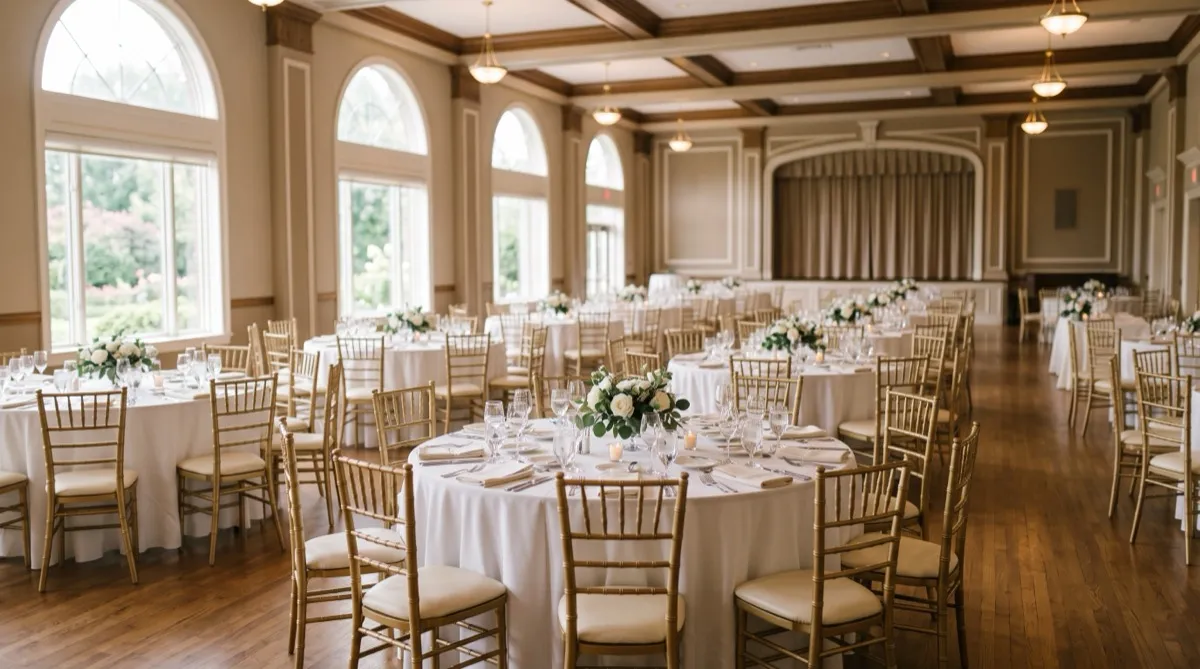
For 100 seated guests, plan on 10 to 13 round tables of 60 inches seating 8 per table, or 12 to 14 rectangular 8 foot banquet tables seating 8 per table, plus 100 chairs. For a cocktail reception, swap most seating for 15 to 20 cocktail or highboy tables at 4 to 6 guests standing per table, with a handful of lounge seats. The right number depends less on the guest count itself and more on the table shape, seating style, and how much room your venue floor plan allows for aisles and service paths.
That range is wide because "100 guests" covers very different events. A formal plated dinner needs full seating and generous aisle space. A cocktail hour needs standing room with just enough tables to set down a drink. A hybrid event splits the difference. Here is how the math actually works for each format, plus realistic pricing so you can budget the order.
Round tables: the standard for seated dinners
Round tables are the default for weddings, galas, and banquet dinners because they encourage conversation across the whole table. A 60 inch round comfortably seats 8, though some venues push to 10 for a tighter fit. For 100 guests seated 8 per table, that is 13 rounds. Seat 10 per table and you can get down to 10 rounds, but expect elbow room to shrink and service staff to have less room to work between chairs.
Most venues land on 10 to 13 rounds for 100 guests, adjusting for head tables, sweetheart tables, or a DJ and gift table that eat into the guest count without adding seats. Round tables also need more floor space per seat than rectangular tables because of the aisle clearance around a circle, so confirm your room's square footage before locking in a count.
Rectangular banquet tables: more guests per square foot
Rectangular 6 to 8 foot banquet tables seat 6 to 8 guests depending on length and whether seating wraps the ends. An 8 foot rectangular table comfortably seats 8, so 100 guests need roughly 12 to 13 tables. Rectangular layouts are the more space-efficient option, since long runs of tables use floor space more efficiently than the same guest count in rounds, which is why conference banquets, awards dinners, and family-style receptions often default to rectangular.
The tradeoff is conversation flow. Long rectangular runs favor talking to the people directly across or beside you, not the whole table the way a round does. Many planners mix formats: rectangular tables for a head table or buffet line, rounds for guest seating.
Cocktail and standing-reception math
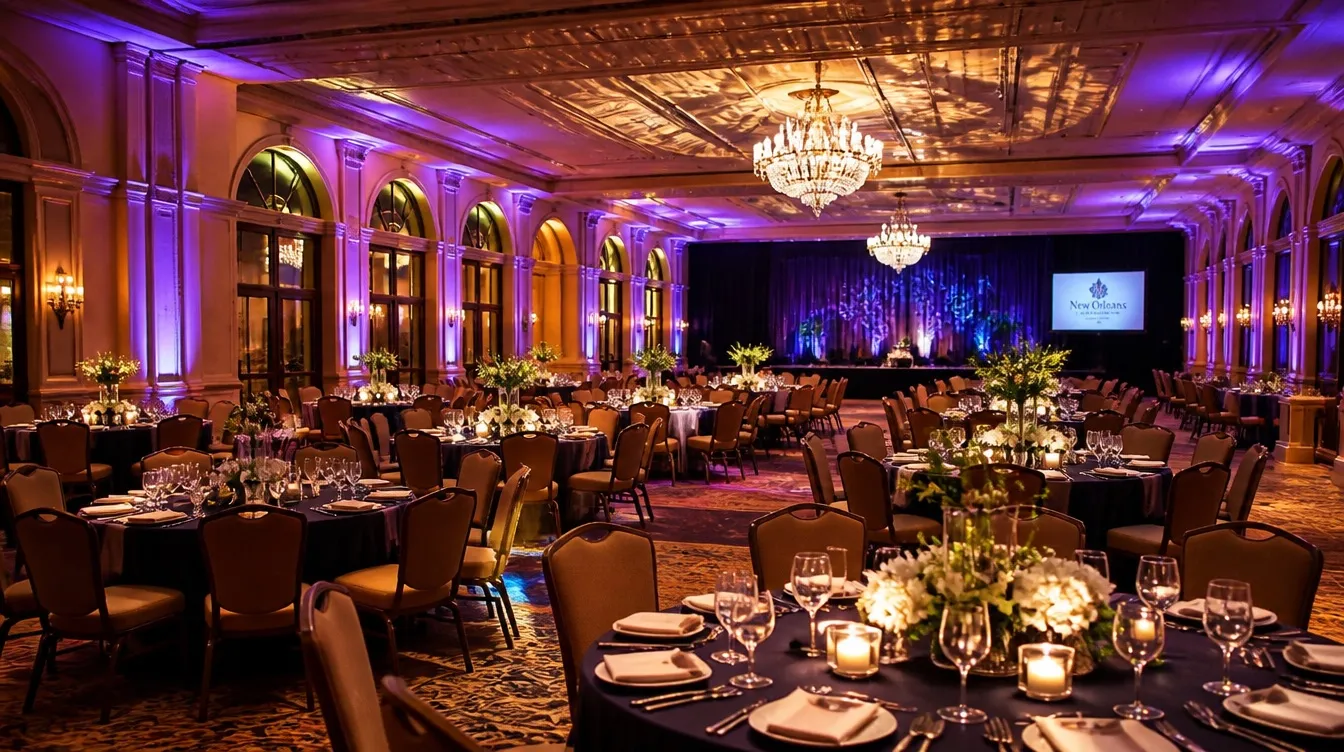
Cocktail events change the math entirely because most guests never sit down. Cocktail or highboy tables typically host 4 to 6 guests standing around a 30 to 36 inch top. For 100 guests at a standing reception, 15 to 20 cocktail tables is a workable range, since not everyone clusters around a table at once and a portion of the room is always in motion. Add a small number of lounge seats or barstools for guests who need to sit, and keep tables spaced enough for servers to move trays through the crowd.
If the event blends cocktail hour with a later seated dinner, budget for both counts rather than converting one into the other. Venues frequently rent or own two sets, a cocktail layout for the reception and a seated layout for dinner, and turn the room between the two.
What this means for your order
Once you have a table count, chairs follow directly for seated formats: order one chair per seat plus a small buffer (5 to 10 chairs) for last-minute additions, staff, or a broken unit. For cocktail formats, order enough lounge or bar seating for roughly 10 to 20 percent of guests, not the full headcount.
On pricing, round 60 inch folding tables run $60 to $130 per unit and rectangular 6 to 8 foot tables run $50 to $120, with cocktail and highboy tables at $70 to $150. Steel-frame stacking banquet chairs run $45 to $90 per unit, with aluminum stacking chairs at $70 to $130. Volume discounts typically start at 50 units and step up again at 100, 250, and 500, commonly 5% to 15% off list depending on quantity and finish. For 100 guests, most orders land in the 12 to 20 table range plus 100 to 110 chairs, which usually qualifies for at least the first volume pricing tier.
Freight and lead time
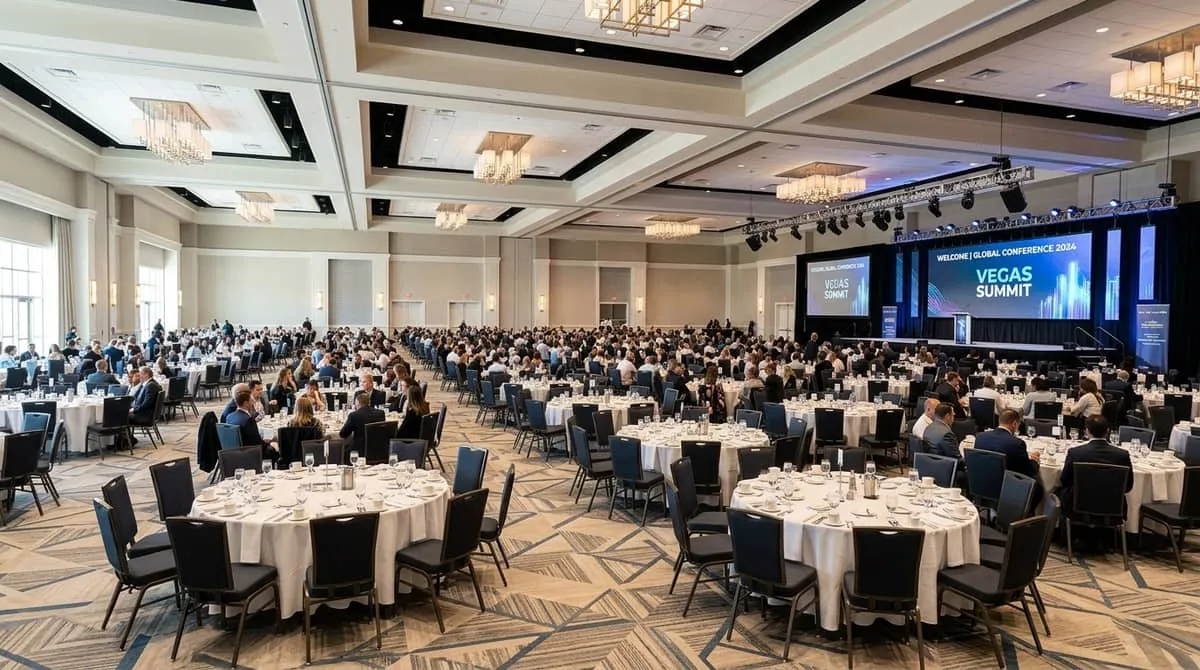
Orders at this scale ship LTL freight, and cost depends on your delivery zip code, whether the site has a loading dock or needs a liftgate, and whether the address counts as commercial or limited access. Have those details ready before you request pricing. In-stock tables and chairs typically ship in 2 to 6 weeks; custom fabrics or finishes run 8 to 14 weeks, so order well ahead of your event date if you are specifying a custom color or upholstery.
Before ordering at volume, confirm stackability and stacking height, frame gauge and weld quality, weight rating, and glide or floor protection on both tables and chairs. If chairs are upholstered, check the Wyzenbeek double-rub rating for the fabric. Get a sample of your final table and chair combination before committing to a full order.
Get an exact count and a quote
Table and chair math changes with room shape, aisle width, and whether you are running a buffet, bar, or dance floor. Run your guest count and layout through the furniture cost calculator to estimate budget, or use a banquet seating calculator to map exact table counts to your floor plan. When you are ready to order, request a quote with your item, quantity, finish, delivery zip, and timeline, and our team will confirm the right table and chair count for your event.