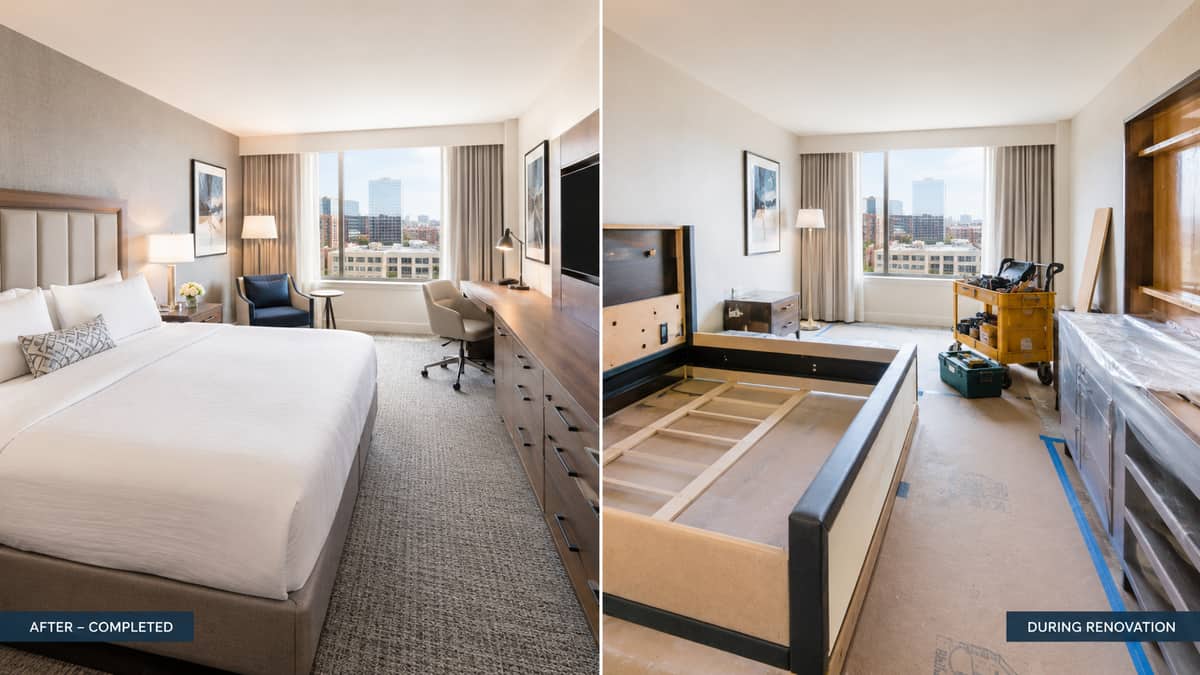
Provo has become one of the more active hospitality renovation markets in Utah Valley, driven by growth on multiple fronts at once. Campus event traffic tied to BYU keeps demand steady year round, graduation weekends, football Saturdays, and academic conferences fill hotels close to campus on a predictable calendar. The Silicon Slopes tech corridor running through Utah County has pulled in a wave of business travel that older properties were not originally built to serve. And leisure tourism into Provo Canyon and the surrounding Wasatch Mountains has grown steadily, pushing owners to upgrade properties that were competing on price into ones that can compete on experience. When you renovate in this market, you're working against a campus event calendar, a construction season shaped by mountain weather, and an operator base that expects a supplier who understands the local logistics. Getting hotel renovation furniture Provo procurement right is not a back-office task, it's a revenue decision.
Phasing a Renovation Around an Occupied Property
Most Provo hotel renovations happen with the property still operating, which means furniture delivery has to be sequenced floor by floor or wing by wing rather than arriving all at once. That requires a supplier who can hold inventory between phases and coordinate delivery windows that avoid your highest-occupancy weeks, typically campus football Saturdays and graduation weekend, when disrupting operations costs far more than a delayed renovation timeline would.
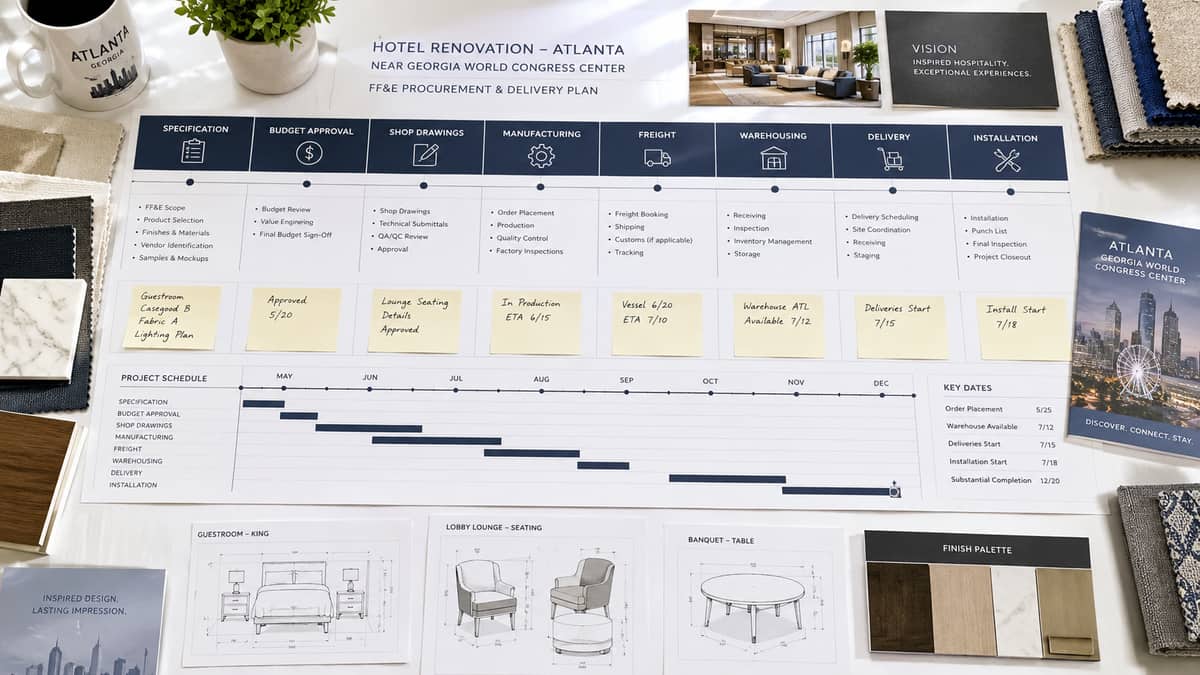
Build your phasing plan around your actual occupancy calendar, not a generic construction schedule. A property near campus should avoid major disruption during football season and commencement weekends. A property closer to the canyon and mountain corridor should plan around the ski season and summer hiking peaks that drive its leisure occupancy. Share that calendar with your furniture supplier early so delivery windows can be built around it rather than fought against it.
Matching New Furniture to What Stays
Most renovations are not full gut jobs, some furniture and finishes stay while guestroom seating, casegoods, or lobby pieces get replaced. Matching new contract furniture to existing finishes that are staying in place, wall colors, flooring, fixed millwork, requires a supplier who can work from your existing finish palette rather than starting from a blank slate. Bring finish samples to your first supplier conversation rather than relying on photos, since lighting and screen calibration distort color more than most buyers expect.

Budgeting and Timeline Realities for Provo Renovation Projects
Renovation timelines compress faster than new-build timelines because you are often working against a hard reopening date tied to a booking calendar that is already selling rooms. Lock your furniture specs as early as possible in the renovation planning process, ideally before demolition begins, so lead times can run in parallel with construction rather than stacking on top of it after the fact.
Domestic lead times of 10 to 16 weeks are the realistic floor for most contract furniture categories, and a renovation project that discovers a lead time problem mid-construction has far fewer options to recover than a new-build project planning further in advance. Get ahead of that risk with a detailed renovation furniture quote as soon as your scope and room count are finalized, and ask your supplier directly about their capacity to expedite critical-path categories if your construction schedule shifts.