
Provo sits at the center of a hospitality market that has grown fast over the last decade, driven by BYU campus event traffic, the expanding Silicon Slopes tech corridor running through Utah County, and steady leisure tourism into the Wasatch Mountains and Provo Canyon. Downtown Provo has spent that same stretch turning Center Street into one of the more active restaurant and lounge districts in Utah Valley. If you are developing or refreshing a property here, the procurement challenge is not finding furniture, it is locking in specifications, managing lead times from suppliers that are rarely local, and coordinating delivery against a construction schedule that will not wait for you.
Building an FF&E Timeline That Actually Holds
FF&E procurement fails most often not because the wrong furniture gets ordered, but because the timeline gets built backward from an optimistic opening date instead of forward from realistic production and freight lead times. Start with your hard opening date, work backward through installation time, freight transit, production lead time, and sample and approval cycles, and you will usually find you needed to place your order months earlier than intuition suggests.
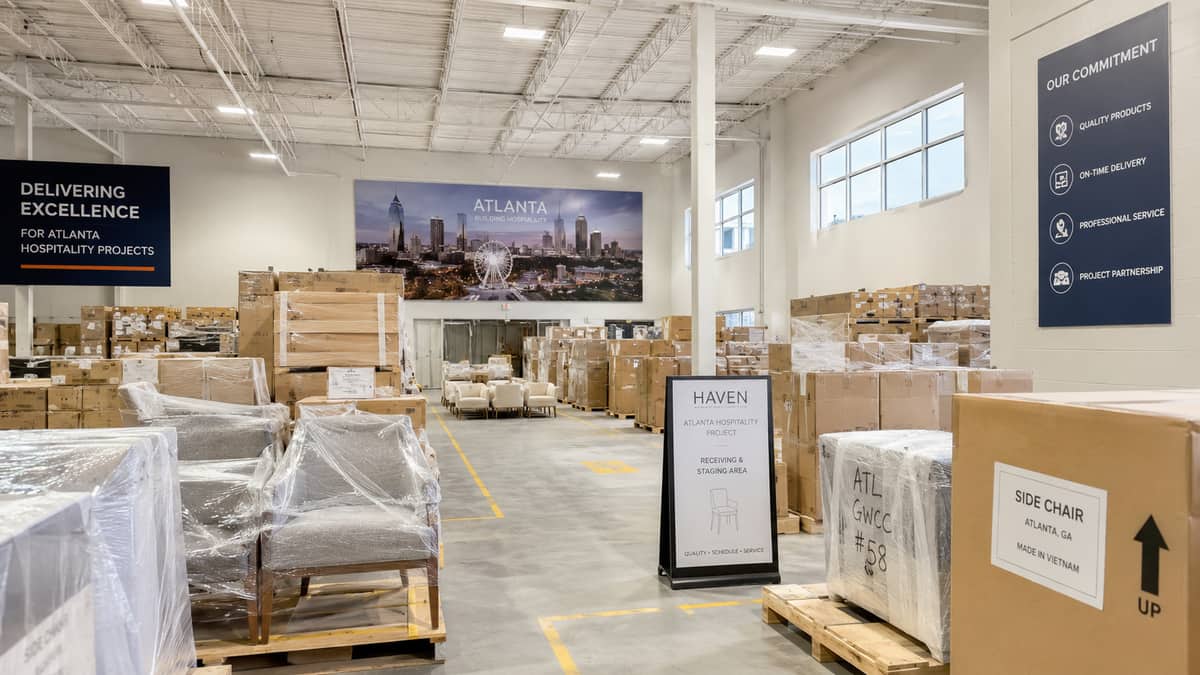
Domestic contract manufacturers currently run eight to fourteen weeks depending on the product category, and that clock does not start until specs and fabrics are finalized, not when you first reach out to a supplier. Import orders add real time on top of that, typically four to eight additional weeks once shipping, customs, and inland freight to Utah are factored in. A Provo project targeting a fall opening ahead of football season needs its casegoods and seating specs locked well before summer, not after.
Vendor Coordination Across a Multi-Category Project
Most hotel and restaurant FF&E projects in Provo involve multiple furniture categories from potentially multiple manufacturers, guestroom casegoods, lobby lounge seating, meeting room furniture, restaurant seating and tables. Coordinating delivery windows across all of those categories so nothing arrives before your construction schedule can receive it, and nothing arrives so late it holds up your opening, is where a lot of projects lose control.

A single point of contact who can coordinate across categories, rather than separate vendor relationships for every furniture type, reduces the coordination burden significantly. Ask a prospective supplier directly whether they can manage a phased, multi-category delivery schedule and hold inventory between phases if your construction timeline shifts, because Utah County construction schedules do shift, and a supplier who can absorb that flexibility is worth more than one offering a slightly lower unit price.
Budgeting and Documentation for Provo Projects
Document every spec decision in writing as you go, fabric selections, frame finishes, quantities per room type, so that reorders and warranty claims down the line reference an accurate record instead of institutional memory that walks out the door when staff turns over. This matters even more for a market like Provo, where hospitality development has accelerated quickly and property management teams are often still building out their own internal processes.
Get your procurement process started with a detailed FF&E quote request that lists room count, category breakdown, and target delivery windows. A supplier who can turn that into an accurate, category-by-category lead time estimate on the first pass is one worth building a longer relationship with.