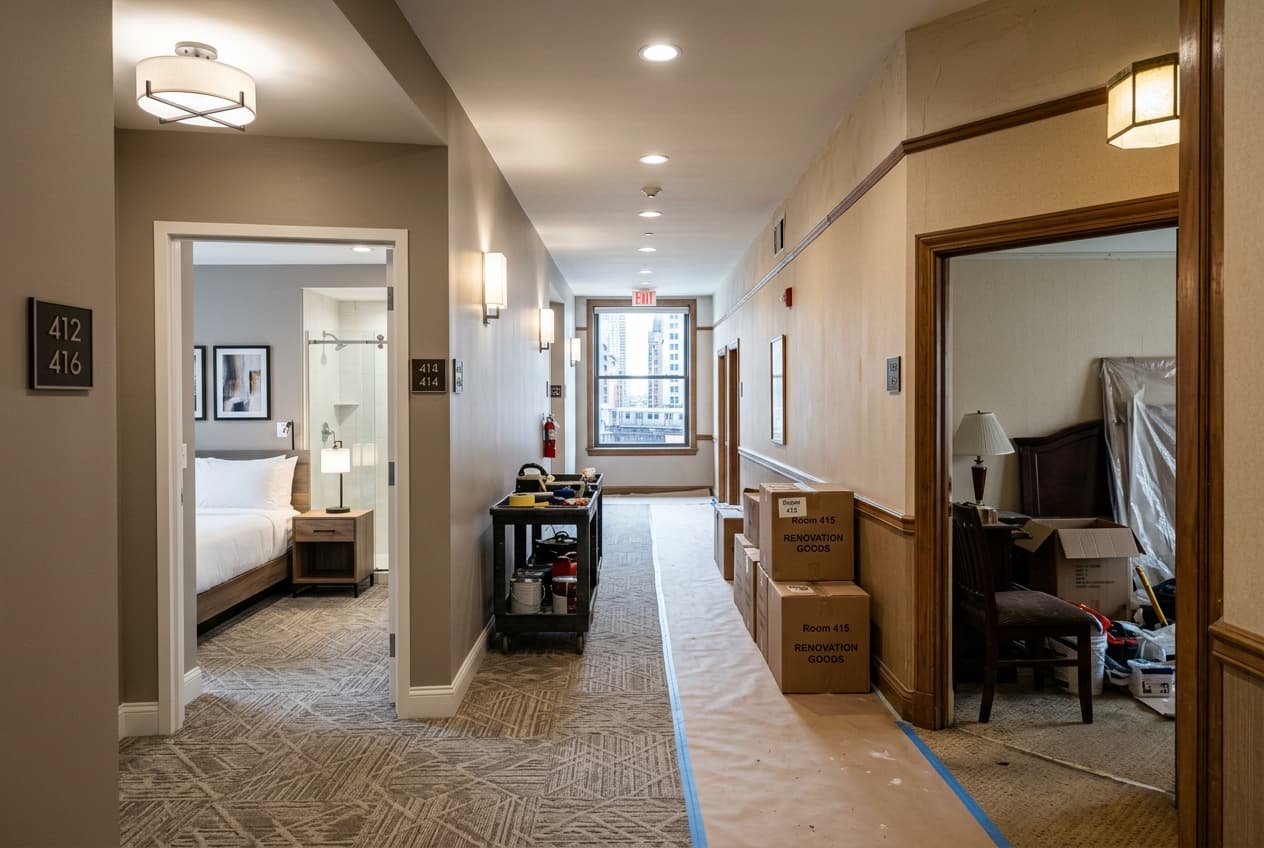
A hotel renovation is harder to execute than new construction in almost every way that matters for FF&E. You are working around an occupied or partially occupied building, coordinating furniture delivery and installation with guests still checking in and out, and doing all of it against a calendar that a Huntington property cannot simply push back when Marshall's football schedule or the region's medical travel demand does not slow down for construction.
Why Renovation Procurement Runs on a Different Timeline
New construction gives you a clean install window: the building is empty, access is unrestricted, and furniture arrives once everything else is substantially complete. A renovation almost never works that way. Most Huntington hotel renovations happen in phases, floor by floor or wing by wing, so the property can keep generating revenue from unrenovated rooms while the renovated sections come online. That phasing means your furniture procurement has to be phased too, arriving in the right sequence to match construction completion floor by floor, not all at once.
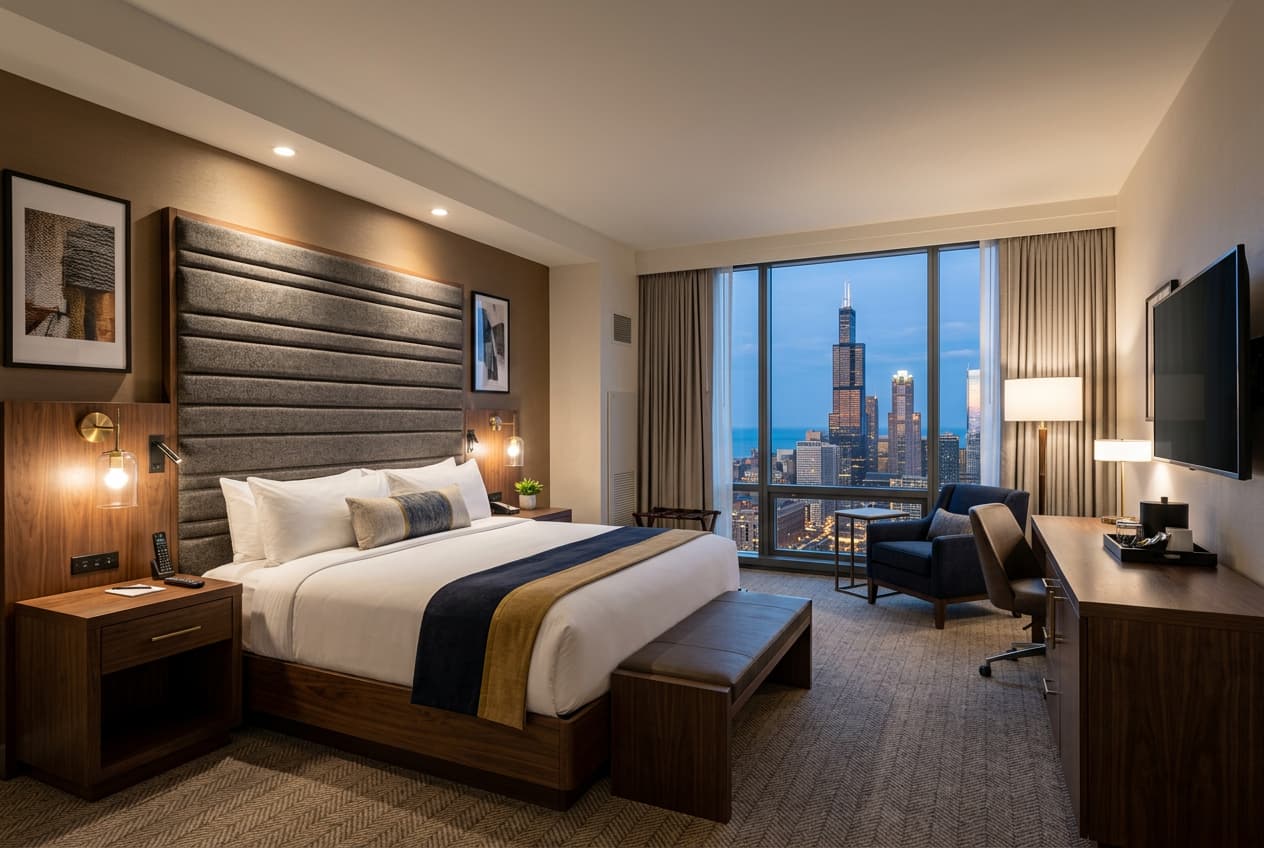
This is where a lot of renovation projects lose time. If furniture for phase two arrives before phase one construction is complete, it sits in a crowded loading dock or an improvised storage area, at risk of damage and taking up space the property needs for daily operations. If it arrives late, the renovated rooms sit finished but unsellable while everyone waits on a delivery. Getting that sequencing right requires a supplier who will commit to a phased delivery schedule and hold to it, not just quote a single ship date for the entire order.
Working Around an Occupied Building
Guest disruption is the constraint that shapes every logistics decision on a renovation project. Furniture deliveries and installation need to happen during hours and through routes that do not interfere with guests checking in, housekeeping carts moving through hallways, or the general flow of an operating hotel. A supplier experienced with renovation work in occupied Huntington properties will coordinate delivery windows with hotel operations staff, use service elevators and back-of-house routes rather than guest-facing entrances, and manage old furniture removal and disposal as part of the same scope rather than leaving it for hotel staff to handle.

Noise and dust containment matter more on a renovation than most owners initially plan for. Guests in unrenovated rooms adjacent to active construction zones are still paying full rate and expecting a normal stay. A furniture installation team unfamiliar with hospitality environments can create disruption that shows up in guest reviews even when the underlying renovation work is going well. Ask your supplier about their experience specifically with occupied-building hospitality projects, not just commercial installation in general.
Budgeting and Specifying for a Renovation, Not a New Build
Renovation furniture specs need to account for what is staying versus what is being replaced. A partial refresh that keeps existing casegoods but replaces soft goods and lighting has a very different budget and timeline than a full guestroom gut that replaces everything down to the frame. Be explicit with your supplier about scope from the first conversation, since a supplier quoting a full FF&E package when you actually need a soft goods refresh is going to blow your budget and your timeline in the same conversation.
Lead times matter just as much on a renovation as new construction, and arguably more, since a renovation project is often working around a fixed date, a Marshall home-game weekend the property needs renovated rooms ready for, or a booking commitment already on the calendar tied to medical travel or tri-state event demand. Standard lead times of 10 to 16 weeks for domestic production, longer for imports, need to be built into your renovation schedule from the planning stage, not discovered partway through construction when it is too late to adjust.
The difference between a Huntington hotel renovation that opens on time and on budget and one that drags past every deadline usually comes down to the procurement decisions made in the first four weeks of planning. Treat FF&E as a core operational workstream from day one, and your renovation has a real chance of running the way it was designed.