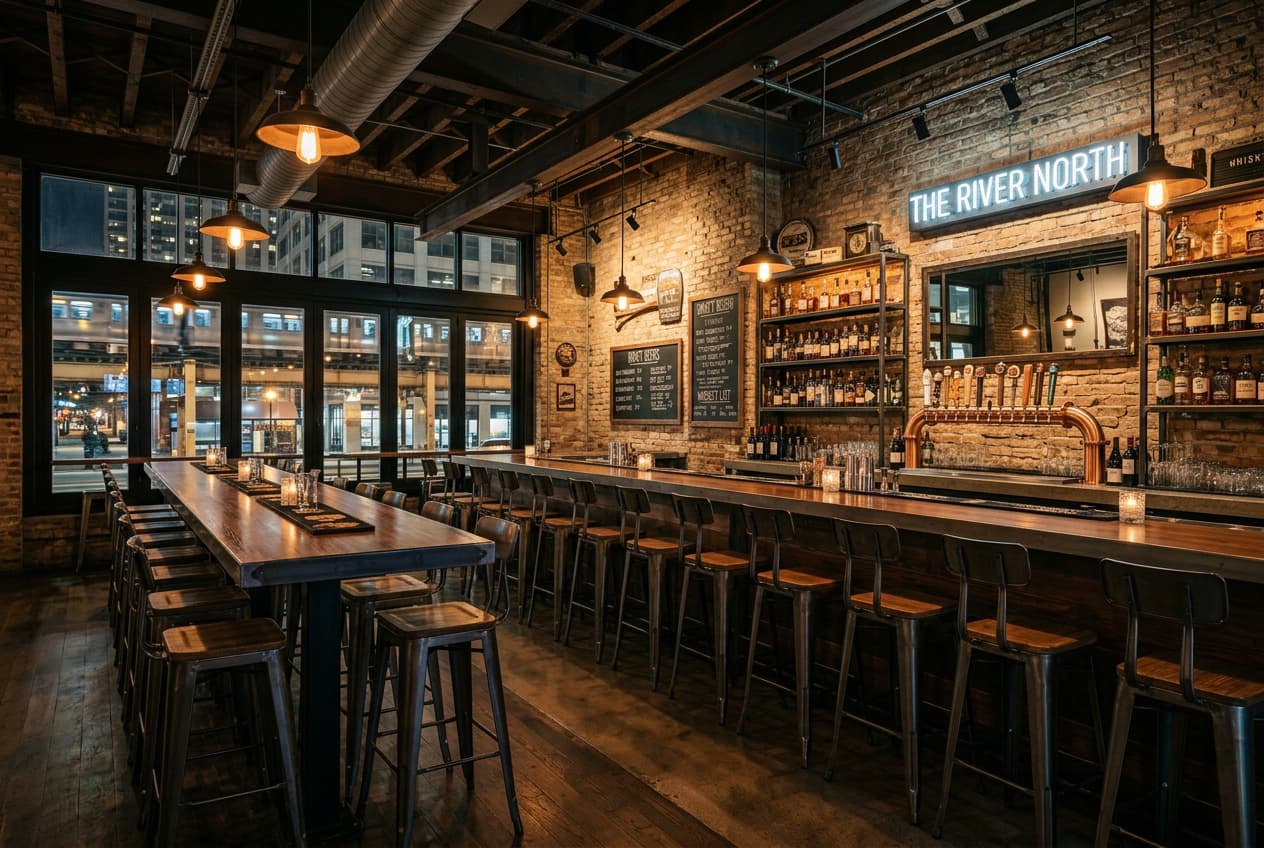
Huntington's bar and lounge scene runs on two calendars that overlap and stack in ways operators have to plan around. There is the Marshall University athletics calendar, home football and basketball games that flood downtown bars and any lounge near campus with fans well before and after the final whistle. And there is the steady weekend draw from across the tri-state area, Kentucky and Ohio residents crossing the river for a night out downtown or near Pullman Square. A bar that only plans furniture around an ordinary Friday night is going to be caught short on a home-game Saturday, and a bar that only plans for game days is going to look overbuilt the rest of the year. Getting the furniture program right means designing for both realities at once.
Furniture That Survives a Bar's Actual Use Pattern
Bar and lounge seating takes a different kind of abuse than restaurant dining furniture. Barstools get spun, leaned back on, and climbed on and off of by guests who have had a few drinks and are not being careful. Lounge seating in a high-traffic bar gets sat on by more people per chair per night than almost any other commercial furniture application. Standard retail bar stools with lightweight swivel mechanisms fail fast under that use pattern, and a wobbly or squeaking stool is the kind of small detail that undercuts an otherwise good bar experience.
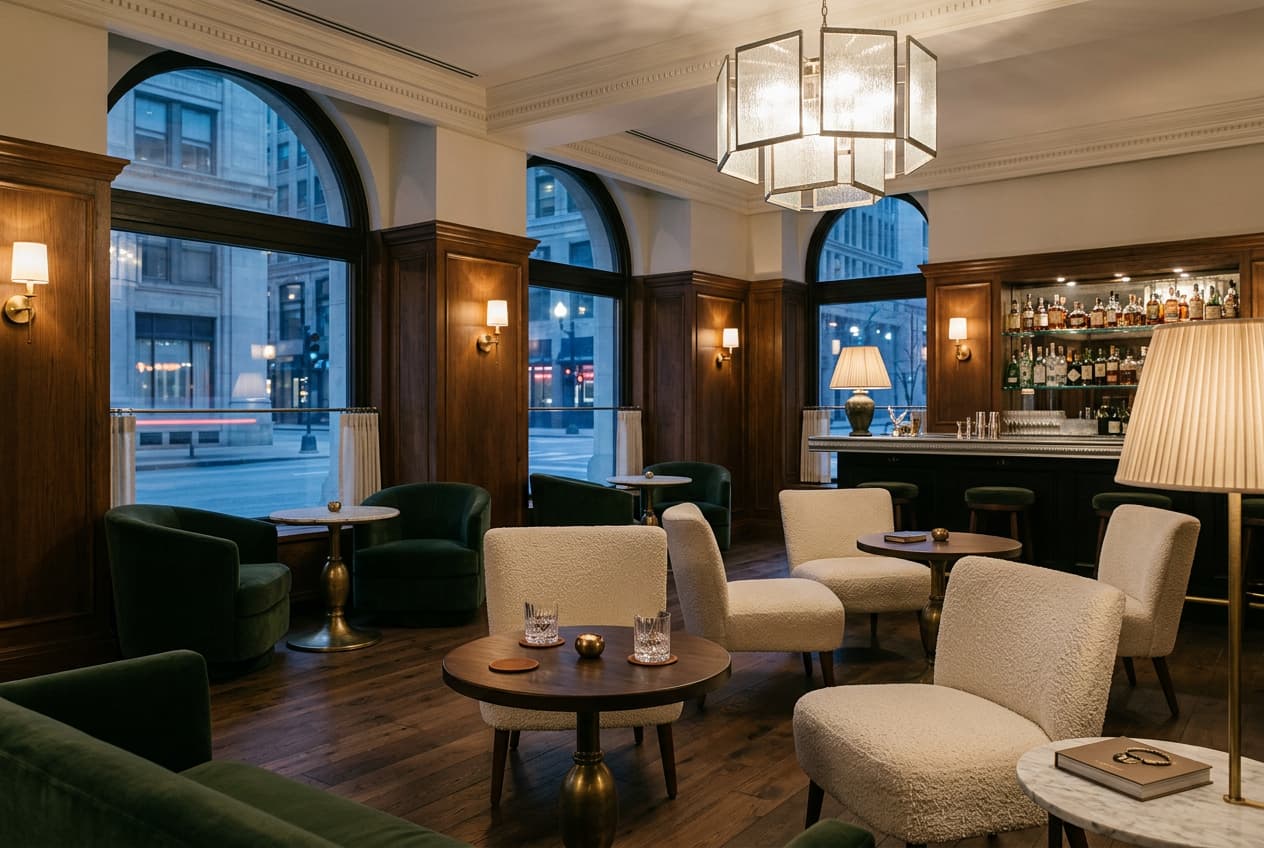
Contract-grade barstools use reinforced swivel mechanisms rated for continuous commercial cycling, footrests welded rather than bolted to resist loosening under repeated impact, and upholstery specified for high-traffic wear. For a Huntington bar planning around Marshall game days, that construction difference is the gap between stools that hold up through a full season of home games and stools you are replacing by the following fall.
Designing for Huntington's Layered Guest Base
A downtown lounge near Pullman Square serving a mixed crowd of Marshall alumni, tri-state visitors, and local regulars needs furniture flexible enough to work across very different occasions in the same room. High-top communal tables and durable barstools handle the game-day crowd efficiently, while a separate lounge seating zone with more comfortable upholstered pieces gives the space a reason to hold guests on a quieter weeknight. Layout flexibility matters as much as the furniture spec itself in a market where the same room needs to function completely differently depending on the night.
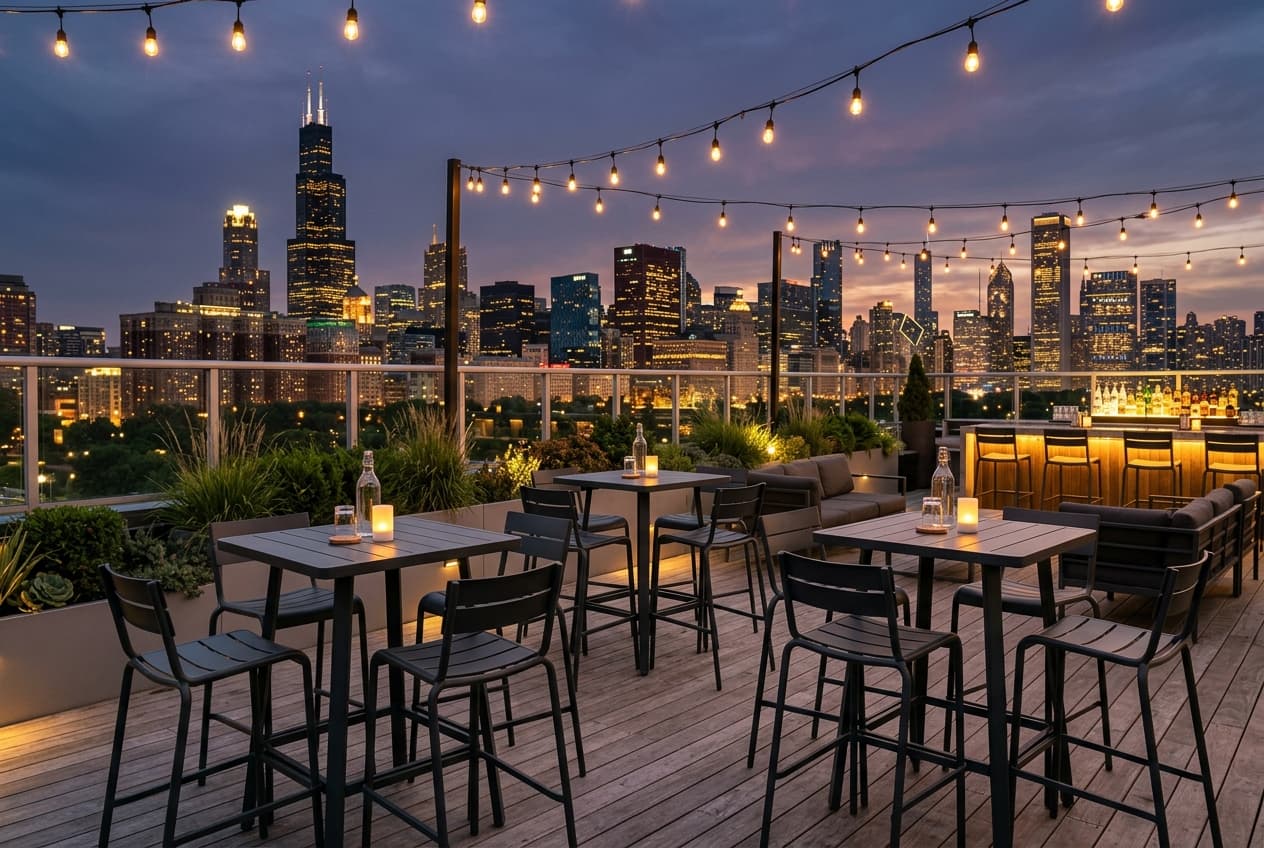
Outdoor and patio bar seating deserves its own line item where a Huntington venue has riverfront or patio space to work with. That furniture needs UV-rated frames and weather-resistant upholstery specified separately from the indoor program, since West Virginia's seasonal swings put outdoor furniture through a wider temperature and moisture range than most operators plan for on the first order.
Planning Ahead of the Season
Huntington's hospitality construction market tends to move around specific triggers: a bar commits to a renovation ahead of a new football season, a new taproom opens downtown, or an operator times a remodel to a graduation weekend surge. The standard commercial furniture lead time of 8 to 12 weeks for custom orders needs to be planned against these fixed dates well in advance, since the region's distance from major manufacturing and distribution hubs can add time to freight schedules that a coastal city would not face.
The practical approach for most Huntington bar and lounge projects is in-stock contract inventory for the core seating program, with custom or COM orders reserved for accent pieces where a specific look matters most. Build supplier relationships ahead of a fixed opening date rather than after ground has already broken. Know which vendors hold in-stock bar stools in the finishes used most often in this market, which suppliers can turn a COM order in a realistic window given regional freight timelines, and which can fulfill a partial replacement order without a long wait.
If you are in the early planning stages of a bar or lounge build anywhere in Huntington, downtown near Pullman Square, the campus corridor, or the riverfront, request a specification consultation before your layout is finalized. It is far cheaper to catch a seat height mismatch or a material issue on paper than after the furniture has arrived at the loading dock.