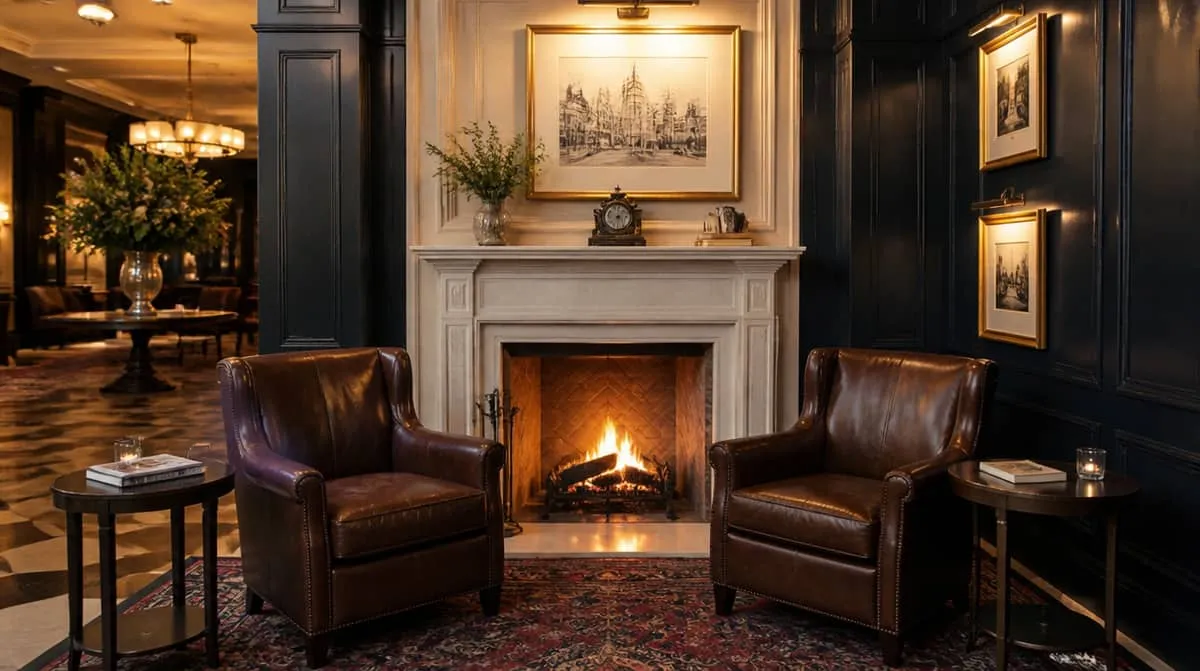
A corporate travel manager flies into Philadelphia International, takes the forty-minute ride down I-95, and checks into a hotel a few blocks from Rodney Square. Tomorrow is a full day of meetings with a bank headquartered in Wilmington, the kind of meeting that has been happening in this city for decades because Delaware's corporate law and banking infrastructure keep bringing executives, attorneys, and consultants back through the same few blocks of downtown. Tonight, the lobby is the only impression the property gets to make before the meeting starts. Before the front desk clerk says a word, the furniture in that room has already told the guest something about the property they are standing in.
That first impression carries real weight in Wilmington's hotel market. This is a city built around business travel more than leisure tourism, and the properties competing for that traveler are judged against a demanding baseline: the guest booking a Wilmington stay usually travels for a living, has stayed in dozens of comparable lobbies, and notices immediately when furniture looks tired, mismatched, or built for a lower price point than the room rate suggests. Lobby furniture here is not decoration. It is a credibility signal for a market built on financial and legal-services trust.
Wilmington's Market Segments Demand Different Things From the Same Room
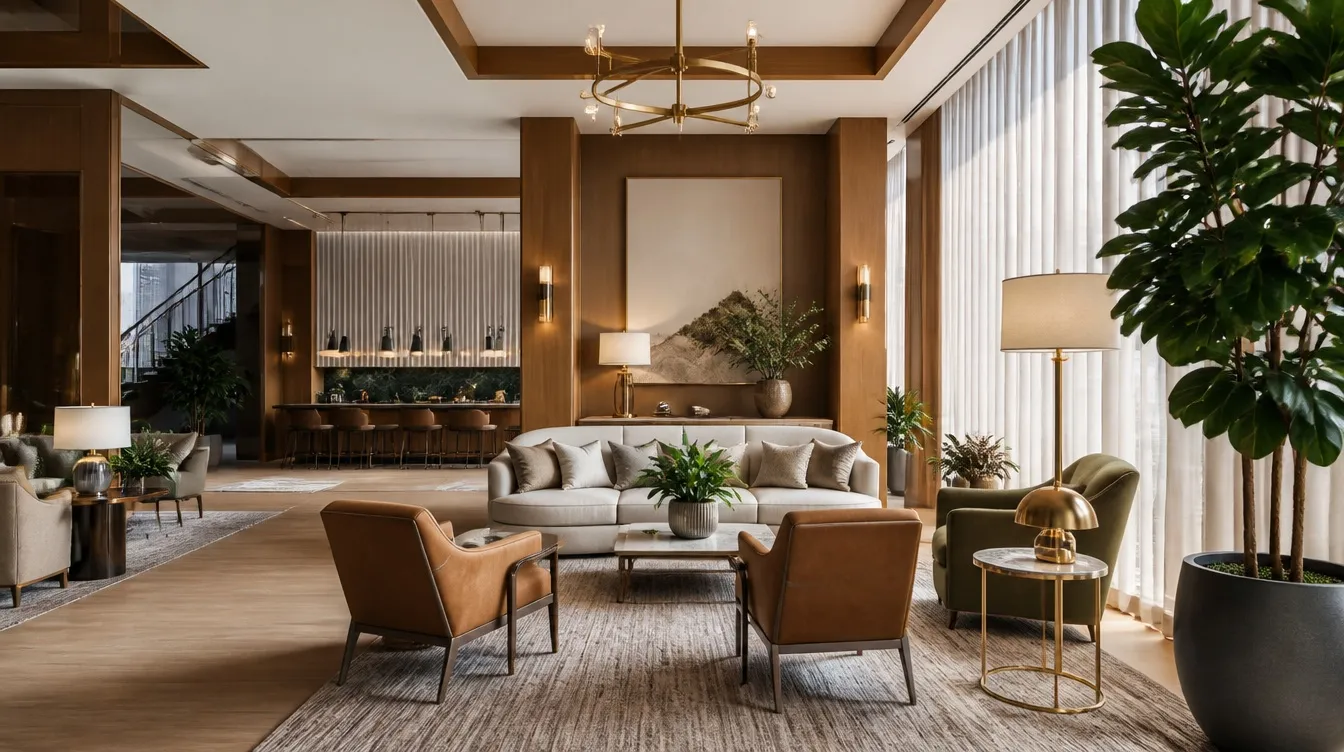
Wilmington's hospitality market splits along a line that matters directly for furniture specification. The properties near the Riverfront and the Chase Center handle a different traffic pattern than the boutique and business-class hotels closer to Rodney Square and the financial district, and both are distinct again from the interstate hotel cluster serving I-95 travelers and the airport-adjacent trade. Contract-grade construction is the floor for all three, but the design brief and the wear pattern differ enough to plan for separately.
Riverfront properties near the Chase Center are managing conference and event traffic on top of standard overnight stays. When the Chase Center is hosting a trade show or a regional conference, nearby hotel lobbies absorb overflow gathering space before and after sessions, guests staging luggage between meetings, and a volume of foot traffic that a quiet Tuesday night in the off-season never produces. Furniture in this segment needs contract-grade kiln-dried hardwood or steel frames, high-resilience foam rated for commercial use, and upholstery rated above 100,000 double rubs, because the difference between a slow week and an event week is large and the furniture has to hold its shape through both.
Downtown business hotels near Rodney Square and Market Street are serving a different guest almost every night: attorneys and bank executives visiting for closings, board meetings, and the ordinary business of a state that houses more corporate headquarters than its population would suggest. That guest has expense-account expectations and low tolerance for furniture that reads as generic. Clean lines, upholstery that holds a crisp edge rather than sagging into the frame, and a scale that suits a smaller, more intimate lobby than a convention hotel's great room all matter more here than in the Riverfront segment.
What the Mid-Atlantic Climate Actually Does to Lobby Furniture
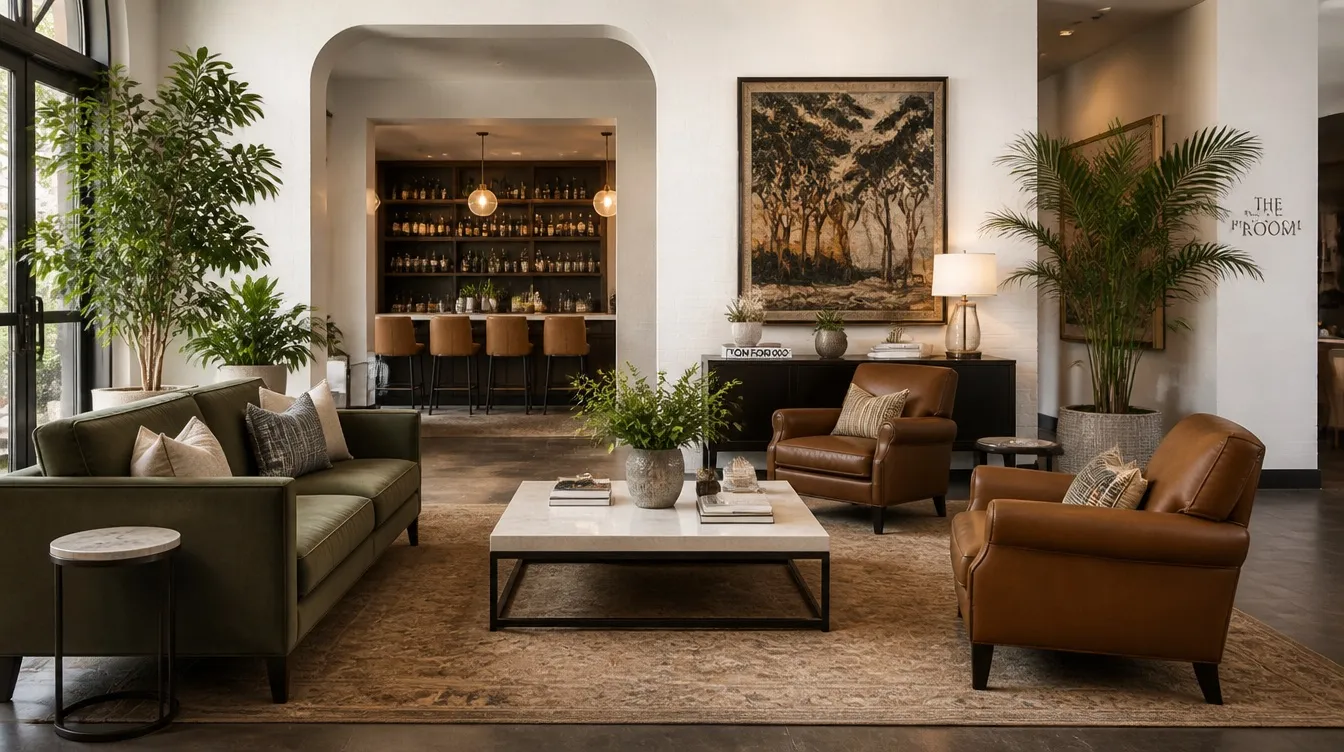
Delaware's climate is a genuine durability variable, and it is a different one than the Southern humidity operators plan for further down the coast. Wilmington runs cold, wet winters with regular ice and salt exposure, followed by humid summers along the Christina and Brandywine rivers. Guests are tracking in road salt, slush, and wet umbrellas from November through March, then arriving in high humidity for four months in the summer. That is two distinct moisture challenges on the same furniture inventory in the same year.
Performance textile specification has to account for both seasons. Salt residue and moisture from winter foot traffic degrade untreated upholstery fabric quickly, particularly on chair arms and the lower rail of sofas where boots and wet coats make contact. Stain-resistant, moisture-rated upholstery is not an upgrade in this market, it is the baseline specification that keeps lobby seating presentable through a full winter instead of showing visible wear by February.
Frame construction matters just as much across that seasonal swing. Solid hardwood or steel frames with reinforced corner blocking handle the humidity-driven expansion and contraction that a Mid-Atlantic year puts furniture through, while particleboard components absorb moisture and loosen at the joints faster in this climate than in a drier region. In lobbies that get rearranged for holiday displays, private receptions tied to law firm or bank client events, and the general reconfiguration that comes with year-round corporate use, frame integrity under repeated movement is a practical, not cosmetic, requirement.
Designing for the Arrival Experience in Wilmington's Signature Districts
Guests process a lobby in a predictable sequence: the primary seating cluster, then the front desk, then the path toward elevators or a meeting room. Every piece of furniture in that sequence is doing communication work before any staff member speaks.
In the Rodney Square and Market Street corridor, where legal and financial firms bring in the same visiting clients and partners on a rotating basis, the furniture that reads as right is understated rather than showy. A well-scaled lounge chair in a textured neutral fabric, paired with a side table in a material that reads as solid rather than laminate, communicates the same quiet competence as a smooth check-in process. Nothing about it should suggest the property bought furniture to fill square footage rather than to define the room.
Riverfront and Chase Center-adjacent properties are competing on a different priority: efficient movement. Guests arriving off a full conference day want to orient quickly, and lobby seating that creates a bottleneck between the door, the desk, and the elevator bank becomes a liability during a busy event week. Chairs that are easy to exit without difficulty when a guest is carrying a laptop bag and a rolling suitcase, and configurations that can be cleared or reset for a private evening reception, serve this segment better than a fixed showpiece arrangement.
Procurement Timing and the Wilmington Renovation Cycle
Wilmington's hotel stock has been through a steady renovation cycle over the past several years, with Riverfront-area properties and several legacy downtown hotels updating common areas to compete with newer regional inventory. That activity puts real pressure on furniture procurement timing.
Contract-grade furniture is built to order, and lead times for standard commercial pieces run eight to twelve weeks from confirmed specification, with custom COM fabric programs and non-catalog finishes adding time on top of that. Properties planning a common-area refresh around a corporate client's fiscal-year visit schedule or a Chase Center event calendar need those lead times built into the project timeline from the start, not treated as a detail to solve once construction is underway. A supplier who commits to clear lead times and understands hospitality volume at your property's rate category is worth more than a marginally lower unit price from a vendor treating a hotel lobby order like a retail purchase.
We quote hotel lobby furniture for Wilmington operators against their own layouts and order sizes rather than a generic sheet. Request a quote and we will put together pricing for your property.