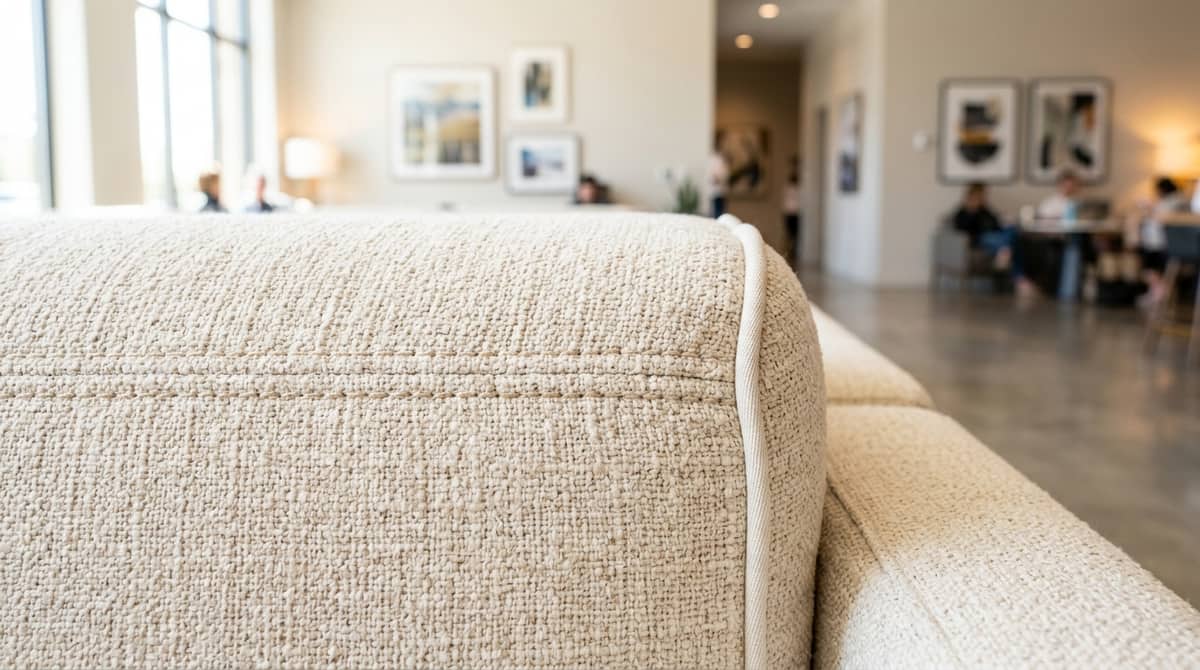
A cruise ship has just docked at Ocean Gateway, and a wave of passengers is making its way up Commercial Street toward the Old Port. Some of them peel off into the cobblestone-lined boutique hotels tucked behind the working waterfront. An hour later, a different kind of guest checks in a few blocks away: a conference attendee arriving for an event at Cross Insurance Arena, rolling a suitcase past brick storefronts that have sold fish and fittings since the nineteenth century. Both of them form an opinion about your property in the first few steps past the door, and in both cases, the furniture in that room is doing the talking before the front desk ever does.
That first impression carries real weight in Portland's hospitality market. The city pulls in millions of day-trippers and overnight visitors across a tourist season that runs hard from Memorial Day through fall foliage, anchored by cruise calls, lobster-and-lighthouse tourism, and a food scene that has made Portland a destination in its own right. It also runs a quieter, steadier calendar of conference and business travel tied to the Jetport, the hospital and university systems, and a downtown that keeps drawing corporate meetings even after the leaf-peepers go home. Lobby furniture that has to perform across both patterns, at both volumes, is a genuine specification problem, not a decorating afterthought.
Portland's Market Segments Demand Different Things From the Same Room
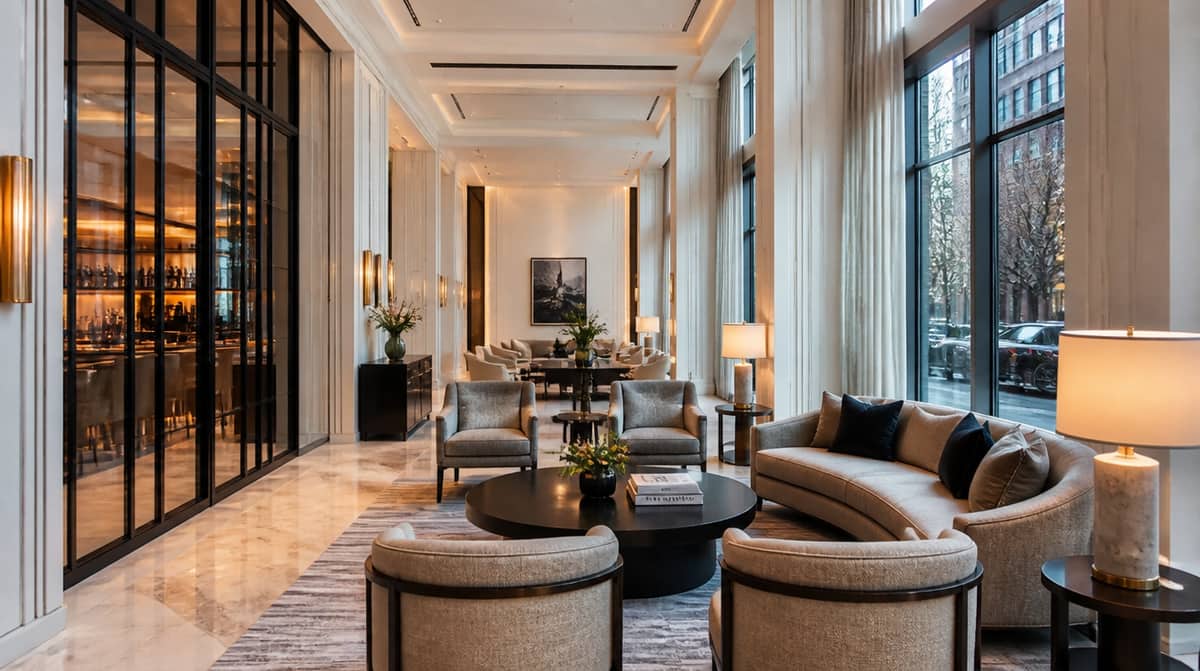
Portland's hotel inventory splits along lines that matter a great deal once you start choosing lobby furniture. The boutique properties packed into the Old Port and the historic buildings along Fore Street and Exchange Street are managing a design-literate leisure guest who chose Portland specifically for its character. The larger business and convention-adjacent hotels near the Jetport, along Marginal Way, and around the Cross Insurance Arena downtown corridor are managing volume, turnover, and a more transactional stay pattern. Both segments need contract-grade construction underneath, but the brief on top of that foundation is different.
Old Port and West End boutiques are competing on story. A guest who booked a restored brick building a few streets up from the waterfront has already looked at the photos, and the lobby furniture is expected to carry through on the promise those photos made: reclaimed materials, nautical or maritime-adjacent detailing, upholstery that feels considered rather than ordered from a catalog. Durability is still non-negotiable in this segment, it's just paired with a design judgment call that matters as much as the construction spec.
The larger business hotels serving the arena, the Jetport corridor, and the corporate travelers coming in for meetings at the hospital systems and the university are managing something closer to a high-traffic public space. A property near the arena can cycle its lobby population multiple times during a single evening when an event lets out, and the furniture needs to hold its shape and its finish through that kind of repeated, fast turnover without looking tired by the following event.
What Portland's Coastal Climate Actually Does to Lobby Furniture
Maine's climate is a durability variable that gets underweighted more often than it should. Portland sits directly on Casco Bay, which means salt air and coastal humidity are a year-round condition, not a seasonal one. Add a winter that regularly brings snow, road salt, and slush tracked in on boots and bags, and a lobby is absorbing a moisture and mineral load that a landlocked market simply doesn't deal with in the same way.
Performance textile specification earns its keep here. Upholstery that isn't rated for moisture contact shows it first at the seat cushion and the arm, exactly where wet coats, bags, and hands make contact after someone has walked in off the Eastern Prom in February. Stain-resistant, moisture-resistant fabric treatment isn't an upscale add-on for a Portland hotel lobby, it's the baseline that keeps furniture out of an early replacement cycle.
Frame construction matters just as much. Solid hardwood or steel frames with reinforced corner blocking and fasteners that can be re-tightened stand up to the humidity swings that come with a harbor city's seasonal shift from damp summer fog to dry winter heat indoors. Particleboard components absorb that moisture cycle and swell, loosening joints faster than most operators expect, particularly in lobbies where furniture gets pushed aside for holiday displays, private events, or extra staging during Old Port festival weekends.
Designing for the Arrival Experience in Portland's Signature Districts
Guests read a lobby in sequence: the seating cluster first, then the desk, then the path toward the elevators or the stairs. Every piece in that sequence is telling the guest something before a staff member says a word.
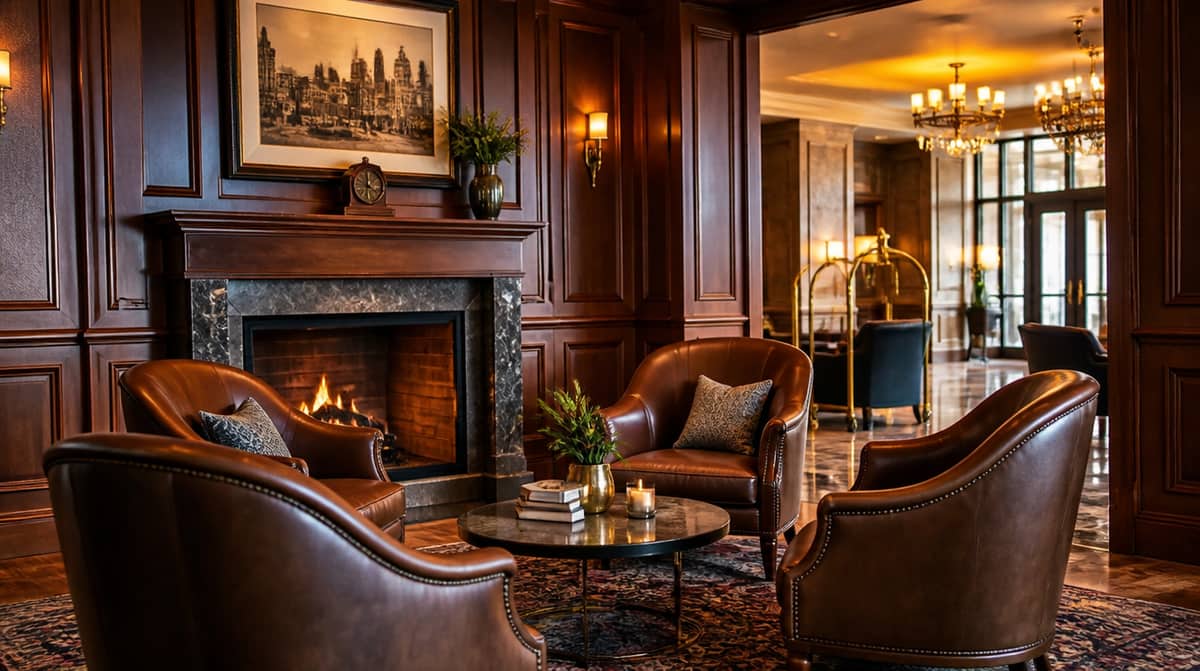
In the Old Port and along the Munjoy Hill and Bayside edges of downtown, the guest walking in has usually chosen the neighborhood as much as the hotel. Furniture that reads as right here leans into materials with texture and history: leather or leather-alternative seating with clean, low-profile lines, wood tones that echo the exposed brick and timber of the surrounding buildings, and a scale that doesn't overwhelm the smaller footprints typical of converted historic properties. A lounge chair that looks like it was selected from a national chain's standard package works against the whole reason the guest picked a Portland boutique over a highway hotel.
For the larger properties near the arena, the Jetport, and the interstate corridor, the priority shifts toward efficient movement. Guests arriving after a flight delay or a long drive up Route 1 want to orient quickly. Lobby furniture here needs seating clusters that don't create bottlenecks between the door, the desk, and the elevators, chairs that are easy to exit with luggage in hand, and configurations flexible enough to clear out fast when the property is hosting an overflow crowd for an arena event or a conference breakout session.
Procurement Timing and the Portland Renovation Cycle
Portland's hotel development has kept a steady pace, with new boutique conversions filling historic buildings in the Old Port and West End, and established properties near downtown and the waterfront refreshing common areas between tourist seasons. That timing pressure is real. Most operators have a narrow window between the fall foliage rush and the start of the following summer season to get renovation work done without disrupting revenue.
Contract-grade furniture is built to order, and standard lead times run eight to twelve weeks from confirmed specification. Custom or semi-custom work, COM fabric programs, frame modifications, finishes matched to a specific design story, adds coordination time on top of that. Projects that leave furniture decisions until late in a winter renovation window routinely discover the pieces that arrive on schedule aren't the right pieces, and the right pieces don't make it in time for the first cruise ship of the season.
If your property is targeting a hard reopening date tied to the start of tourist season or a booked conference block at the arena, those lead times need to be part of the project schedule from day one. The cost of opening with placeholder furniture and replacing it within the first year, in guest review scores, in staff time, in a second capital outlay, is higher than the cost of specifying it correctly the first time.
Working with a supplier who can commit to clear lead times, who understands the volume and seasonality of a coastal Maine hospitality market, and who can run a COM program for properties with a specific material story to tell, is worth more than a marginally lower unit price from a vendor treating a hotel lobby order like a standard retail purchase. In a market where the Old Port's character is the whole draw, the furniture is either reinforcing that story or quietly working against it.