Portland, Maine punches well above its population in the bar and lounge business. It is routinely ranked among the country's highest breweries-per-capita cities, its Old Port waterfront draws cruise ship passengers by the thousand from May through October, and its Arts District along Congress Street has become a genuine craft cocktail destination for a city this size. Sourcing bar lounge furniture Portland, Maine venues can depend on means understanding three distinct contexts, because a stool that survives a peak cruise ship Saturday on Commercial Street is not the same stool that belongs in a quiet cocktail lounge on Congress Street.
The Old Port and the Working Waterfront
The Old Port is Portland's signature district, a compact grid of cobblestone streets and nineteenth-century brick warehouses running from Commercial Street up to Middle and Fore. It is also the hardest environment in the city on furniture. Salt air off the harbor, foot traffic that spikes hard on cruise ship days and summer weekends, and buildings with uneven original wood or brick floors all work against anything undersized or lightly built.
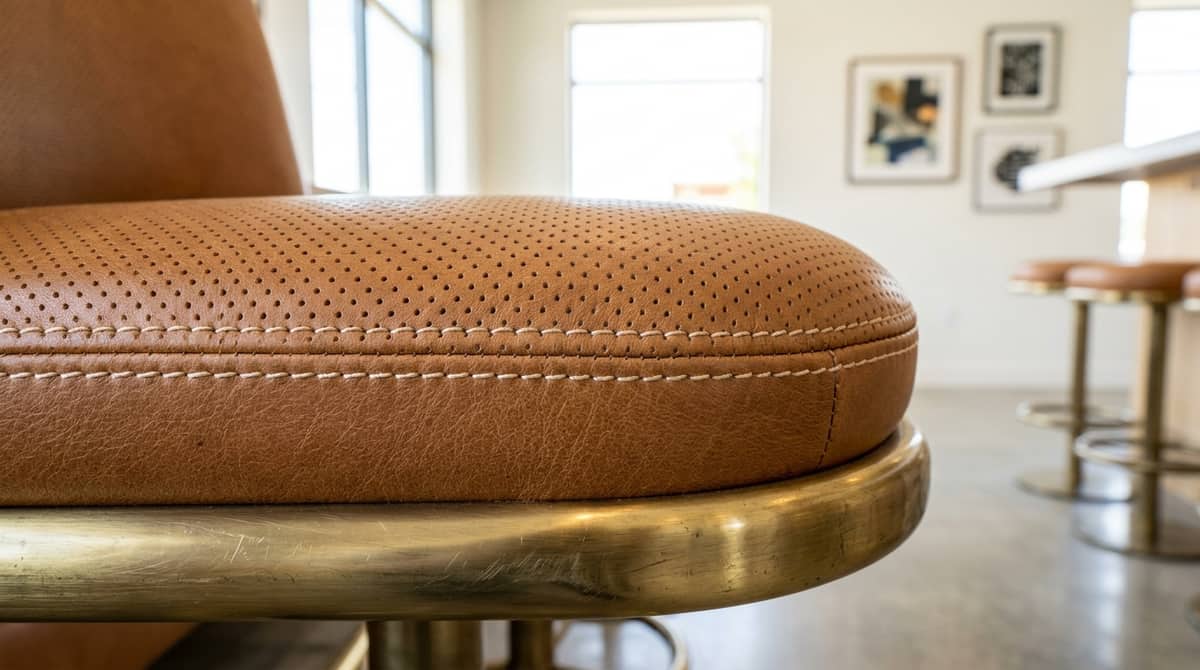
For patios, rooftop decks, and any seating within reach of harbor spray, powder-coated aluminum is the right frame material. It resists the corrosion that steel picks up quickly this close to saltwater, and it holds paint better through a Maine winter of freeze-thaw cycles than most finishes rated only for general outdoor use. Avoid hollow-tube footrests on any barstool going into a high-traffic Old Port program. A cruise ship day can push a small pub through several full turns of seating between morning arrivals and evening departures, and hollow footrests loosen and dent under that kind of sustained pressure far faster than solid bar stock.
Upholstery on Old Port waterfront seating should be solution-dyed acrylic or marine-grade vinyl, not standard interior contract fabric. The combination of salt air, direct sun off the water, and spilled drinks during a busy season will fade and degrade ordinary fabric within a single summer. For indoor rooms in the same building, particularly older warehouse conversions with tin ceilings and exposed brick, specify performance fabric rated at a minimum of 50,000 double rubs Wyzenbeek. Confirm your actual counter height before ordering. A 42-inch bar counter pairs with a 28-to-30-inch stool, while a 36-inch counter-height surface needs a stool in the 24-to-26-inch range. Original Old Port buildings sometimes have nonstandard counter heights left over from previous tenants, so measure on site rather than trusting the build plans.
Congress Street, Munjoy Hill, and the Arts District Look
Portland's Arts District along Congress Street, along with the newer restaurant and bar cluster spreading toward Munjoy Hill and the East End, represents the city's most design-conscious hospitality market. These are smaller-footprint venues competing on craft cocktail programs and a distinct sense of place rather than volume, and the furniture is expected to carry that identity.
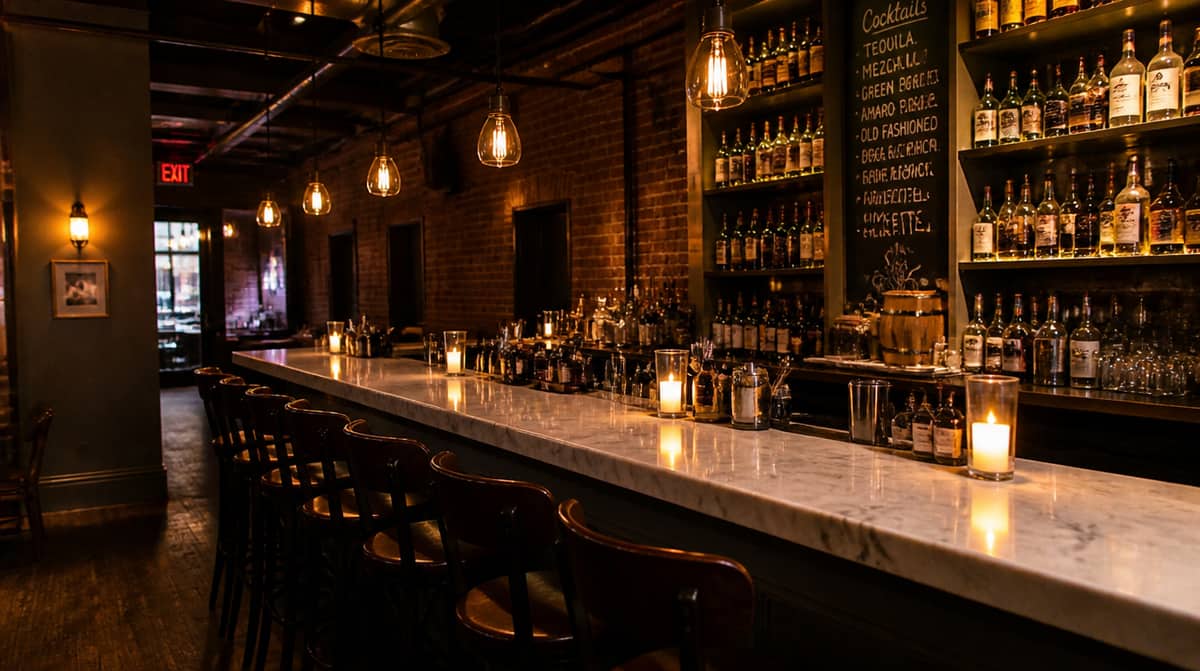
The prevailing look here favors warm wood tones paired with blackened or aged metal, deep navy, forest green, and rust-toned upholstery that nods to Maine's coastal and working-waterfront character without leaning into nautical cliche, and lounge seating with real depth for a slower-paced evening crowd. This is where a COM program is worth raising early with your supplier. Custom order-material lets an independent bar owner specify a proprietary fabric on a commercially rated frame, which is how a twenty-seat Congress Street cocktail room achieves a distinctive look without giving up contract-grade durability. That conversation needs to happen while the design is still being finalized, not after the frames are already on order.
For communal high-top tables and shared seating, which are common in this district's smaller rooms, specify cast iron or heavy powder-coated steel bases with adjustable leveling glides. Many of these buildings are well over a century old, and original wood floors are rarely level after decades of settling. A wobbling table in a room this size is noticed immediately.
Cruise Season, Thompson's Point, and the Hotel Corridor
Portland's peak demand does not come from a downtown convention center the way it does in larger cities. It comes from the cruise ship calendar, from event programming at Thompson's Point, and from the hotel bar corridor running along the waterfront and up toward the Cross Insurance Arena. On a clear-weather day with two ships in port, Commercial Street and the surrounding Old Port bars can seat and turn over more covers before dinner than a typical week produces during the off-season. Furniture in these venues has to be treated as infrastructure built for sustained peak load, not simply decor chosen for the room.
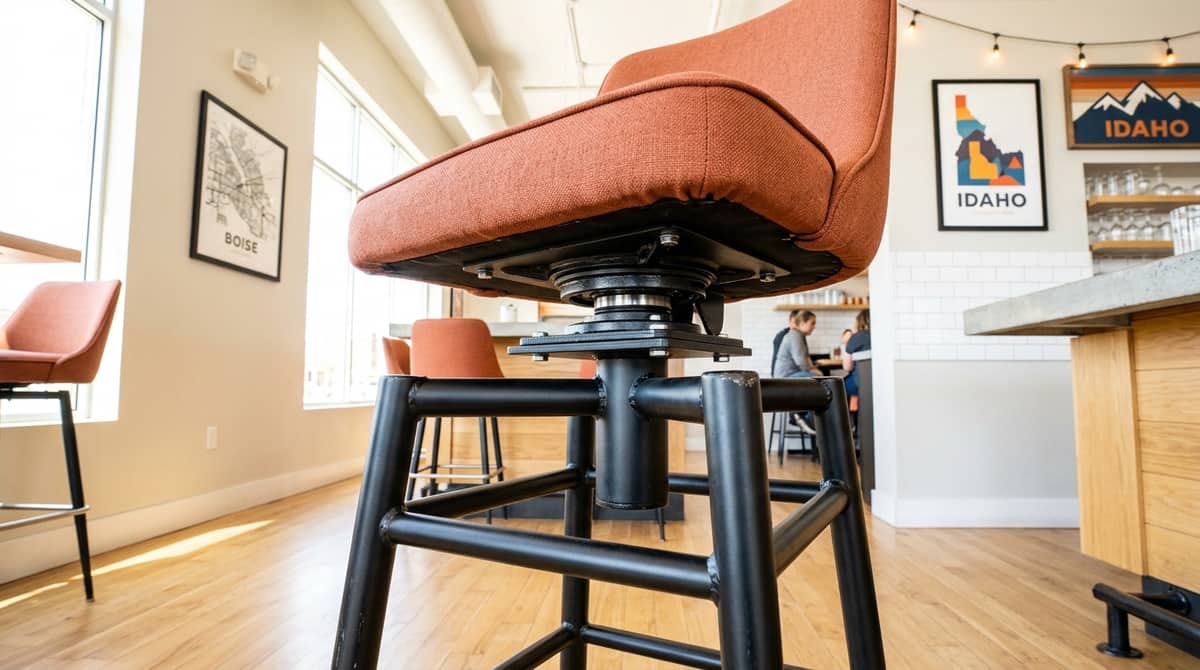
The specification priorities are structural weight and weld quality. Barstool frames for high-traffic waterfront and hotel bar programs should run a minimum of 16-gauge steel on structural members, fully welded at the footrest and every leg-to-seat connection. Bolted frames work loose under the kind of repeated stress that comes from hundreds of different guests over a single cruise day, and a wobbling stool at a hotel lobby bar reflects poorly on the property in a way that is disproportionate to the actual cost of the fix. Ask any credible contract furniture supplier for weld documentation if you are ordering in volume.
Replaceability matters as much as initial build quality. A hotel bar or waterfront restaurant running at full capacity through a summer season will lose individual pieces to wear, and those pieces need to be swapped without disrupting service or waiting on a full production run. Confirm your supplier stocks your primary collection rather than offering it only as made-to-order, so that ordering four or six replacement barstools in a matching finish is a matter of weeks, not months.
Sourcing Bar Lounge Furniture for Portland, Maine Projects
Portland's hospitality construction calendar is compressed by its own seasonality. Most owners want a patio, rooftop, or new dining room open before Memorial Day, which means furniture orders often land in late winter on a timeline that construction delays have already eaten into. The standard 8 to 12 week lead time for custom orders does not leave much room for error when the season's entire revenue window depends on a fixed opening date.
The practical approach for most Portland bar and lounge projects is in-stock contract inventory for the core seating program, paired with custom or COM orders reserved for the accent pieces where design specificity actually matters. Build the supplier relationship before the urgent need arrives. Know which vendors carry in-stock barstools in the finishes you use most, which suppliers run realistic COM turnaround, and which can fill a partial replacement order mid-season without derailing the rest of your inventory.
If you are planning a bar or lounge build anywhere in Portland, whether that is the Old Port, the Arts District, Munjoy Hill, or across the bridge in South Portland, request a specification consultation before your layout is locked. It is far cheaper to correct a seat height mismatch or a floor clearance issue on paper than after the furniture has already shipped.