The Portland Hotel Lobby as a Revenue Space
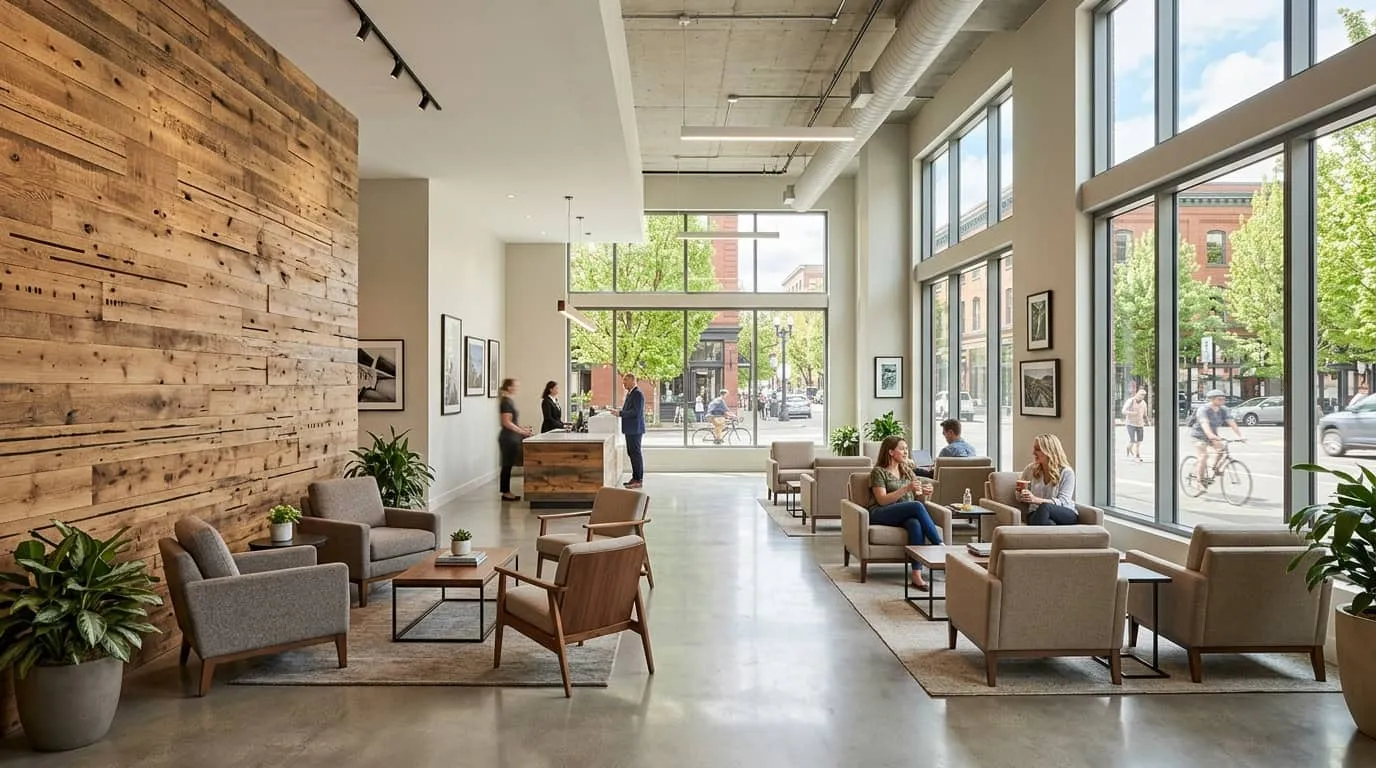
Portland hotel operators have reshaped the lobby over the past decade from a transitional space into a destination. The lobby that functions as a neighborhood coffee bar in the morning, a work-from-hotel space in the afternoon, and a pre-dinner cocktail spot in the evening generates revenue from guests and non-guests alike. Properties near Powell's Books, in the Pearl District, and along the Willamette River waterfront have built real local followings around their ground-floor spaces.
That shift has practical consequences for furniture specification. A lobby optimized for check-in and check-out movement has different furniture requirements than one running 12 hours of daily programming for a mixed audience of hotel guests, remote workers, and neighborhood regulars. The latter demands greater density of comfortable seating, more surface area per seat for laptop and drink placement, and furniture that holds up under the extended and varied use that a programming-heavy lobby generates.
Contract-grade lobby furniture is the only category that can support this kind of use at scale. Residential and light-commercial alternatives look adequate on a specification sheet but fail in practice within the first year compressed foam cushions, failing frame joints, worn armrests, and cover materials that don't recover from the cleaning cycles a busy hotel lobby requires.
Lounge Seating Specifications for Portland Hotel Lobbies
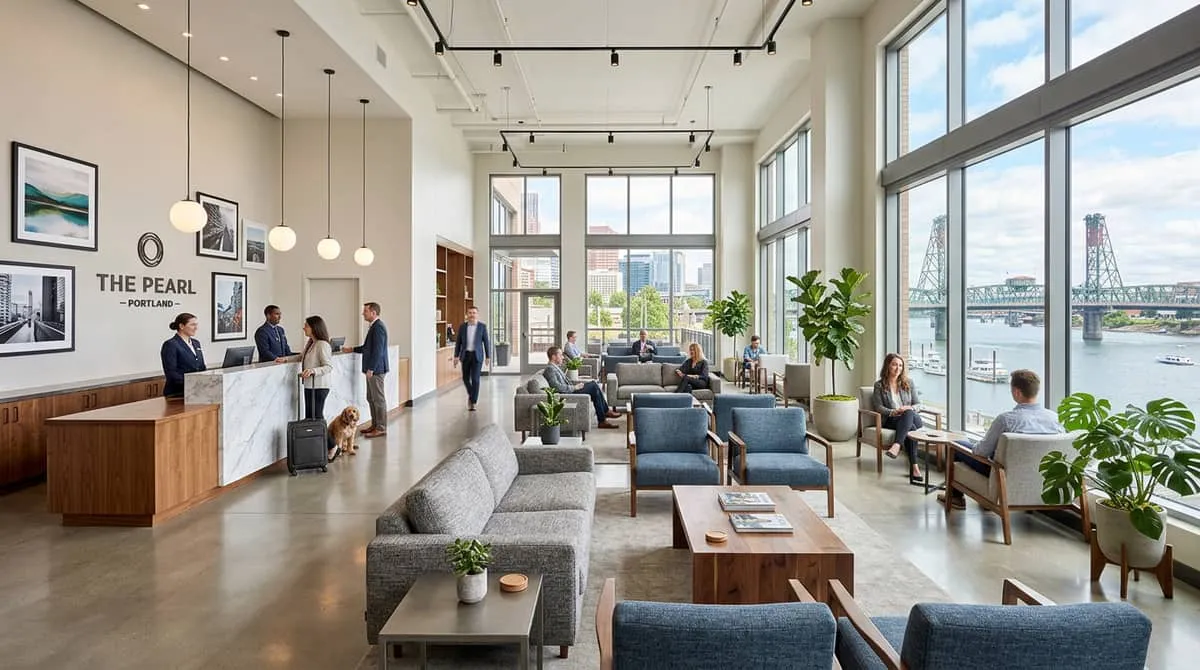
Lounge seating is the core of a Portland hotel lobby furniture specification. The categories you need to cover typically include low lounge chairs, two- and three-seat sofas, and smaller accent seating for the periphery of the space.
For lounge chairs in high-use hotel lobbies, the critical construction specifications are frame material, foam density, and cover performance. Frames should be solid hardwood or welded metal particleboard and plywood frames absorb impact and lateral stress differently than solid material, and they fail at joint points under commercial use. High-resiliency foam at 1.8 lb/ft³ or higher for seat cushions holds its shape through the extended and repeated seating cycles a busy lobby generates; lower-density foams compress permanently within months of commercial service.
Cover materials for Portland hotel lobby seating face a specific challenge: the city's outdoor culture means guests frequently arrive in gear that's damp, muddy, or carrying the outdoor materials that urban Portland experiences involve. Woven fabrics with high rub counts (30,000 Wyzenbeek minimum for commercial seating) and soil-release treatments outperform untreated textiles. Contract vinyl and performance leathers offer even greater cleanability for the highest-traffic seating positions. Leather works particularly well in Portland's boutique segment, where it reads as quality and ages with the kind of character that aligns with the city's appreciation for honest, durable materials.
Specify COM-rated fabrics if your designer is bringing specific textile selections. Most commercial frame manufacturers can accommodate customer's own material and will confirm suitability ratings. Verify the material is rated for contract use before committing not all designer fabrics that look appropriate are engineered for commercial durability.
Tables, Surfaces, and Ancillary Furniture
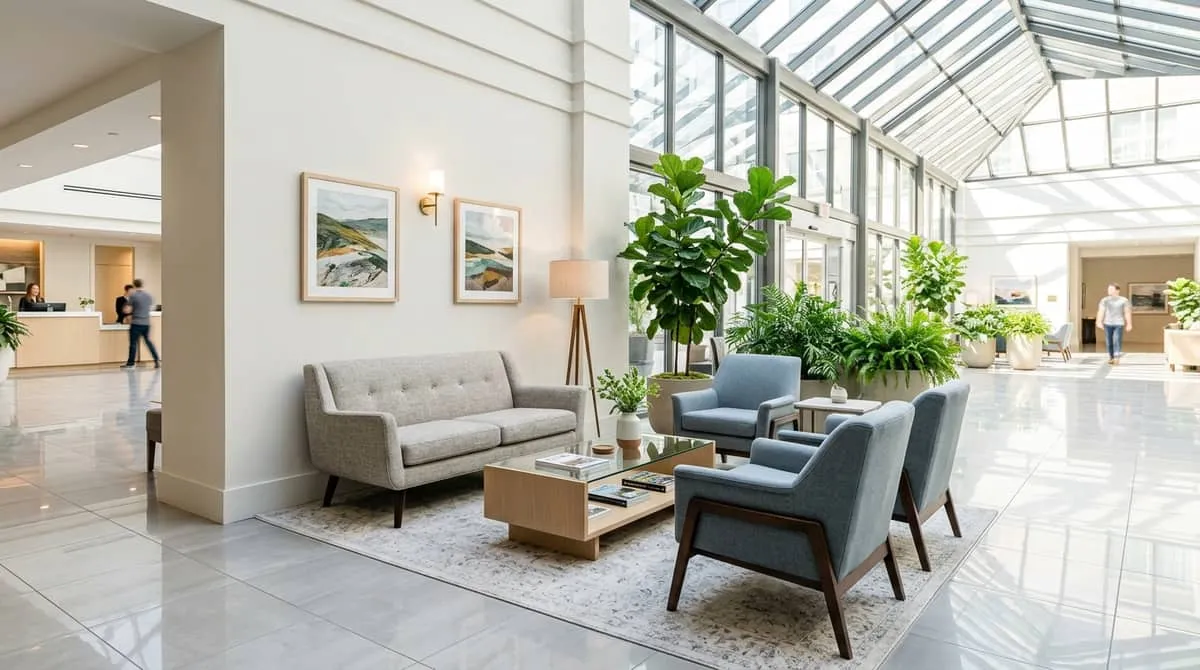
A hotel lobby seating environment needs adequate surface area to function. Guests need somewhere to put drinks, laptops, charging cables, and the coffee they ordered from the bar. Under-surfacing a lobby maximizing seating count without allocating enough table area creates a guest experience problem that shows up in reviews.
Coffee tables for lounge groupings in Portland hotel lobbies should be sized for the seating group they serve, not for the catalog dimensions that look proportional in a product photo. A three-seat sofa paired with a coffee table that seats two properly requires a different table dimension than a photo suggests. Work from the actual floor plan and seating arrangement.
Stone, porcelain, and commercial laminate are the right surface materials for hotel lobby tables in Portland. Wood surfaces require regular refinishing under the heat, moisture, and impact exposure of a busy lobby. Stone and porcelain hold up without maintenance and read as quality appropriate to the room rate. Laminate in concrete or stone finishes offers the same durability at a lower price point and is indistinguishable from stone in most lobby lighting conditions.
Console tables and credenzas against lobby walls often used for luggage staging, amenity display, or check-in support functions in smaller boutique properties should be specified in materials consistent with the overall lobby palette and mounted to wall studs per Oregon seismic anchoring requirements. Freestanding pieces in high-traffic zones create clearance and liability considerations; wall-mounted or structurally anchored alternatives are safer and often more space-efficient.
Side tables, lamp tables, and accent tables in the peripheral seating areas need the same durability standards as primary coffee tables, even if they see lighter use. A side table that shows wear while the primary seating is still in good condition creates a visual inconsistency that's disproportionately noticeable.
Front Desk and Host Area Furniture
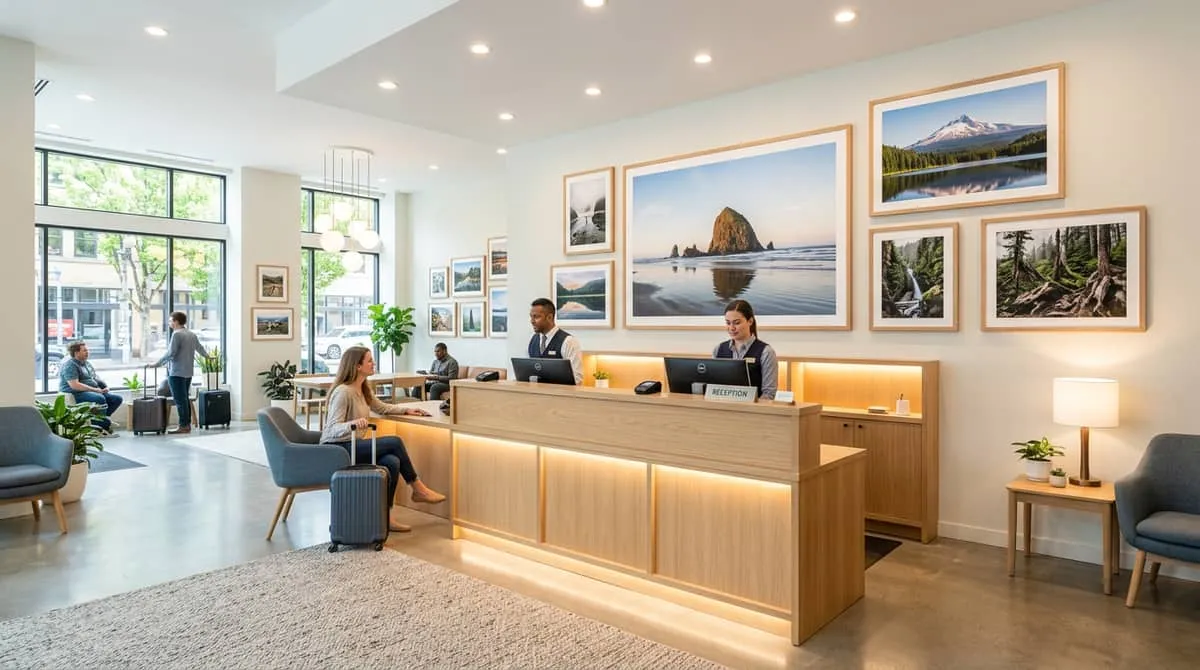
The front desk and host area furniture in a Portland hotel lobby sets the first impression and anchors the space architecturally. In boutique properties, the front desk is often a design statement rather than a purely functional piece a custom millwork element, a repurposed antique counter, or a deliberately casual check-in format that fits the property's personality.
Whatever the aesthetic direction, the functional requirements are consistent. Counter heights need to accommodate both standing check-in interaction and accessible-height service points per ADA requirements. Back-of-desk storage for key envelopes, charging supplies, concierge materials, and operational tools should be planned into the design rather than improvised with add-on shelving after installation.
For properties near the Oregon Convention Center and the Lloyd District hotel corridor, front desk efficiency is a higher priority than in boutique properties where check-in pace is more relaxed. High-volume lobbies benefit from desk configurations that can support multiple simultaneous check-in agents without the desk surface feeling chaotic.
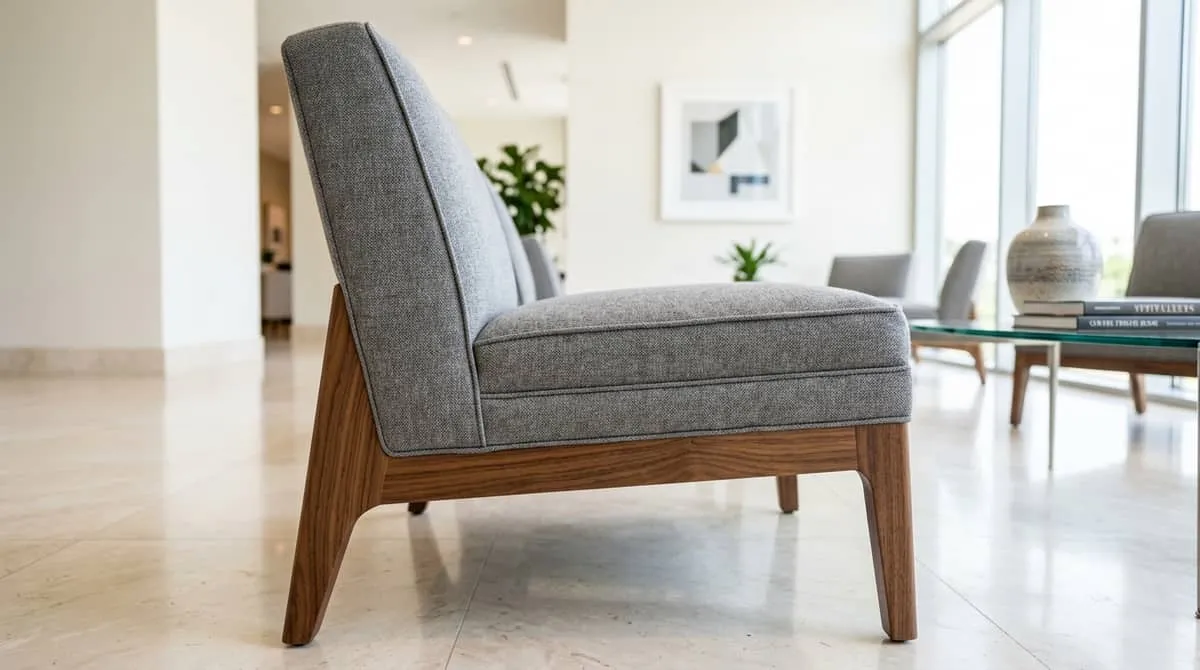
Supplier relationships that cover both the design-forward lounge furniture and the functional front desk and back-of-house millwork coordination simplify the lobby project. Managing these as separate procurement streams creates coordination risk finish mismatches, installation sequencing problems, and conflicting lead times that delay the lobby completion.
Installation, Arrangement, and Ongoing Maintenance
Portland hotel lobbies in older building stock the converted warehouses in the Pearl District, the early-20th-century commercial buildings near Powell's Books often have floor-level variations and structural characteristics that affect furniture installation. Level hardwood floors are not guaranteed. Seating with leveling glides, tables with adjustable bases, and the willingness to shim or otherwise address floor irregularities before installation saves ongoing operational frustration.
Furniture arrangement in Portland hotel lobbies increasingly reflects specific programming logic rather than just aesthetic preference. Zones for laptop workers need power access and appropriate lighting. Lounge zones for cocktail service need surface-to-seat ratios that accommodate drink placement without requiring guests to reach. Traffic flow paths between the entrance, the front desk, the elevator bank, and the bar need to be preserved as functional clearance, not consumed by furniture.
Engage your supplier in the arrangement conversation if they have experience with Portland hotel projects. A supplier who has furnished comparable lobby spaces can offer practical insight into what works and what creates operational problems that aren't obvious at the design stage.
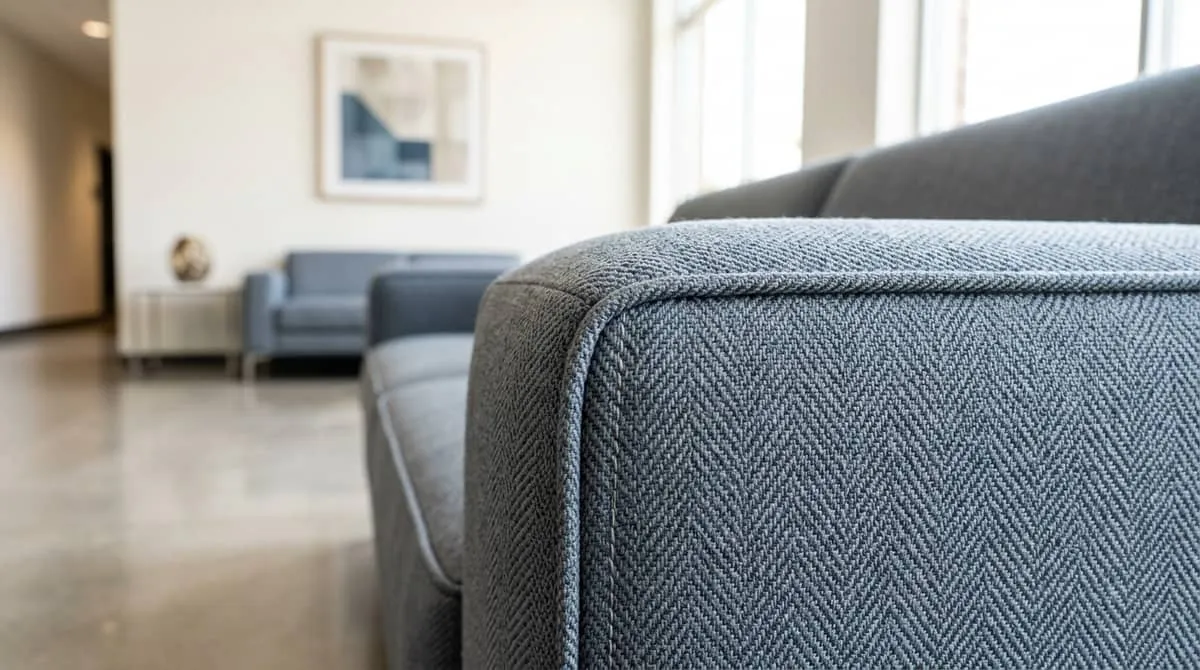
For ongoing maintenance, establish a care protocol for each material type in your lobby specification at the time of procurement. Commercial seating suppliers should provide cleaning and care instructions that your housekeeping team can follow. Quarterly inspection of frame joints, casters, and upholstery condition allows you to address wear early, before it becomes a visible quality problem.
Tell us about your Portland hotel lobby furniture needs and we will turn your quantities, finishes, and timeline into a firm quote. Request a quote whenever you are ready to compare.