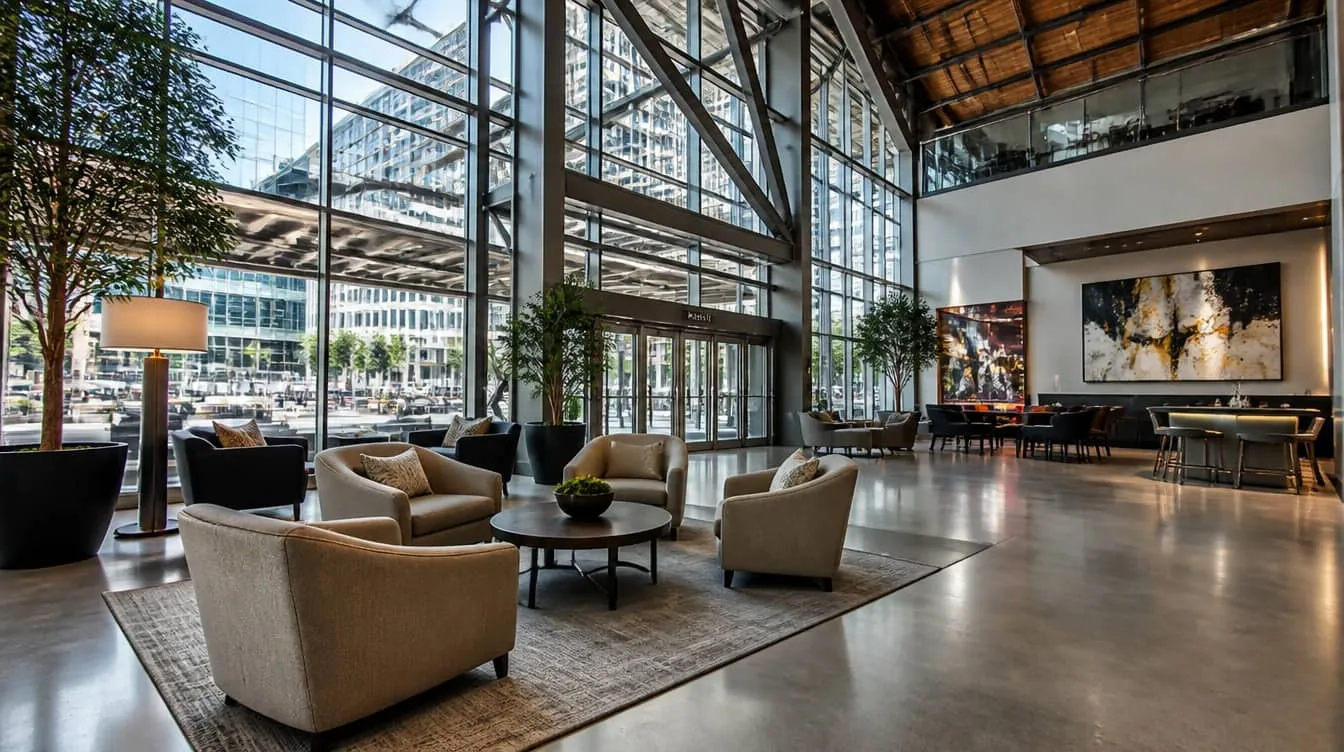
Dallas hotel lobbies have undergone a genuine transformation over the last decade, and the properties that have led that transformation are outperforming their competitive set in ways that directly trace back to the lobby environment. The shift is from a lobby as a transitional space, somewhere guests pass through going to and from their rooms, to a lobby as a destination space where guests choose to spend time, work, meet, and socialize. This shift has been more pronounced in Dallas than in many markets because the city's strong food and beverage culture, its design-aware guest demographic, and the concentration of boutique and lifestyle hotel product in Uptown and the Design District have all pushed in the same direction.
The furniture implications of this shift are significant. A lobby designed as a destination rather than a throughway needs seating that guests actually want to sit in for an hour or two, tables that work for laptops and for drinks, and a spatial arrangement that allows for both social gathering and semi-private work. It also needs furniture that holds up under the traffic load of guests plus local visitors who use the lobby bar and restaurant, which in a well-programmed Dallas hotel can be substantially higher than the room count alone would suggest.
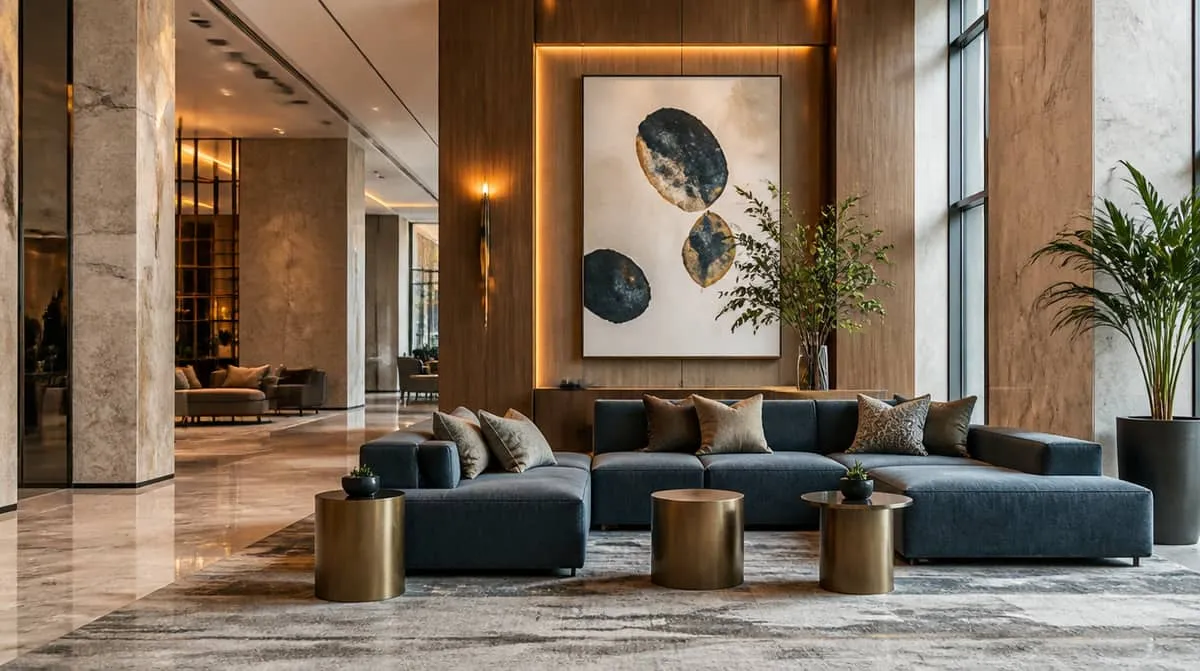
Seating Strategy for Dallas Lobby Environments
The lobby seating conversation in Dallas starts with the guest demographic and the use pattern that follows from it. Uptown hotels serving young finance and tech professionals need a higher proportion of work-friendly seating, with surface access for laptops and power access nearby. Properties in the convention corridor need seating that absorbs the large-group dwell patterns that convention travel creates, with configurations that work for both individual waiting and group gathering. Design District boutique hotels need seating that is primarily a design statement, communicating the property's aesthetic identity to a guest who is evaluating the room before they've even checked in.
In all cases, the seating needs to be commercially specified. Dallas lobby chairs take a level of use that residential furniture was never designed for. A lobby in a 200-room Uptown hotel might have 500 or more discrete uses of its seating per day, counting both guests and visitors, and a chair that handles 500 seating cycles per day needs frame construction, foam density, and fabric abrasion ratings that reflect that reality. The failure mode for under-specified lobby furniture is visible within 18 months: compressed foam that makes the chair look deflated, fabric wear at the seat and arm areas, and frame looseness that shows up as creaking and wobbling. Replacing lobby furniture at 18-month intervals because it wasn't specified correctly costs more than buying properly specified furniture in the first place.
Scale and proportion in Dallas lobby seating deserves attention. Dallas commercial spaces tend to be generous in volume, with high ceilings and large floor plates, and furniture that looks appropriately scaled in a residential context can look undersized or tentative in a Dallas lobby. Working with pieces that have appropriate visual presence, including upholstered seating with bold profiles, tables with visual weight, and lighting fixtures that fill the vertical space, creates the confidence that Dallas's hotel design culture rewards.
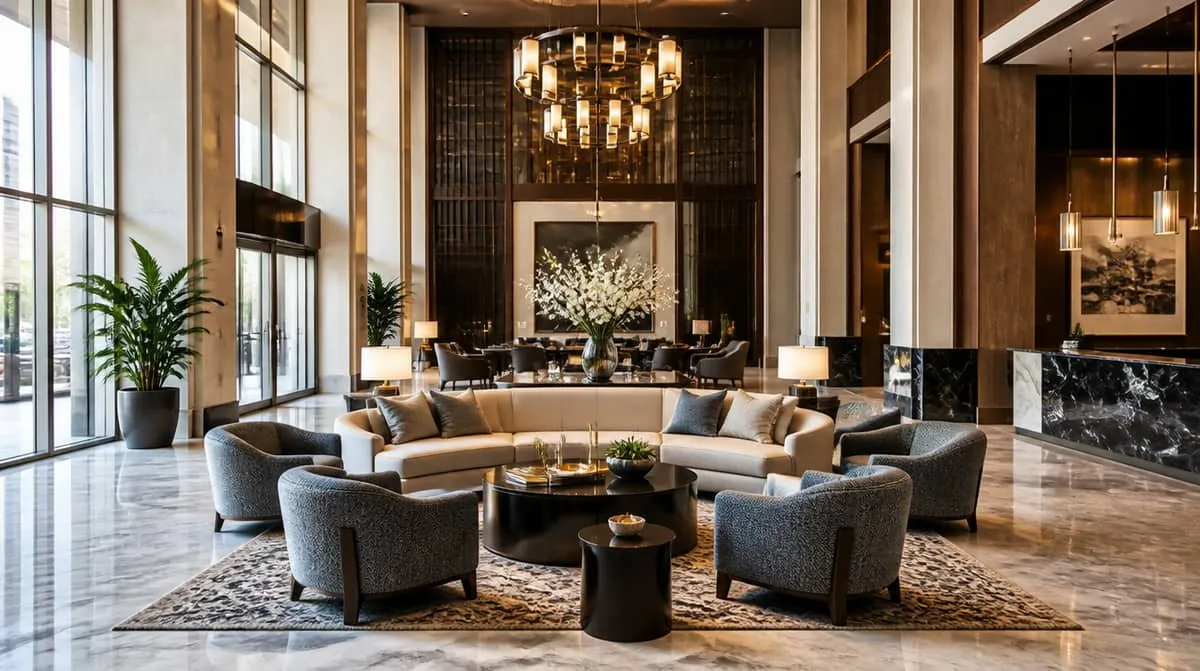
Hard Surface Furniture and Accent Pieces
Lobby tables in Dallas hotels need to be thought of as functional furniture first and design objects second, because the use they take, constant placement and removal of drinks, laptops, bags, and luggage, is primarily functional even when the aesthetic context is design-forward. Commercial cocktail tables with properly weighted bases, leveling capability, and surfaces that resist the rings and scratches of daily drink service are the operational standard. The finish selection for these surfaces is where the design expression happens, and commercial contract tables are available in a wide range of finish options that allow the designer to achieve the specific aesthetic without sacrificing function.
Console tables and accent case pieces in Dallas hotel lobbies serve a dual purpose: they provide functional surfaces for the concierge program, local information display, and key drop, and they are visible design contributions to the room's character. Properties that use this furniture intentionally, selecting pieces that reference the specific aesthetic vocabulary of the property rather than defaulting to generic hospitality case goods, are using the lobby as a design communication tool. Dallas's hotel market is competitive enough that this level of intentionality is noticed by the guests who drive the most valuable repeat business.
Desk furniture for the front desk area affects both staff efficiency and the guest's first impression of the property. A front desk that looks dated, with case goods that don't match the quality level implied by the rest of the lobby, creates a visual inconsistency that undermines the overall impression. Specifying the front desk case goods as part of the same furniture program, with finish and material selections that connect to the lobby furniture, is worth the additional coordination.
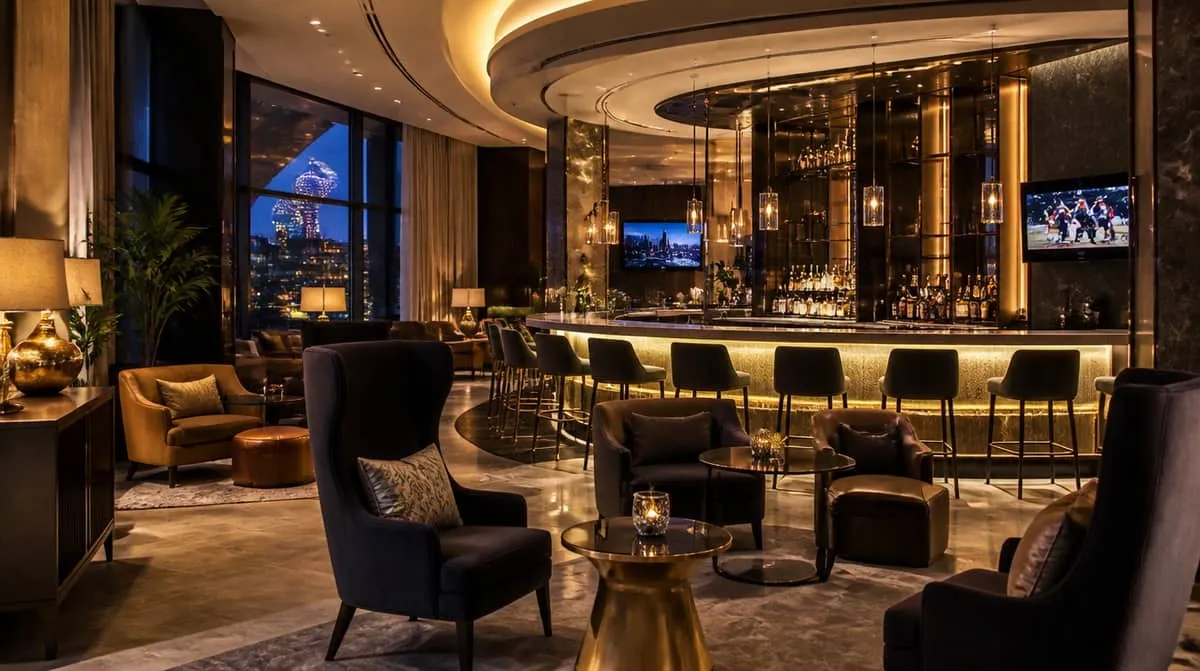
Maintenance and Replacement Planning
Dallas hotel lobbies in properties that program them well as social spaces experience furniture wear faster than lobbies that function primarily as throughways. A replacement cycle budget, set aside annually as a maintenance reserve, and a clear specification document that allows accurate reorders of matching product when individual pieces need replacement, are both elements of responsible lobby furniture management for Dallas properties running active lobby programming.
Every Dallas venue has its own volume, layout, and turnaround demands, and hotel lobby furniture pricing follows from those specifics. Request a quote and we will scope it to your project.