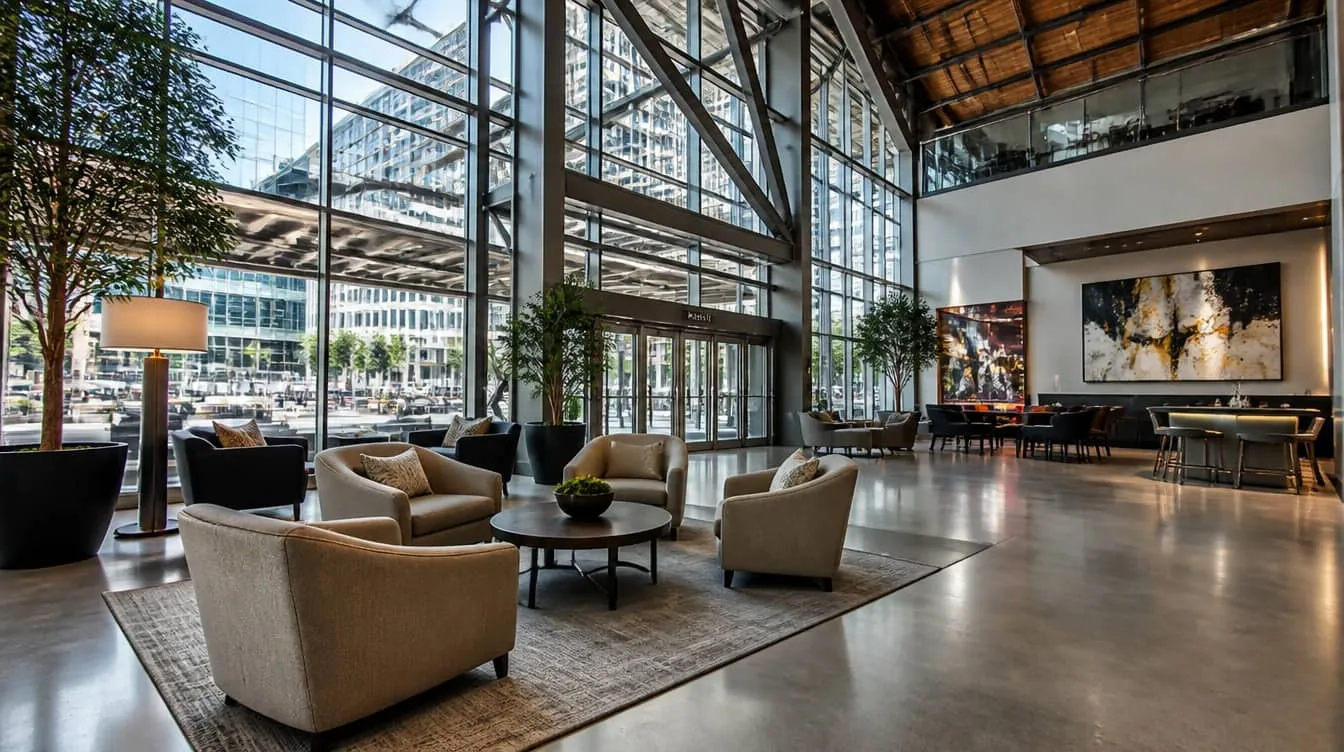
Dallas's bar and lounge market is one of the most design-competitive in the South, and the furniture programs running in the best venues reflect that competition. The McKinney Avenue strip in Uptown runs a dense concentration of bars and lounges serving the young professional demographic with expense accounts and high aesthetic expectations. Deep Ellum has developed a nationally recognized bar culture with a strong independent and creative character. Victory Park has a cluster of venues tied to the entertainment and sports entertainment market around American Airlines Center. West Village and Knox-Henderson have neighborhood bar scenes with a more residential, community-oriented character. Each of these environments has different furniture requirements, but they share one feature: guests who notice what the room looks like and make choices based on it.
The practical challenge for bar furniture procurement in Dallas is that design credibility and commercial durability are both requirements, not tradeoffs. A Dallas bar that opens with furniture that looks exactly right but isn't built for commercial use will be looking at damaged and degraded furniture within 18 months, at which point the design credibility evaporates along with the furniture's structural integrity. A bar that opens with furniture that's clearly commercial grade but lacks design consideration will never develop the visual identity that drives the social sharing and word-of-mouth that fuels growth in Dallas's competitive bar market. The goal is furniture that hits both marks, and it's achievable across a meaningful range of budget levels if the specification is done well.
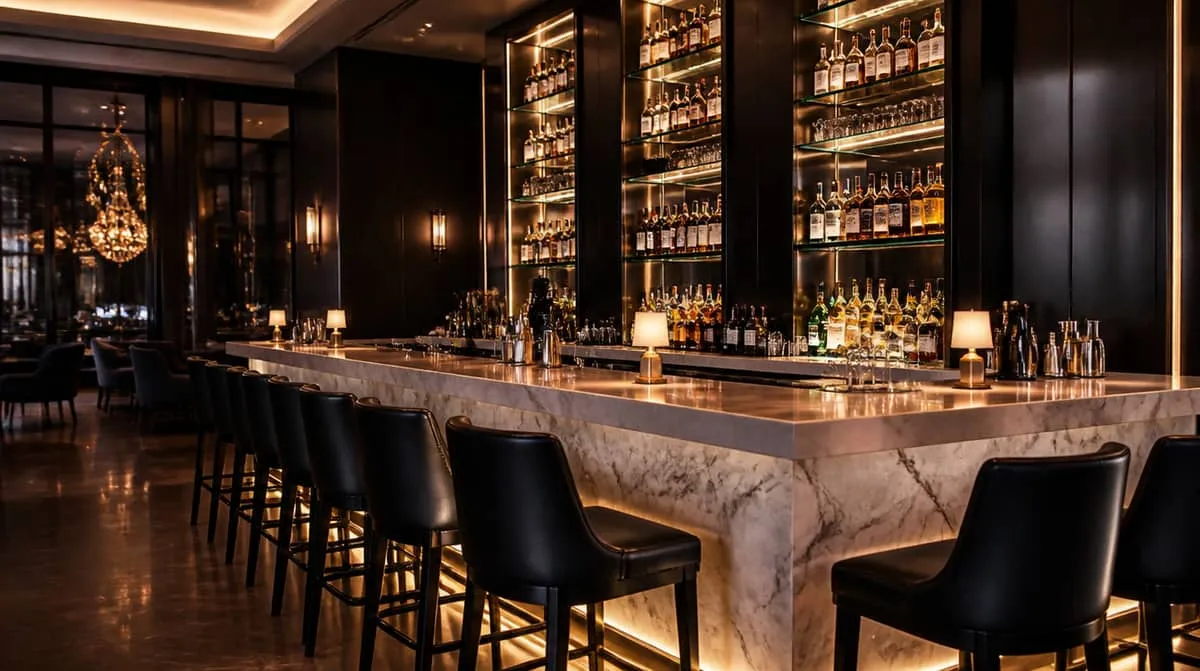
Barstool Specification for Dallas's Volume Environments
Dallas's high-volume Uptown bar market puts specific demands on barstool construction that budget-tier commercial product doesn't always meet. A barstool at a McKinney Avenue bar that does 400 covers on a Friday night is being sat on, spun, dragged, and occasionally climbed on continuously for six to eight hours. The swivel mechanism needs to be rated for commercial use, which means steel ball bearings and a construction that stays smooth through thousands of rotation cycles, not a consumer-grade mechanism that develops wobble and resistance within a year.
The dominant frame aesthetic in Dallas's contemporary bar market has settled on powder-coated steel, with matte black being the most versatile finish for the industrial and contemporary aesthetics that characterize both the Deep Ellum and the upscale Uptown bar markets. Brass and gold-tone finishes have a significant presence in the more upscale lounge settings, particularly in the hotel bars of Uptown and the higher-end cocktail lounges targeting the financial services demographic. Wood frame barstools hold a place in the neighborhood bar market in Knox-Henderson and the bars with a more residential or craft aesthetic.
Seat height needs to be confirmed against your actual bar counter height, not assumed from a standard dimension. Bar counter heights vary by six to eight inches across different construction vintages in Dallas's bar stock, and a mismatch between barstool seat height and counter height is a comfort problem that every guest at the bar experiences on every visit. Measure before you order, and if you're working in an existing space with a non-standard counter height, confirm your supplier can source stools with the right seat height rather than adjusting your counter construction.
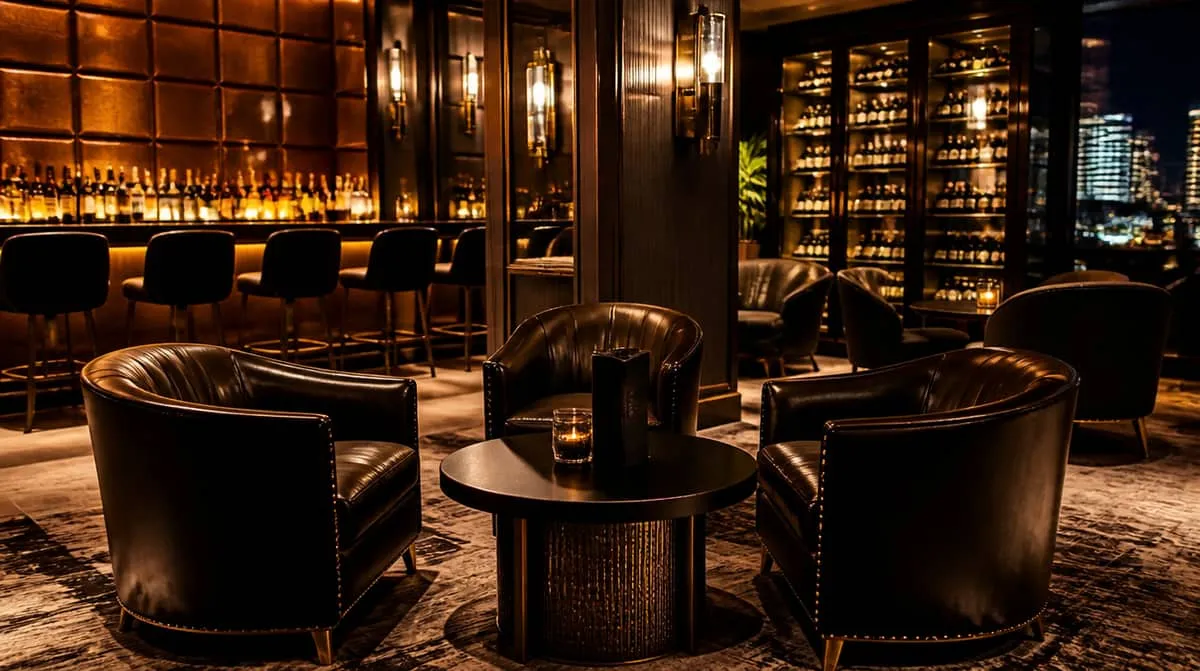
Lounge and VIP Seating for Dallas's Upscale Market
Dallas's upscale cocktail lounge market, including the hotel bars of Uptown and the private club-adjacent venues that serve the financial services and corporate entertainment circuit, has moved toward larger, more comfortable lounge configurations that encourage extended dwell time and higher per-cover check averages. Deep sectional sofas, club chairs with genuinely good cushioning, and low cocktail tables that work for groups of four to six are the furniture typology that anchors these spaces.
The commercial specification requirements for this type of seating are significant. High-density foam rated for commercial use, performance fabric with appropriate cleaning resistance, and frame construction that maintains its integrity under the stress patterns of a lounge bar, which include people perching on arms, people using seating as leverage to get up from low positions, and constant cleaning with commercial-grade products, are all required. The residential lounge furniture that looks identical to commercial spec in photographs degrades visibly within one to two seasons in this environment.
Fabric selection for Dallas lounge furniture is worth investing time in. Performance velvets in jewel tones have become a dominant choice in the upscale Dallas cocktail lounge aesthetic, and commercial performance velvet from suppliers like Crypton or equivalent is available in the color range this market wants. The distinction between commercial performance velvet and residential velvet is significant in terms of durability, stain resistance, and cleanability under commercial conditions, and it's a distinction that justifies the higher per-yard cost.
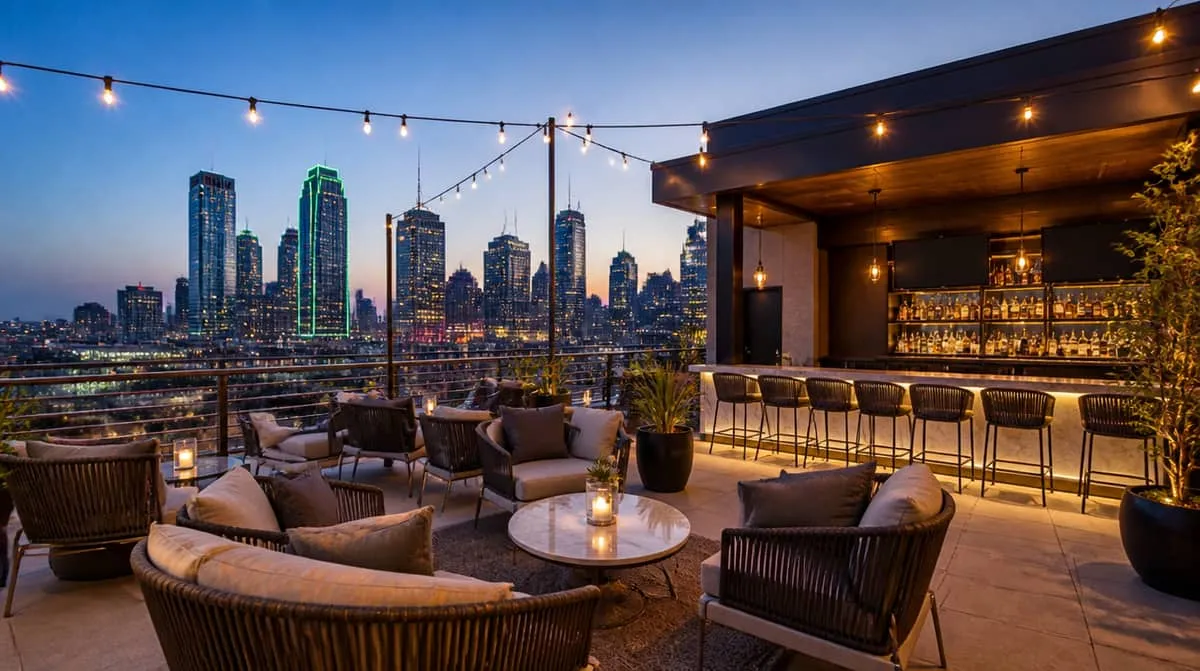
Rooftop and Outdoor Lounge Programming
Dallas's rooftop bar and outdoor lounge market has expanded significantly, with multiple high-profile venues on top of hotels and mixed-use buildings in Uptown and downtown. Outdoor lounge furniture for these environments needs to handle Dallas's temperature range, from summer heat to occasional winter freezes, with UV resistance across the full spectrum of Dallas's high-solar environment. Commercial aluminum frames with powder coat, commercial-grade outdoor sling or woven seating, and bases that resist wind loading are the standard specification for Dallas rooftop and elevated outdoor applications.
For Dallas properties comparing bar and lounge furniture options, project-specific pricing tells you more than any published range. Request a quote and we will scope it to your space and volume.