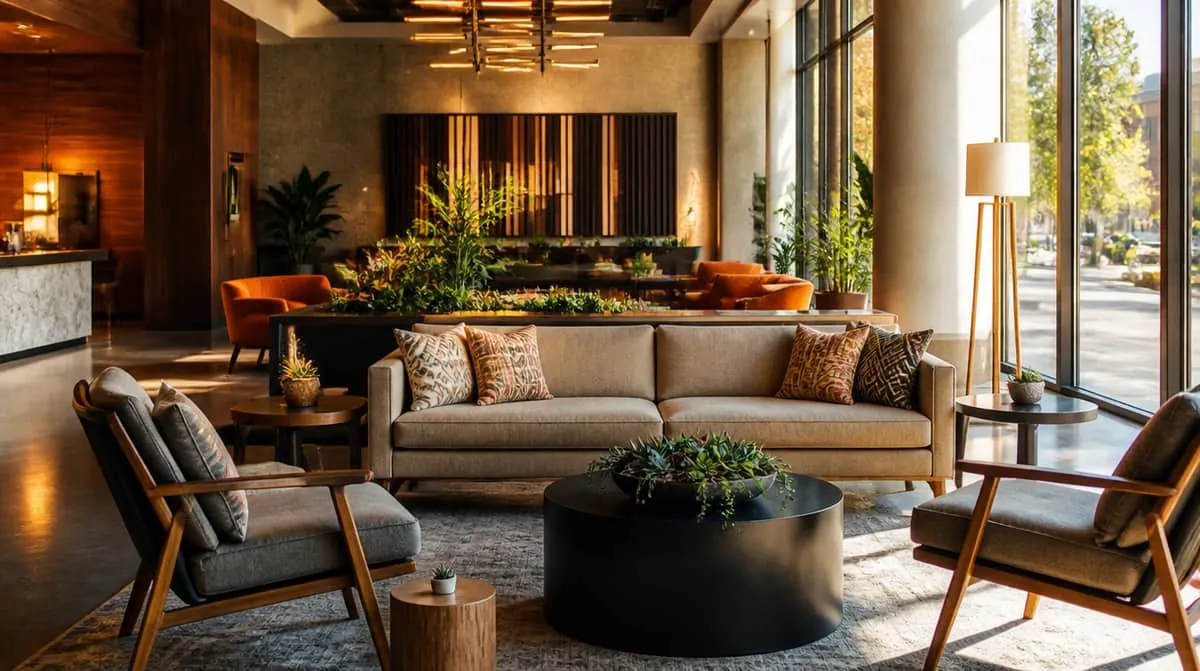
A guest steps off a horse-drawn carriage tour on Meeting Street, ducks past the wrought-iron gates of a historic district property, and walks into a lobby that used to be the entry hall of a nineteenth-century single house. Twenty minutes later, three blocks away, a conference attendee checks into a mid-rise property near the Gaillard Center after a full day of sessions, rolling a bag past a front desk built into what was once a cotton warehouse. Both of these lobbies are doing the same job, communicating trust and quality in the first fifteen seconds, but the furniture that earns that trust looks almost nothing alike.
That contrast is the defining fact of Charleston's hospitality furniture market. The peninsula's historic district draws travelers who chose the city specifically for its architecture and its slower pace, while the North Charleston convention corridor and the airport hotel cluster serve a business and event traveler moving on a tighter schedule. Your lobby furniture has to read as correct in whichever version of Charleston your property is selling, and it has to survive the coastal climate that both segments share.
Two Charlestons, Two Furniture Briefs
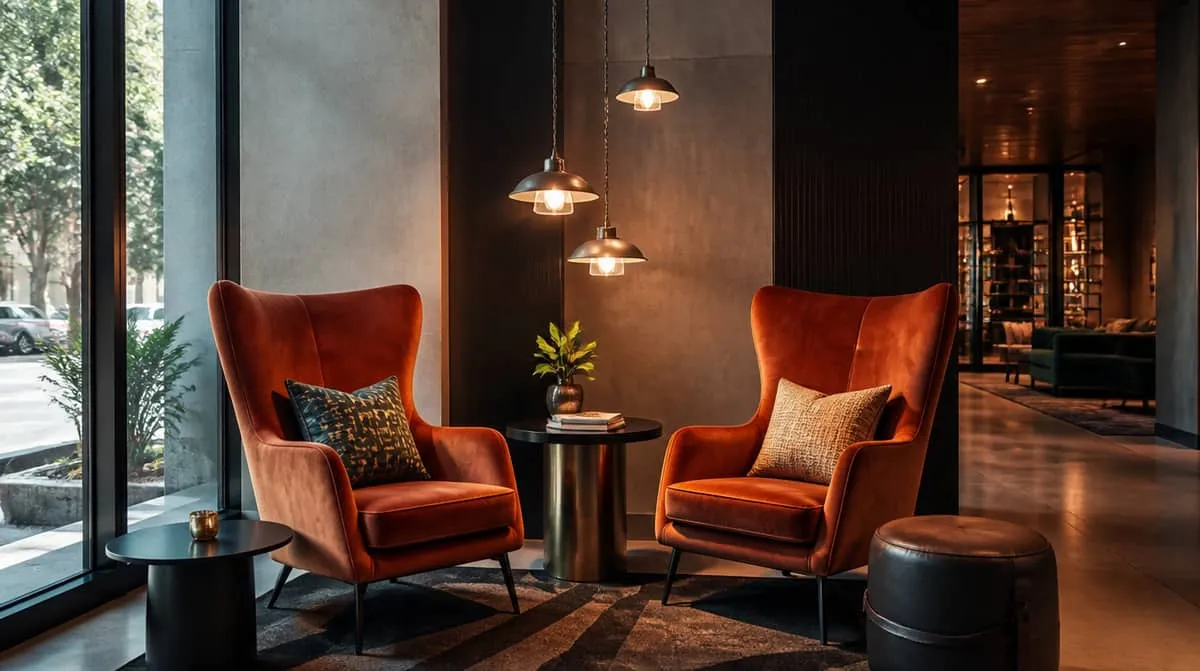
The historic peninsula, from the Battery up through the French Quarter and along King Street, is dense with boutique inns and small-format luxury properties built inside converted mansions, carriage houses, and merchant buildings. These lobbies are often modest in square footage but heavy on architectural detail, exposed brick, heart pine floors, tall windows. Furniture here has to hold its own next to genuine historic material without competing with it. A guest who booked a room on King Street because of the wrought-iron balconies and the cobblestone side streets is not looking for a lobby that reads like a highway-exit chain property. Furniture selection needs a design sensibility that matches the pace of a horse-drawn carriage, low-profile lounge chairs with tailored upholstery, side tables that reference wood or wrought iron rather than laminate, pieces scaled to intimate rooms rather than grand atriums.
The convention and business corridor is a different specification problem. Properties near the North Charleston Coliseum and Convention Center, the airport hotel cluster off I-26, and the mid-rise business hotels serving the growing Boeing and Volvo manufacturing base in the Lowcountry are managing higher guest volume with faster turnover. A property hosting a three-day trade event can move its entire lobby population through twice a day during peak check-in and check-out windows. That volume calls for contract-grade construction as a baseline: kiln-dried hardwood or steel frames, high-resilience foam, and upholstery rated well above standard retail double-rub counts, because furniture that looks sharp during a soft opening will show wear inside eighteen months if it was not specified for this level of traffic.
The Lowcountry Climate Is a Furniture Variable, Not a Backdrop
Charleston's coastal climate does real damage to lobby furniture that is not built for it. The city sits at sea level with humidity that stays high for most of the year, and guests are walking in from salt air, afternoon thunderstorms, and summer heat that regularly pushes past 90 degrees with heavy moisture. Lobbies absorb that moisture load constantly, condensation on drink cups, damp umbrellas leaned against arm rests, bags set down after a walk from the parking garage in a downpour.
Upholstery fabric that is not treated for moisture and stain resistance will degrade first at the seat cushion and the arms, exactly the surfaces that get the most hand and bag contact. This is not an upgrade decision for a Charleston hotel lobby, it is a baseline requirement the same way it would be for a coastal property in Savannah or Wilmington. Frame material matters just as much. Solid hardwood and steel frames with reinforced corner blocking and mechanical fasteners handle the expansion and contraction that comes with a humid, salt-air climate far better than particleboard components, which absorb moisture and swell over time, loosening joints in exactly the pieces that get rearranged for weddings, historic house tours, and private event staging.
Designing the Arrival Sequence for Charleston's Guest Mix
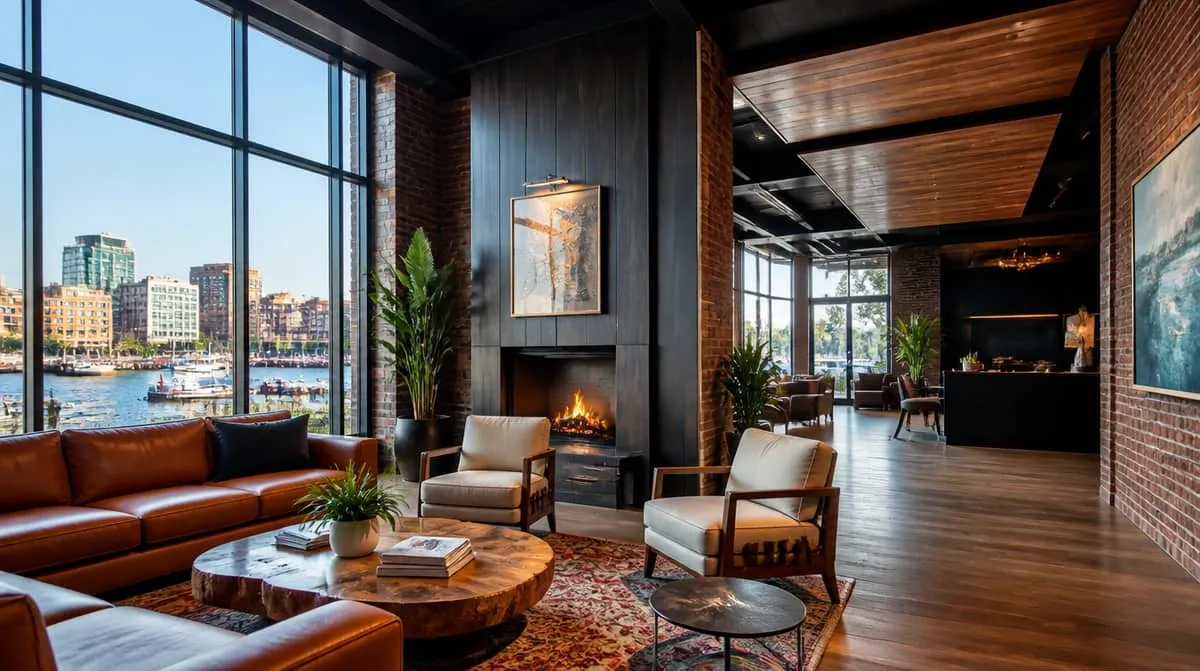
Every lobby choreographs an arrival whether an operator plans it or not: primary seating cluster first, then the desk, then the path toward elevators or a courtyard. In the historic district, that sequence is often compressed into a smaller footprint, which makes every piece more visible and more scrutinized. A wing chair or a settee near the entry of a King Street property is not filling space, it is functioning almost like a piece of curated furniture in a historic home, and it needs the joinery quality and upholstery finish to support that role under daily guest use.
Near Marion Square and the upper King Street corridor, where boutique properties increasingly compete with design-forward restaurants and retail for the same design-literate traveler, lobby furniture needs a similar level of intention, tailored silhouettes, natural material references, nothing that reads as generic contract stock pulled from a catalog without a design pass. Down at the convention end of the market, near the Gaillard Center and the North Charleston event venues, the priority shifts toward efficient flow: seating clusters that do not create bottlenecks for guests moving through with rolling bags and badge lanyards, and configurations flexible enough to be reset quickly when a property hosts a private meeting or reception during a busy event week.
Lead Times and Charleston's Renovation Calendar
Charleston's hotel market has kept building, with new boutique conversions opening in former warehouses and commercial buildings on the peninsula, and new business-class properties following the growth around the airport and the manufacturing corridor. That pace puts real pressure on furniture procurement timing. Contract-grade furniture is built to order, and standard commercial lead times run eight to twelve weeks from confirmed specification, with custom COM fabric programs, frame modifications, and non-catalog finishes adding coordination time beyond that baseline.
A property with a hard opening date tied to a spring wedding season, a Spoleto Festival USA booking window, or a convention calendar commitment at the Gaillard Center or the North Charleston Coliseum needs those lead times built into the construction schedule from day one, not treated as a closeout item. Working with a supplier who understands both sides of Charleston's hospitality market, the historic boutique inn with a small footprint and a high design bar, and the convention-adjacent property managing volume, is worth more than chasing a lower unit price from a vendor who treats a hotel lobby order like a standard retail purchase.
Planning hotel lobby furniture for your Charleston project? Share your specs and quantities and we will build pricing around your actual program. Request a quote to get numbers for your space.