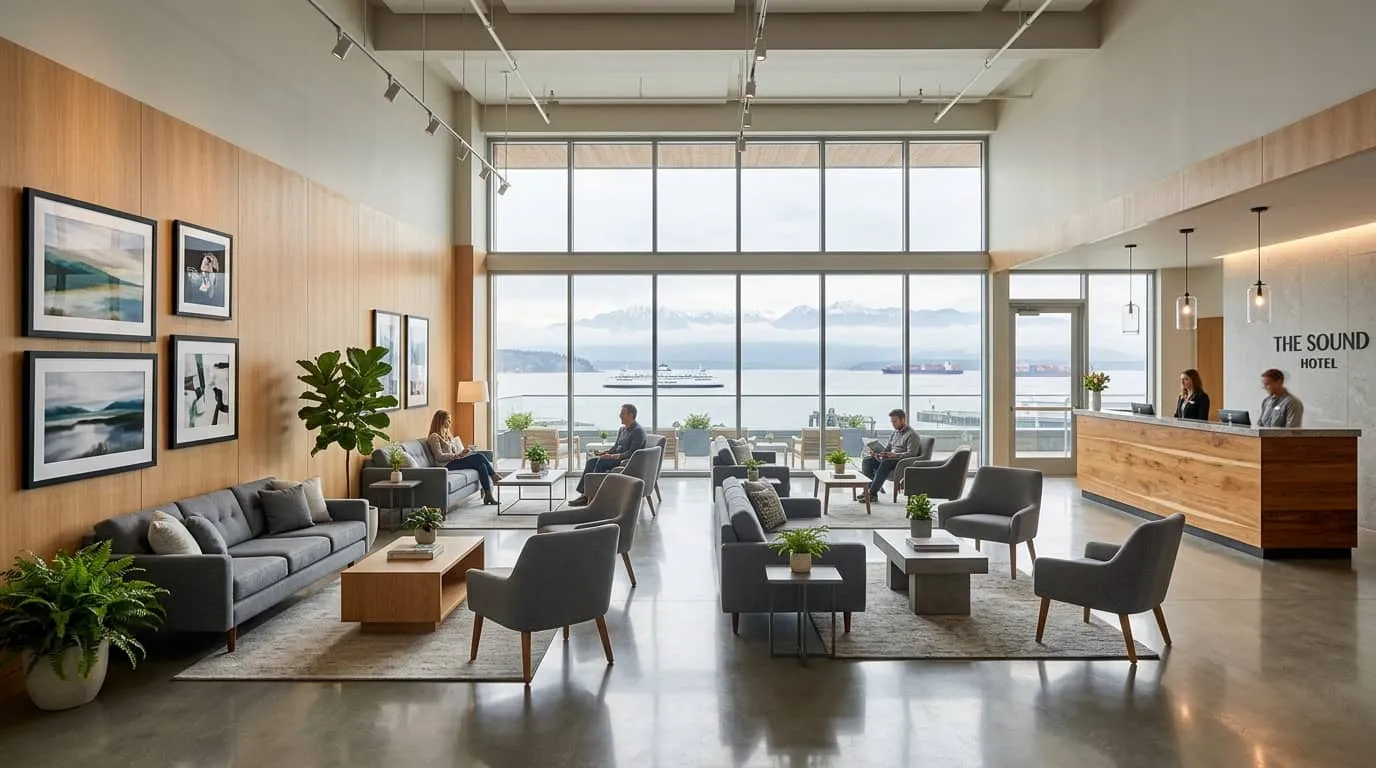
Contract-Grade Hotel Furniture Suppliers Serving Seattle
Seattle's hospitality market runs on extremes. You have boutique properties in Capitol Hill competing against full-service towers in South Lake Union, extended-stay hotels catering to Amazon and Microsoft relocations, and historic properties near Pike Place Market that need furniture with enough character to match the neighborhood. What ties all of them together is the need for contract-grade product furniture built to survive the daily punishment of commercial occupancy rather than the light use assumptions baked into residential lines.
Contract-grade case goods and upholstered pieces are engineered to different standards than what you find at a retail furniture store. Dovetailed drawer boxes, commercial-rated hinges, frame construction that holds up through thousands of check-ins and check-outs these specifications exist because hotel environments are categorically harder on furniture than residential ones. When you are sourcing FF&E for a Seattle property, working with suppliers who understand hospitality procurement means you get product that matches those specs from the start, rather than discovering failures during a peak travel weekend.
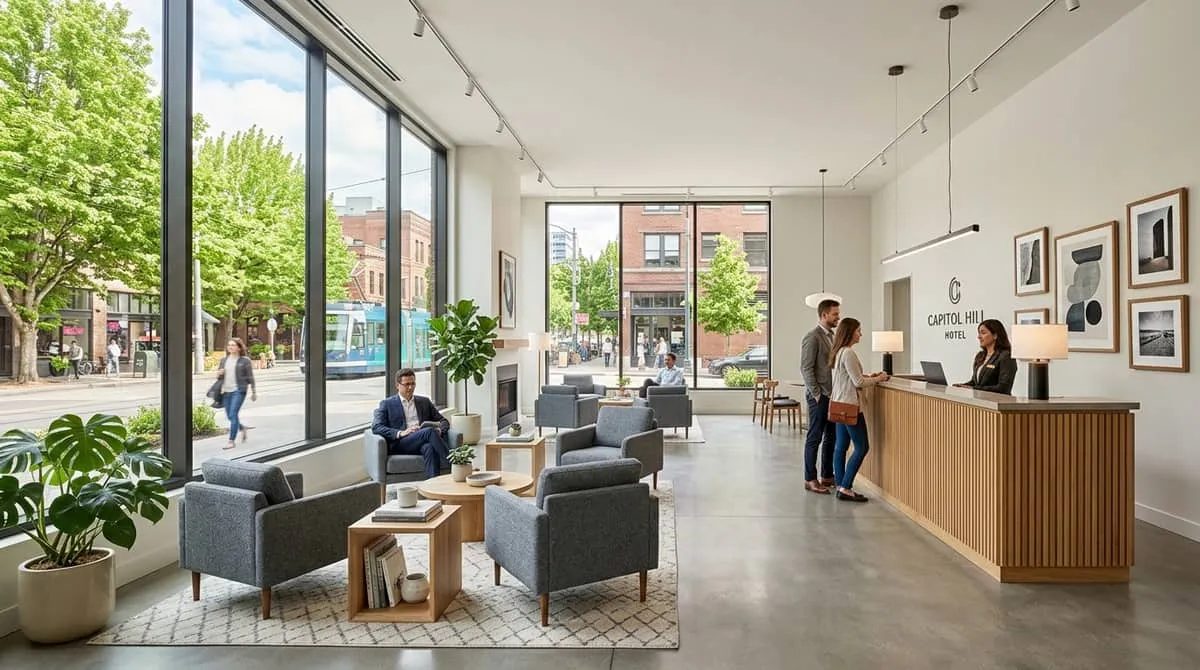
The Seattle market has grown steadily with the tech corridor's expansion. Properties along the South Lake Union waterfront have had to rethink their furniture programs to attract guests who have high expectations shaped by corporate travel budgets. That demand has made the region a more sophisticated market for hospitality furniture, with procurement teams who know the difference between a residential headboard and one built for contract use.
Case Goods and Bedroom Furniture for Pacific Northwest Properties
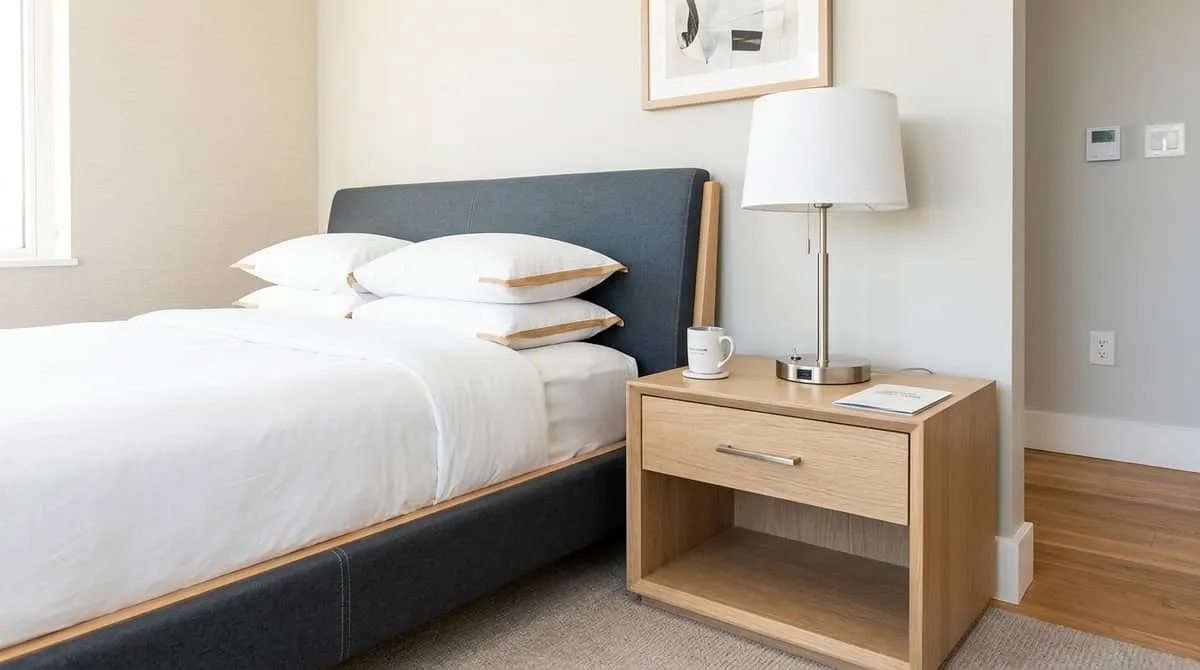
Guestroom case goods dressers, nightstands, armoires, media consoles take more daily contact than almost any other piece in a hotel room. Drawers open and close hundreds of times per year. Surfaces collect moisture from coffee cups and water bottles. Edges absorb impacts from luggage. Furniture that holds up in this environment needs commercial-grade construction, and that means sourcing from suppliers who manufacture to hospitality standards rather than adapting residential product.
For Seattle properties, the regional aesthetic leans toward materials that reference the Pacific Northwest environment: warm wood tones, clean modern lines, occasional natural textures. This translates well into contemporary hotel design, where guests in Capitol Hill boutique properties or Ballard neighborhood hotels expect interiors that feel intentional rather than generic. Contract manufacturers who serve the hospitality market offer finishes and profiles that let you match a design brief without sacrificing the structural integrity you need.
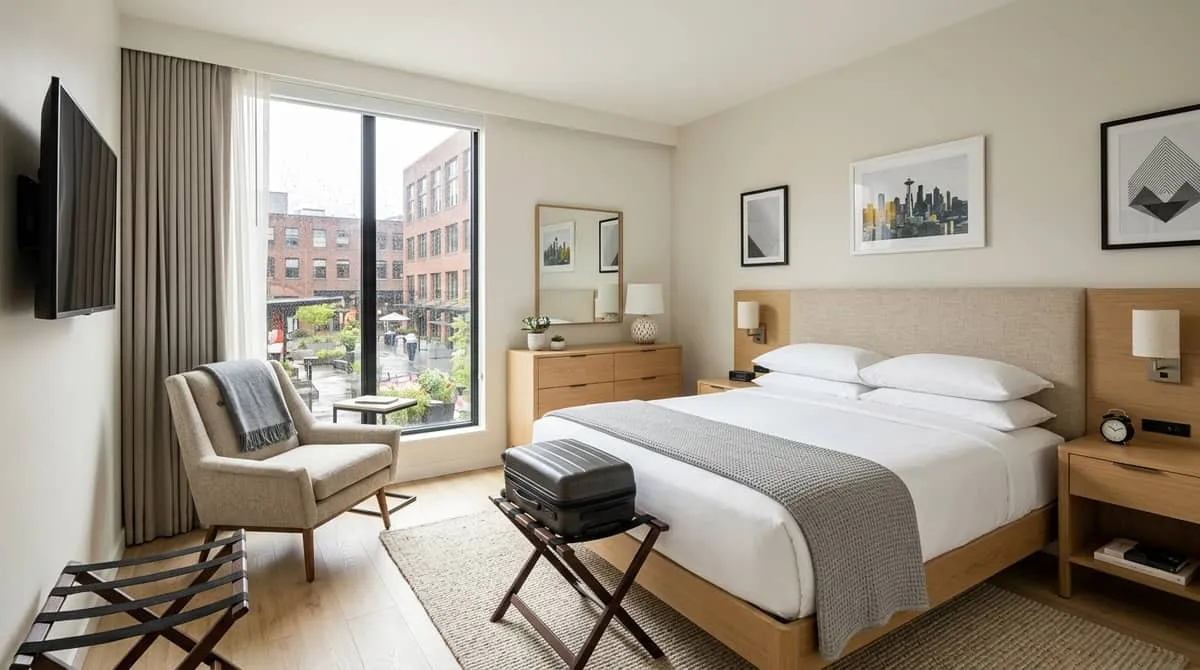
When evaluating case goods suppliers, the key specifications to verify include drawer box construction (dovetailed solid wood or equivalent), drawer slide ratings (commercial-rated slides with full-extension and soft-close are standard in better product), surface materials with appropriate scratch and abrasion resistance, and finish systems that can be touched up in the field. A supplier who understands hospitality procurement will document all of this and can provide third-party test reports if your brand standards or flagged property requirements call for them.
Delivery and logistics matter as much in Seattle as anywhere. Properties near the Washington State Convention Center deal with traffic and loading dock constraints. Waterfront locations along Puget Sound have their own access considerations. Working with a supplier who has experience coordinating freight into urban hotel environments saves significant coordination time during a project.
Upholstered Headboards and Soft Goods
Headboards set the visual tone for a guestroom more than almost any other piece. In a market where guests are posting room photos and comparing properties through every booking platform, the headboard wall is the first thing that reads in a smartphone image. Getting the upholstery right fabric selection, panel proportion, attachment system matters for both the aesthetic result and the long-term maintenance picture.
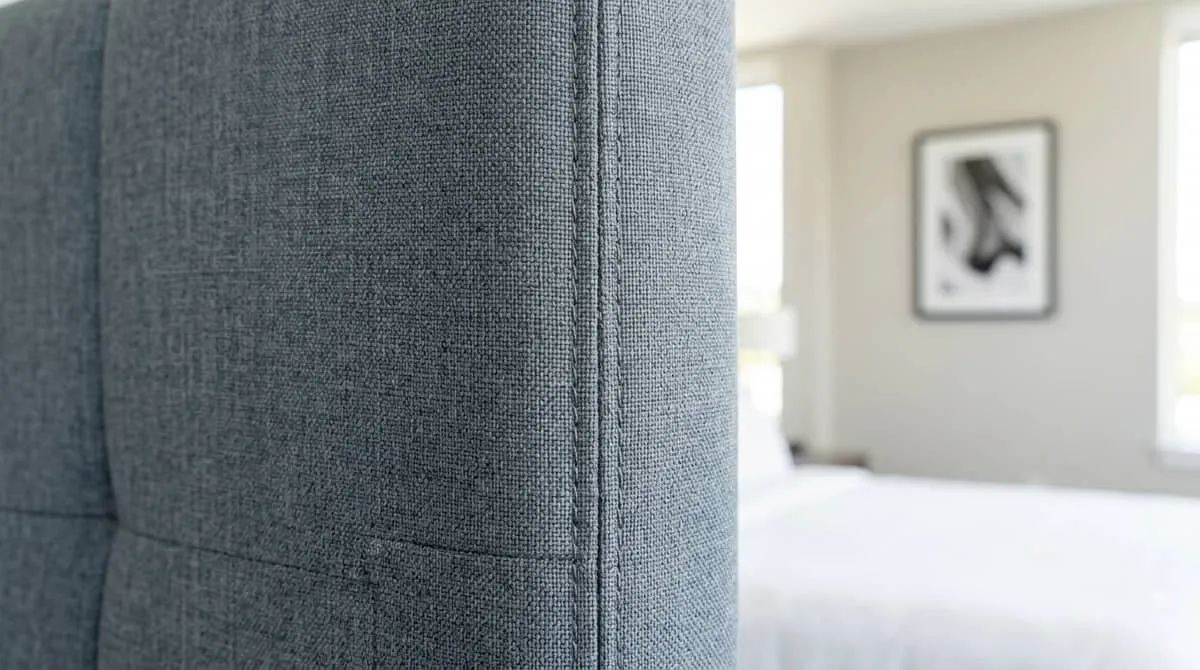
Contract-grade upholstered headboards differ from residential product in their fabric specifications, backing construction, and mounting systems. Fabrics used in hospitality applications carry commercial durability ratings, typically measured in double rubs, and are selected for cleanability alongside appearance. A headboard that looks sharp at installation but can't survive a housekeeping routine or an occasional stain isn't serving your operation.
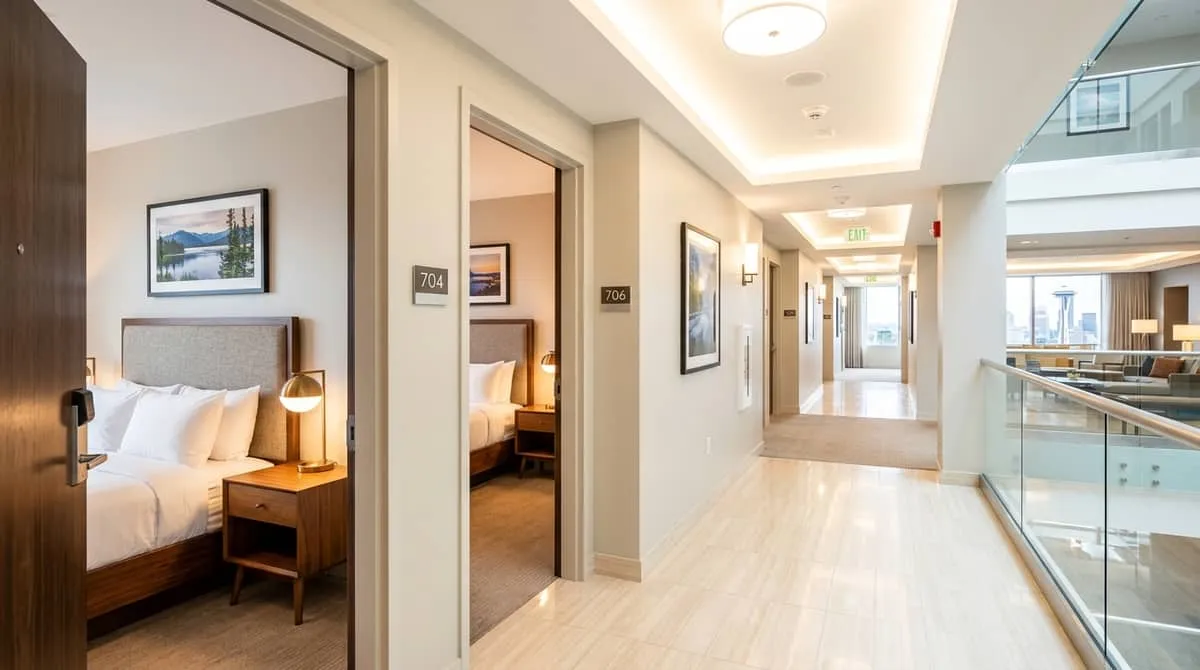
For Seattle properties, consider that the market attracts a wide range of guests tech travelers doing extended stays near the Amazon campus, leisure tourists visiting Pike Place Market, convention attendees at the Washington State Convention Center. Each property type benefits from a slightly different approach to soft goods. Extended-stay properties often benefit from more durable, pattern-forward textiles that hold their appearance through long-term use. Upscale boutique properties in Capitol Hill or Belltown may prioritize custom sizing and premium textiles that match a specific design direction.
The mounting system behind the headboard matters as much as the face fabric. Wall-mounted panels need blocking in the right location during construction or renovation, and a supplier who provides clear installation documentation makes the coordination with your GC straightforward. Free-standing headboards that attach to the bed frame have different structural requirements. Verify these details before the product ships.
FF&E Procurement for Seattle Hotel Projects
Full FF&E procurement coordinating case goods, seating, lighting, textiles, and accessories across multiple room types and common areas is a different scope of work than buying a single category. For a Seattle hotel project, whether you are opening a new property in South Lake Union, renovating a historic building near Belltown, or refreshing guestrooms in a Ballard boutique hotel, the procurement process involves managing lead times, freight coordination, installation sequencing, and punch list resolution across dozens of SKUs.
Working with a supplier who has hospitality FF&E experience means you are dealing with a team that understands this process. They know how to read a spec book, coordinate with a designer's vision, manage phased deliveries around construction schedules, and document product for the ownership group's records. That operational knowledge is as valuable as the product itself.
Seattle's construction costs and labor market make it especially important to get deliveries right the first time. Re-delivery fees, installation delays, and damage claims eat into project budgets that are already tight in a high-cost market. Vetting your supplier's logistics process how they handle freight, what their damage claim rate looks like, how they manage installation is a reasonable part of due diligence for any project of scale.
Budget planning for Seattle hotel FF&E should account for the full installed cost, not just the product price. Freight to the Pacific Northwest, local installation labor, and any custom or semi-custom work all factor into the per-key number your ownership group will evaluate.
Ready to spec hotel furniture for your Seattle project? Send us the details and we will price it around your requirements. Request a quote to start.
Related reading
- Commercial hotel furniture: a sourcing guide for every space
- Boutique hotel furniture: specifying a distinctive, durable look
- What is contract furniture
- Commercial furniture vs retail
- Hospitality furniture supplier guide
- Hotel lounge chairs
- Hotel headboards
- Browse full catalog
- Commercial furniture in Washington