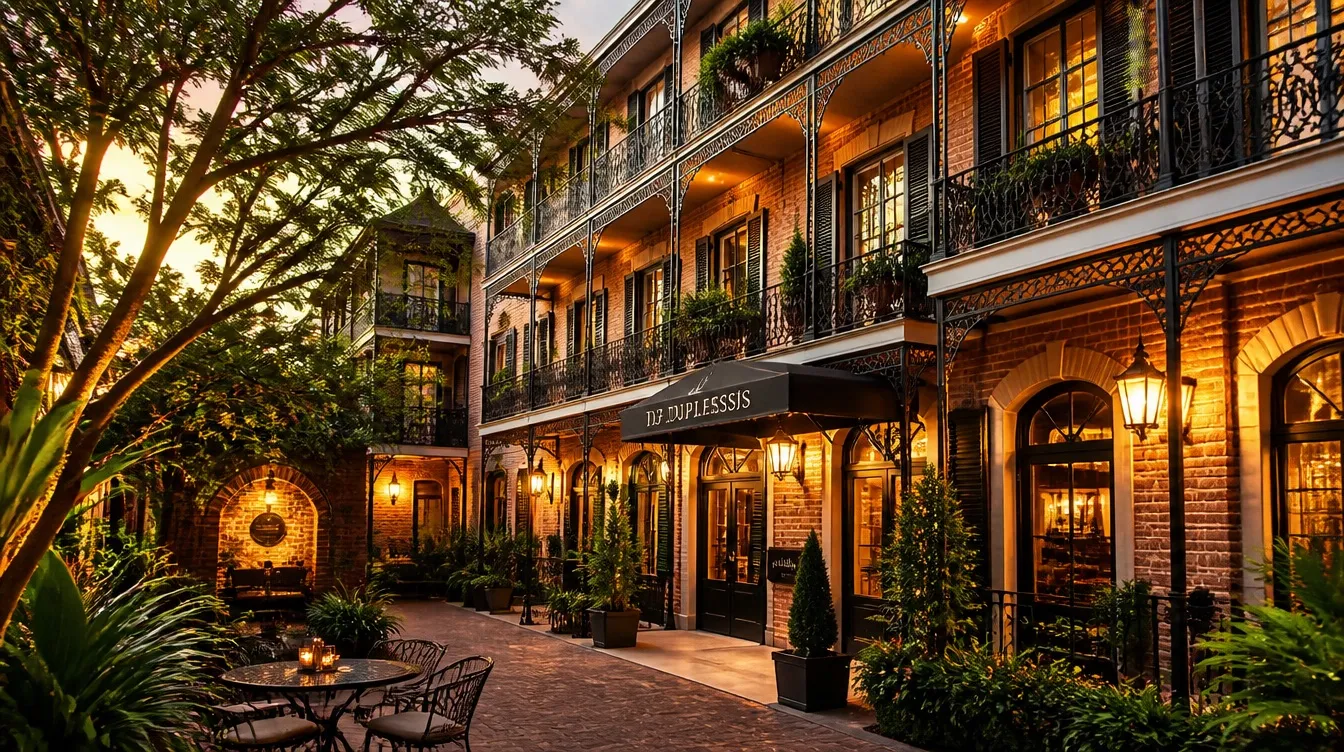
New Orleans does not operate like other hotel markets. The French Quarter runs at a level of sustained intensity that has no real equivalent in the United States a combination of relentless tourism, a convention center that anchors group business year-round, and annual demand peaks during Mardi Gras and Jazz Fest that push properties to occupancy figures most markets never approach. If you are sourcing hotel furniture for a New Orleans property, the starting point is recognizing that this market puts furniture through a pace of use that most manufacturers do not design for and most suppliers do not anticipate.
What New Orleans Volume Does to Furniture
The wear math in New Orleans is brutal. A French Quarter boutique hotel running 80% average occupancy against the rest of the country's 65% is already ahead of the curve. But the real story is in the peaks. Mardi Gras and Jazz Fest collectively bring weeks of effectively sold-out conditions across the city, with a guest profile that often includes extended celebrations, late arrivals, and the kind of use patterns that compress years of normal wear into days. Furniture in guestrooms, corridors, and lobby areas absorbs all of it.
This matters for spec decisions in specific ways. Headboards in a French Quarter property need to be attached to the wall or bed frame with hardware rated for repeated loading stress, not simply resting against the wall with a friction fit. Case goods dressers, nightstands, luggage benches need to be built on solid hardwood or steel chassis with drawer slides rated for commercial use, not the undermount residential hardware that feels smooth at delivery but fails within two years of heavy rotation. Frame joints in upholstered lounge chairs and sofas need corner blocking and reinforced doweling, because pieces that move under stressed conditions develop wobble quickly and do not recover.
The Ernest N. Morial Convention Center compounds demand across the broader Central Business District. At 1.1 million square feet, it routinely draws medical, energy, and association conferences that send thousands of delegates into CBD and Warehouse District hotels for extended stays. A supplier who understands this market builds lead time and delivery sequencing around the convention calendar, not against it.
Subtropical Climate and the Durability Layer
New Orleans sits at the convergence of heat and humidity that very few US hotel markets deal with at the same level. Summer conditions routinely push above 90 degrees with humidity percentages that accelerate finish degradation, fabric wear, and adhesive failure in ways that suppliers without Gulf South experience will not flag proactively.
Wood finishes on case goods need to be evaluated for humidity resistance specifically. Conversion varnish and catalyzed lacquer finishes hold better than standard lacquer in high-humidity environments they cure harder, resist surface checking, and clean up without dulling under the repeated wipe-downs that New Orleans housekeeping teams perform daily. Veneer construction over particleboard or MDF substrate performs poorly in sustained humidity; solid wood or high-density fiberboard substrates with properly sealed edges are the better call in this climate.
Upholstery fabric selection needs to account for the same conditions. Fabrics with moisture-wicking properties and mold-resistant treatments are worth the specification upgrade in guestrooms that may experience significant humidity variation, particularly in older French Quarter buildings where HVAC efficiency is inconsistent. Performance fabrics with antimicrobial treatment are the standard for this market, not an option.
The French Quarter Aesthetic Standard
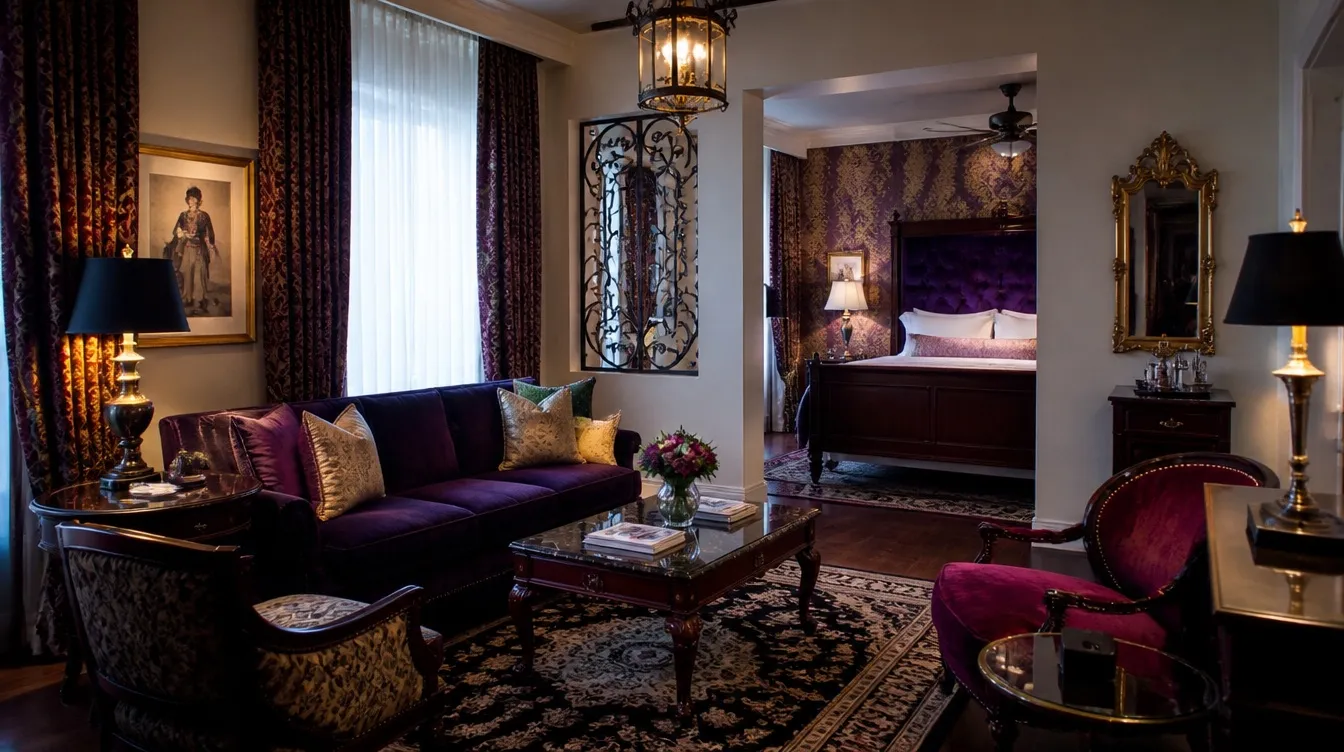
New Orleans has one of the most clearly defined hotel design vocabularies of any US city, and sourcing against it requires a supplier with enough aesthetic range to match it. The French Quarter's historic grandeur wrought iron references, jewel tones, dark mahogany and ebony finishes, velvet upholstery is a genuine design tradition, not a tourist approximation.
Properties in the French Quarter are typically renovating inside buildings with architectural character that must be respected rather than overridden. A supplier who can source headboards with genuine visual weight substantial upholstered frames in emerald, sapphire, or burgundy performance velvet and match them to case goods in dark walnut or ebony-stained hardwood finishes is working at the right level for this market. Gilt hardware accents, deep-toned area rugs, and carved or paneled bed frames with traditional proportions all fit the context.
The Warehouse District operates in a parallel but distinct register. Boutique and convention hotels in this neighborhood lean toward a contemporary interpretation of New Orleans' material richness dark tones and jewel colors remain, but executed in cleaner lines with fewer ornamental references. The gallery aesthetic that defines this neighborhood's art scene informs a furniture standard that values material quality and finish precision over decorative detail.
Working With a Supplier Who Understands This Market
The logistics dimension of sourcing hotel furniture for New Orleans properties carries its own complexity. The French Quarter's narrow streets and older building stock create delivery challenges that suppliers without regional experience will encounter for the first time on your project. Loading dock access, freight elevator limitations in historic buildings, and city permits for street-level delivery coordination all require advance planning that separates experienced hospitality suppliers from general commercial vendors.
Phased delivery capability matters for New Orleans properties that cannot close entirely for renovation. A hotel that stays in operation while renovating a floor at a time needs a supplier who can hold partial inventory, coordinate deliveries against your construction schedule, and maintain consistent product availability across sequential order releases. This is standard practice for experienced hospitality suppliers and a significant logistical challenge for vendors who are not set up for it.
Lead times for custom FF&E in this market need to be built around the convention calendar and the Mardi Gras and Jazz Fest blackout windows. An experienced supplier will help you back-plan from your target date against those constraints. A vendor who quotes a generic 12-week lead time without asking about your renovation window or the convention center schedule is not thinking about this market correctly.
Pricing for hotel furniture in New Orleans depends on quantities, finishes, and your delivery window, so a project-specific quote beats any list figure. Request a quote to get yours.
Related reading
- Commercial hotel furniture: a sourcing guide for every space
- Boutique hotel furniture: specifying a distinctive, durable look
- What is contract furniture
- Commercial furniture vs retail
- Hospitality furniture supplier guide
- Hotel headboards
- Hotel lounge chairs
- Browse full catalog
- Commercial furniture in Louisiana