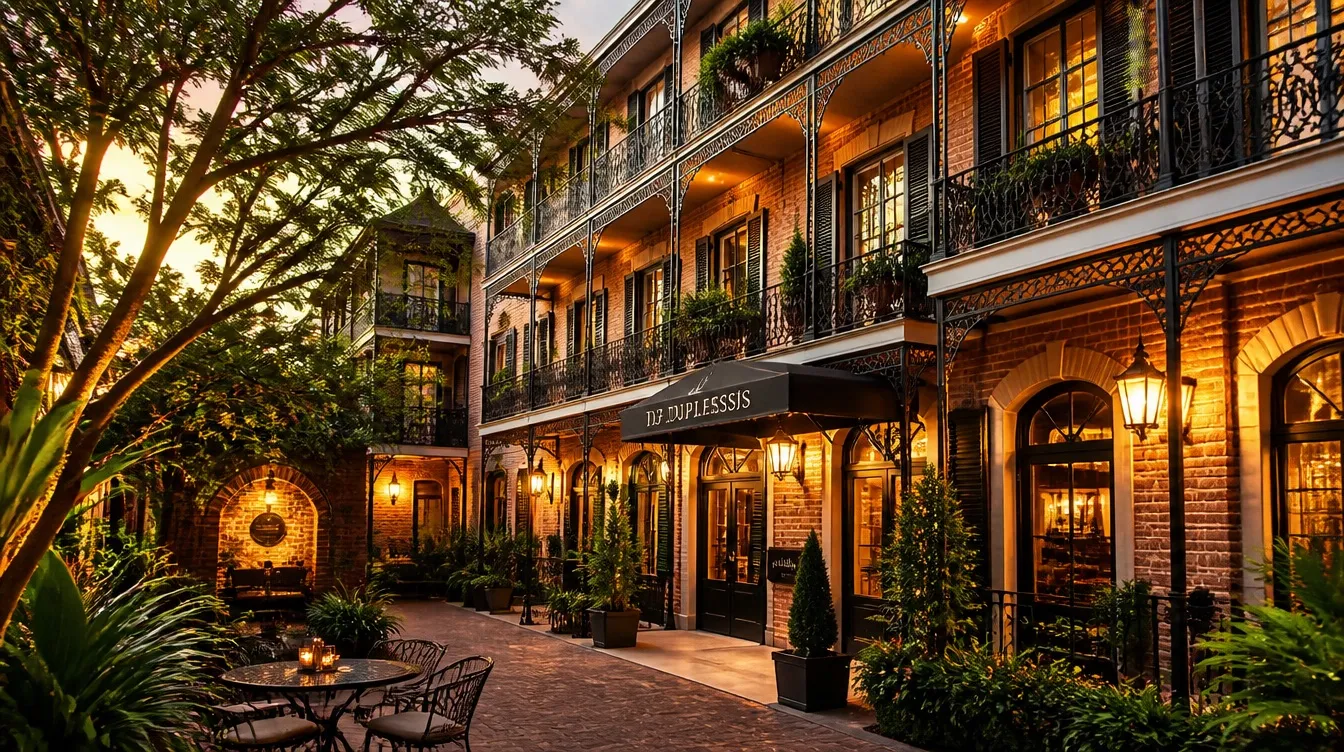
New Orleans has more boutique hotels that actually mean it than almost any other American city. The French Quarter's historic properties, the Warehouse District's converted industrial buildings, the Garden District's antebellum mansions each of these contexts generates genuine design requirements, not just a boutique label applied to a smaller room count. A boutique hotel in the Quarter is operating inside buildings from the 18th and 19th century where the architecture itself sets the standard, and every furniture selection is evaluated against that backdrop. Getting boutique hotel furniture New Orleans right requires a supplier who understands both the design vocabulary of this city and the commercial durability demands of a market where Mardi Gras alone subjects furniture to a pace of use that most operators experience only in their worst weeks.
The Scale Problem Specific to New Orleans Boutiques
Boutique hotels in the French Quarter typically run 30 to 80 rooms inside buildings where the footprint is dictated by 18th and 19th century lot geometry rather than modern hospitality programming. That scale creates the same procurement challenge boutique properties face everywhere contract manufacturers structure their minimums around large orders but the New Orleans version has additional complexity. Heritage buildings have stair configurations, elevator limitations, and room geometries that mean furniture dimensions need to be verified against actual room conditions before anything is ordered.
A New Orleans boutique supplier needs to understand that a headboard or case good that would deliver and install cleanly in a standard hotel room may require modification to move through a narrow staircase in a Creole townhouse. This is not a hypothetical constraint. Properties on Rue Royale, Chartres Street, or along the Esplanade operate inside buildings that were never designed for commercial freight movement. The right supplier accounts for this before production starts, not after the furniture arrives at your loading area.
For smaller boutique accounts, find suppliers who have built their model around independent hospitality properties. Some contract manufacturers offer lower run minimums sometimes as few as five to eight units per SKU in exchange for a per-unit premium that remains workable when you factor in the custom finish and COM upholstery value you receive. The goal is sourcing a program that holds design coherence across every room without requiring the order volumes of a 300-room flagged property.
Design Cohesion Across New Orleans' Distinct Boutique Contexts
A French Quarter boutique and a Warehouse District boutique are operating in completely different design contexts, even though they may be ten minutes apart on foot. The furniture program needs to be grounded in the specific context, not a generalized New Orleans aesthetic.
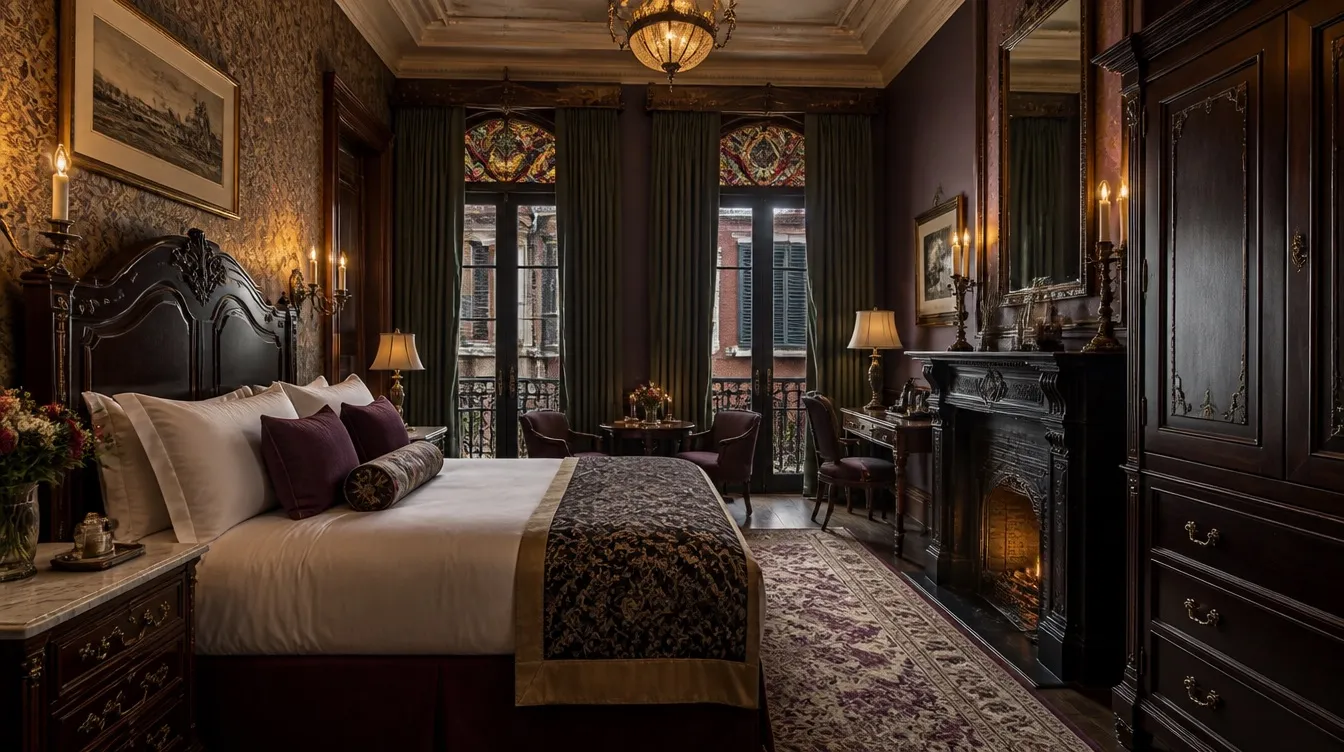
French Quarter properties have the richest historical design vocabulary in the city. Dark mahogany and ebony-stained hardwood case goods, headboards with substantial visual weight in jewel-toned velvet emerald, sapphire, burgundy upholstered in commercial grades above 50,000 Martindale cycles, wrought iron accent pieces, and warm candlelit-register lighting all fit inside the Quarter's design tradition. The temptation is to apply a tourist's interpretation of New Orleans beads, fleur-de-lis, oversaturated Mardi Gras colors and that is exactly the wrong direction. The authentic design register is one of genuine historic grandeur: formal, rich, specific.
Warehouse District boutiques are where New Orleans' design tradition meets contemporary hospitality sensibility. Properties in this neighborhood operate against exposed brick, reclaimed timber beams, and the visual vocabulary of the gallery culture that defines the area. Deep tones remain the Warehouse District does not default to bright Scandinavian minimalism but the furniture executes those tones in cleaner profiles. Blackened steel bed frames with an upholstered headboard in deep charcoal performance fabric, case goods in a dark wire-brushed oak, and gallery-wall art integration all create a room that reads as contemporary New Orleans without abandoning the material richness that defines the city's design standard.
Garden District boutique properties occupy converted antebellum mansions where the architecture demands a period-appropriate furniture vocabulary. High-ceilinged rooms with original plaster medallion details and wide-plank floors call for pieces with genuine scale and vertical proportion beds with canopy or poster frames are appropriate where the ceiling height allows, upholstered chairs in warm velvet tones should have the sitting depth and cushion quality to match a room that communicates cultivated luxury.
COM Upholstery and the Finish Consistency Requirement
For boutique New Orleans properties trying to hold a specific color narrative across guestrooms, lobby, and bar, COM (customer's own material) upholstery programs are often the only way to achieve real consistency. A property that has selected a specific deep emerald performance velvet for its brand story needs every upholstered piece headboards, lounge chairs, lobby seating in that same material, regardless of whether those pieces come from different manufacturers.
COM capability varies significantly across suppliers, and the specifics matter more than the general availability. Find out whether the manufacturer can work with velvet and performance leather specifically not all upholstery operations are set up for velvet, which requires different handling during cutting and fabrication. Confirm the fire rating requirements for any COM material in a Louisiana commercial application: state code requires appropriate certifications for fabric used in commercial guest rooms, and a material you select has to be either inherently fire-rated or treated before application.
Dark wood finish consistency is equally important across a boutique program. Case goods in a mix of slightly different ebony or walnut tones are visible to design-literate guests in the way that a wrong note is visible to a musician most guests cannot name the problem, but they feel that something is off. Specify a single finish standard and hold your supplier to it across all case good deliveries, including phased orders and replacements.
Subtropical Durability Requirements
New Orleans boutique hotels face climate conditions that matter at the furniture specification level. Sustained summer humidity accelerates the failure of finishes, adhesives, and upholstery materials that were not selected with this environment in mind. Conversion varnish and catalyzed lacquer finishes on case goods resist humidity-driven checking and surface degradation better than standard lacquer. Drawer slides rated for commercial use full-extension ball-bearing slides rather than residential undermount maintain function through the humidity cycling that causes cheaper mechanisms to bind or loosen within a few seasons.
The Mardi Gras and Jazz Fest demand peaks create an additional layer of durability requirement that goes beyond standard boutique use. During these events, New Orleans boutique properties run at maximum occupancy with guest profiles that put furniture through use patterns that compress years of normal wear into days. Frame construction across all upholstered pieces needs to be built for sustained commercial loads: welded steel or kiln-dried hardwood with corner blocking and reinforced joints, not the construction you find in residential furniture that looks the same at delivery but fails under the first sustained peak period.
Planning boutique hotel furniture for your New Orleans project? Share your specs and quantities and we will build pricing around your actual program. Request a quote to get numbers for your space.