Baltimore operates as two distinct hospitality markets layered on top of each other: a convention city anchored by the Baltimore Convention Center at the Inner Harbor, and a healthcare travel hub driven by Johns Hopkins Medicine and the University of Maryland Medical System two of the largest employers in the state. Hotels serving both need furniture that can absorb the pace of back-to-back conference blocks while projecting the warmth and character that medical travel guests and leisure visitors equally expect. The sourcing decisions that shape a Baltimore hotel's furniture program carry real operational weight.
Baltimore's Hotel Market and What It Demands
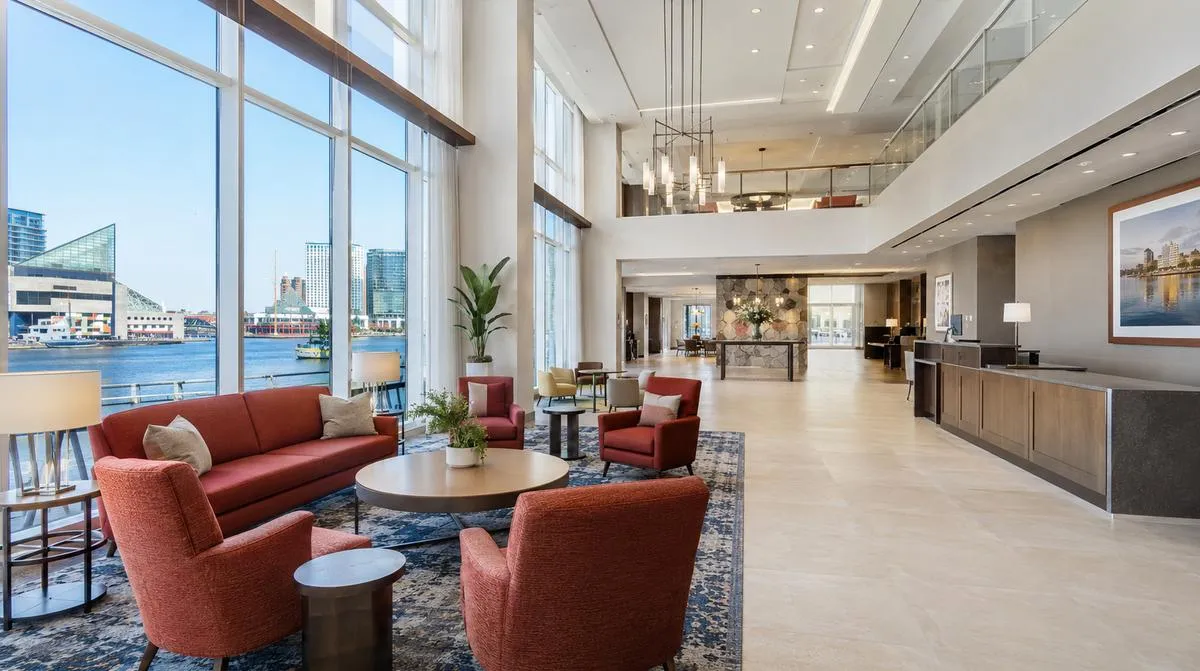
The Inner Harbor corridor sets the baseline. Hotels within walking distance of the Convention Center are running near-continuous group business medical conferences, federal contractor meetings, regional trade events and their guestroom and lobby furniture takes the kind of wear that isolated leisure properties simply don't experience. Frames need to be welded, not just bolted. Fabric specifications should carry commercial-grade Martindale ratings of 30,000 rubs or higher. Anything less shows up in maintenance logs within eighteen months.
Fells Point and Harbor East attract a different profile: boutique properties drawing weekend leisure guests, food-and-drink tourism tied to Baltimore's Chesapeake Bay crab culture, and corporate travelers who prefer smaller, design-forward hotels over convention-block inventory. These properties compete on atmosphere, which means furniture selection becomes a branding decision. A worn armchair in a Fells Point boutique isn't just a maintenance issue it's a one-star review.
The federal contractor travel segment deserves its own mention. Baltimore's proximity to Washington, D.C. fills mid-week occupancy at select-service and extended-stay hotels with government-adjacent workers who log extended stays. Extended-stay properties need lounge chairs and sofas designed for living, not just sitting furniture that holds up to laptop use, meal takeout, and daily occupancy that dwarfs the typical two-night leisure stay.
Healthcare travel families visiting Johns Hopkins or the University of Maryland Medical Center adds a human dimension to spec work that procurement teams sometimes underestimate. These guests are often stressed, staying longer than planned, and highly sensitive to comfort. Upholstered pieces with clean-off antimicrobial fabric treatments and supportive seating profiles perform better in this segment than stripped-down, value-engineered alternatives.
Baltimore's Design Language and Furniture Specifications
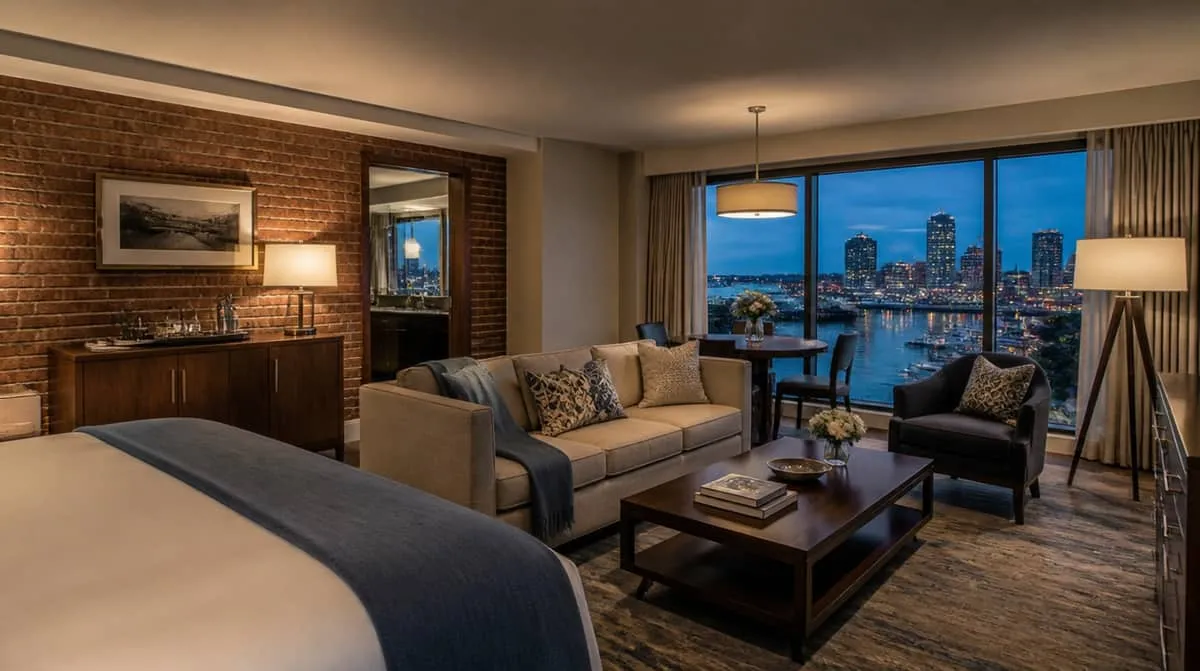
Baltimore has a visual identity that's genuinely its own: working waterfront authenticity, Federal Hill rowhouse brick, maritime industrial references borrowed from the Chesapeake Bay shipping heritage, and the warm amber of aged wood juxtaposed against blue-grey harbor tones. Hotels that lean into this language rather than defaulting to generic hospitality beige consistently outperform their comp set on guest satisfaction scores.
In practical specification terms, that aesthetic translates to warm wood tones walnut, oak with a light wire-brush finish, reclaimed-look species paired with metal accents in matte black, aged brass, or weathered steel. Upholstery palettes should pull from the Chesapeake Bay color story: slate blue, oyster white, warm sand, deep navy. Exposed brick walls, common in the Inner Harbor's converted warehouse properties, benefit from furniture with similar texture contrast woven textiles, leather, raw linen.
Headboards are a particular leverage point in Baltimore guestroom design. An upholstered headboard in a channel-tufted navy or slate grey instantly anchors the room in the city's coastal-industrial character without requiring expensive millwork. Pair that with case goods in a warm walnut finish and you've defined the room's identity for a fraction of a full renovation budget.
Contract-grade specifications matter here not just for durability but for fire code compliance. Maryland requires commercial hospitality furniture to meet NFPA 101 standards, and properties near the Convention Center face additional scrutiny during large convention blocks when fire marshal inspections are more frequent.
Procurement and Delivery Coordination
Baltimore's hospitality construction pipeline moves in phases, and furniture procurement needs to match that rhythm. Convention-adjacent properties typically plan renovations in compressed windows between major convention bookings often a six-to-ten-week slot between January and March before the spring conference season opens. That timeline requires a supplier who can confirm production lead times at the point of specification, not after purchase orders are placed.
Lead times for contract furniture from domestic manufacturers currently run eight to fourteen weeks for custom upholstery and twelve to eighteen weeks for casegoods. Planning procurement discussions eight months before a targeted renovation window is the standard operating assumption for any property above 150 keys.
Delivery coordination into Inner Harbor properties involves real logistical constraints: narrow loading docks, no street parking on Pratt Street during peak hours, and elevator bank competition during multi-property renovation seasons. Working with a supplier who has direct-to-property delivery experience in Baltimore not just a regional distribution hub handoff prevents the schedule compression that turns a six-week renovation into a nine-week overrun.
Pricing for hotel furniture in Baltimore depends on quantities, finishes, and your delivery window, so a project-specific quote beats any list figure. Request a quote to get yours.
Related reading
- Commercial hotel furniture: a sourcing guide for every space
- Boutique hotel furniture: specifying a distinctive, durable look
- What is contract furniture
- Hotel furniture supplier guide
- Hospitality furniture supplier guide
- Lounge chairs for hotel guestrooms
- Hotel headboards and casegoods
- Commercial sofas for extended stay
- Commercial furniture in Maryland