Review the mattress and base as one allowed assembly rather than assuming a base type determines early failure, housekeeping labor or freight cost. Obtain exact support and warranty instructions and compare the actual packed, installed and occupied dimensions before ordering.
Compare platform bases, separate foundations and any other allowed support option using the exact mattress maker's instructions, brand requirements, assembled height and housekeeping workflow. This guide has no market dataset establishing which type dominates hospitality.
Platform bases
A platform base is a solid or slatted deck, usually supported on a steel or engineered wood frame, that the mattress sits directly on without a separate box spring layer underneath. Evaluate the proposed platform on its actual support drawing rather than an assumed industry trend.
A foam or hybrid mattress label does not establish allowed deck, slat gaps, support or foundation. Obtain the exact mattress maker's instructions and warranty conditions, then compare them with the base drawing. Test the approved assembled bed with the property team rather than infer edge support or guest satisfaction from the base category.
Calculate assembled bed height from the actual base, foundation and mattress rather than assuming every platform is lower. Compare the maker's inspection, support, care and parts instructions for both options; fewer named parts do not establish less sag, squeaking or failure.
Box spring foundations
Use a separate box foundation when the selected mattress's support instructions and warranty call for it. An innerspring label alone does not establish that a spring foundation is required or that a platform would shorten mattress life. Obtain the exact mattress maker's allowed foundation types, deck or slat support, and center-support requirements, then check them against the base drawing before selecting the package.
Compare dated proposals for the allowed foundation and platform configurations, including assembled height, freight, installation, support and warranty scope. Neither base type establishes the lower unit cost. If the brand or retained mattress requires one support arrangement, record that requirement before comparing alternatives.
Deck rating and the weight question
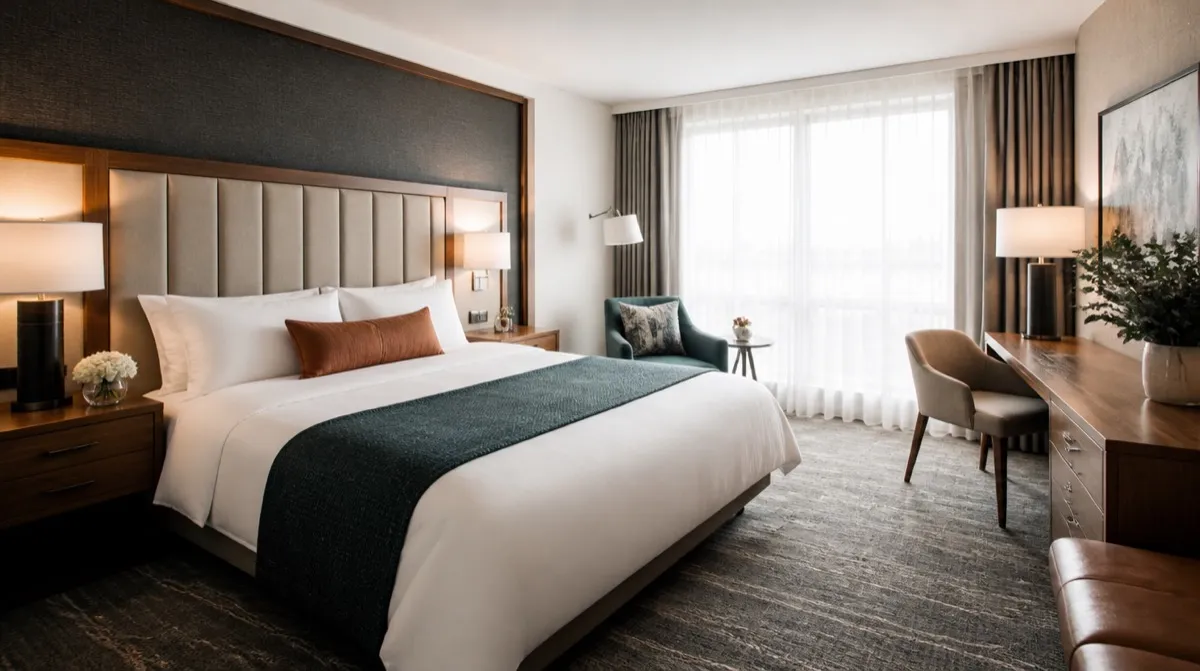
Obtain the exact assembly's stated intended-use limit and structural test documents, including what any static or dynamic result measures. Commercial and residential labels do not establish a higher load threshold, and a test value does not authorize standing on the mattress or other use outside the maker's instructions.
Compare the proposed steel, wood or other frame and center supports against the exact mattress and base drawings. Record support locations, legs, floor contact, fasteners, load documents and inspection instructions. A full-length rail or steel label does not by itself establish superior service life or prevent sag in a queen or king assembly.
Knockdown shipping and housekeeping clearance
Two practical questions decide a lot about which base works for your property, and both get skipped in early planning.
Compare packed dimensions, actual freight proposals, assembly labor and receiving requirements for knockdown and assembled bases. Fifty, one hundred or several hundred units are illustrative quantity scenarios, not proof of a cost or dock-time advantage. The FF&E budget calculator gives room-count and tier-based hotel allowances; it does not compare base packaging or itemized freight. Request that comparison separately.
Housekeeping clearance is the other overlooked factor. Housekeeping needs enough clearance under the base to run a vacuum or mop without moving furniture, and low-profile platform bases sometimes sacrifice that clearance for the sake of a lower bed height. Confirm the under-base clearance against your housekeeping team's actual equipment and workflow before locking in a base height across the property, then ask the maker which approved changes, if any, could address a clearance problem without assuming full replacement is the only remedy.
Matching base to renovation scope
A full renovation replacing mattresses, bases, and headboards together gives the most freedom to match base type to the new mattress spec cleanly. A partial renovation replacing only bases while keeping existing mattresses needs to confirm compatibility first, since mismatching base and mattress type undermines the investment in either piece.
See our hotel guest room furniture guide for how bed bases fit into the full guest room package alongside headboards, casegoods, and seating.
Ordering and lead times
Confirm stock, made-to-order options, actual quantity minimums and dated fulfillment milestones for the exact base. Common steel or custom upholstered descriptions do not establish faster shipping. A 10 to 14 week factory duration is an illustrative preliminary assumption; verify mattress compatibility, packed dimensions, assembly and receiving scope against the actual renovation calendar.
Request a quote with key counts, the retained or proposed mattress model and its support instructions, target assembled bed height, and installation dates. Ask responding suppliers for the base's exact support drawing, intended-use load, assembly instructions, compatibility confirmation, and itemized delivery milestones; confirm any mattress-warranty conditions with its maker.