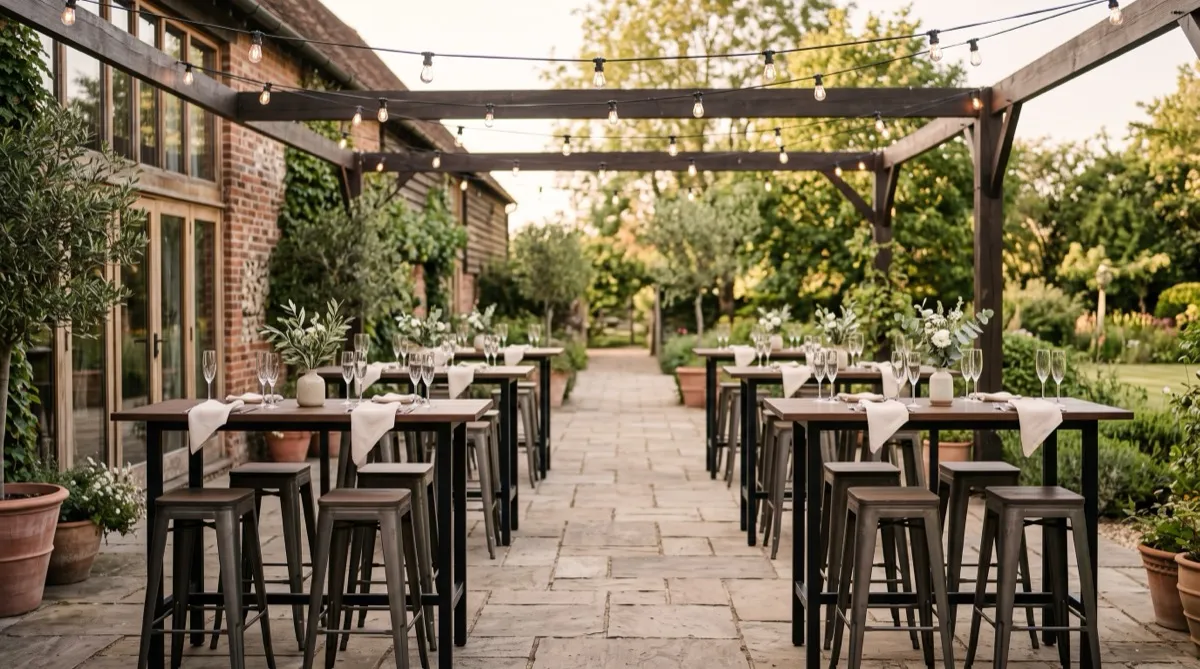
An event or catering program may load furniture into a truck, set it up, run service, then dismantle and move it again for each booking. Record that actual cycle, route, loading, and storage routine when comparing portable bar furniture. Neither a portable label nor a commercial label establishes how many years a model will last.
What a portable bar program actually needs
For folding high-top tables, request the model’s approved loads, intended use, locking instructions, and relevant complete-table test documentation. Trial the actual table on the venue surface and check its stability in the approved configuration. Frame material or apparent weight alone does not establish performance during repeated event use.
For a mobile bar unit, review the assembly and disassembly instructions, joint inspection, work-surface care, and handling limits. Quick-connect panels, folding frames, and bolted designs may have different operating requirements; select from the documented use rather than assuming one joint system is always superior. Confirm compatibility with the intended spills, equipment, and cleaning products.
Confirm cart compatibility before choosing tables or bar panels. Trial the approved cart with the actual load, truck, venue route, thresholds, and staff resources. Record the trips and handling effort; there is no basis here to promise that two staff can move a full setup in one or two trips.
Spandex, table skirting, and bare finishes
Event tables get dressed differently depending on the booking. A corporate event might call for a clean bare finish that reads as intentional rather than utilitarian. A wedding or formal event typically calls for a fitted stretch cover over the folding table, which hides the folding mechanism and gives a polished look regardless of the table underneath.
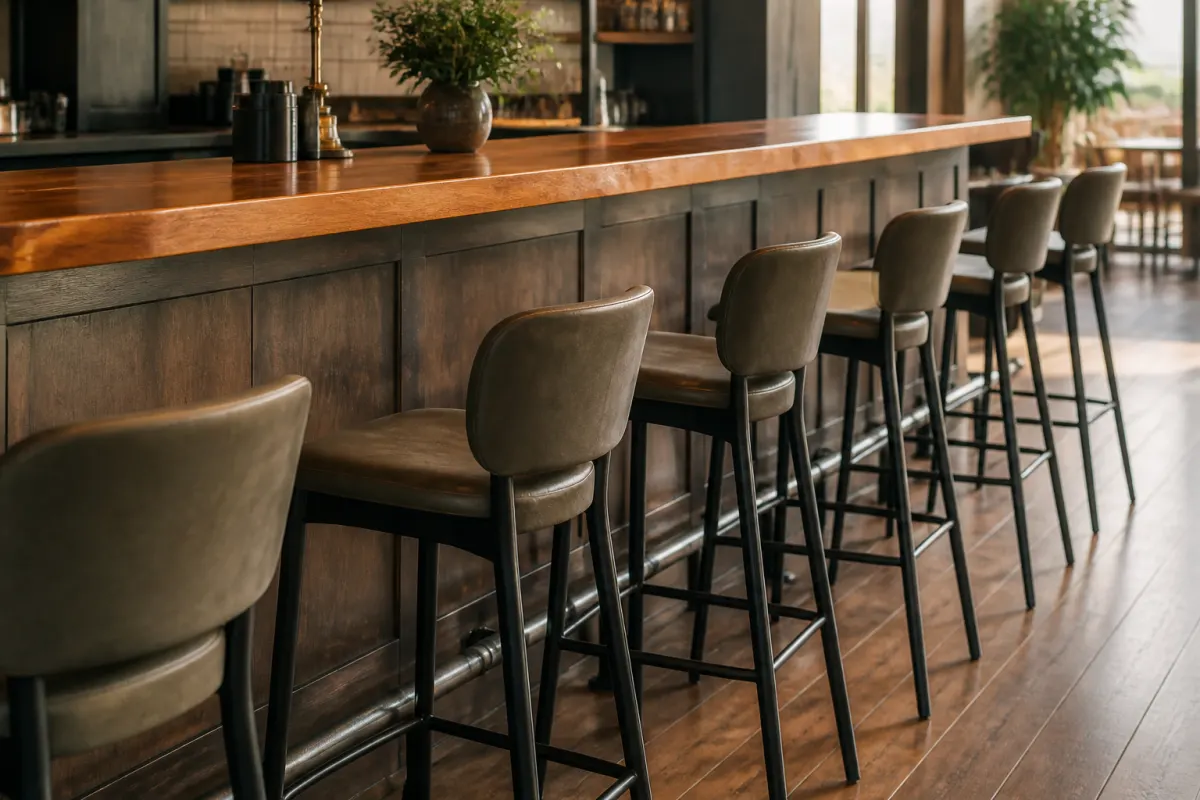
Review a bare finish sample alongside the planned covers, skirting, and table dimensions so the same inventory can serve the intended bookings. Confirm how the selected finish and cover should be cleaned and transported. Powder coating or laminate alone does not establish performance without compromise.
Durability for the setup and teardown cycle
Repeated setup and teardown adds a duty to consider alongside service loads, transport, and cleaning. Document the expected bookings and resets, then ask what testing and inspection instructions apply to the model’s folding mechanisms, joints, and handles. A fixed or portable category does not establish an actual annual wear rate.
Request the relevant test method, configuration, load, and result where a supplier cites cycle testing. Compare the documented use with your reset routine, and follow the inspection and locking instructions. A cycle count is not a prediction of annual replacement or five years of service life.
Building a portable inventory that scales
Standardizing a manageable number of table sizes and bar designs can simplify your inventory records and layout planning. Trial loading and setup with the proposed models and confirm available parts and reorder terms. Standardization does not establish faster handling or guarantee future replacements.
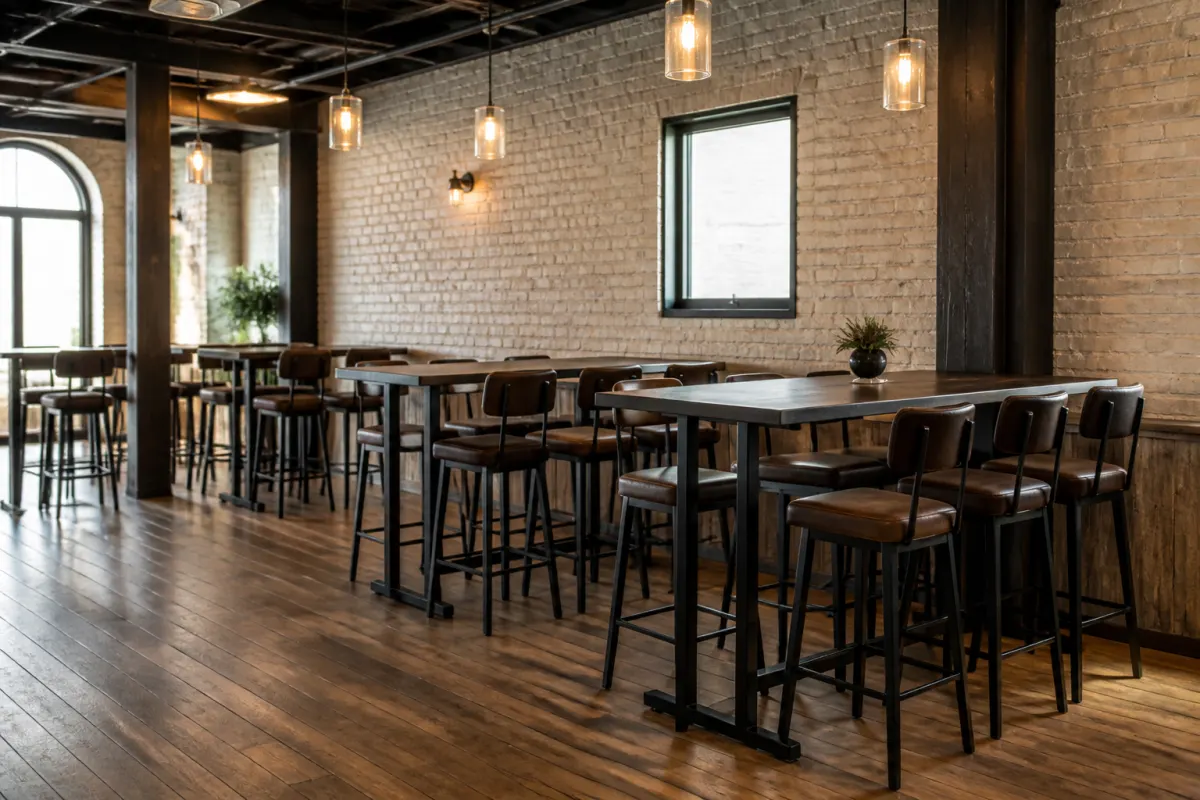
Plan quantities from realistic overlapping bookings, repair reserves, transport capacity, and storage. Use the party rental inventory calculator to explore those planning inputs, then compare the result with actual booking records and approved event layouts. The cost of reserve inventory versus a shortage depends on the program’s own costs and demand.
Storage between bookings
Use each model’s approved storage position, stack limits, protection, and compatible cart or rack. Check the actual folded dimensions, route, and floor conditions. A generic flat stack is not suitable for every model, and this guide has no evidence predicting how a storage position changes service life.
Compare proposed racks or carts with the actual table and bar dimensions, approved loading, and staff workflow. Measure storage capacity and trial retrieval before adding inventory. Any handling savings or longer life needs evidence from your operation rather than an automatic payback assumption.
Sourcing a portable bar program
Ask the proposed supplier for the actual portable model’s use and test documentation and quoted stock or production milestones. The guide’s 10 to 14 week custom-order window was a published planning example, not a current delivery commitment. Our bar furniture guide covers broader specification questions; table bases provide visual concepts, not proof of repeated-setup testing.
Request a quote with booking volume, item quantities, assembly routine, delivery location, and receiving conditions. Compare independent supplier proposals for documented use, carts, storage requirements, support, and the delivered scope.