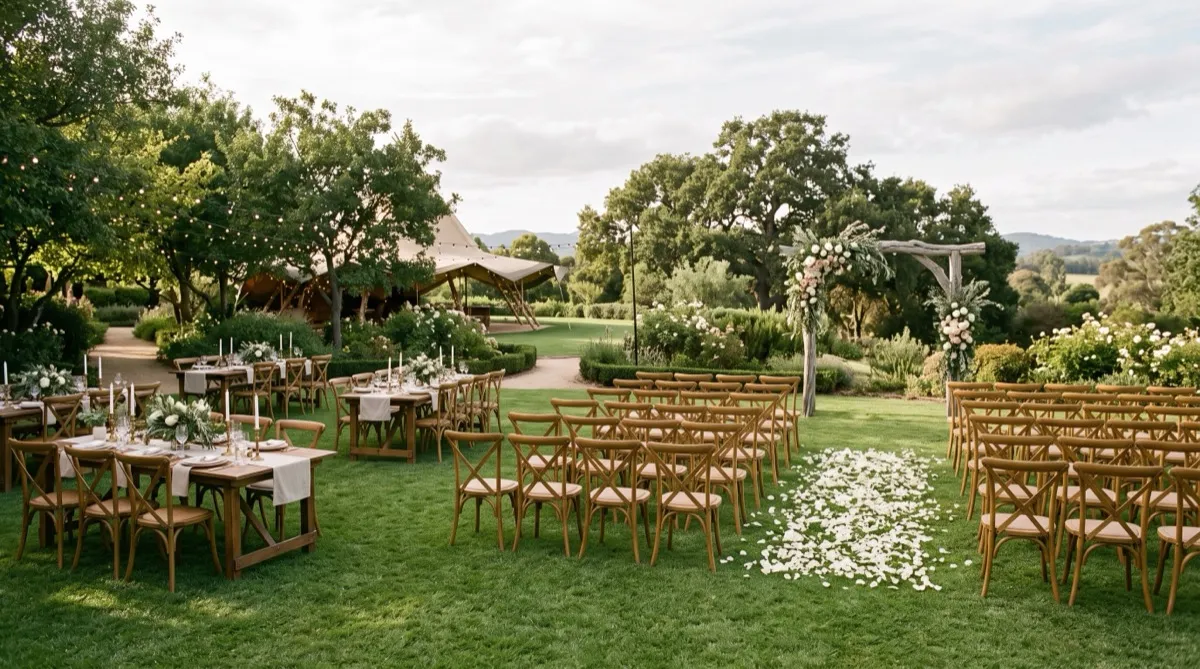
Outdoor wedding and event furniture needs a plan for ground surfaces, repeated setup, transport, exposure, storage, and photographs. Specify those uses separately from an indoor ballroom program. No universal seasonal loss rate is established here; record damage and repairs from the venue's actual events.
Ceremony seating versus reception seating
Ceremony and reception are different uses. Review whether one exact chair model is approved for both, including outdoor exposure, ground contact, occupied comfort, and repeated transport.
A ceremony lasting 20 to 60 minutes is a planning scenario to test with the venue's booking schedule. Compare handling, comfort, ground stability, photographs, and access for the actual chairs. Cross back and Chiavari styles are options to compare; confirm each model's outdoor and ground-use approval. If the same set moves to reception, check approved stacking, carts, travel routes, and staffing.
For reception bookings lasting two or three hours, trial the actual seat, pad, and back support for the intended use rather than assuming a cushion alone establishes comfort. Confirm chair width, table/base clearances, and occupied spacing against the approved reception layout before ordering.
Feet and ground contact
Check feet and ground contact before buying. Narrow feet can sink into soft ground, and unequal support can make a chair unstable. Test the exact chair and approved foot caps on the venue's surfaces, including the conditions after rain, and plan a stable accessible route to seating.
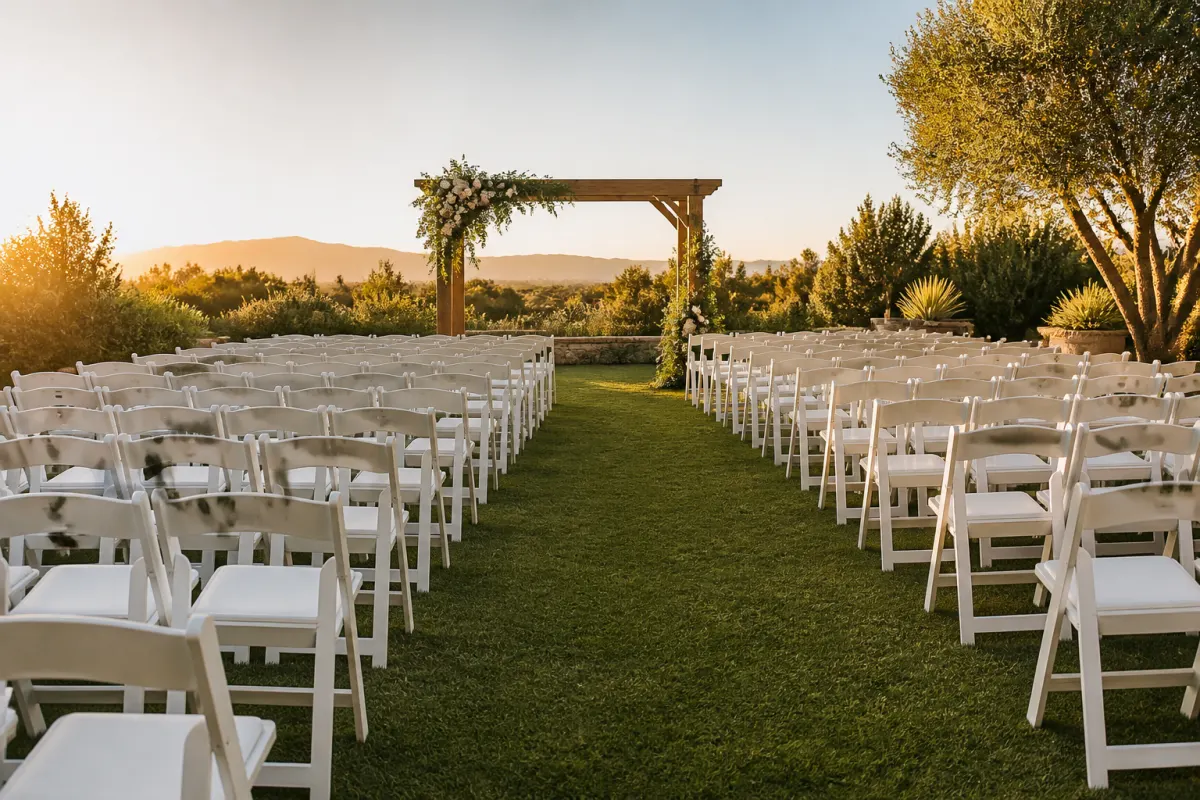
Compare the maker's approved feet or caps on the venue's actual surfaces. If mats, decking, or runways are proposed, check stability, transitions, accessible routes, and installation with the site team. Trial setup labor before treating any ground-contact solution as a seasonal labor saving.
Check stability and finish contact on gravel and hardscape as well as grass. Compare the exact coating, glides, care, and approved repair methods; a powder-coat label alone does not prove better scuff resistance than every painted or plated alternative.
Weather contingencies
Outdoor venues live or die on their weather plan, and furniture is part of that plan whether you've thought about it or not.
Check the exact furniture's permitted rain exposure and drying procedure, and plan the approved indoor or tented backup layout. Compare a separate backup set with moving the main set using actual capacity, travel routes, staffing, and the time available. Neither arrangement guarantees a damage-free weather change.
Obtain the exact furniture and umbrella operating limits and an exposed-site weather and securing plan. Weight and base width alone do not establish safe wind use. For waterfront, hilltop, or open-field events, define closure or removal actions and follow approved anchoring instructions where applicable.
Ask for the selected finishes' and textiles' UV/weathering evidence, care instructions, and warranty conditions for the venue's exposure. An April-through-October booking calendar is a scenario, not a prediction of mid-season fading or replacement.
Storage between events
Compare time in use, transport, and storage using the actual booking calendar. Specify approved stack heights, cart payloads, storage dimensions, and handling procedures alongside appearance and outdoor use.
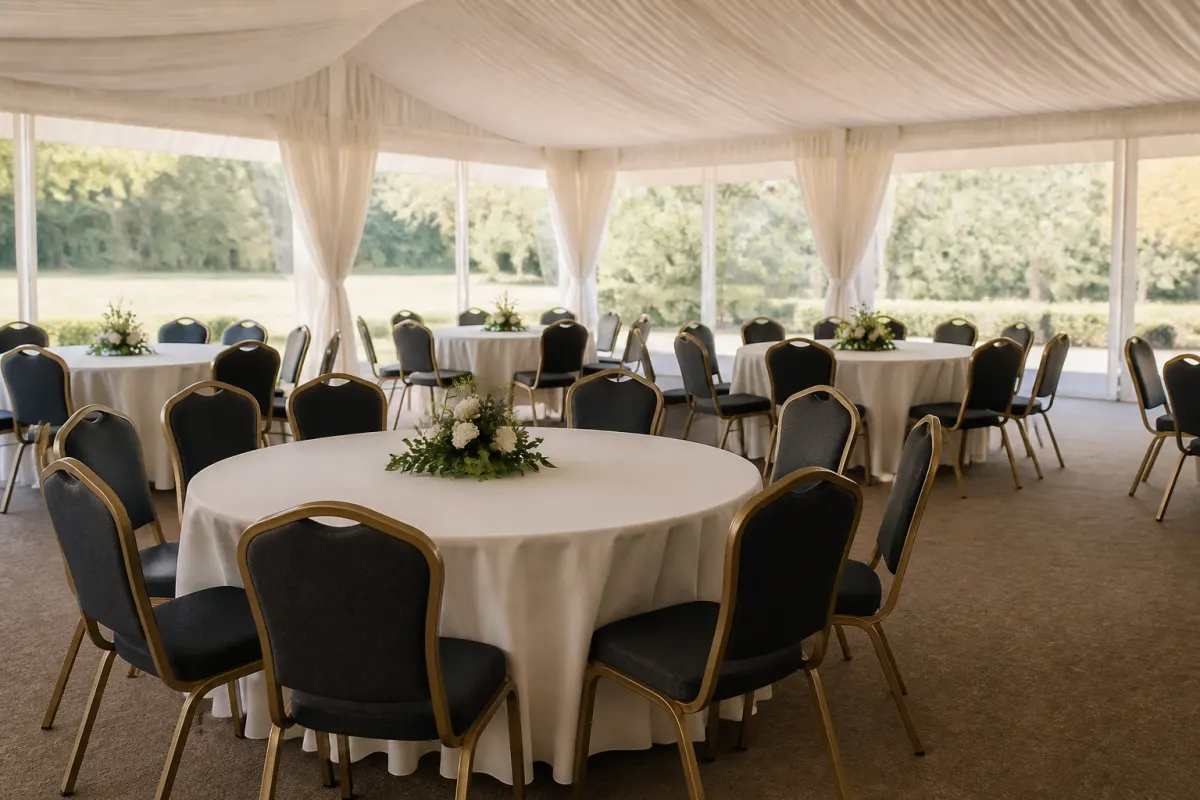
Use the exact chair's approved stack and cart dimensions to calculate storage and transport. Trial loading and setup with staff; stackability alone does not establish how much space or time the venue will save. For off-site delivery, include securing and finish protection specified by the maker.
Follow the selected cushion and fabric assemblies' drying and storage instructions. Check the storage space for water ingress, moisture, and ventilation before packing. Covers are an option only when compatible with those instructions; they do not guarantee protection from mildew or replace suitable storage.
Building a realistic furniture count
Compare the largest planned booking, simultaneous events, approved layouts, repairs, and rental availability when setting inventory. Average attendance alone may leave a shortfall for a larger booking, but no general under-ordering rate is established here.
Treat a 5 to 10 percent spare-chair allowance as an inventory scenario, then adjust it using your own breakage, repair, and simultaneous-event records. Spare stock does not increase the approved seating capacity of the ceremony or backup space.
Cocktail hour and lounge furniture
The gap between ceremony and reception, cocktail hour, is its own furniture moment and an easy one to underspec. Standing cocktail tables, some lounge seating for older guests, and a bar setup if your venue serves drinks during that window all need to hold up outside on the same terms as your ceremony chairs.
Check cocktail-table stability, exposure, and any approved securing using the exact product and site plan. Compare reusing lounge pieces with a separate set only where their outdoor approval, transport, availability, and occupied layout fit the cocktail-hour requirements.
Sourcing and lead times
Obtain the selected furniture's outdoor-use and transport instructions, and ask suppliers to confirm quantities, production, dispatch, transit, and receiving dates. A 10 to 14 week custom-order window can be tested as an early schedule scenario; it does not confirm delivery for a particular event.
Request a quote with ceremony and reception counts, ground surfaces, layouts, storage, transport, and booking dates. Relevant independent suppliers can review that brief and confirm the actual products' outdoor and handling approvals, availability, price, and delivery terms.