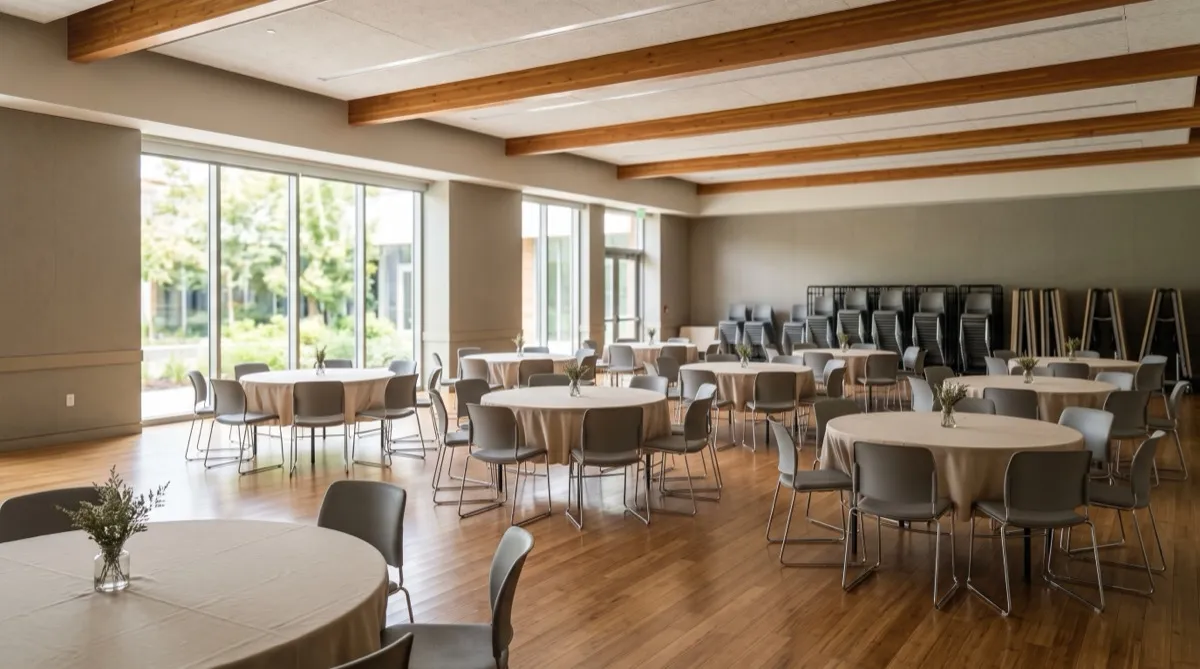
A multi-purpose community hall might host a toddler gym class, a board meeting, a quinceanera, and a blood drive within one week. Plan the furniture around those actual layouts and changeovers: seating and table fit, compatible carts, staff handling, and storage. Appearance alone does not establish how the furniture will withstand that routine or how many years it will last.
This guide covers rounds and rectangular tables, stacking chairs, compatible carts, and storage for recreation and community centers. Check model documents and trial a changeover before repeating a package across the facility.
Buying at volume for a multi-purpose facility
A community center may buy in phases as rooms get renovated, programs expand or a new wing opens. Compare the same model, materials, documented intended use, weight rating and warranty across bids. For a package of 40 round tables, ask suppliers to itemize unit pricing, any quantity discounts and the delivery scope. Buying direct or increasing quantity does not by itself guarantee particular construction or a lower price.
What a typical multi-purpose room needs
A single flexible room needs seating, tables and equipment to move and store both. The table below is an illustrative buying and budget scenario for a room planning 150 to 200 event seats, not a verified layout, stock list or current price offer. Replace the quantity and unit-cost assumptions with your concurrent layouts, storage measurements and supplier quotes; confirm currency, freight, tax and service exclusions.
| Item | Typical quantity | Est. cost per unit | Est. line total |
|---|---|---|---|
| Steel-frame stacking chairs | 175 to 200 | $45 to $90 | $7,875 to $18,000 |
| Round 60" tables (seats 8) | 20 to 25 | $60 to $130 | $1,200 to $3,250 |
| Rectangular 6-8 ft tables | 8 to 12 | $50 to $120 | $400 to $1,440 |
| Chair and table dollies/carts | 6 to 10 | Varies by capacity | Request in quote |

The seating and table allowances above round to an illustrative $10,000 to $23,000 budget scenario, before carts, storage racks, upholstered lounge or lobby furniture and the excluded delivery or service costs. This is arithmetic from the proposed inputs, not a measured market range. Use the furniture cost calculator to test your own quantities and allowances before obtaining itemized supplier quotes.
Rounds vs rectangular for flexible rooms
Round 60 inch tables and rectangular 6 to 8 foot tables are useful planning formats for different activities. The table’s eight-seat round example is not a confirmed capacity: check chair width, place settings, leg positions, circulation, and the project layout. Use actual program demand and approved storage capacity to decide the mix, including classroom work, registration, crafts, and shared meals.
Stacking chairs for daily reconfiguration
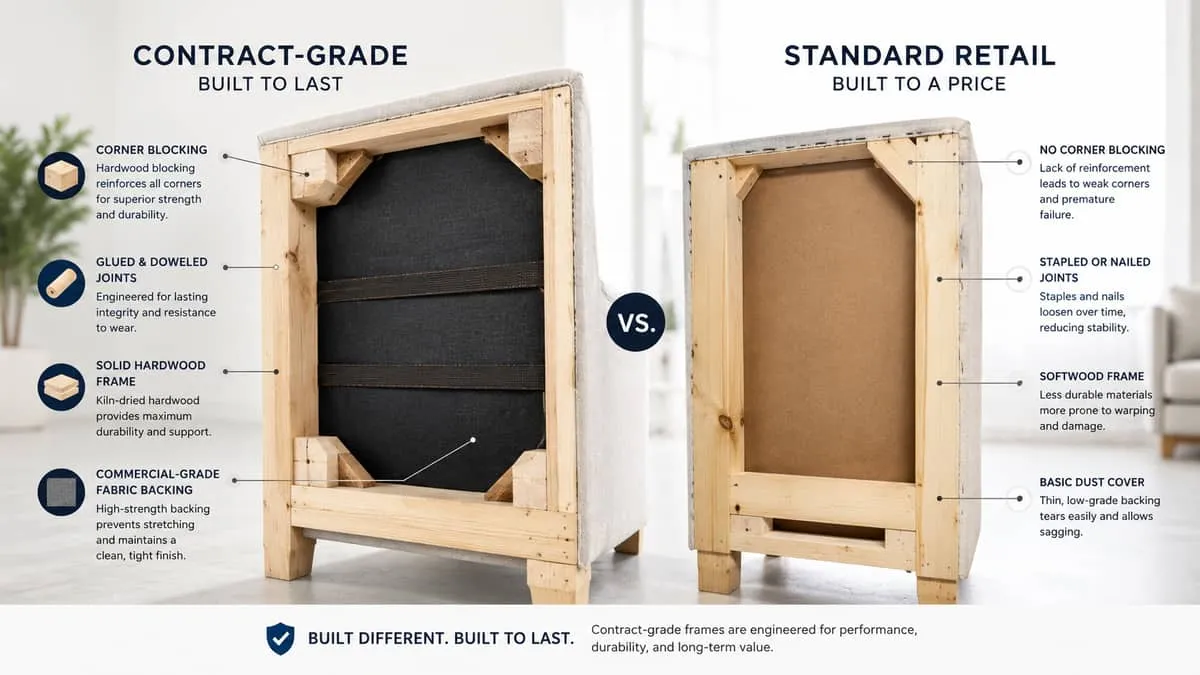
For repeated reconfiguration, request the complete chair’s intended use, applicable test documentation, stated load limits, approved stack height, and compatible cart. Inspect the actual stacking contact points and trial handling on the venue route. Welded, bolted, or riveted construction alone does not establish suitability or a stable approved stack.
For upholstered chairs, request the exact cover’s abrasion method and result, intended use, and cleaning instructions. ACT’s abrasion guidance explains why results alone cannot predict service life. Food or craft activities also require care instructions compatible with the actual spills and cleaning products; neither a 50,000 double-rub figure nor a performance-fabric label establishes that compatibility.
Carts, dollies, and storage: the part everyone underspecs
Include handling and storage equipment in the furniture proposal. Match each chair and table to approved stack or load limits and a compatible cart or truck, then check the cart footprint, doors, turning space, thresholds, and floor conditions against the actual storage route. Trial staff retrieval and a room reset before ordering; neither a cart label nor an assumed storage dimension establishes the complete workflow.
Freight and lead times
Bulk orders for community centers typically ship LTL freight or full truckload depending on order size, and cost depends on your delivery zip code, whether the site has a loading dock, and whether a liftgate is needed for a non-dock delivery. Have your delivery address, dock access, and preferred delivery window ready when you request a quote, since freight quotes tighten up fast once that information is known.
An initial schedule could test 2 to 6 weeks for a stocked configuration and 8 to 14 weeks for custom fabric, frame finish or branded upholstery. These are planning assumptions, not verified inventory or promised lead times. Confirm the supplier's available configuration, approvals and written production, transit and delivery milestones before setting a grand opening or renovation completion date.
Before you order
Before ordering, request complete-chair use and test documentation, model load and stack limits, upholstery care and test method, and cart compatibility. Ask about sample availability and cost and read the warranty’s covered use, exclusions, and remedies, including stacking wear. Trial glides and handling equipment on the actual floor rather than assuming the frame gauge or joint type proves the model’s suitability.
When you are ready to move forward, request a quote with your item list, quantities, finish preferences, delivery zip code, timeline and changeover needs for relevant independent suppliers to review. Ask each supplier to identify the selected chairs and tables, compatible carts, itemized pricing and receiving requirements so you can compare the complete multi-purpose-room package.