
Walk a showroom floor and a contract chair and a retail chair can look nearly identical. Same silhouette, same fabric color, sometimes the same overall design. The price tags can be far apart, and that gap is where a lot of hospitality buyers make an expensive mistake. The difference between contract furniture and retail furniture is not the look. It is the engineering underneath, the testing behind it, and how long it survives in a commercial setting.
Here is what actually separates the two, and why commercial grade furniture matters for any space the public uses.
What "contract" actually means
Contract furniture, sometimes called commercial or hospitality furniture, is built and tested for high-traffic public environments. The term refers to a real set of construction and performance standards, not a marketing label. Retail furniture, by contrast, is engineered for residential use: a home where a few people use a piece lightly each day.
The distinction matters because a restaurant chair gets sat in 30 to 50 times a day, a hotel lobby sofa serves a continuous stream of guests, and a banquet chair cycles through hundreds of events a year. Residential furniture is simply not designed for that load, no matter how good it looks.
The construction differences
Most of the difference is hidden inside the piece.

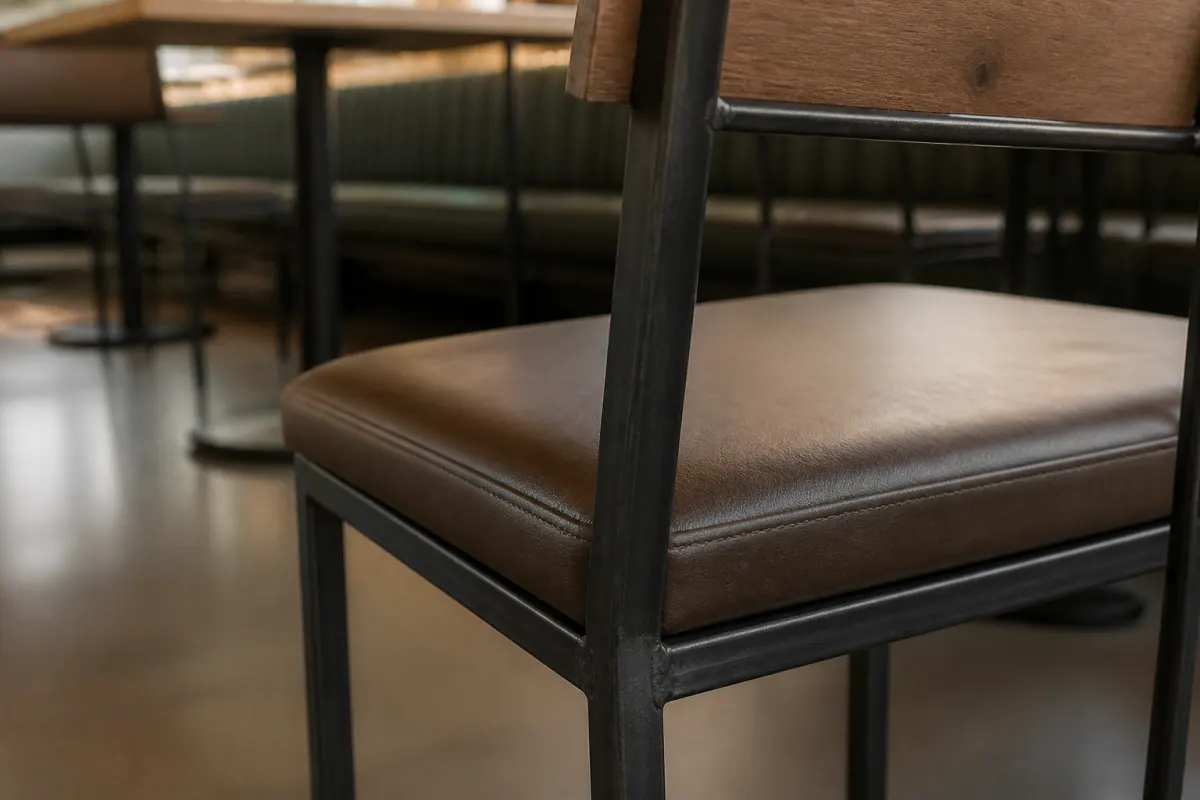
Frames. Contract furniture uses welded steel or kiln-dried hardwood with reinforced joints and corner blocking. Retail furniture often relies on stapled or glued joints and lighter materials that loosen under heavy use.
Foam. Commercial grade furniture uses higher-density foam, commonly around 35 to 40 ILD, that holds its shape under constant use. Retail foam at 15 to 25 ILD compresses and goes flat fast, which is why a budget chair feels collapsed within months in a busy room.
Upholstery. Contract fabric and vinyl are rated for abrasion, typically a minimum of 50,000 Wyzenbeek double rubs, and often treated for stains and moisture. Retail upholstery commonly rates 10,000 to 15,000 double rubs and shows wear quickly under public use.
Hardware and finishes. Contract pieces use commercial-grade glides, fasteners, and finishes designed to be cleaned with stronger products and to resist scuffing from daily traffic.
Hospitality furniture standards to ask for
When you compare quotes, ask specifically about these benchmarks rather than trusting the word "commercial" on a spec sheet.
BIFMA certification. The Business and Institutional Furniture Manufacturers Association sets the structural and durability standards for commercial seating in North America. Ask whether a piece is tested to BIFMA standards.
Wyzenbeek double rubs. The abrasion rating for upholstery. Look for 50,000 or higher for general commercial use, and higher still for heavy-traffic zones.
Foam ILD or density. Confirm commercial-grade foam, not residential.
Fire codes. Many jurisdictions require commercial furniture to meet flammability standards such as CAL 117 for upholstered seating. Verify compliance for your location before ordering.
Frame warranty. A meaningful structural warranty signals the manufacturer expects the piece to survive commercial use.
Realistic cost ranges and what drives price
Contract furniture costs more upfront than comparable-looking retail furniture, often noticeably so on a per-unit basis. The premium pays for heavier frames, denser foam, higher-rated fabric, testing, and certification. What drives contract pricing within the category: custom upholstery and finishes, premium performance fabrics, custom dimensions, and lower order volumes. What lowers it: stock finishes and fabrics, and ordering at or above minimum quantities so production setup cost spreads across more units.
The key number is not unit price. It is cost over the life of the furniture. A retail piece that fails in a year and has to be replaced repeatedly costs far more than a contract piece that lasts five to ten, once you add up replacements, downtime, and the labor of swapping furniture in a live operation.
Why retail furniture fails in commercial use
The failure pattern is predictable. Frames loosen and wobble under weight and movement. Foam collapses and the seat feels flat. Fabric abrades, pills, and stains. The piece looks tired within months and unsafe within a year. In a public space, that is not just an aesthetic problem. Wobbling frames and worn seating are liability and brand risks. Guests notice, and so do inspectors.
Sizing and ordering in volume
Contract furniture is manufactured to order, which is why it ships in minimum quantities and supports customization. Typical minimums run from a handful of lounge pieces per style to a dozen or two dining chairs, with custom orders holding the same minimums as standard ones. Factory-direct production for larger or custom runs commonly takes 10 to 14 weeks.
Plan sizing around your actual layout and traffic flow, and order early. Furniture bought ahead of schedule can be stored, while a space without furniture cannot open or operate. Most buildouts run behind, so place orders before they feel urgent.
The bottom line
Contract furniture and retail furniture are different products that happen to look alike. For any space the public uses, commercial grade furniture is the only sound choice: welded frames, dense foam, high Wyzenbeek fabric, and verified hospitality furniture standards like BIFMA and applicable fire codes. Compare lifetime cost, not unit price, and the contract option almost always wins.
Specifying for a commercial space? Request a quote or browse the Commercial Furniture Depot catalog, and our team will confirm the standards, specs, and lead times for your project.
Our take
This guide does the important work of naming the standards to ask for: BIFMA, Wyzenbeek, foam ILD, fire codes like CAL 117, and frame warranty. The step it leaves out is what happens to that documentation after the sale. Those certifications are only worth asking for if you can produce them later, and the moments you need them come years out: a franchise or brand inspection, an insurance question after an incident, or a reorder that has to match the original spec. Filing the spec sheet, the compliance certificates, and the fabric ratings with the rest of the property's records at purchase turns a one-time buying question into a defensible paper trail. A verbal assurance at point of sale is worth little when an inspector asks two years later.
The bottom line: For any public-facing space, contract furniture is the sound choice on lifetime cost and safety. Ask for BIFMA, Wyzenbeek, foam, and fire-code documentation, then keep it on file, since reorders and inspections are when those certificates actually earn their keep.