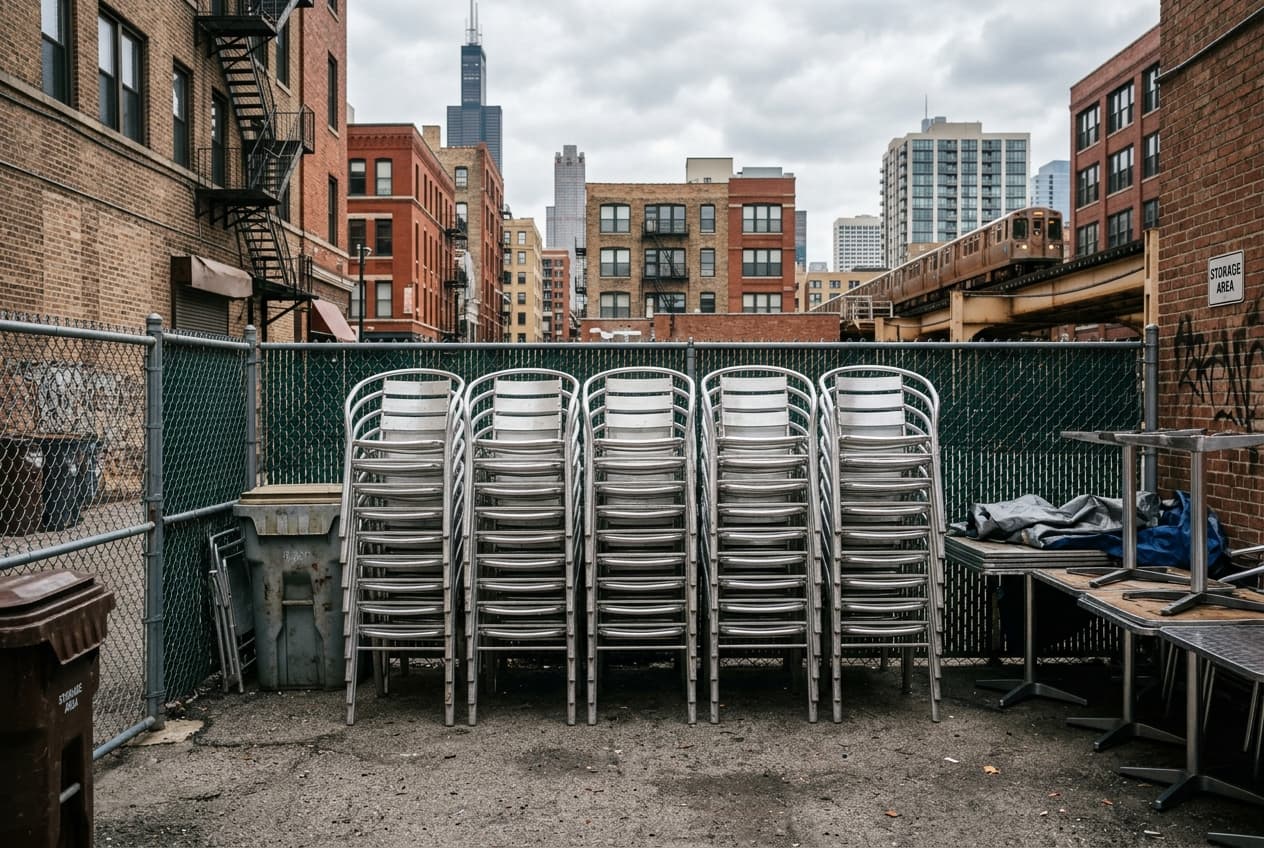
Wilmington's patio market gets underestimated by operators who assume a smaller East Coast city means a simpler specification. It doesn't. Commercial patio furniture in Wilmington has to survive a genuine mid-Atlantic climate swing: humid, storm-prone summers along the Christina Riverfront, ice and freeze-thaw cycles that arrive every winter without much warning, and a corporate hospitality market (banking headquarters, law firms, and the businesses that orbit them) that expects outdoor seating to look as buttoned-up as the lobby it sits next to. A furniture program spec'd for a milder or drier market simply does not hold up here, and the operators running serious outdoor programs on the Riverwalk, in Trolley Square, and around downtown Market Street have learned that the hard way.
Wilmington sits at a climate crossroads. It is far enough north to get real winter weather, close enough to the Delaware River and the Atlantic to carry serious humidity through the summer months, and positioned along a storm track that brings nor'easters and remnant tropical systems through several times a year. Specifying furniture correctly for this market means building for both ends of that range, not picking a middle ground and hoping it holds.
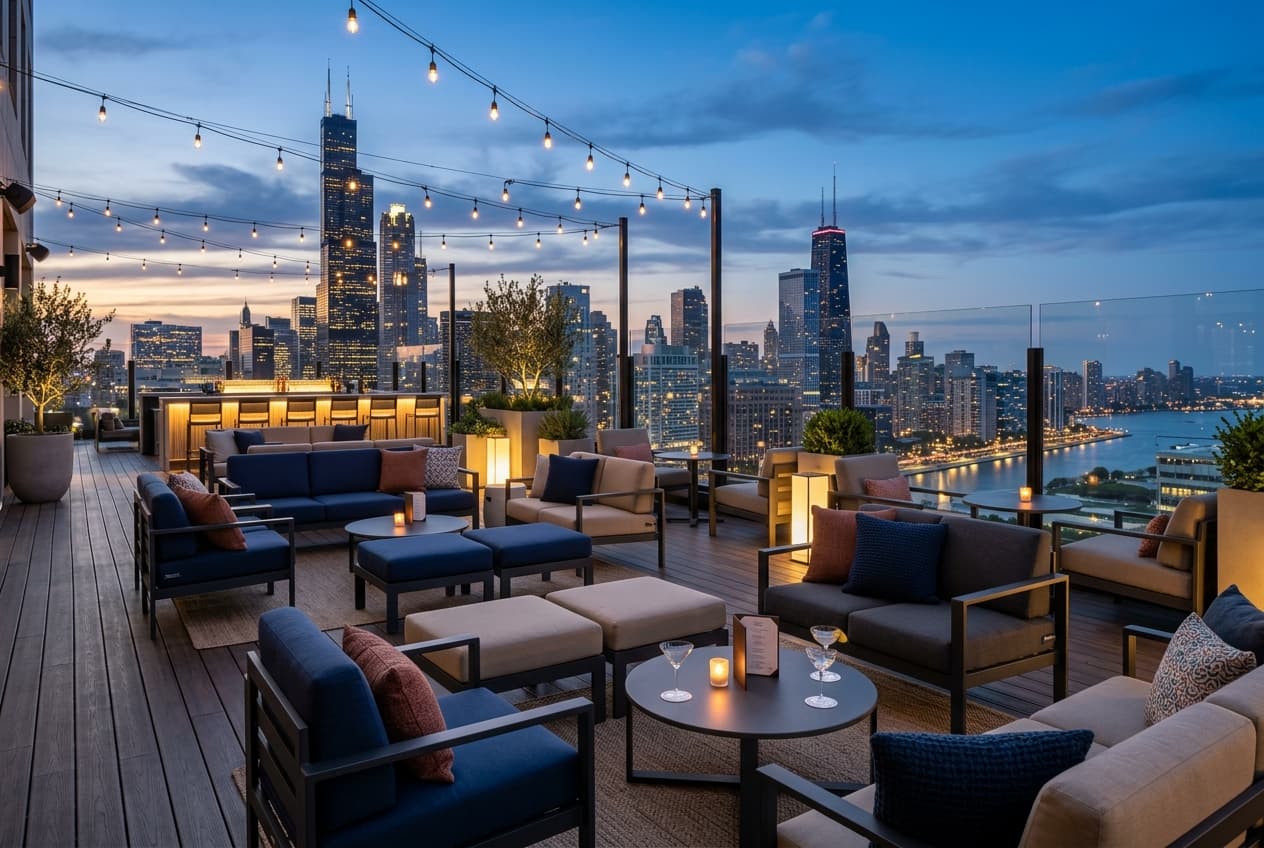
Wilmington's Climate Demands a Genuine Four-Season Spec
The instinct many operators bring to a mid-Atlantic city like Wilmington is that it's a moderate climate, not a harsh one, so furniture specifications can split the difference between what a Sun Belt property needs and what a true northern market requires. That instinct causes problems within the first eighteen months. Wilmington gets meaningful snow and ice most winters, and unlike a Gulf Coast freeze event that passes in a day, Delaware's cold stretches can run for a week or more with repeated freeze-thaw cycles. Ice works into any hairline flaw in a powder coat finish, expands, and accelerates corrosion and delamination at weld points far faster than a single hard freeze would.
Summer brings the opposite problem. The Delaware Valley runs humid from June through September, with relative humidity regularly sitting above 70 percent and heat index values that push well past the actual temperature on the thermometer. That sustained moisture load is exactly the condition that breeds mold and mildew in cushion fabric that isn't rated for it, and it accelerates corrosion anywhere a finish has been compromised. Operators running outdoor seating for the hotels and event venues near the Chase Center on the Riverfront, which pulls a steady stream of conference and corporate travel through the city, know that fabric and finish specification isn't a nice-to-have, it's a line item that determines the maintenance budget for the next five years.
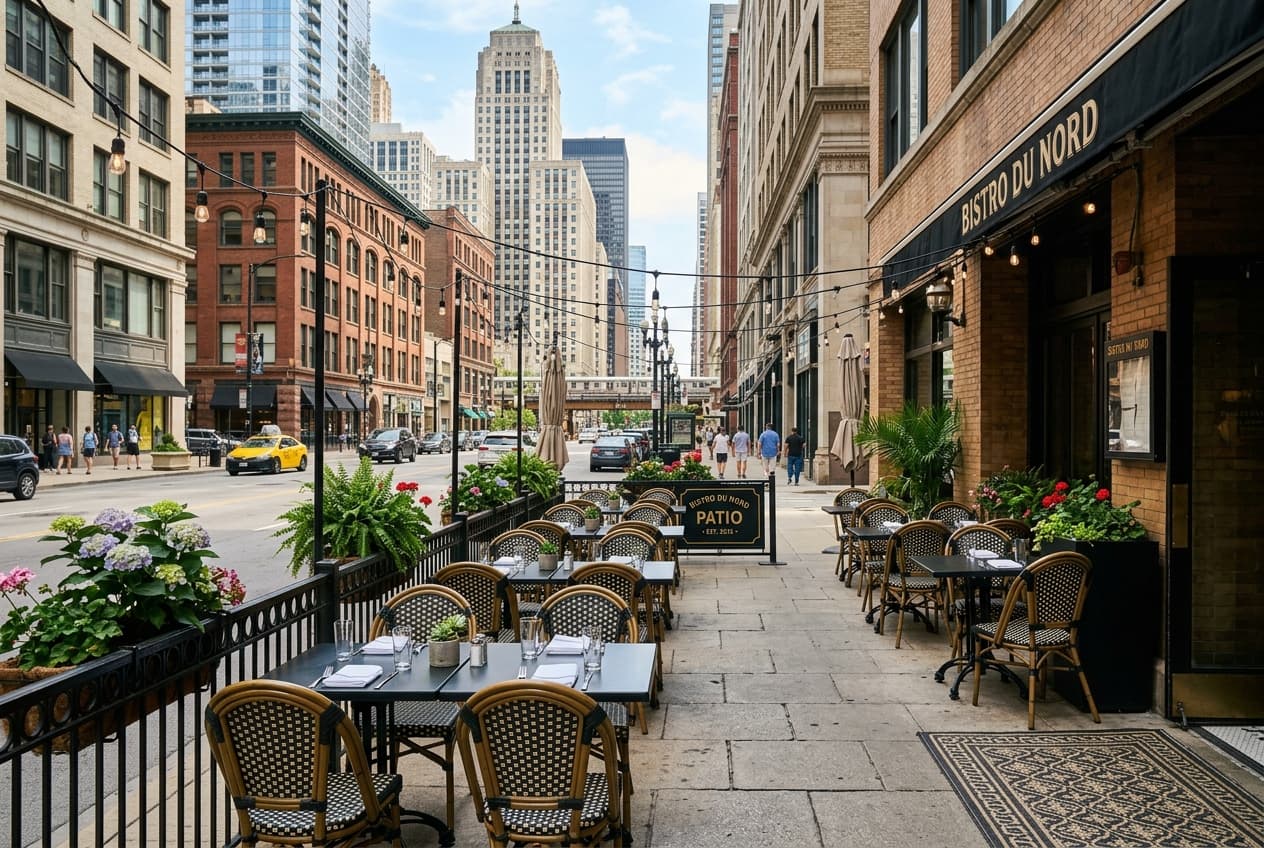
What the Riverfront, Trolley Square, and Downtown Actually Require
Wilmington's outdoor hospitality market is smaller than a major metro's but far from uniform. A Riverfront restaurant terrace overlooking the Christina River has a different design brief than a Trolley Square gastropub patio, and both differ from a downtown hotel courtyard serving business travelers tied to the city's banking and legal sector. Treating commercial patio furniture in Wilmington as one generic order, rather than matching the program to the location, is how a property ends up with furniture that works but doesn't fit the room it's sitting in front of.
The Riverfront corridor, anchored by the Riverwalk and the properties built up around the old shipyard and rail infrastructure, wants a program that reads as intentional and cohesive: matched frame finishes across dining chairs, lounge seating, and side tables, real shade structures rather than improvised umbrellas, and planters treated as part of the design rather than an afterthought. This is where a lot of Wilmington's convention and corporate travel lands, and that guest base has seen well-executed outdoor programs in other cities. A mismatched frame finish or an obviously budget cushion reads as a shortcut.
Trolley Square's patio scene runs on a different register. It's neighborhood-facing, casual, and dense, with restaurant and bar patios packed close along Delaware Avenue and the side streets around it. Furniture here needs to be durable under high-frequency use and stackable enough to reconfigure for weekend crowds, but it can carry more character in frame color and upholstery than the more conservative downtown corporate crowd would want. Downtown Market Street and the area around the government and financial district lean the other way: cleaner lines, more restrained finishes, and a program built to complement a lobby-adjacent patio that corporate visitors pass through on the way to a meeting rather than linger in for an evening.
Fabric, Foam, and Frame: Getting the Spec Right for a Mid-Atlantic Market
Fabric specification is where Wilmington patio programs most often fall short before their first full year is over. Solution-dyed acrylic, with Sunbrella as the standard reference point, is the correct baseline for any patio that sees direct sun or repeated wet-dry cycles. Because the color is built into the fiber rather than applied to the surface, it holds up against both the UV load of a full mid-Atlantic summer and the humidity that would otherwise drive mold growth in a lesser fabric. It also cleans with a diluted bleach solution, which matters in a climate where cushions go through repeated soak-and-dry cycles from summer storms rolling up the Delaware River.
Foam density is the quieter failure point. Standard 1.8 lb density foam compresses within a season of steady commercial use, and Wilmington's hospitality patios, particularly the ones tied to convention and business travel through the Chase Center area, see exactly that kind of continuous rotation. Commercial-grade foam in the 2.0 to 2.5 lb range with a correspondingly higher ILD rating holds its shape through a full season rather than going flat by August.
For frames, aluminum at 1.5mm wall thickness minimum is the right starting point for a Wilmington hospitality application. Thinner consumer-grade stock, in the 0.8mm to 1.0mm range, is built for occasional residential use, not for a Riverfront patio where staff reposition chairs daily and the frames cycle through a genuine mid-Atlantic freeze-thaw winter every year. Weld quality at the joints matters as much as wall thickness, and it's worth pressing suppliers on joint construction directly rather than judging quality by frame weight alone.
The Revenue Math on Quality Commercial Patio Furniture in Wilmington
Wilmington punches above its size as a hospitality market because of the corporate and financial activity concentrated downtown, along with the steady flow of conference and event traffic through the Chase Center on the Riverfront. Hotel and restaurant patios in these corridors carry meaningful per-seat revenue during a strong event calendar, and that changes the furniture math entirely. Measured against sticker price alone, a budget chair looks like the smart choice. Measured against revenue per seat and the cost of downtime, it isn't.
A properly specified commercial aluminum chair, maintained correctly for a Delaware climate, runs eight to ten years in active service. A lower-cost "commercial-style" chair that needs replacing after two seasons costs more annually once you factor in the disruption of mid-season sourcing, the visual mismatch between old and new pieces on the same patio, and doing the whole process again two years later. Properties that have run outdoor programs through multiple cycles in this market buy once, maintain on schedule, and reupholster rather than replace while the frame is still sound.
The right approach to commercial patio furniture in Wilmington is to specify for the actual four-season climate, match the aesthetic to the neighborhood the patio sits in, and buy against the full lifecycle rather than the opening invoice. The programs that get this right hold their look and their margins for a decade. The ones that don't spend that decade catching up.