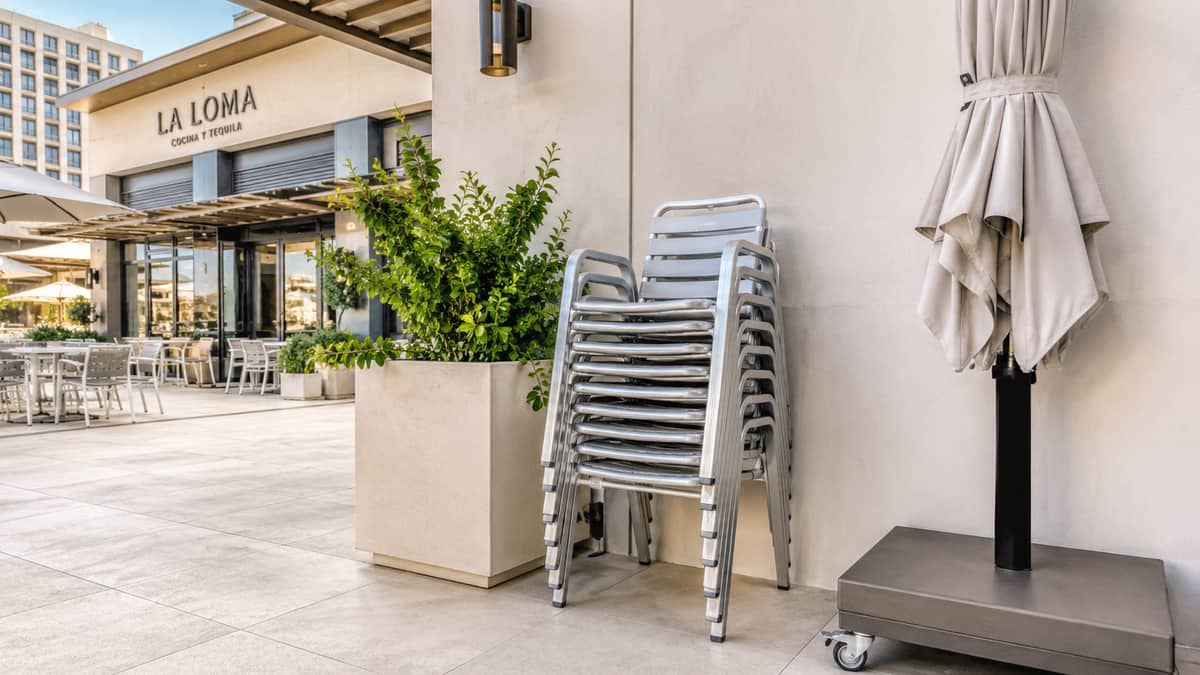
St. Louis has a patio problem that a lot of operators underestimate until they have lived through one full year of it. The city's outdoor season runs long compared to a lot of Midwest markets, stretching from early spring patio openings through late fall Cardinals season, but the climate swings hard across that window. Summers bring genuine heat and humidity that break down cheap finishes fast. Winters bring real freezes that crack frames and finishes never rated for sub-freezing storage. Operators running serious outdoor programs downtown near the riverfront, in Soulard's courtyard bars, and across the Central West End's sidewalk dining scene know the real challenge is different from what a first-time buyer assumes: order for the full climate cycle, not just the pleasant months.
Building for the Full Seasonal Swing
Retail-grade outdoor furniture is engineered for occasional use in mild weather, a few weekends a summer, brought inside before the first freeze. A St. Louis restaurant patio or hotel rooftop bar runs outdoor furniture through months of continuous heavy use, full sun exposure, humidity, and rain, followed by winter storage or exposure that most consumer-grade product was never built to survive.
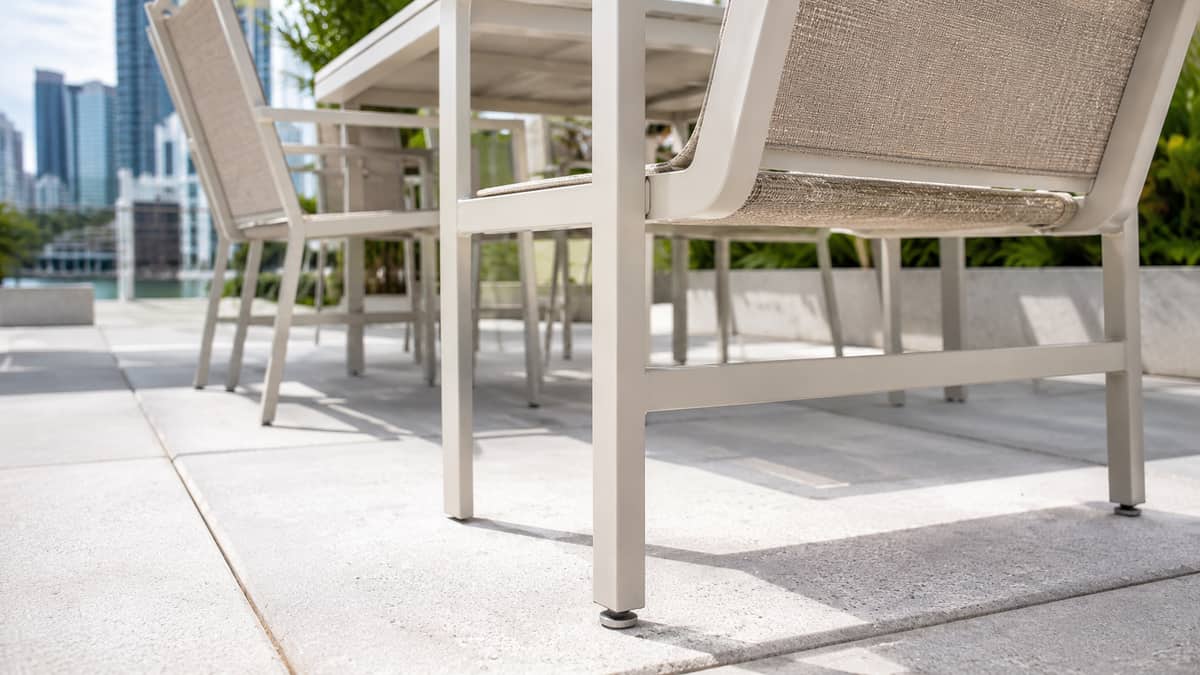
Frame material matters more here than almost any other spec decision. Powder-coated aluminum resists corrosion and holds up through repeated wet-dry cycles far better than untreated steel. Woven and sling materials need UV stabilization rated for extended sun exposure, not a generic outdoor fabric claim on the spec sheet. Cushions and soft goods need quick-dry foam and fade-resistant, mildew-resistant fabric if they are going to survive a humid St. Louis summer without smelling musty by August.
Matching the Program to the Setting
A downtown rooftop bar overlooking the Gateway Arch and riverfront needs furniture that photographs well and holds up to steady evening traffic through the warm season. A Soulard courtyard patio trading on historic character needs a different aesthetic but the same underlying durability standard. A Central West End restaurant with sidewalk seating near Forest Park needs furniture that can be quickly staged and struck depending on weather and city permitting requirements. Getting the look right for each setting matters, but it cannot come at the expense of the frame and fabric specifications underneath.
For hotel properties and larger downtown restaurant groups, the calculus also includes guest perception during the busiest months of the year, when every impression counts more. A patio or rooftop deck showing rust, faded fabric, or wobbling frames by the third summer signals underinvestment to guests choosing between properties or restaurants on amenity quality. For operators competing on that margin, the difference between budget and contract-grade furniture shows up directly in repeat business and online reviews.
The right approach to commercial patio furniture in St. Louis is to specify for the full seasonal cycle honestly, match the aesthetic to the neighborhood, whether that is downtown's skyline-facing rooftop scene or Soulard's historic courtyard character, and buy for the multi-year lifecycle rather than the opening day cost.